Artwork
The Prima Macchina for the Chinea of 1726: Hercules and the Hydra
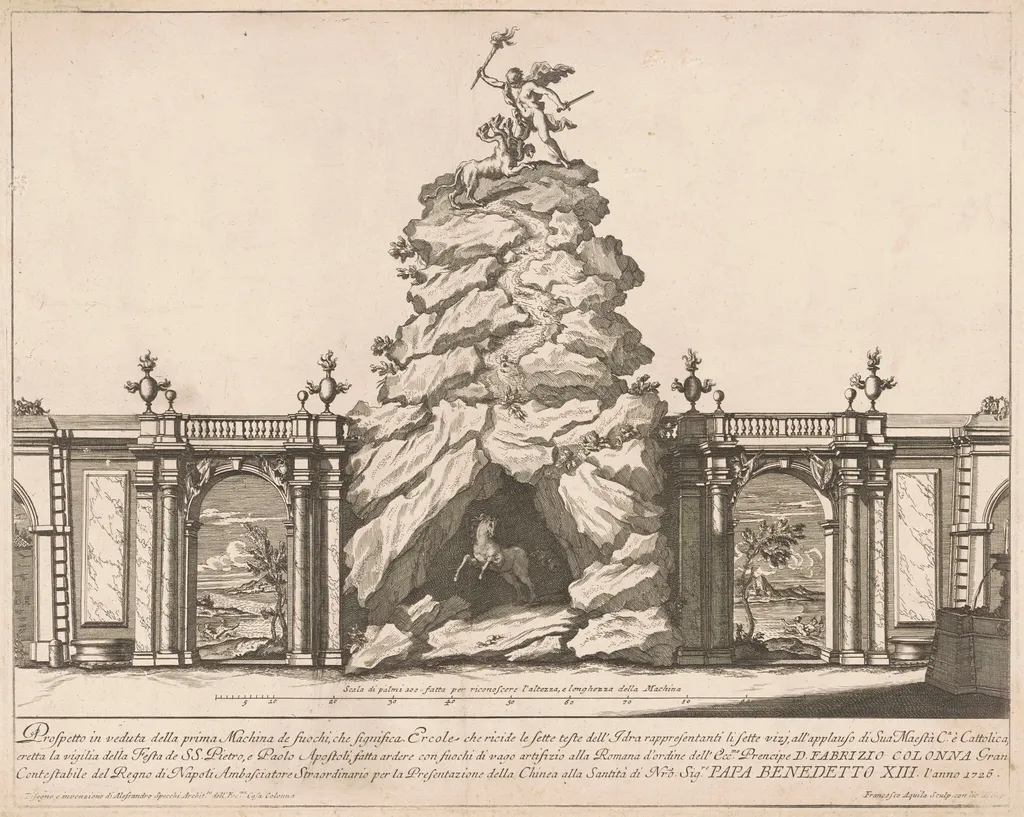
The Prima Macchina for the Chinea of 1726: Hercules and the Hydra is an ink print by the Baroque artist Francesco Faraone Aquila. It dates from 1726 and is held in the collection of the National Gallery of Art.
About this work
The text at the bottom explains this was built for a royal celebration in 1726, where fireworks lit up the scene.
This print shows a towering, rocky pyramid with a statue of Hercules on top crushing a giant snake. Below, a grand stone balcony frames three arched windows, each with a tiny landscape inside. The whole scene looks like a stage set, with dramatic lighting and rough textures.
The text at the bottom explains this was built for a royal celebration in 1726, where fireworks lit up the scene. The artist used shading to make the rocky forms look almost three-dimensional.
Next, check out etching to see how artists like Aquila carved fine lines into metal plates.
Overview
The Prima Macchina for the Chinea of 1726: Hercules and the Hydra is an etching by Francesco Faraone Aquila, created in 1726.
Subject & Meaning
The print depicts a monumental, rocky structure topped with a statue of Hercules battling the Hydra, accompanied by a grand stone balcony with arched windows containing miniature landscapes, evoking a theatrical setting.
Technique & Style
Aquila employed shading techniques to achieve a three-dimensional effect, accentuating the texture of the rocky forms and creating dramatic lighting.
Context
This etching represents a temporary structure built for a royal celebration in 1726, where fireworks illuminated the scene, suggesting a dynamic and ephemeral experience.
Artist & collection


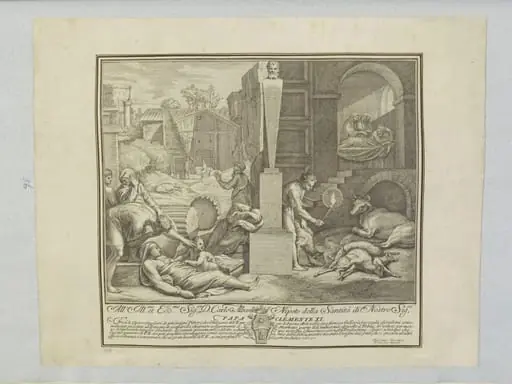
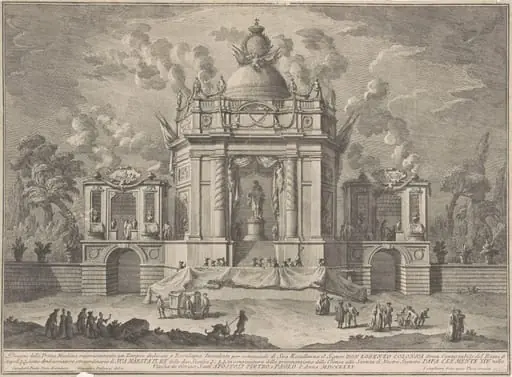 The Prima Macchina for the Chinea of 1771: The Temple of Asclepius
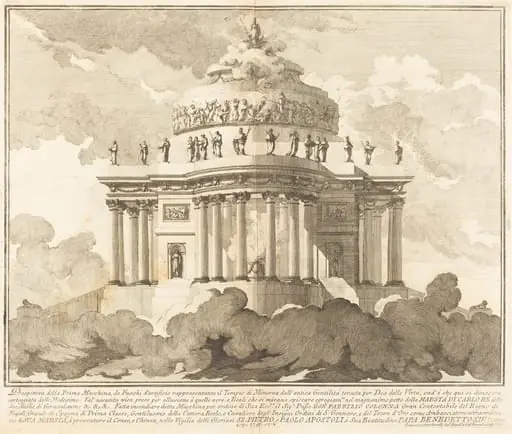 The Prima Macchina for the Chinea of 1746: The Temple of Minerva
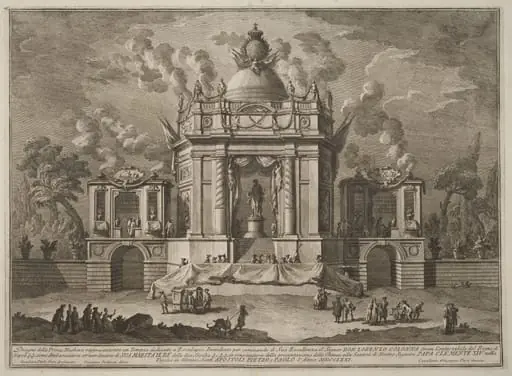 The Prima Macchina for the Chinea of 1771: The Temple of Asclepius
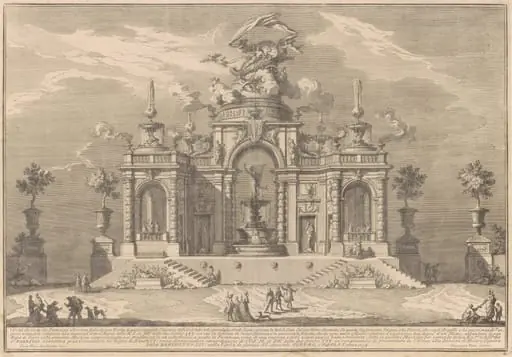 The Prima Macchina for the Chinea of 1754: The Palace of Venus in Cyprus
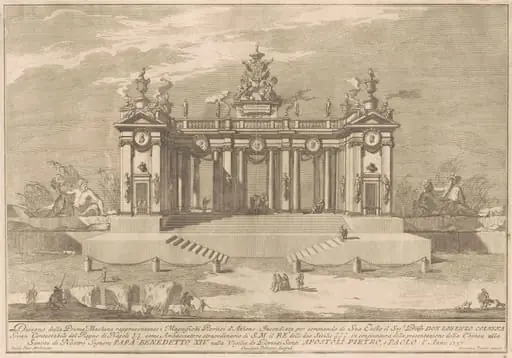 The Prima Macchina for the Chinea of 1757: The Colonnade of the Athenian Lyceum
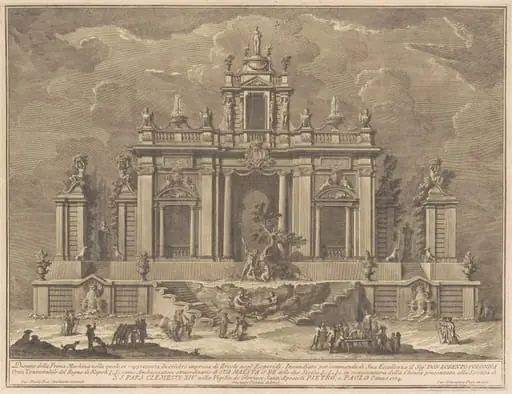 The Prima Macchina for the Chinea of 1774: Hercules and the Dragon in the Garden of the Hesperides
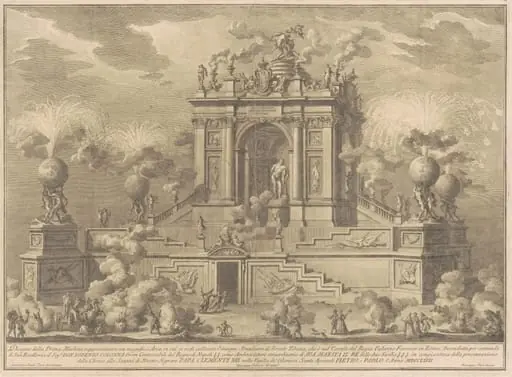 The Prima Macchina for the Chinea of 1767: A Triumphal Arch with the Farnese Hercules
 The Prima Macchina for the Chinea of 1757: The Colonnade of the Athenian Lyceum
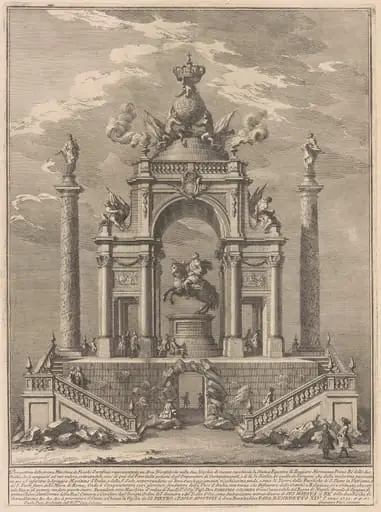 The Prima Macchina for the Chinea of 1751: Triumphal Arch for Roger I of Sicily
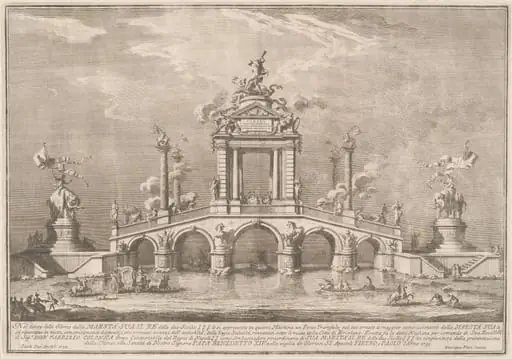 The Prima Macchina for the Chinea of 1755: A Triumphal Bridge with Antiquities from Herculaneum
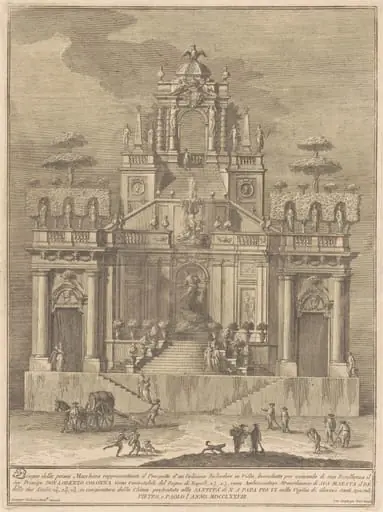 The Prima Macchina for the Chinea of 1778: A Countryside Belevedere with Hercules and Antaeus