Artwork
Lock at the junction of the River Brent with the Grand Union Canal
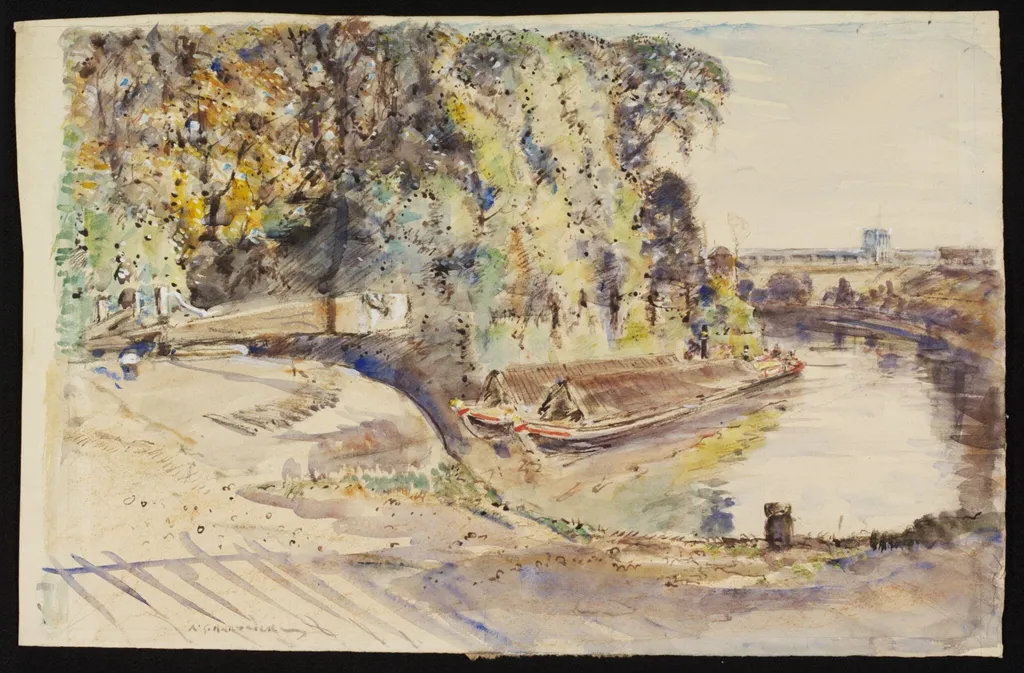
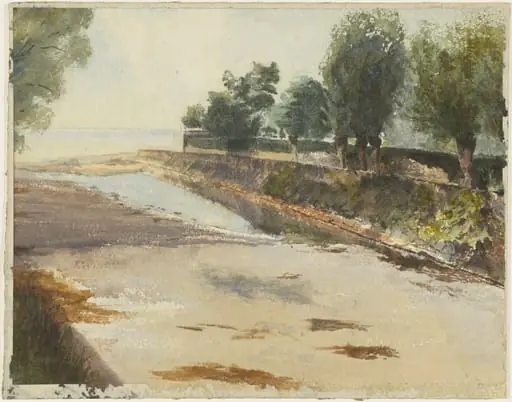
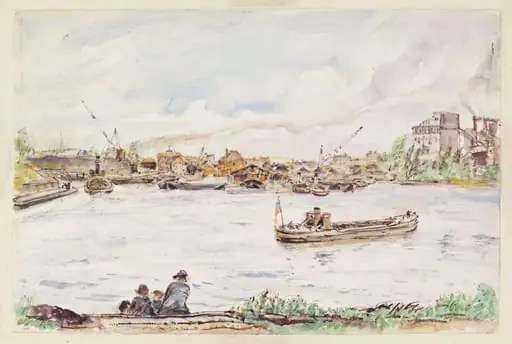
Lock at the junction of the River Brent with the Grand Union Canal is a watercolor work on paper by the Impressionist artist Archibald Standish Hartrick. It dates from 1940 and is held in the collection of the Victoria and Albert Museum.
About this work
Overview
Archibald Standish Hartrick's 1940 watercolour, Lock at the junction of the River Brent with the Grand Union Canal, captures a specific topographical moment in Britain's landscape during World War II.
Subject & Meaning
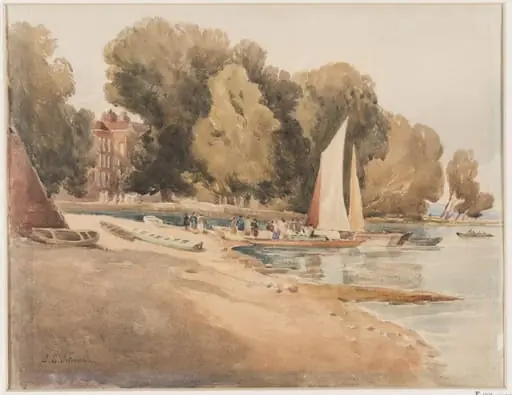
The painting depicts a serene convergence of the River Brent and the Grand Union Canal, with everyday life subtly present through a moored fishing boat and figures by the water. It reflects the artist's contribution to documenting Britain's national identity and heritage amidst wartime uncertainty.
Technique & Style
Hartrick employed loose, expressive brushstrokes and a muted palette of earth tones, greens, and blues to evoke a sense of natural tranquility. The emphasis on light and shadow adds depth to the scene, capturing the fleeting effects of the environment.
History & Provenance
Created under the Recording Britain project, this work was part of a wartime initiative sponsored by the Pilgrim Trust and overseen by Sir Kenneth Clark, aiming to employ artists in documenting Britain's landscape and cultural heritage.
Context
Painted in 1940, the work responds to the threats of World War II, contributing to a collective effort to preserve a visual record of Britain's pre-war landscape and identity. The scene's tranquility contrasts with the turmoil of the time.
Legacy
Now part of a broader collection, Hartrick's watercolour is preserved as part of Britain's artistic and historical heritage, with similar works viewable at institutions like the Victoria and Albert Museum.
Artist & collection
Artist
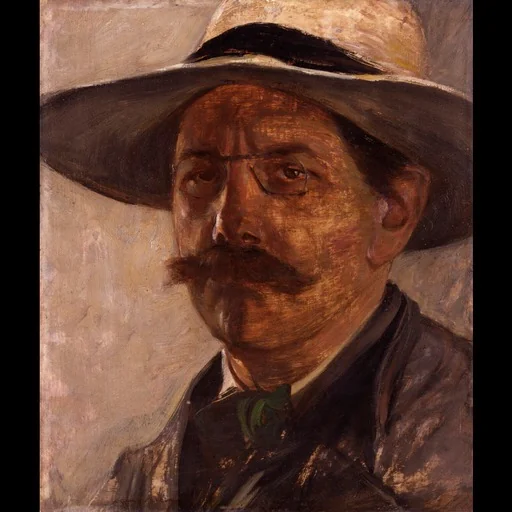
Archibald Standish Hartrick (7 August 1864 – 1 February 1950) was a Scottish painter known for the quality of his lithographic work.

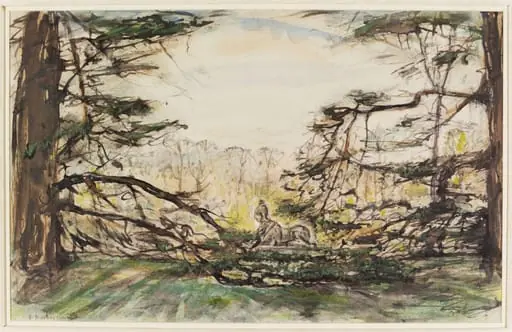 The Cedars, the Sphinx and the spring in the Grounds of Chiswick House
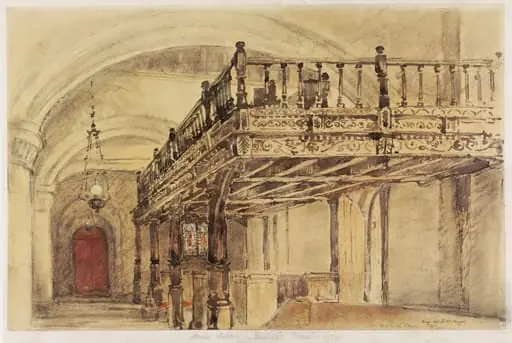 Music Gallery, St. Michael's Church, Bishop's Cleeve
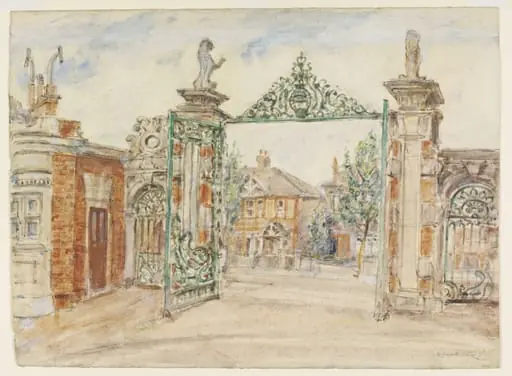 The Gateway, Boston Manor Park, Brentford.
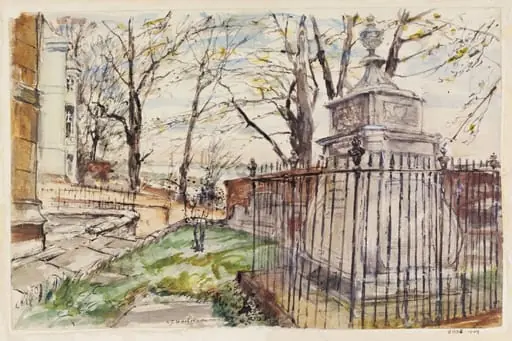 Hogarth's Tomb and Chiswick Reach
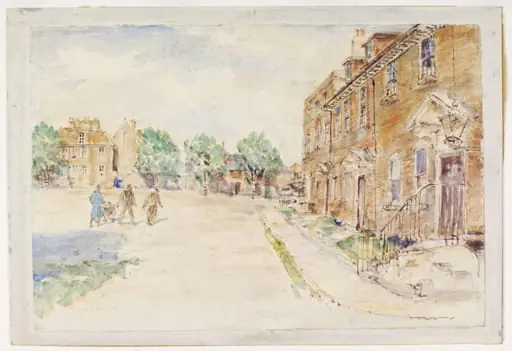 18th century houses at The Butts, Brentford
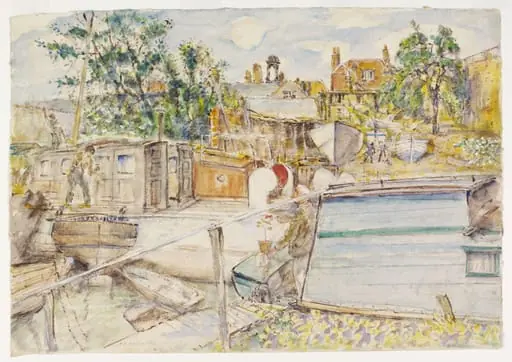 Dock of the Grand Union Canal Co., Brentford
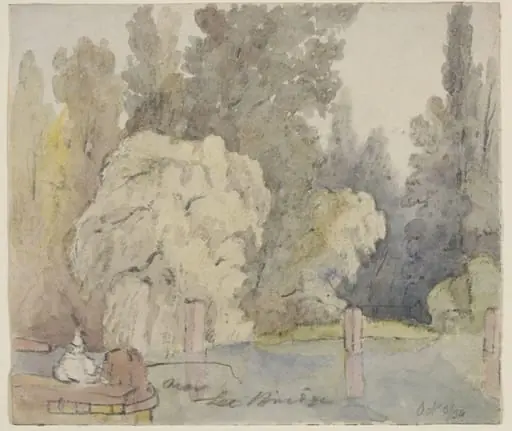
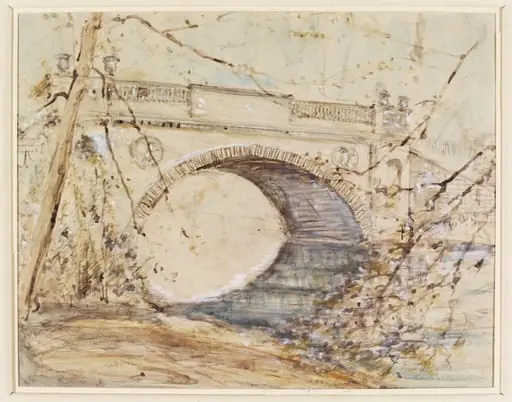 The Bridge in Chiswick House Grounds
 The Thames at Brentford