Artwork
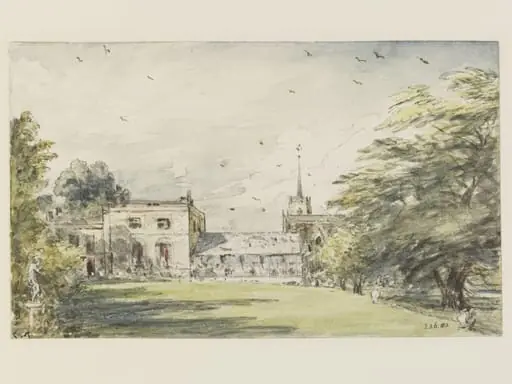
Chiswick House, from the Lake
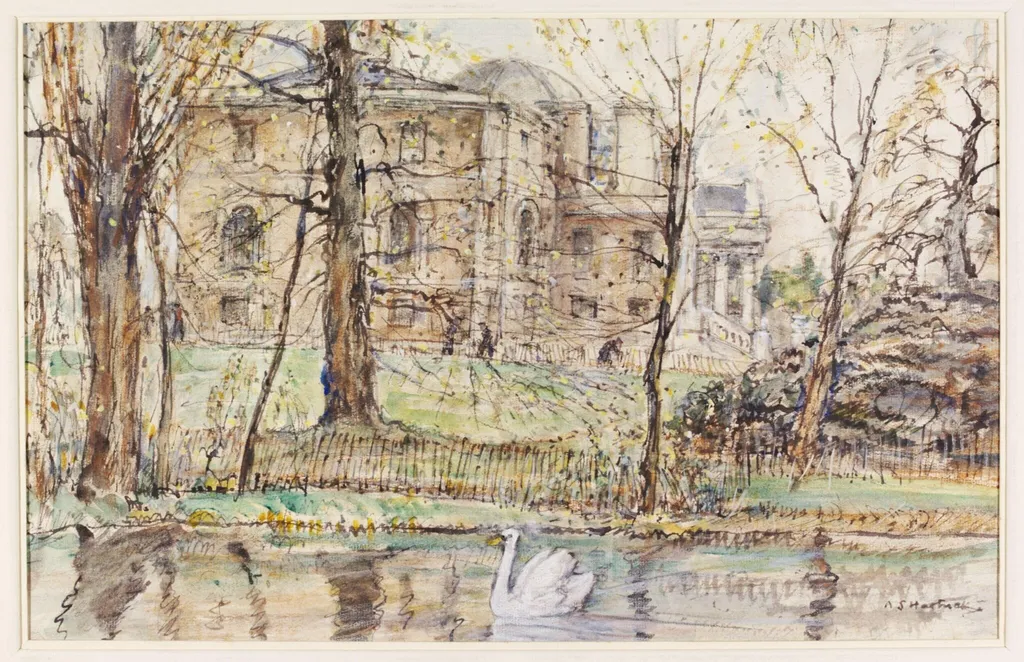
Chiswick House, from the Lake is a watercolor work on paper by the Impressionist artist Archibald Standish Hartrick. It dates from 1940 and is held in the collection of the Victoria and Albert Museum.
About this work
Overview
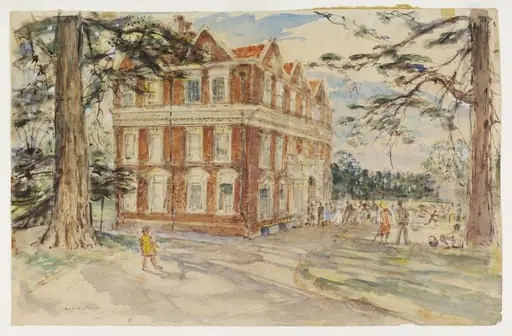
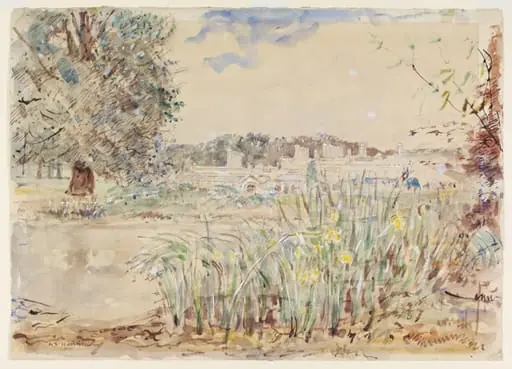
Created in 1940, this watercolour by Archibald Standish Hartrick depicts Chiswick House as seen across its ornamental lake.
Created in 1940, this watercolour by Archibald Standish Hartrick depicts Chiswick House as seen across its ornamental lake. It was produced under the Recording Britain initiative, a government-backed effort to visually archive the nation’s architectural and rural heritage during the Second World War. The project sought to preserve a sense of place amid fears of destruction and cultural erosion, with Hartrick’s work contributing to a collection of over 1,500 drawings and paintings.
Subject & Meaning
The scene captures Chiswick House in stillness, framed by bare winter trees and a quiet pond. A single bird glides on the water, adding subtle life to an otherwise tranquil composition. The fence at the foreground anchors the viewer’s gaze, suggesting a boundary between the natural and the built environment. The image conveys a quiet reverence for heritage, offering a contemplative counterpoint to the turbulence of wartime Britain.
Technique & Style
Hartrick employed a loose, economical watercolour technique, allowing washes to suggest form rather than define it. The sky is thinly layered, nearly transparent, while the trees are rendered with darker, more deliberate strokes. Muted tones dominate, with only faint accents of yellow and green introducing subtle variation. The brushwork feels spontaneous, balancing precision with atmospheric suggestion, characteristic of the Recording Britain project’s emphasis on immediacy and observation.
History & Provenance
Commissioned by the Pilgrim Trust and overseen by Sir Kenneth Clark, the Recording Britain project enlisted artists to document vulnerable landscapes before they could be lost to war or development. Hartrick’s watercolour was one of many produced during this period, later acquired by the Victoria and Albert Museum as part of the national collection. Its preservation reflects the project’s success in safeguarding visual records of Britain’s architectural heritage.
Context
During the early 1940s, Britain faced aerial bombardment and societal upheaval. The Recording Britain initiative emerged as a cultural response, aiming to affirm national identity through the documentation of traditional landscapes and historic structures. Artists like Hartrick were tasked not only with recording appearances but also with evoking a sense of continuity, offering the public visual reassurance amid uncertainty.
Legacy
The Recording Britain collection remains a vital archive of mid-20th-century British topography. Hartrick’s watercolour exemplifies the project’s quiet dedication to observation over grandeur. Today, it stands as a historical document that captures not only the physical appearance of Chiswick House but also the mood of a nation seeking to hold onto its past during a time of profound change.
Own this work as a print
Artist & collection
Artist
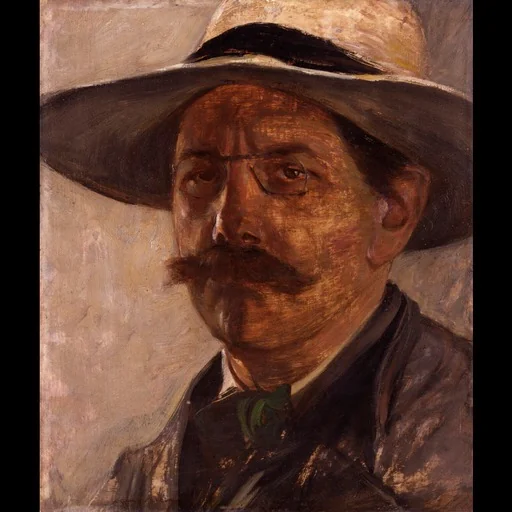
Archibald Standish Hartrick (7 August 1864 – 1 February 1950) was a Scottish painter known for the quality of his lithographic work.

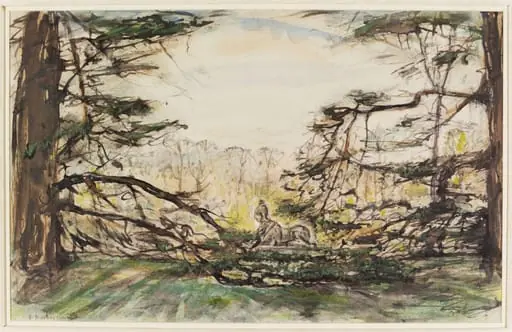 The Cedars, the Sphinx and the spring in the Grounds of Chiswick House
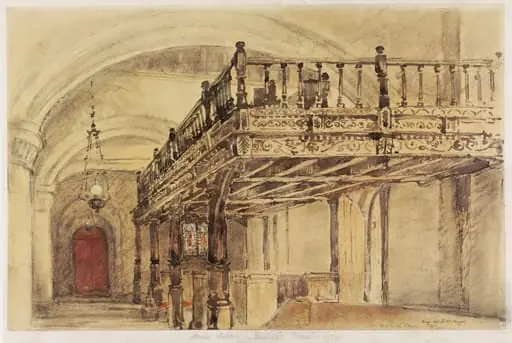 Music Gallery, St. Michael's Church, Bishop's Cleeve
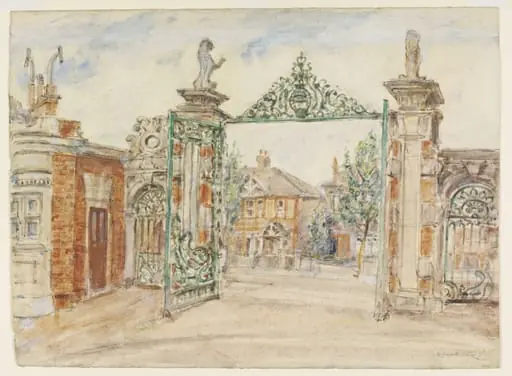 The Gateway, Boston Manor Park, Brentford.
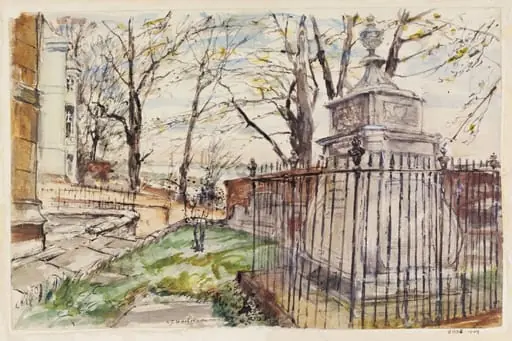 Hogarth's Tomb and Chiswick Reach
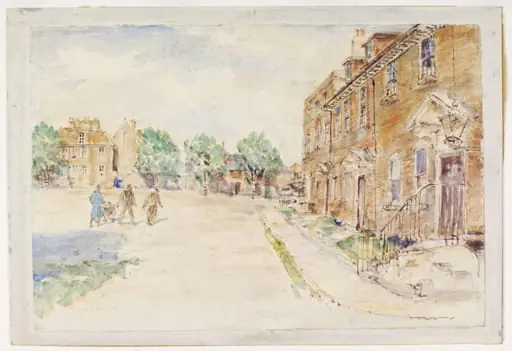 18th century houses at The Butts, Brentford
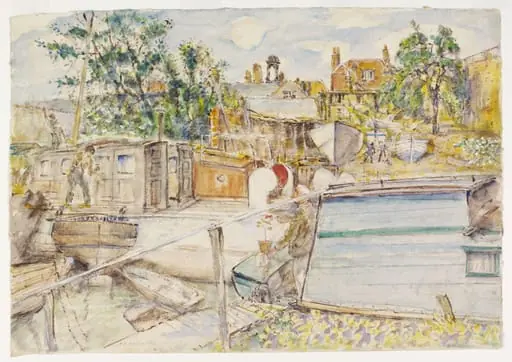 Dock of the Grand Union Canal Co., Brentford
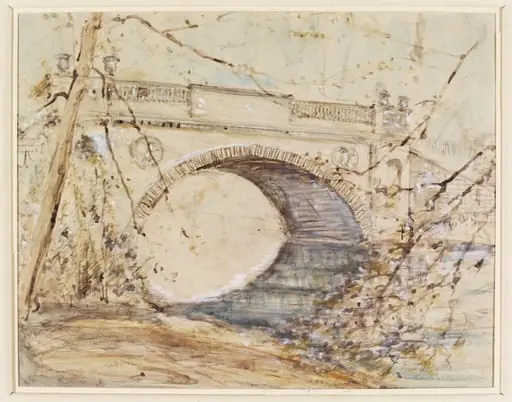 The Bridge in Chiswick House Grounds
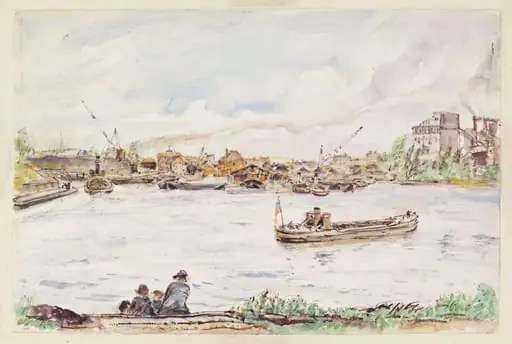 The Thames at Brentford