Artwork
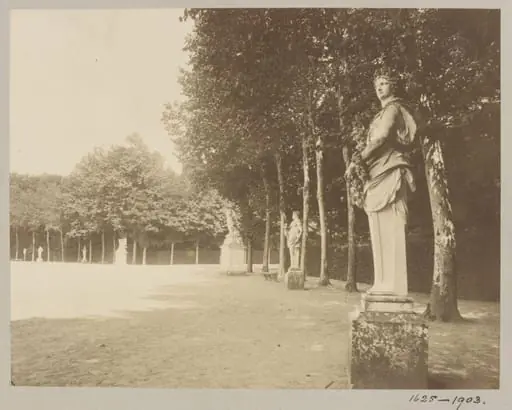
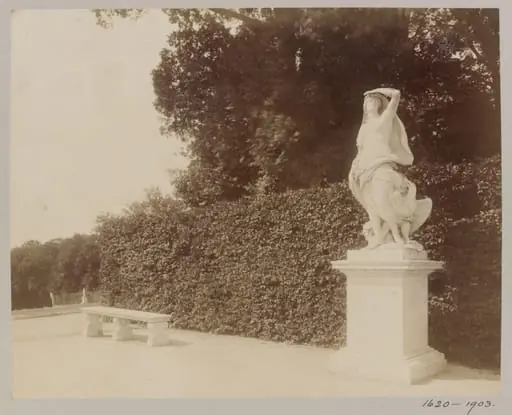
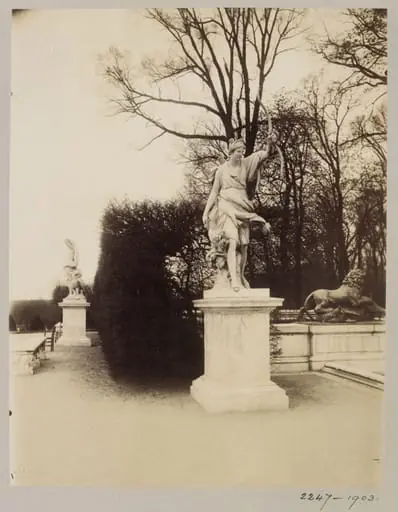
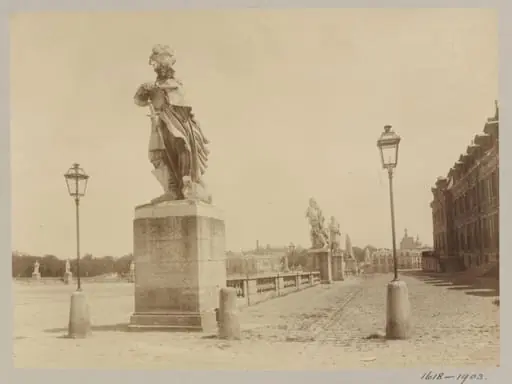
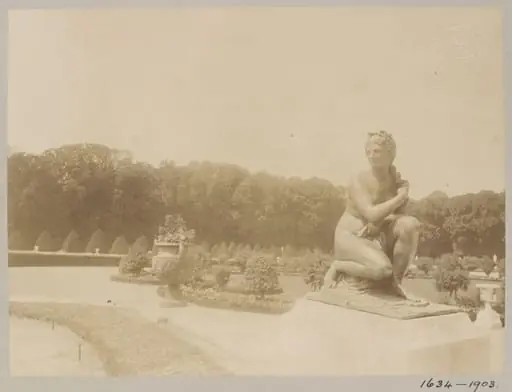
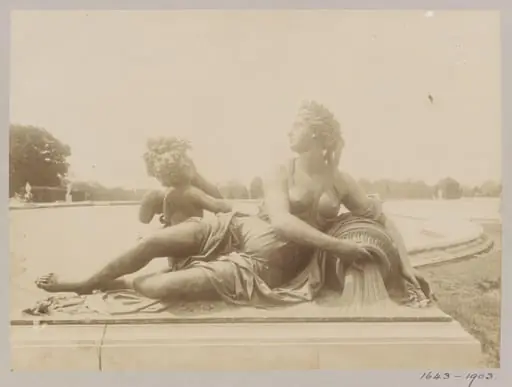
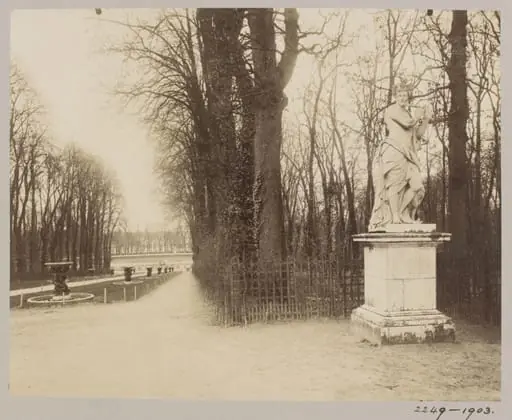
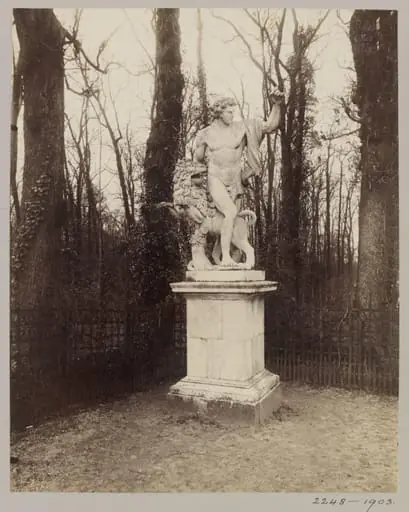
"France Triumphant", Versailles, France
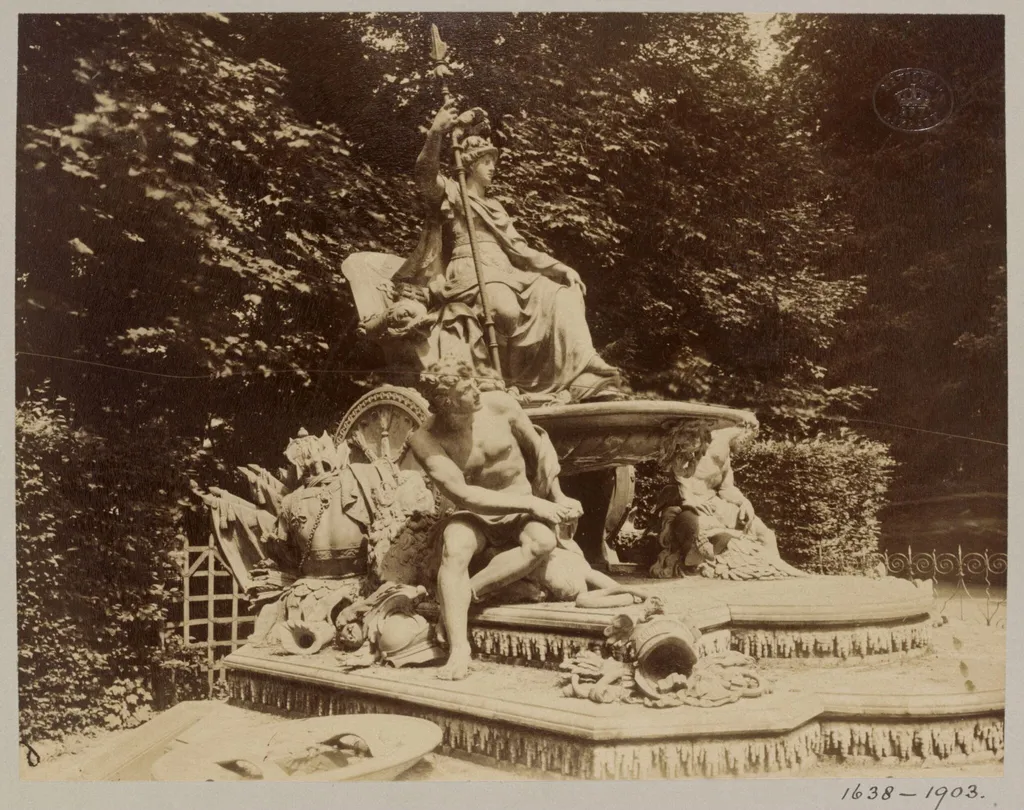
"France Triumphant", Versailles, France is a photographic photography by Jean-Eugène-Auguste Atget. It dates from 1900 and is held in the collection of the Victoria and Albert Museum. Eugène Atget began photography professionally in the late 1880s after earlier careers as a sailor and actor.
About this work
Overview
He devoted himself to documenting Paris’s disappearing architecture, focusing on narrow streets, facades, and quiet corners rather than monumental landmarks.
Eugène Atget began photography professionally in the late 1880s after earlier careers as a sailor and actor. He devoted himself to documenting Paris’s disappearing architecture, focusing on narrow streets, facades, and quiet corners rather than monumental landmarks. His work was initially commercial, aimed at artists and institutions, yet his method—patient, systematic, and unembellished—laid the groundwork for later artistic reinterpretations of his images.
Subject & Meaning
Atget’s photographs of Old Paris capture the quiet decay of medieval and early modern structures amid rapid urban renewal. He avoided grandeur, instead isolating details: wrought-iron balconies, shuttered windows, cobblestones. These images, devoid of people, evoke absence and memory, transforming architectural records into silent testimonies of a city in transition, where the past lingers in empty spaces.
Technique & Style
Atget used a large-format camera with slow emulsions, resulting in sharp detail and long exposures. His compositions often feature asymmetrical framing, reflective surfaces, and unusual angles that disrupt conventional perspective. The resulting images feel detached and observational, with a stillness that invites contemplation rather than narrative, subtly unsettling the viewer’s sense of place.
History & Provenance
Atget sold thousands of prints to museums, architects, and artists, including approximately 600 to the Victoria and Albert Museum. After his death in 1927, his archive was acquired by Berenice Abbott, who recognized its broader significance. She preserved and promoted the collection, ensuring its survival and eventual recognition beyond its original documentary intent.
Context
Atget worked during a period of intense transformation in Paris, as Haussmann’s renovations erased centuries-old neighborhoods. While official projects celebrated modernity, Atget turned his lens toward what was being lost. His work stood apart from both official documentation and artistic experimentation of his time, operating in a quiet, almost solitary space between record and revelation.
Legacy
Though largely unrecognized in his lifetime, Atget’s photographs gained new meaning after Walter Benjamin’s 1936 essay, which likened them to crime scenes—evidence of something vanished. His images became foundational for Surrealists and modern photographers drawn to ambiguity, fragmentation, and the poetic potential of the ordinary. He is now seen as a pivotal figure in shifting photography from documentation to artistic expression.
Artist & collection
Artist
Jean-Eugène-Auguste Atget spent the early 1900s photographing Versailles when tourists were scarce, turning empty courtyards and statues into quiet studies of light and weather.