Artwork
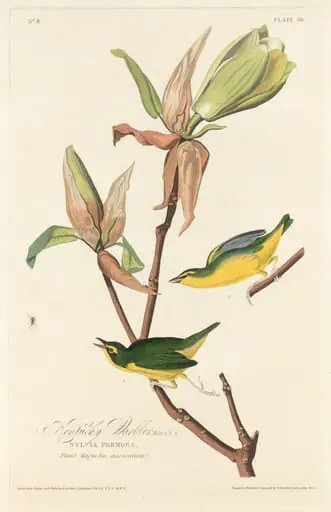
Kentucky Fly-catching Warbler
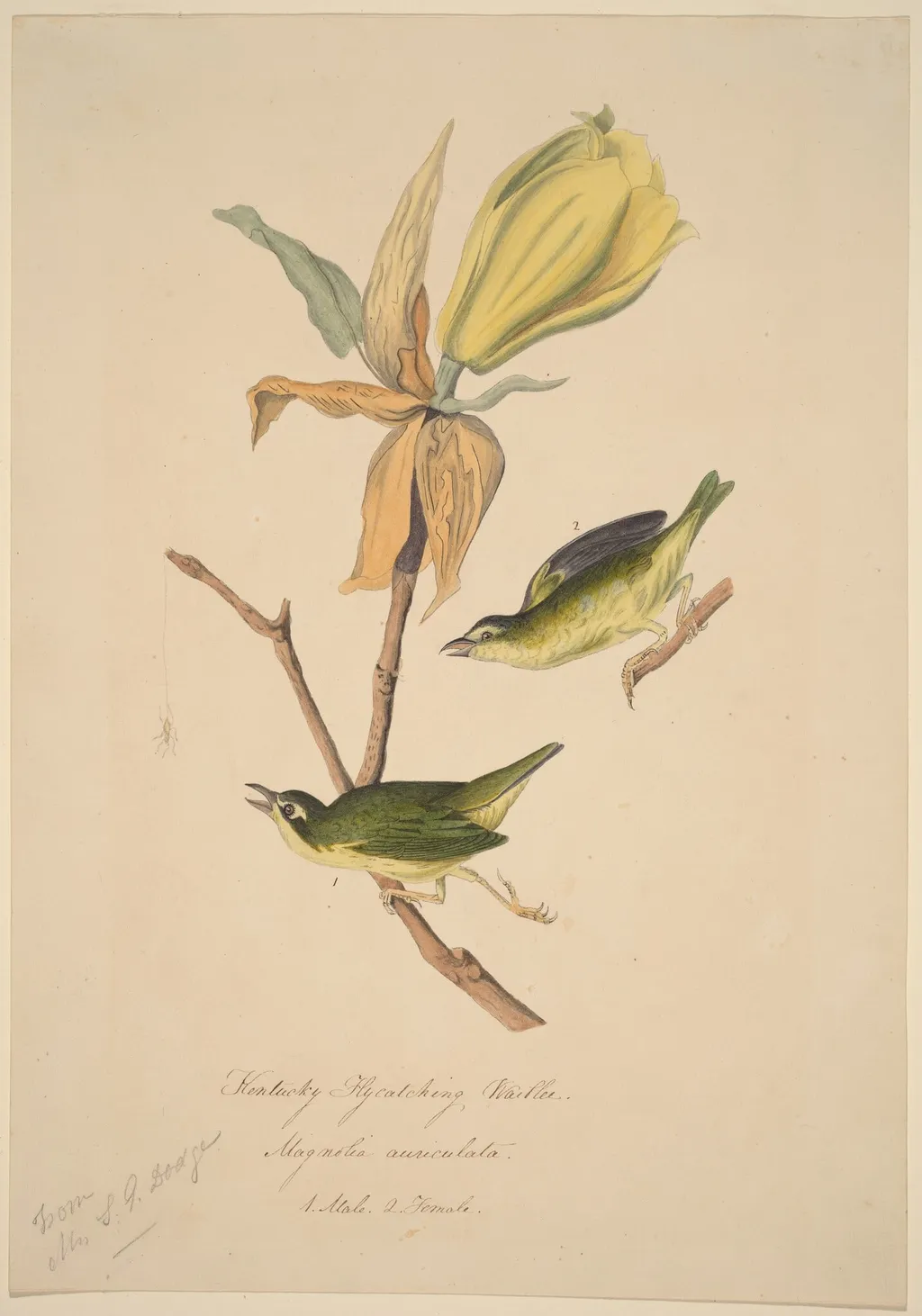
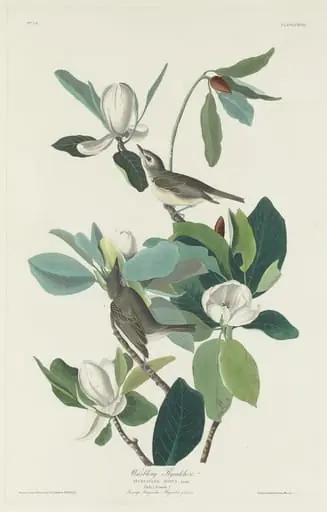
Kentucky Fly-catching Warbler is an ink drawing by the Romanticist artist John Woodhouse Audubon. It dates from 1834 and is held in the collection of the National Gallery of Art.
About this work
Overview
Executed by John Woodhouse Audubon on wove paper, the work is part of a broader effort to document North American avian life with scientific precision.
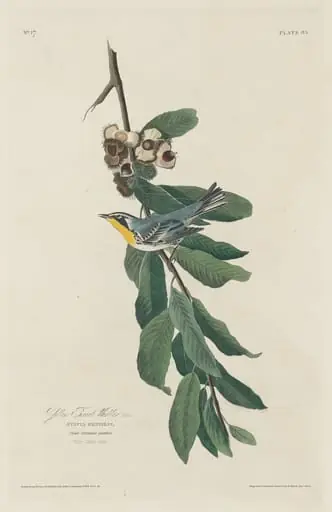
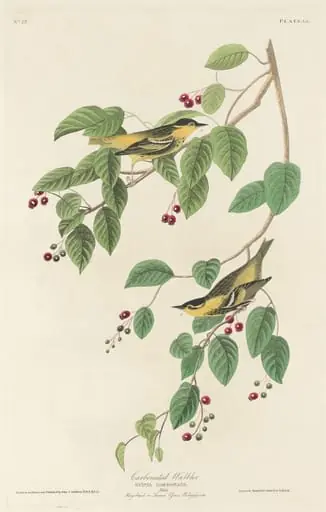
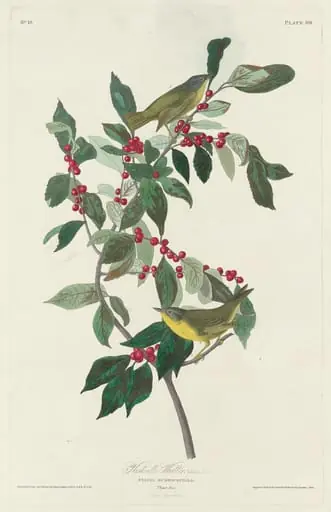
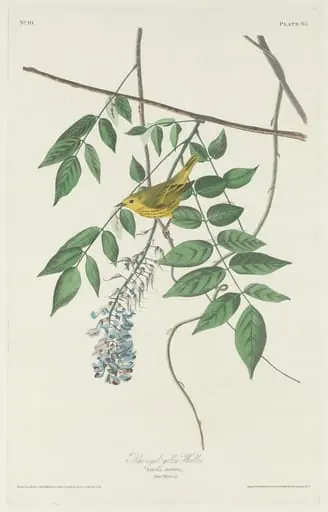
This ink and watercolor drawing, dated around 1834, depicts a pair of Kentucky Fly-catching Warblers alongside a magnolia blossom. Executed by John Woodhouse Audubon on wove paper, the work is part of a broader effort to document North American avian life with scientific precision. The composition isolates the birds and plant against a blank background, emphasizing observational clarity over decorative elements.
Subject & Meaning
The drawing presents a male and female warbler, labeled '1' and '2' respectively, perched on slender branches beside the flower of Magnolia acuminata. The birds are shown in naturalistic poses, facing slightly apart, suggesting momentary stillness between flight. The inclusion of the magnolia, a native tree, anchors the species within its ecological context, reflecting a commitment to documenting flora and fauna in relation to one another.
Technique & Style
Fine pen lines define the birds' plumage and branch structure, while translucent watercolor washes suggest subtle tonal variations in feathers and petals. The artist avoided background detail, directing attention to anatomical accuracy and texture. The use of gray and black ink alongside delicate color highlights demonstrates a methodical approach to capturing natural forms, consistent with 19th-century naturalist illustration practices.
History & Provenance
Created during John Woodhouse Audubon’s collaboration with his father, John James Audubon, this drawing likely originated as part of preparatory studies for the larger 'Birds of America' project. Though less widely known than his father’s work, John Woodhouse produced numerous illustrations for the family’s publications. The piece remains within the tradition of American natural history documentation from the 1830s.
Context
In the 1830s, American naturalists sought to catalog the continent’s biodiversity as westward expansion altered ecosystems. Audubon’s illustrations served both scientific and public audiences, offering detailed visual records before photography existed. This drawing reflects the era’s emphasis on field observation and the integration of botanical and zoological subjects to convey ecological relationships.
Legacy
Though overshadowed by his father’s fame, John Woodhouse Audubon’s contributions helped sustain the visual accuracy and ecological framing central to the Audubon legacy. His drawings, including this one, remain valuable references for ornithologists and historians studying 19th-century natural history illustration and the evolving understanding of American bird species.
Artist & collection

Artist
John Woodhouse Audubon (November 30, 1812 – February 21, 1862) was an American painter who was the second son of the ornithologist and painter John James Audubon.