Artwork
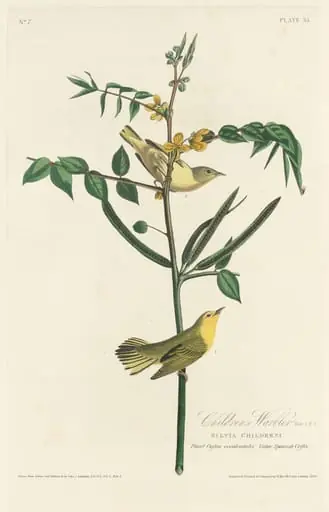
Chestnut-sided Warbler
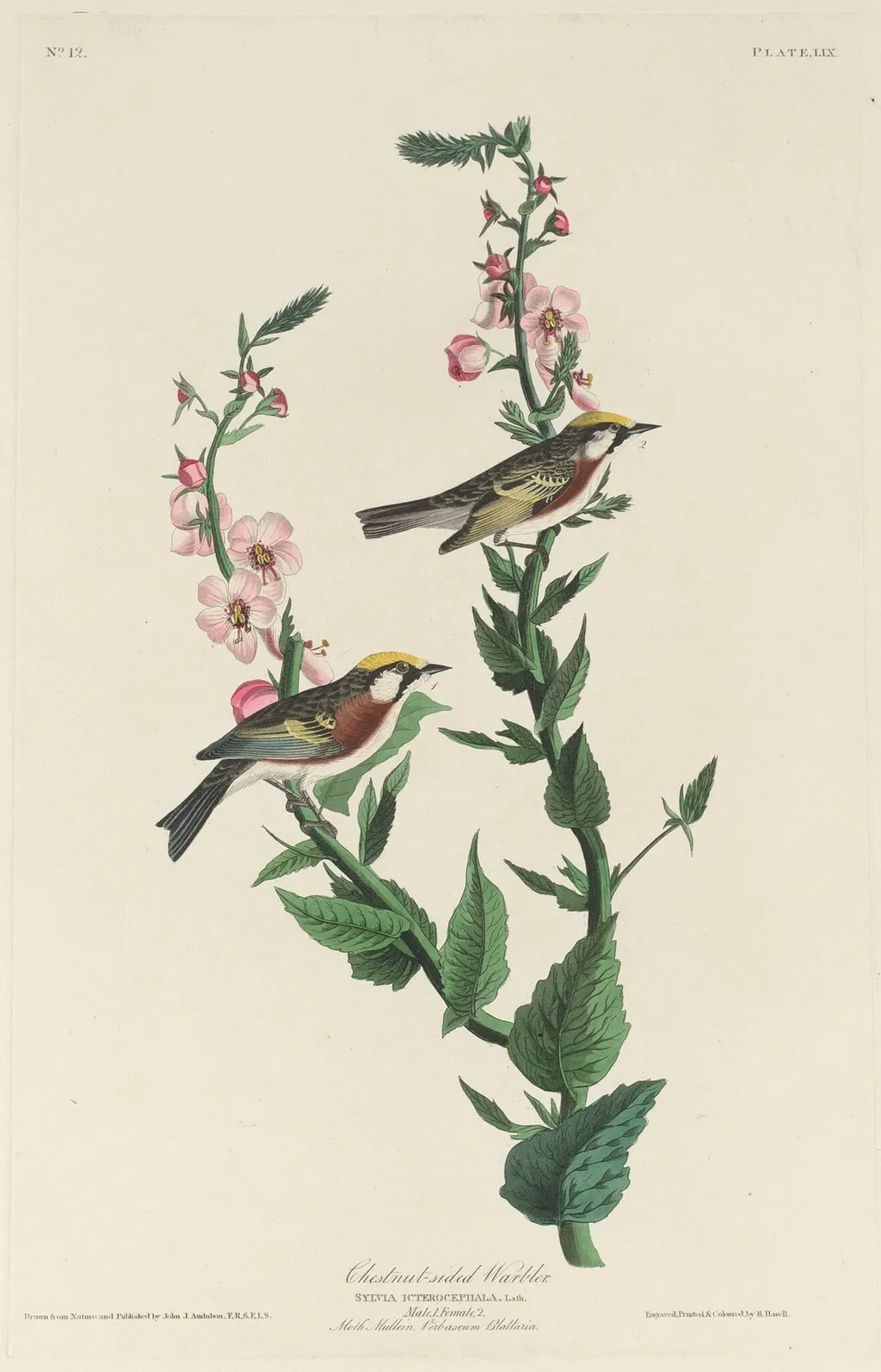
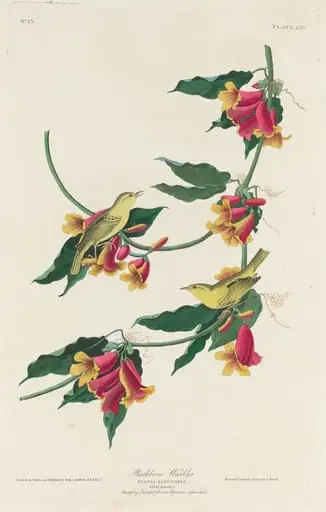
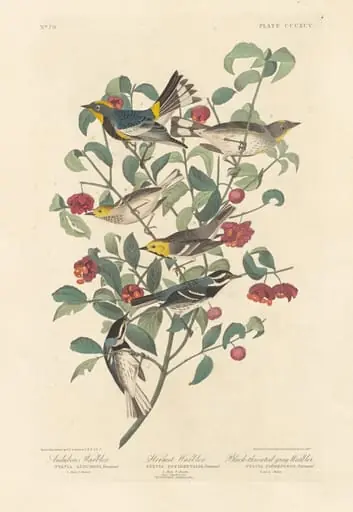
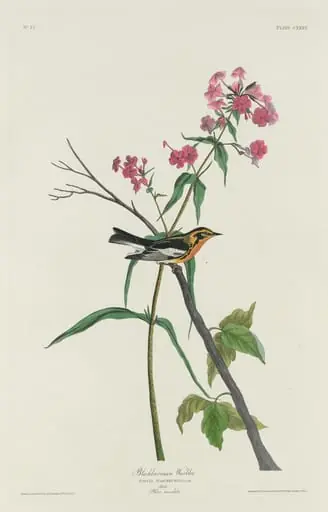
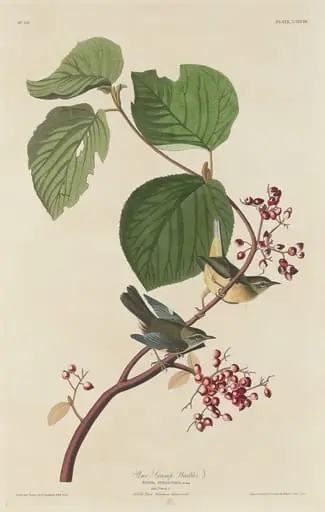
Chestnut-sided Warbler is an ink print by the Romanticist artist Robert Havell Jr.. It dates from 1829 and is held in the collection of the National Gallery of Art.
About this work
Overview
The work combines technical precision with delicate color application, characteristic of the workshop’s approach to scientific imagery.
Created in 1829 by Robert Havell Jr., this print is a hand-colored engraving and aquatint on Whatman wove paper. It belongs to a series of ornithological illustrations produced during the early 19th century, reflecting the Havell family’s long-standing role in American natural history printing. The work combines technical precision with delicate color application, characteristic of the workshop’s approach to scientific imagery.
Subject & Meaning
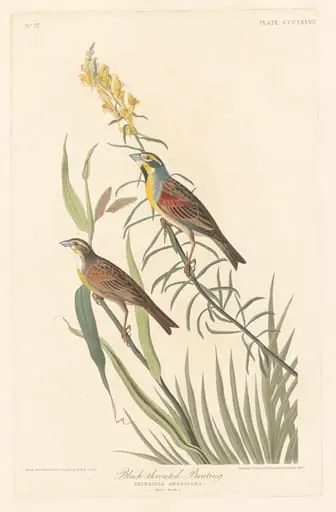
The image portrays two Chestnut-sided Warblers perched on a stalk of Verbascum blattaria, commonly known as moth mullein. The birds, distinguished by their yellow underparts, black wings, and striped heads, are rendered with anatomical accuracy. The inclusion of the plant provides ecological context, suggesting the bird’s natural habitat rather than presenting it as a detached specimen.
Technique & Style
Havell employed engraving and aquatint methods to achieve fine detail and subtle tonal gradations. The wove paper’s smooth surface allowed for even ink distribution and precise hand-coloring. Veins in the leaves and individual petals of the flowers are rendered with meticulous line work, while the birds’ plumage shows layered washes to suggest texture without overt brushwork.
History & Provenance
Robert Havell Jr. continued the family tradition established by his father, Robert Havell the Elder, and uncle, Luke Havell, who were active in London and later in Philadelphia. Their workshop specialized in translating naturalist drawings into printed formats for scientific audiences. This print likely originated as part of a larger ornithological publication, though its exact provenance within that series remains undocumented.
Context
Produced during a period of growing interest in American natural history, the print reflects the influence of European scientific illustration traditions adapted to North American subjects. Havell’s work coincided with the publication of Audubon’s *Birds of America*, though his style was more restrained and less theatrical, emphasizing clarity over dramatic effect.
Legacy
The Havell family’s prints remain valued for their technical fidelity and contribution to early American natural history documentation. While less widely known than Audubon’s, Havell’s illustrations provided accessible, accurate references for scientists and collectors. This print exemplifies the quiet, methodical approach that underpinned much 19th-century scientific publishing.
Artist & collection

Artist
The Havell family of Reading, Berkshire, England, included a number of notable engravers, etchers and painters, as well as writers, publishers, educators, and musicians.