Artwork
Canada Warbler
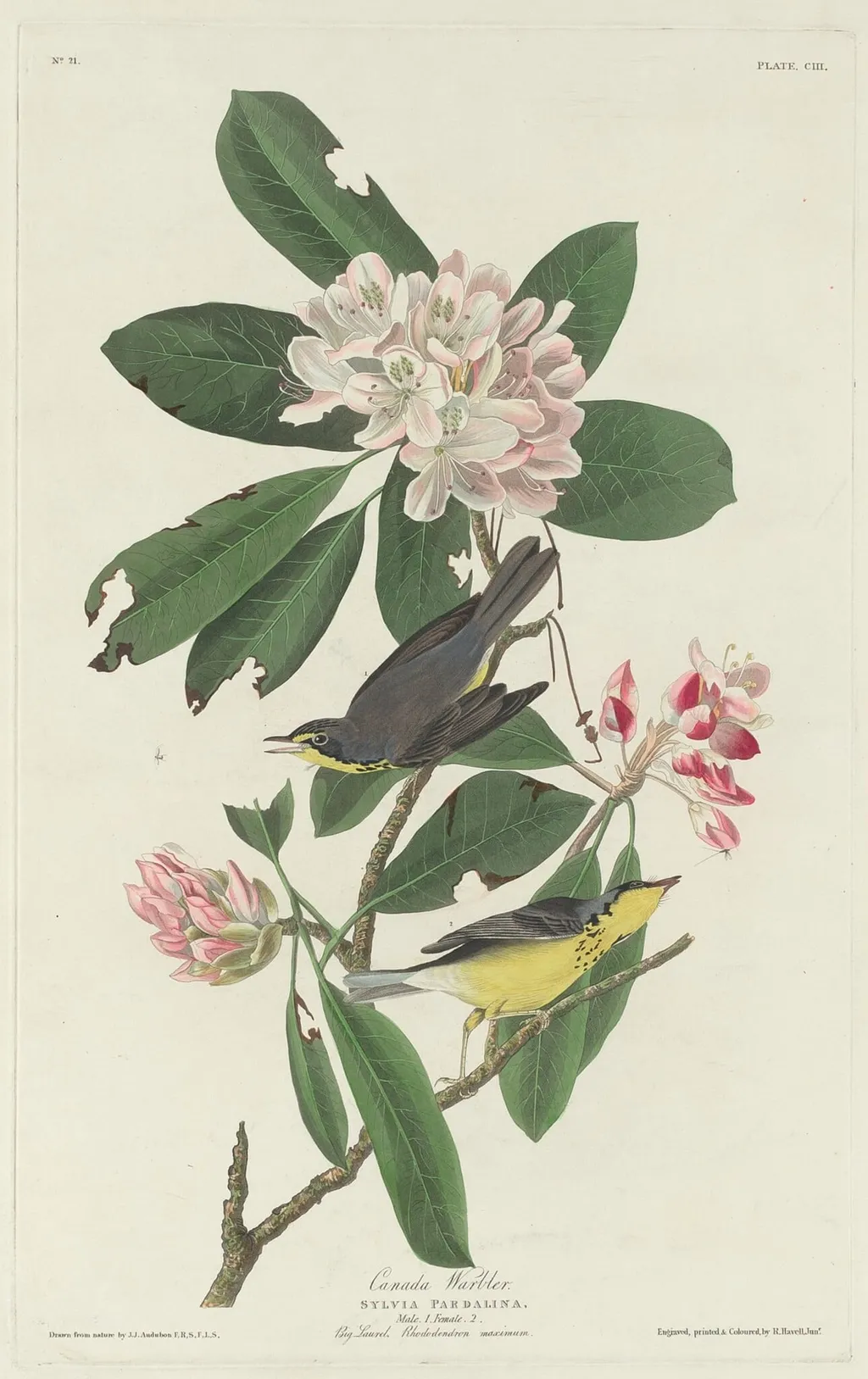
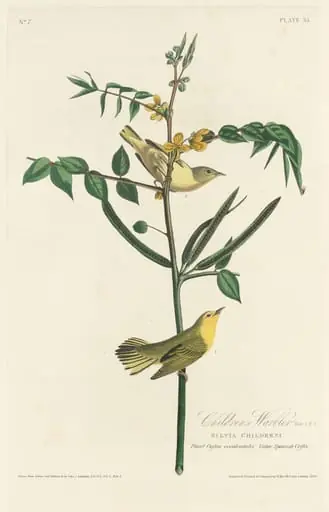
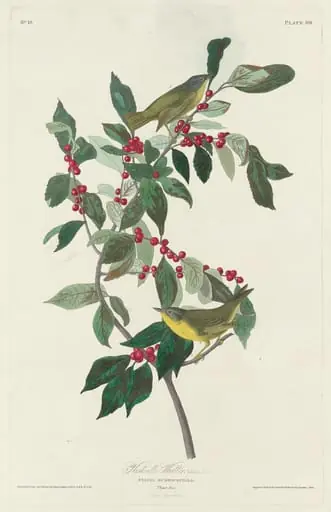
Canada Warbler is an ink print by the Romanticist artist Robert Havell Jr.. It dates from 1831 and is held in the collection of the National Gallery of Art.
About this work
Overview
The image belongs to a broader tradition of scientific illustration, where accuracy and aesthetic detail were equally valued in documenting avian species.
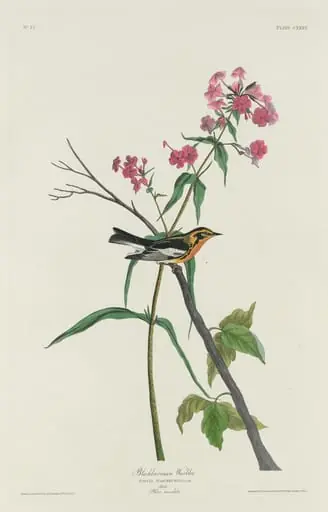
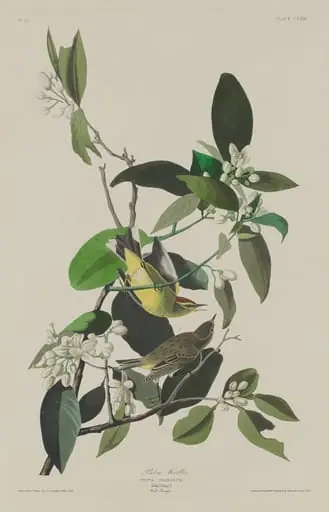
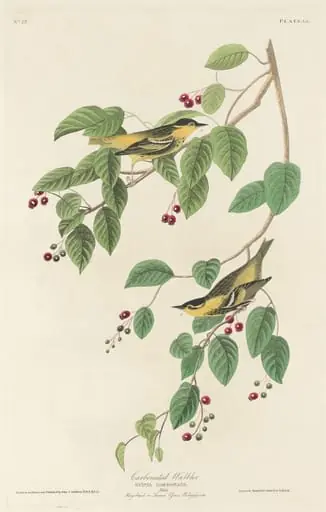
Created in 1831 by Robert Havell Jr., this hand-colored engraving and aquatint on Whatman wove paper depicts a Canada Warbler in a naturalistic setting. Havell, part of a family renowned for printmaking, executed the work with precision using traditional techniques of the time. The image belongs to a broader tradition of scientific illustration, where accuracy and aesthetic detail were equally valued in documenting avian species.
Subject & Meaning
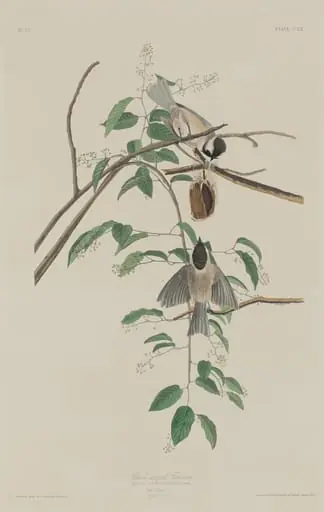
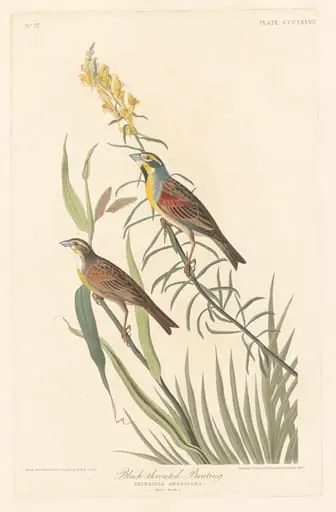
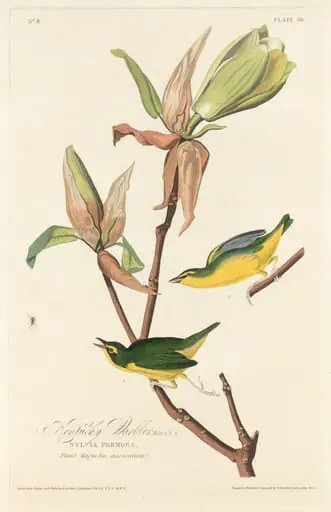
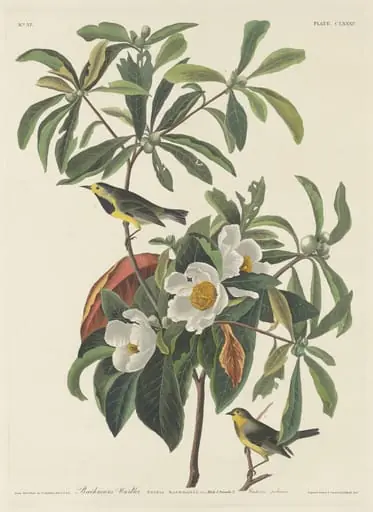
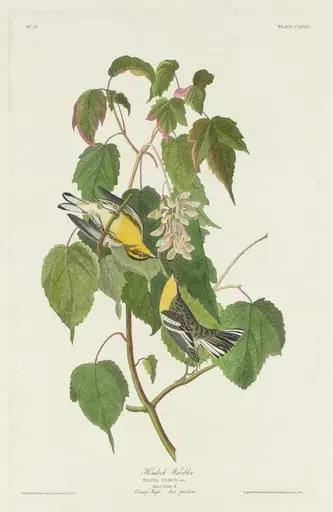
The print portrays two Canada Warblers perched on a branch amid foliage and blossoms. One bird displays a dark upper body with a yellow breast, while the other is more vividly yellow, marked with black speckles. The inclusion of pink and red flowers and deeply veined green leaves suggests a habitat study rather than a purely taxonomic record, reflecting an interest in the bird’s ecological context alongside its physical form.
Technique & Style
Havell employed engraving and aquatint to achieve fine detail and tonal variation. The feathers are rendered with delicate, controlled lines, while shading gives volume to the birds’ forms. The leaves and petals show subtle gradations of color, applied by hand after printing. This method allowed for both scientific clarity and visual richness, aligning with the period’s standards for natural history imagery.
History & Provenance
The print was produced during a period of heightened interest in North American ornithology. Havell, known for his work on John James Audubon’s *Birds of America*, contributed to a major publishing project that sought to document the continent’s wildlife. This piece likely originated as part of that larger endeavor, though its specific provenance prior to modern collections remains undocumented.
Context
In the early 19th century, natural history illustration merged scientific inquiry with artistic craftsmanship. Printmakers like Havell worked closely with naturalists to translate specimens into accessible images for scholars and the public. The Canada Warbler print reflects this collaboration, capturing both biological accuracy and the aesthetic sensibilities of the era’s visual culture.
Legacy
Havell’s work contributed to the standardization of ornithological illustration in the 19th century. His attention to anatomical detail and environmental context influenced subsequent generations of natural history artists. Though no longer used for scientific classification, these prints remain valued as historical records of early American wildlife documentation and printmaking technique.
Artist & collection

Artist
The Havell family of Reading, Berkshire, England, included a number of notable engravers, etchers and painters, as well as writers, publishers, educators, and musicians.