Artwork
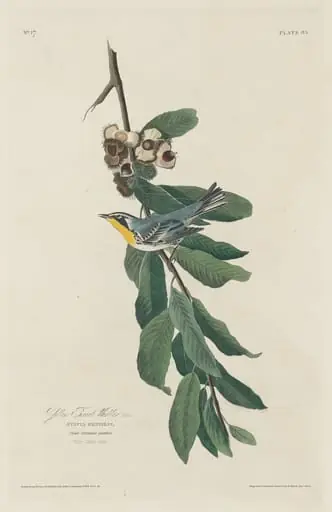
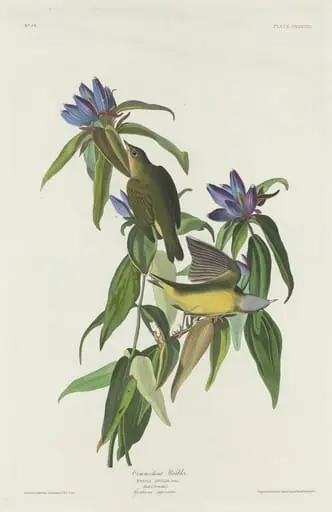
Blue-eyed Yellow Warbler
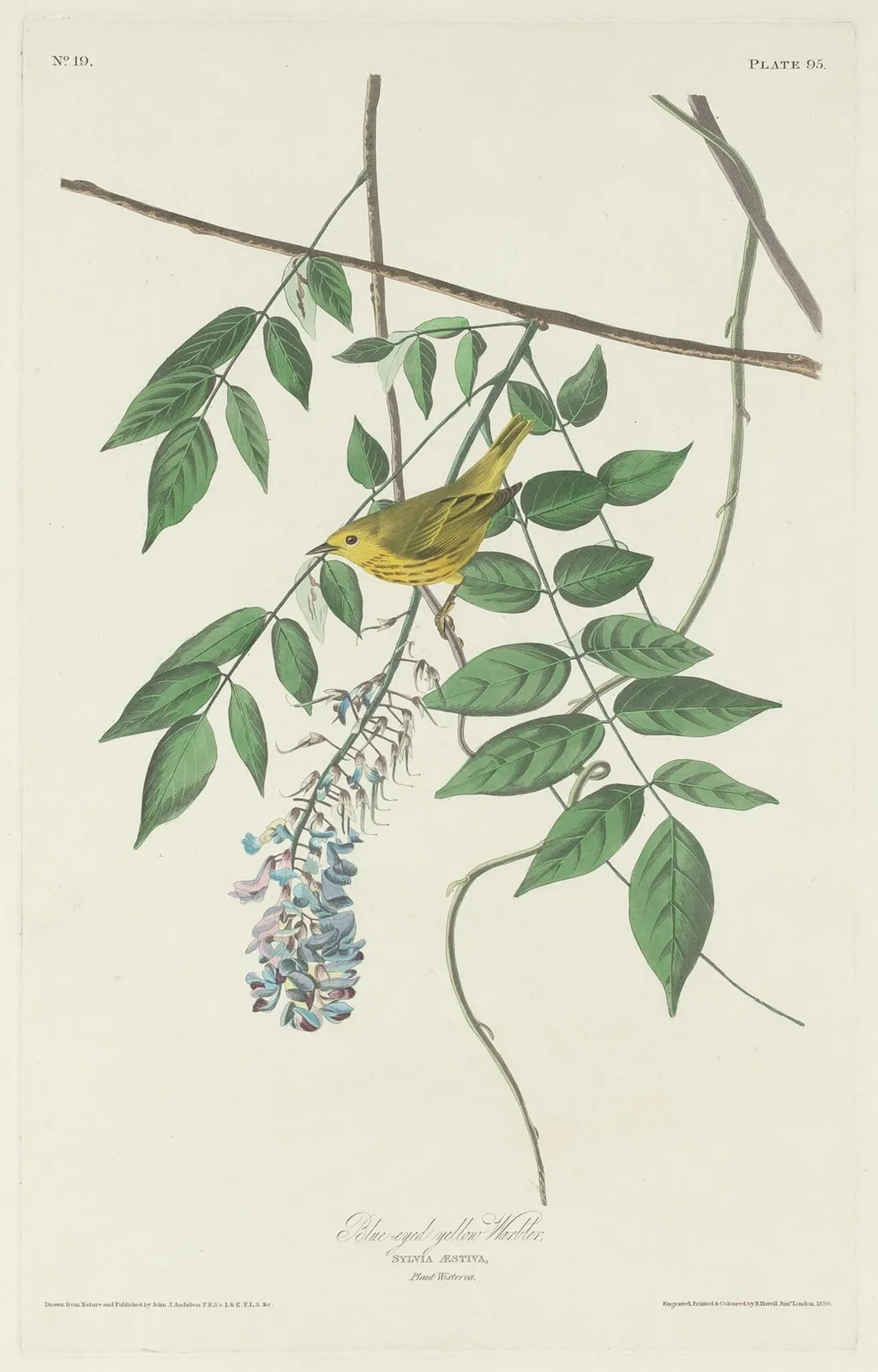
Blue-eyed Yellow Warbler is an ink print by the Romanticist artist Robert Havell Jr.. It dates from 1830 and is held in the collection of the National Gallery of Art.
About this work
Overview
The work combines technical precision with naturalistic observation, characteristic of the period’s scientific illustration practices.
Created in 1830 by Robert Havell Jr., this print is a hand-colored engraving and aquatint on Whatman wove paper. It belongs to a series of ornithological illustrations produced during the early 19th century, reflecting the Havell family’s established role in British printmaking. The work combines technical precision with naturalistic observation, characteristic of the period’s scientific illustration practices.
Subject & Meaning
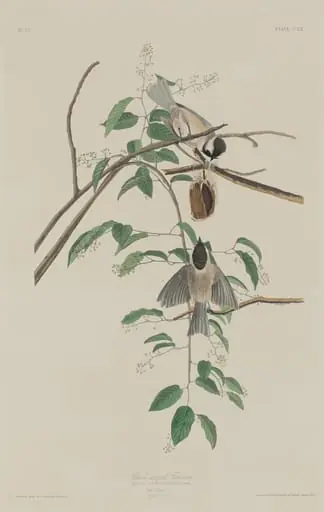
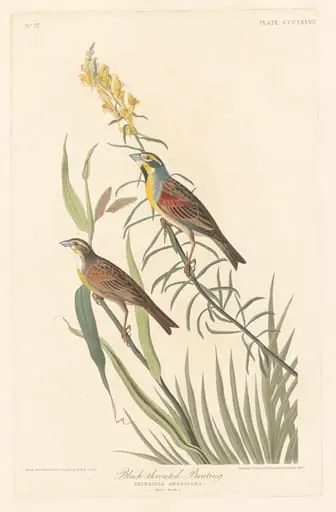
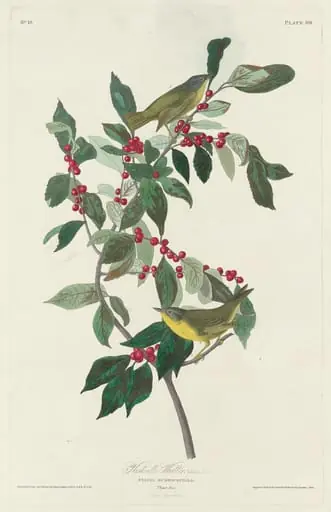
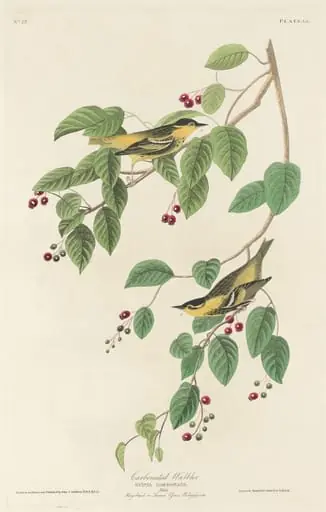
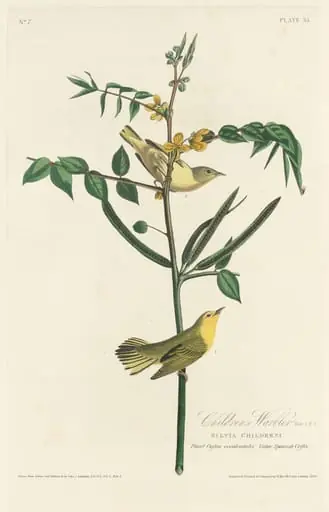
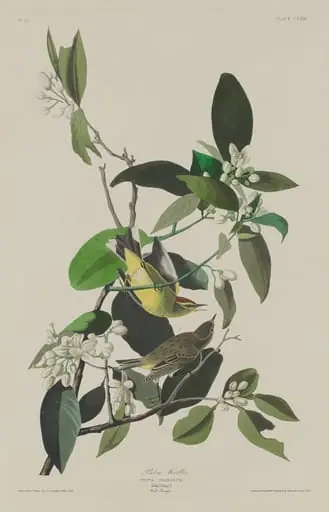
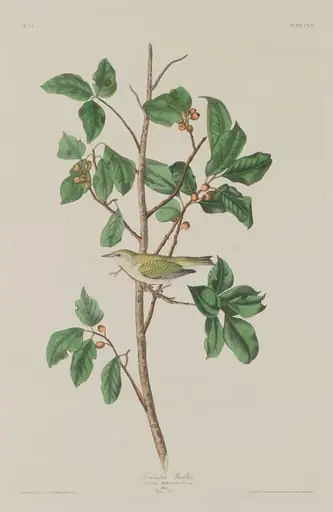
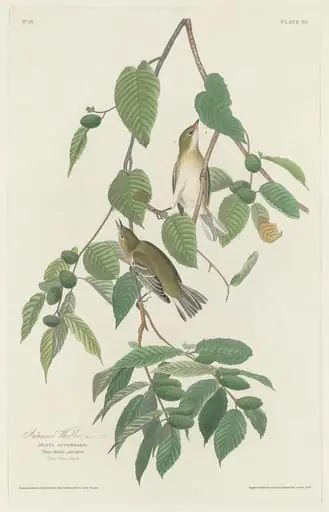
The image portrays a yellow warbler with pale blue eyes, perched on a slender branch amid green foliage and drooping purple-blue blossoms. The bird’s vivid plumage and delicate features are rendered with attention to anatomical accuracy, suggesting a purpose rooted in natural history rather than decorative art. The inclusion of native flora implies an interest in ecological context, though the species and plants are not identified by scientific name.
Technique & Style
Havell employed engraving and aquatint to achieve fine detail and subtle tonal gradations. The feathers and leaves are defined by meticulous linework, while hand-coloring applied with water-based pigments gives the bird and flowers a soft yet distinct presence. The plain white background eliminates distraction, directing focus to the subject. The technique reflects the Havell family’s mastery of print methods developed for naturalist publications.
History & Provenance
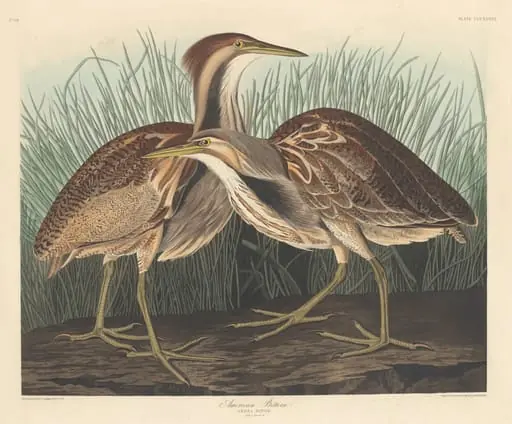
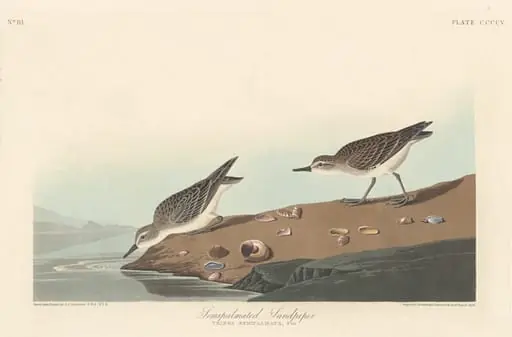
Robert Havell Jr. was part of a multi-generational family of engravers based in Reading, Berkshire, who worked extensively on scientific publications. His father, Robert Havell the Elder, and uncle Luke Havell were also printmakers. This print likely originated as part of a larger ornithological project, possibly linked to John James Audubon’s works, for which the Havells were principal engravers in the British edition.
Context
In the early 1800s, detailed natural history illustrations were in demand as scientific exploration expanded. Printmakers like the Havells bridged art and science, producing images for collectors, institutions, and publications. While the work shows no direct connection to Indian art, the family’s broader engagement with global natural history reflects the era’s imperial and scholarly networks.
Legacy
The print stands as an example of 19th-century scientific illustration at its most refined. Though not widely known outside specialist circles, it contributes to the historical record of how naturalists documented biodiversity before photography. The Havell family’s technical contributions helped shape the visual language of ornithological publishing for decades.
Artist & collection

Artist
The Havell family of Reading, Berkshire, England, included a number of notable engravers, etchers and painters, as well as writers, publishers, educators, and musicians.