Artwork
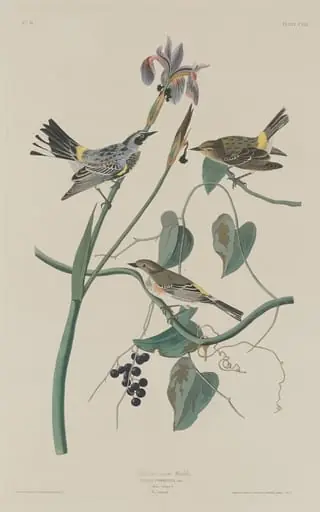
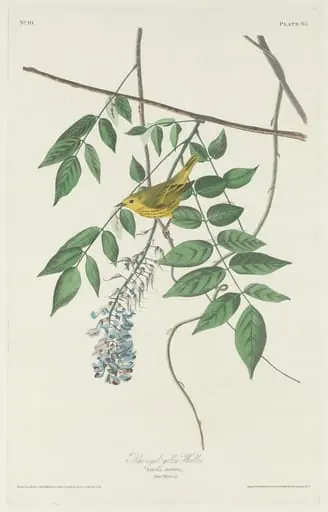
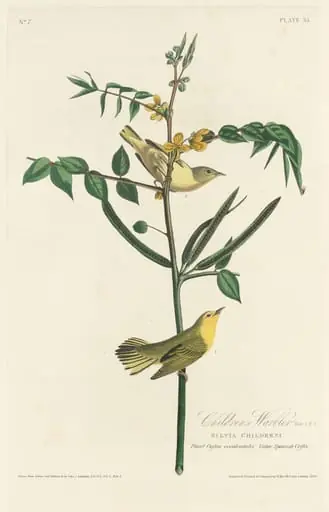
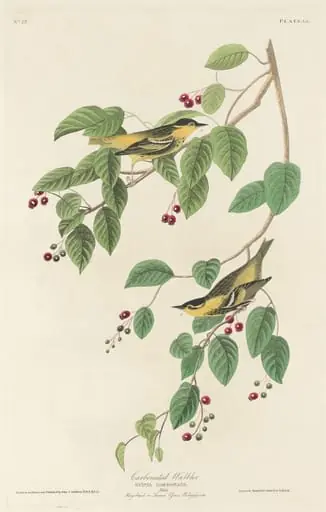
Yellow-throated Warbler
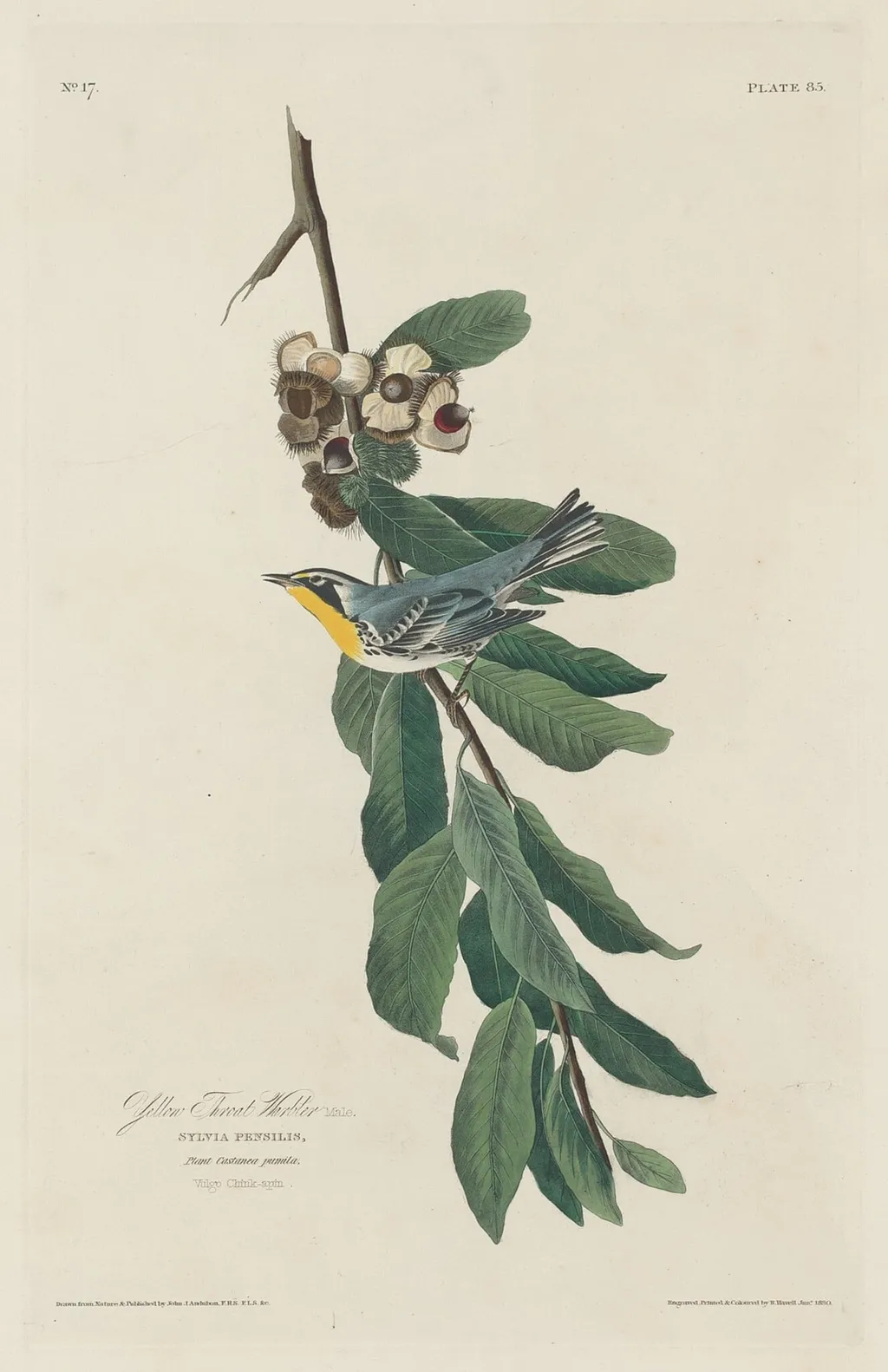
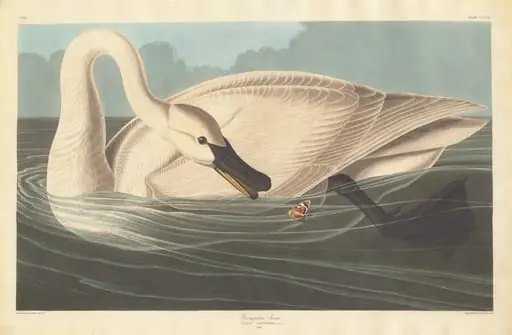
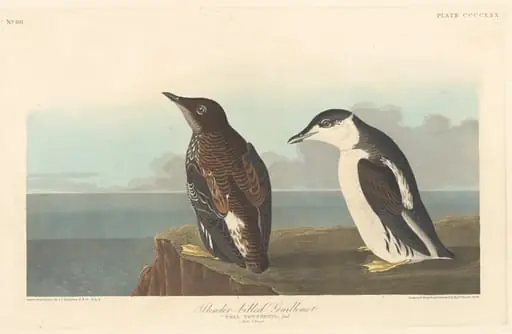
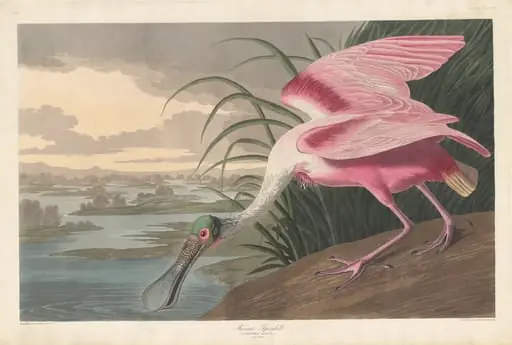
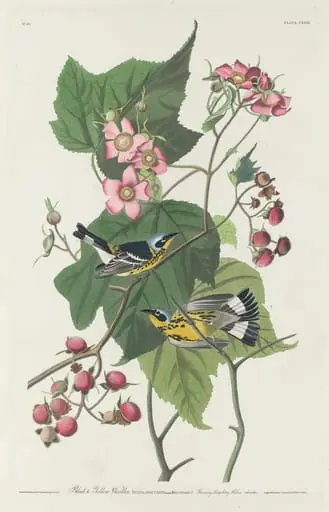
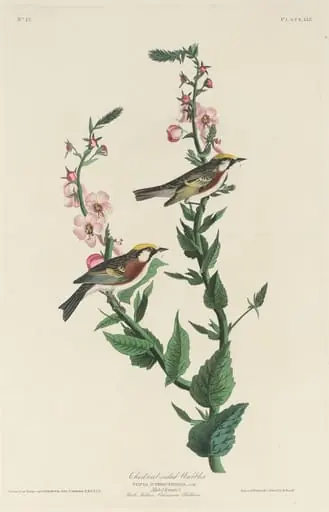
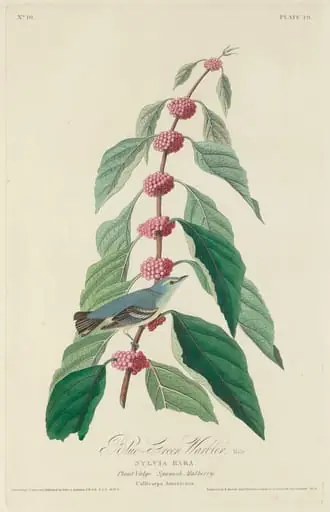
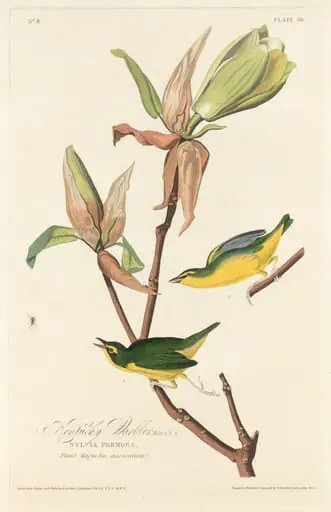
Yellow-throated Warbler is an ink print by the Romanticist artist Robert Havell Jr.. It dates from 1830 and is held in the collection of the National Gallery of Art.
About this work
Overview
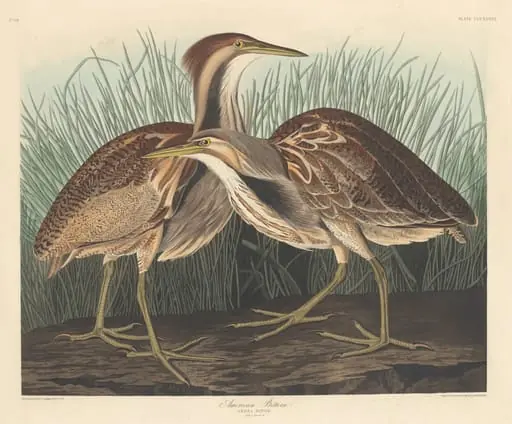
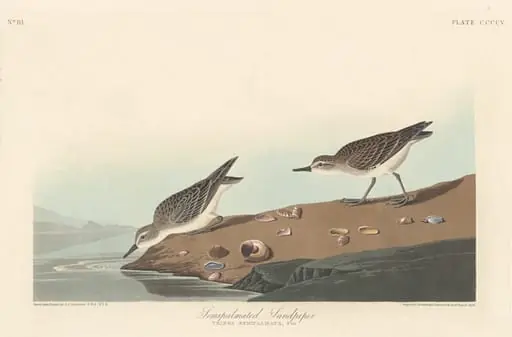
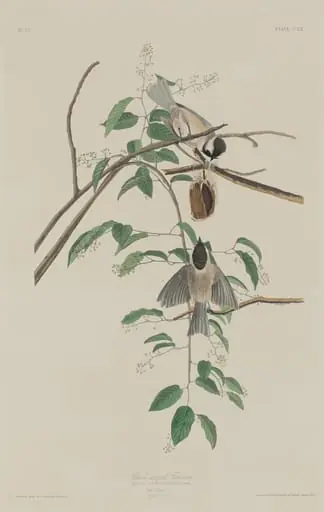
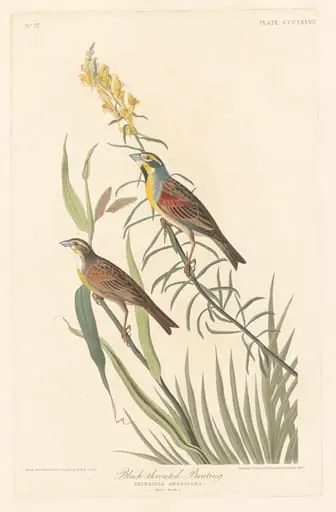
It belongs to a series of ornithological illustrations produced during a period of heightened interest in natural history.
Created in 1830 by Robert Havell Jr., this print is a hand-colored engraving and aquatint on Whatman wove paper. It belongs to a series of ornithological illustrations produced during a period of heightened interest in natural history. Havell, part of a family of English printmakers, specialized in technical precision and delicate color application, contributing to scientific visual records of North American bird species.
Subject & Meaning
The image portrays a yellow-throated warbler perched on a slender branch, its vivid throat and striped plumage rendered with clarity. Surrounding elements—pinecones and small blossoms—anchor the bird in its natural habitat. The composition reflects a scientific intent to document species accurately, while the inclusion of flora suggests ecological context, aligning with early 19th-century naturalist practices that sought to capture organisms within their environments.
Technique & Style
Havell employed engraving for fine linear detail and aquatint to achieve subtle tonal gradations, particularly in the foliage and feather textures. Hand-coloring was applied with precision, enhancing the bird’s bright yellow throat and contrasting black-and-white markings. The use of Whatman wove paper, known for its smooth surface, allowed for crisp impressions and delicate washes, typical of high-quality natural history prints of the era.
History & Provenance
Robert Havell Jr. was a member of a prominent English printmaking family based in Reading, Berkshire. He worked extensively on natural history publications, often collaborating with American ornithologists. This print likely originated as part of a larger illustrated volume on North American birds, distributed to scientific institutions and private collectors. Its survival in good condition reflects its value within early naturalist circles.
Context
In the early 1800s, detailed visual documentation of wildlife became integral to scientific inquiry. Artists like Havell bridged art and science, producing images used in academic texts and museum collections. The emphasis on botanical accompaniments and anatomical accuracy mirrored broader Enlightenment ideals, where observation and representation were central to understanding the natural world.
Legacy
Havell’s prints remain referenced in studies of 19th-century natural history illustration. While later photographic methods replaced hand-colored engravings, his work exemplifies the craftsmanship and observational rigor of pre-photographic biological documentation. These images continue to inform historical understanding of how species were perceived and recorded before modern taxonomy became standardized.
Artist & collection

Artist
The Havell family of Reading, Berkshire, England, included a number of notable engravers, etchers and painters, as well as writers, publishers, educators, and musicians.