Artwork
14 Juillet, Rue de Belleville, minuit
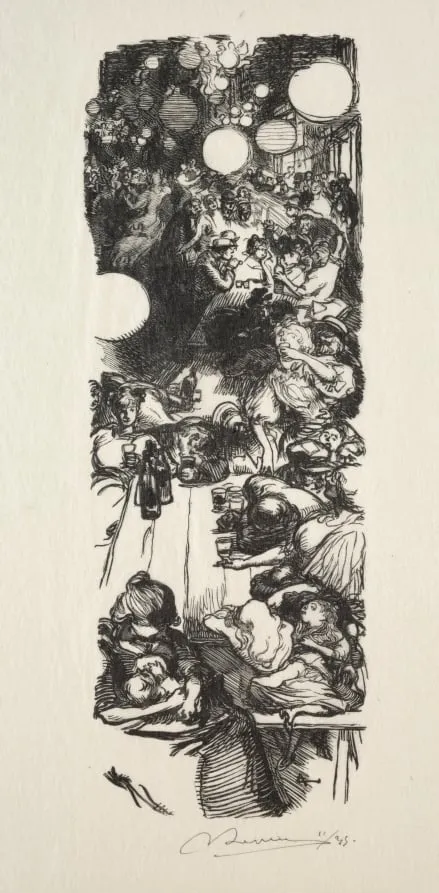
14 Juillet, Rue de Belleville, minuit is a print by the Impressionist artist Auguste Lepère. It dates from 1889 and is held in the collection of the Cleveland Museum of Art.
About this work
Overview
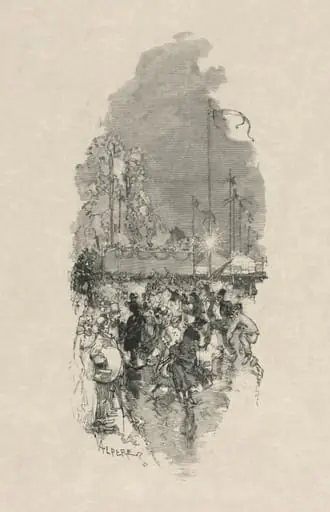
Created in 1889 by French artist Auguste Louis Lepère, *14 Juillet, Rue de Belleville, minuit* is a print that captures a nocturnal street scene on France’s national holiday. The composition presents a densely populated boulevard in the Belleville quarter of Paris, illuminated by the intermittent glow of streetlamps and window panes.
Subject & Meaning
The image records the bustle of Bastille Day celebrations after dark, with a multitude of pedestrians occupying the pavement. Figures are shown seated, strolling, arguing, or dancing, suggesting a spontaneous, communal revelry that animates the otherwise shadowed urban environment.
Technique & Style
Lepère employed rapid, sketch‑like lines characteristic of his wood‑engraving revival, allowing the print to convey movement and disorder. Contrasting patches of light break through the darkness, highlighting faces and gestures while deeper shadows preserve the night’s atmosphere, emphasizing the immediacy of the moment.
Context
At the close of the 19th century, Lepère was instrumental in reintroducing wood engraving to European art, and this work exemplifies his commitment to depicting everyday life with a realist eye. The print reflects contemporary interest in urban scenes and public celebrations, situating the artist within the broader realist movement of the period.
Artist & collection
Artist
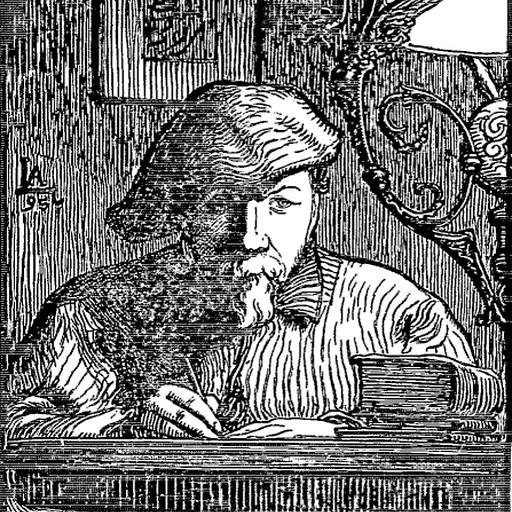
Louis-Auguste Lepère (30 November 1849 – 20 November 1918) was a French painter and etcher. Lepère is also considered a leader in the creative revival of wood engraving in Europe.