Artwork
Festival
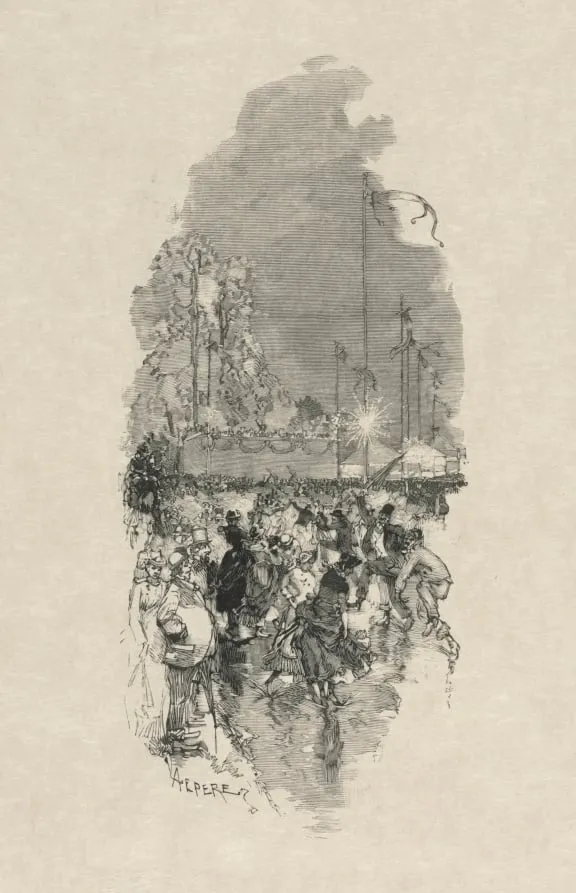
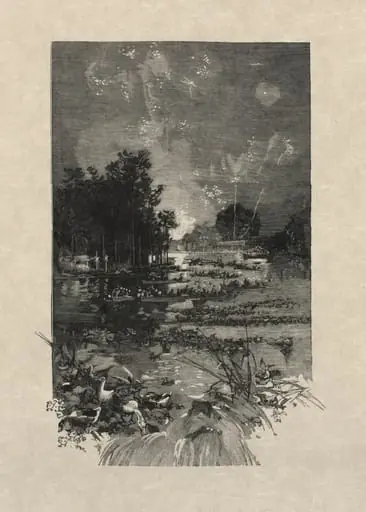
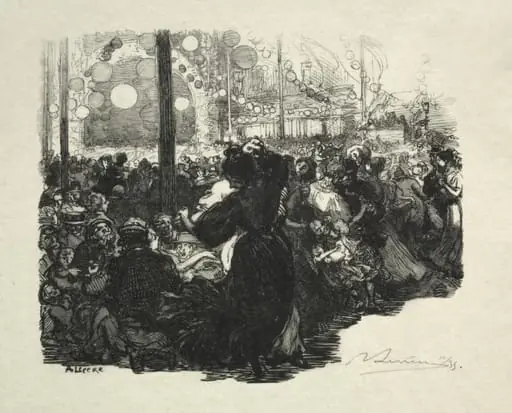
Festival is a print by the Impressionist artist Auguste Lepère. It dates from 1894 and is held in the collection of the Cleveland Museum of Art.
About this work
Overview
This print captures a nocturnal public celebration, reflecting his technical mastery and interest in everyday social life.
Auguste Louis Lepère, a French artist active in the late 19th century, produced *Festival* in 1894 as a wood engraving. Though trained as a painter, he became a central figure in the revival of woodcut techniques in Europe. This print captures a nocturnal public celebration, reflecting his technical mastery and interest in everyday social life. The work is part of the permanent collection at The Cleveland Museum of Art.
Subject & Meaning
The scene portrays a nighttime gathering, likely a local festival or communal event, with figures engaged in dance and conversation. Lepère avoids idealization, instead presenting ordinary people in a moment of shared joy. The absence of clear narrative details invites interpretation, emphasizing atmosphere over specific event. The work suggests a quiet reverence for public rituals and collective experience in modern French society.
Technique & Style
Lepère employed wood engraving, a labor-intensive method involving incised lines on hardwood blocks. He manipulated tonal contrasts through fine, varied lines to suggest light from lanterns and torches against deep shadows. The composition’s energy arises from dynamic, rhythmic mark-making rather than brushwork, distinguishing it from painting. His approach merges precision with expressive spontaneity, characteristic of his revivalist technique.
History & Provenance
Created during a resurgence of interest in hand-printed wood engravings, *Festival* aligns with Lepère’s efforts to elevate the medium beyond commercial reproduction. He collaborated with printers and promoted the craft through exhibitions and publications. The print entered The Cleveland Museum of Art’s collection in the 20th century, where it remains as part of their holdings in European graphic arts from the fin de siècle period.
Context
In the 1890s, European artists sought alternatives to industrial printing, turning to traditional methods as a reaction to mass production. Lepère’s work emerged alongside movements like the Arts and Crafts revival and Japonisme, which valued craftsmanship and flat, decorative composition. His focus on folk celebrations mirrored broader cultural interest in regional identity and communal life amid urbanization.
Legacy
Lepère’s technical innovations in wood engraving influenced a generation of printmakers who valued the medium’s tactile qualities. While not widely known today, his prints are recognized in scholarly circles for bridging 19th-century revivalism and early 20th-century modernist printmaking. *Festival* stands as a testament to his commitment to redefining print as a serious artistic form, not merely a reproductive tool.
Artist & collection
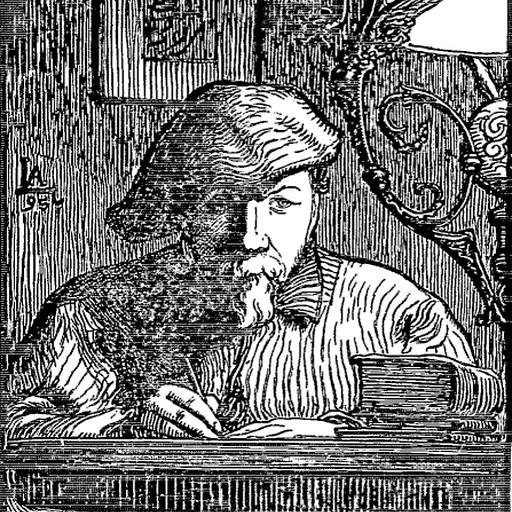
Artist
Louis-Auguste Lepère (30 November 1849 – 20 November 1918) was a French painter and etcher. Lepère is also considered a leader in the creative revival of wood engraving in Europe.

 The Festival for the victims of duty
 Fair, Lyme, -Regis
 14 Juillet, Rue de Belleville, 10 heures
 The Fair
 Oberbaum-Brucke, Berlin
 Route de Versailles
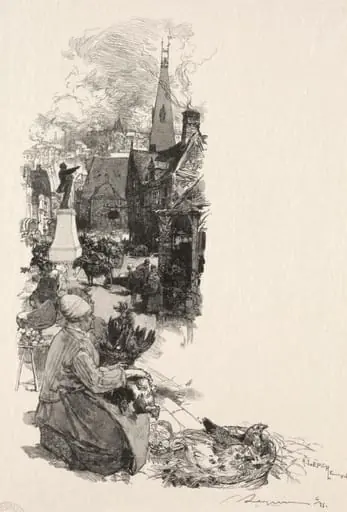 Statue d'un Grand Homme
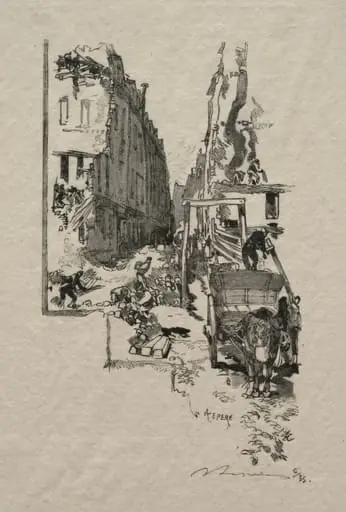 La Rue Victor Cousin
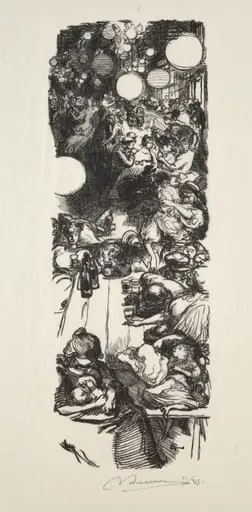 14 Juillet, Rue de Belleville, minuit
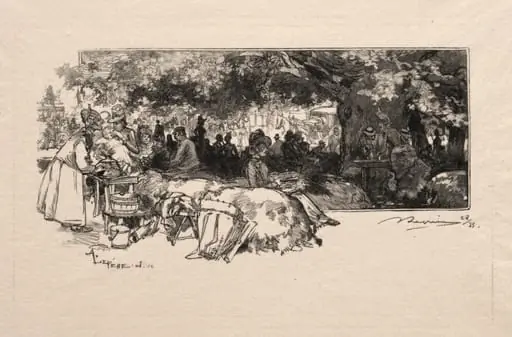 Cantine de la Mère Pichard
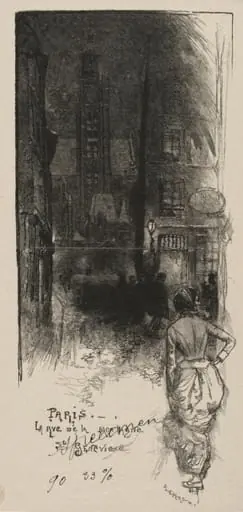 Rue de la Montagne, St. Geneviève
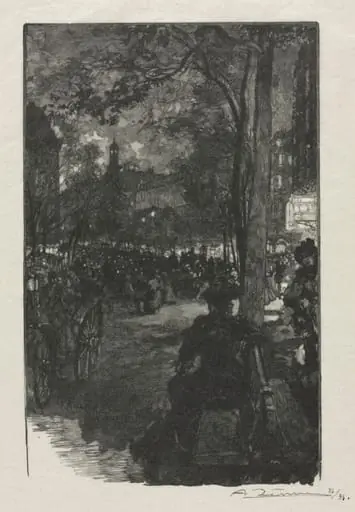 Boulevard Montmartre, Evening