Artwork
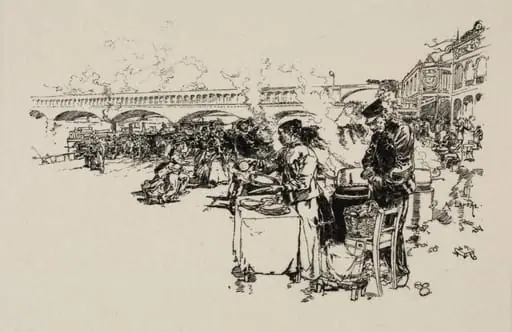
Debarcadère des bateaux-omnibus
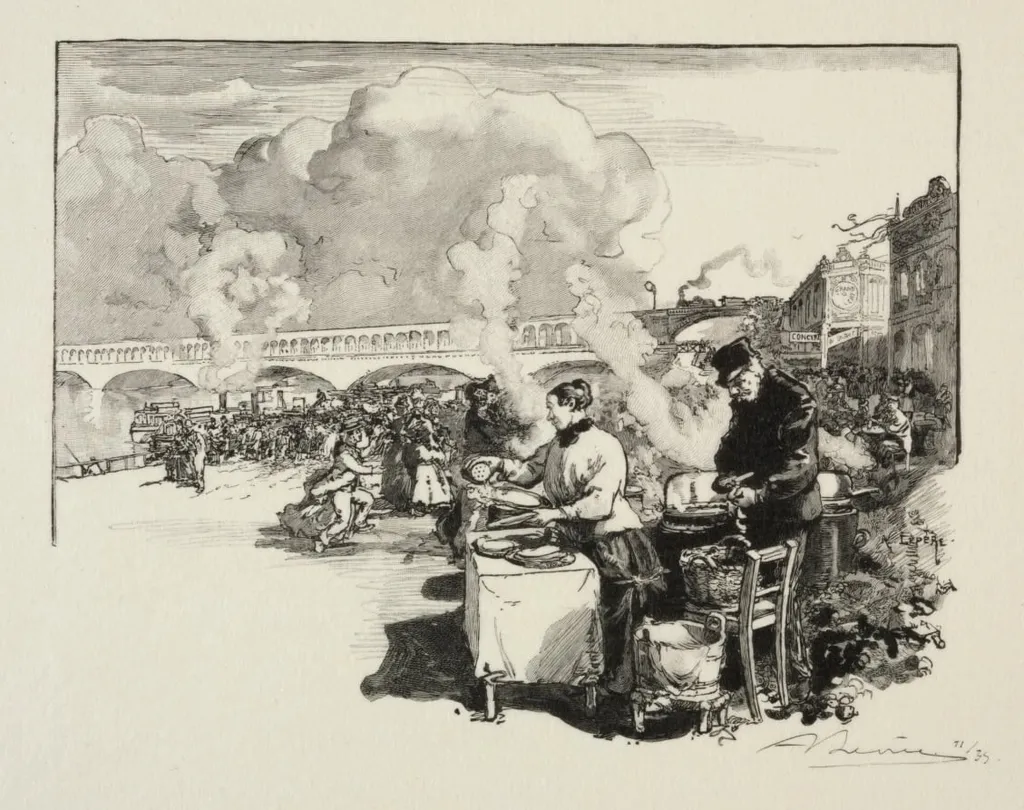
Debarcadère des bateaux-omnibus is a print by the Impressionist artist Auguste Lepère. It dates from 1886 and is held in the collection of the Cleveland Museum of Art. Created in 1886 by French artist Auguste Louis Lepère, this wood engraving captures a bustling riverside dock on the Seine.
About this work
Overview
Created in 1886 by French artist Auguste Louis Lepère, this wood engraving captures a bustling riverside dock on the Seine. Lepère, instrumental in revitalizing wood engraving as a fine art medium, used the technique to render intricate details of daily urban life. The scene emphasizes motion and atmosphere, avoiding idealization in favor of observed reality.
Subject & Meaning
The composition conveys the rhythm of urban life, where commerce, transit, and domestic survival intersect without ceremony.
The print portrays a working-class riverside hub where passenger boats arrive and depart. In the foreground, two individuals tend a small cooking fire, suggesting informal, labor-intensive routines. Behind them, a bridge spans the river, flanked by smokestacks and buildings. The composition conveys the rhythm of urban life, where commerce, transit, and domestic survival intersect without ceremony.
Technique & Style
Lepère employed fine, controlled lines in wood engraving to depict texture and movement. Steam and smoke are rendered with soft, overlapping strokes that dissolve into the sky, blurring boundaries between solid forms and atmosphere. The contrast between detailed foreground figures and hazy background architecture enhances the sense of depth and environmental density.
History & Provenance
The print was made during a period when French artists turned to printmaking to document modern life outside academic traditions. Lepère’s work was part of a broader revival of wood engraving in Europe, influenced by Japanese prints and Realist ideals. It was likely circulated as a standalone print or in illustrated periodicals, reaching audiences interested in contemporary scenes.
Context
In late 19th-century Paris, the Seine was a vital artery for transport and trade. The bateaux-omnibus served as public ferries connecting neighborhoods, and their docks became microcosms of urban labor. Lepère’s focus on this setting aligns with broader artistic movements that valued the authenticity of ordinary life over historical or mythological subjects.
Legacy
Lepère’s work contributed to the recognition of wood engraving as a legitimate artistic medium, distinct from commercial illustration. His attention to transient, unglamorous moments influenced later printmakers who sought to document urban change. The print remains a quiet testament to the overlooked rhythms of industrial-era Paris.
Artist & collection
Artist
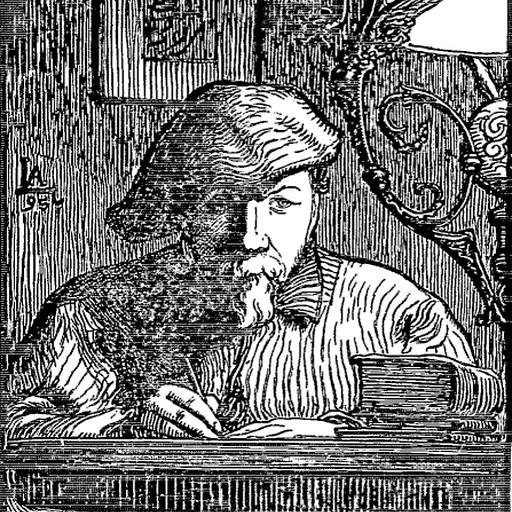
Louis-Auguste Lepère (30 November 1849 – 20 November 1918) was a French painter and etcher. Lepère is also considered a leader in the creative revival of wood engraving in Europe.

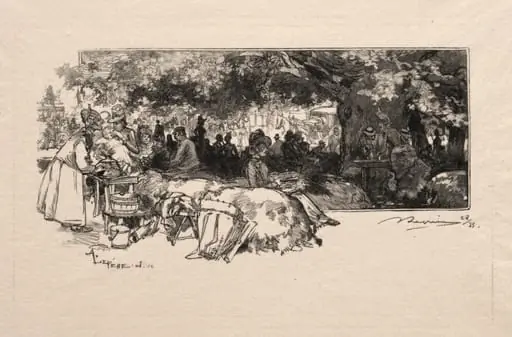 Cantine de la Mère Pichard
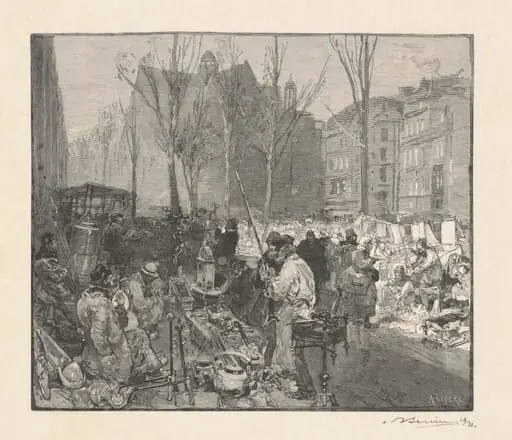 Marché à la terraille
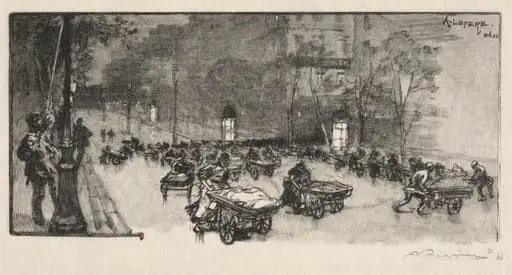 Le Boulevard, au coin du Fauborg Montmartre
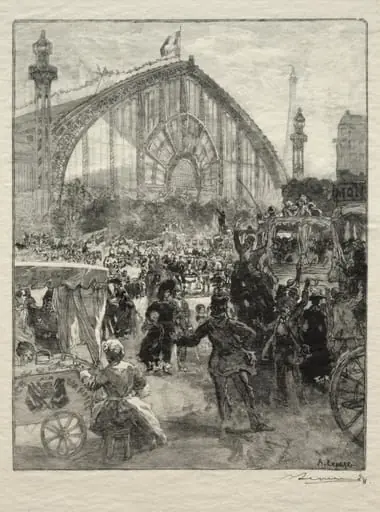 Leaving the 1889 Exhibition
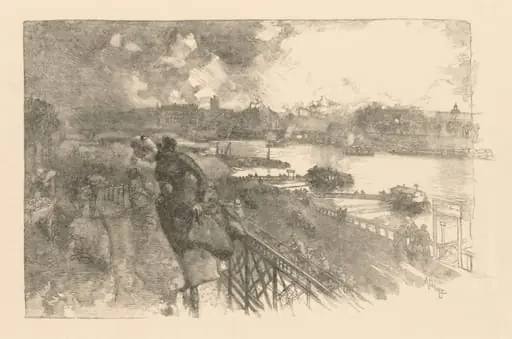 La Seine au Pont d'Austerlitz
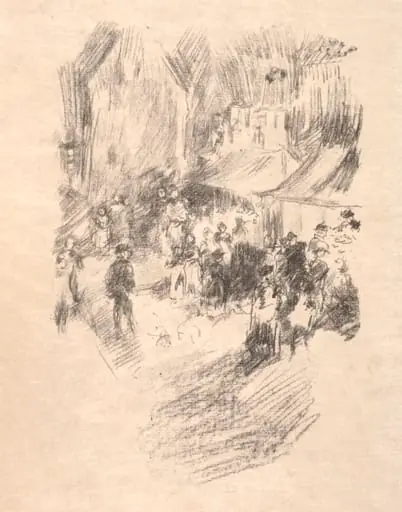 Fair, Lyme, -Regis
 The Fair
 Unloaders of Plaster (Canal St. Martin)
 Les Déchargeurs de Plâtre
 Le Boulevard Montmartre, le Soir
 Debarcadère des bateaux-omnibus
 Bal au Point-du-Jour