Artwork
Bal au Point-du-Jour
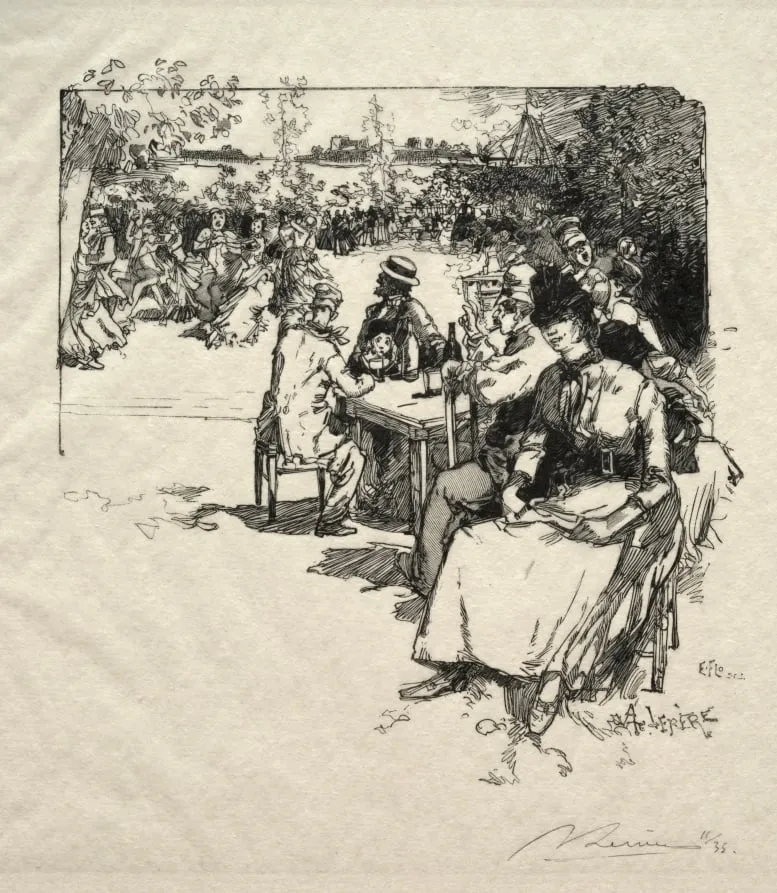
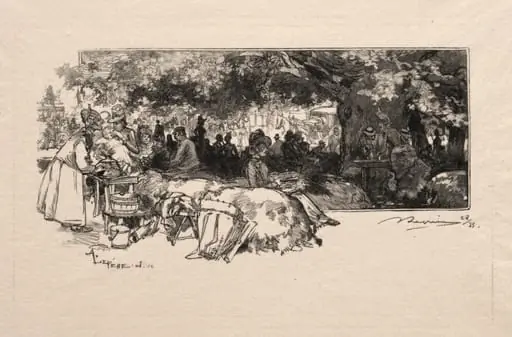
Bal au Point-du-Jour is a print by the Impressionist artist Auguste Lepère. It dates from 1886 and is held in the collection of the Cleveland Museum of Art.
About this work
Overview
The work is part of the Cleveland Museum of Art’s collection, reflecting its significance in the resurgence of printmaking during the period.
Created in 1886 by French artist Auguste Louis Lepère, *Bal au Point-du-Jour* is a wood engraving that captures a casual outdoor gathering in late 19th-century Paris. Lepère, instrumental in the revival of wood engraving as a fine art medium, used this technique to render fleeting moments of public life. The work is part of the Cleveland Museum of Art’s collection, reflecting its significance in the resurgence of printmaking during the period.
Subject & Meaning
The scene depicts ordinary Parisians enjoying an afternoon at the Point-du-Jour, a popular leisure spot. Figures are shown seated at tables playing cards or conversing, while others move through the background beneath trees. There is no formal ceremony or heroic gesture—only the quiet rhythm of daily social interaction. The focus on unposed, everyday behavior aligns with broader 19th-century interests in realism and the observation of common life.
Technique & Style
Lepère employed fine, rapid lines characteristic of wood engraving to suggest movement and density without detailed rendering. The sketchlike quality conveys spontaneity, with figures emerging from loose, overlapping strokes. Shadows and textures are implied through tonal variation rather than solid fills, echoing the immediacy of Impressionist brushwork. The technique prioritizes atmosphere over precision, emphasizing the transient nature of the moment.
History & Provenance
Lepère produced this print during a period of renewed interest in wood engraving as an artistic medium in France. Though widely circulated in its time, the work entered the Cleveland Museum of Art’s collection in the 20th century, where it remains as part of a broader effort to document the evolution of printmaking. Its preservation reflects scholarly recognition of Lepère’s role in elevating printmaking beyond mere reproduction.
Context
In the 1880s, Parisian artists increasingly turned to scenes of public leisure as subjects, influenced by urban expansion and changing social habits. Lepère’s print aligns with contemporaries like Degas and Toulouse-Lautrec, who documented cafés, dances, and parks. Unlike academic painting, this work embraces informality and rejects idealization, mirroring broader shifts in artistic values toward authenticity and direct observation.
Legacy
Lepère’s work contributed to the reestablishment of wood engraving as a legitimate art form in Europe, moving it away from commercial illustration. *Bal au Point-du-Jour* exemplifies how technical precision could serve expressive, observational goals. Though less known today than his painterly peers, his prints remain important for understanding the intersection of craft, modernity, and everyday life in late 19th-century France.
Artist & collection
Artist
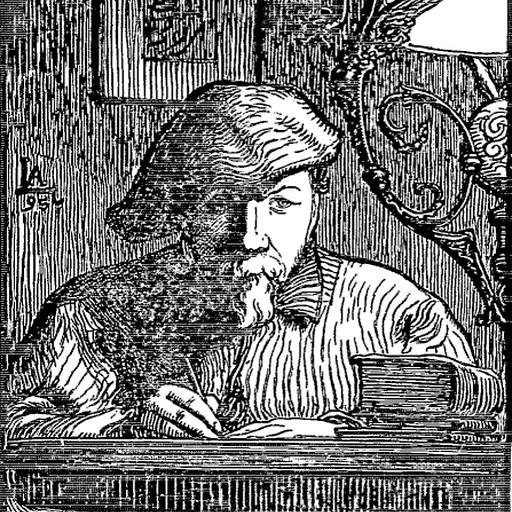
Louis-Auguste Lepère (30 November 1849 – 20 November 1918) was a French painter and etcher. Lepère is also considered a leader in the creative revival of wood engraving in Europe.

 Cantine de la Mère Pichard
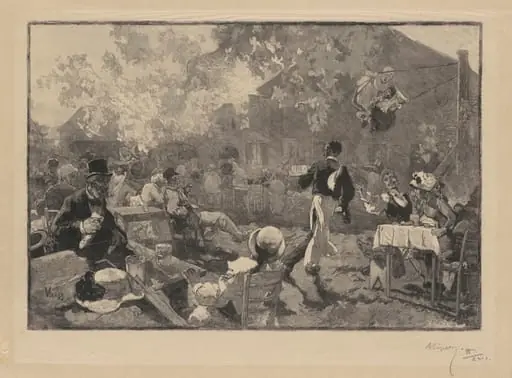 Au coq du brûyeres
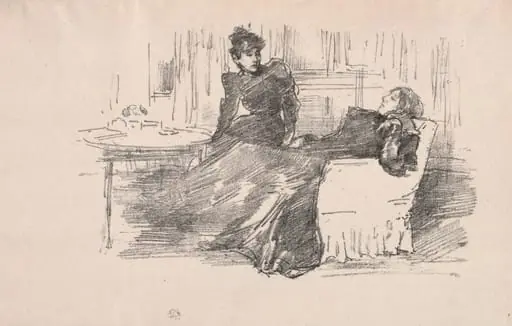 The Sisters
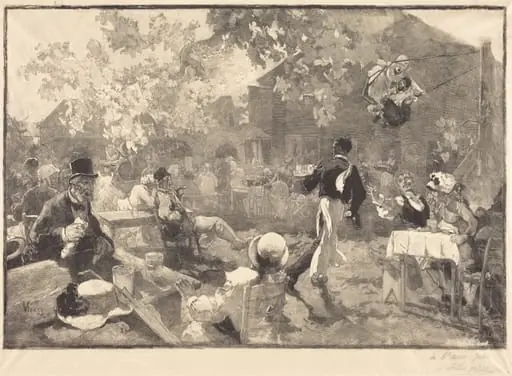 Au coq des bruyeres
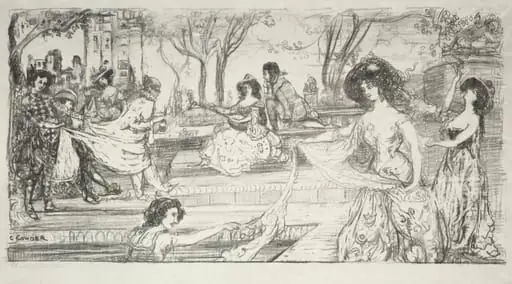 La Guitariste
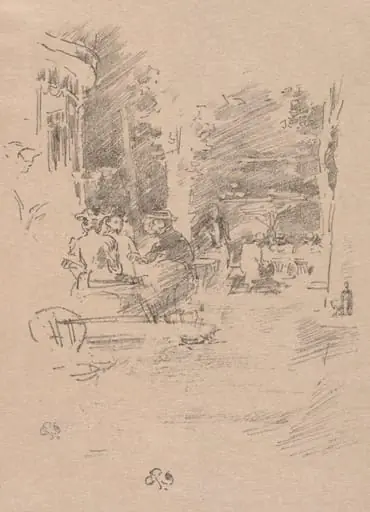 The Litte Café au Bois
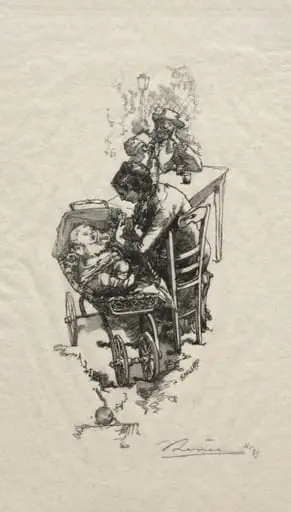 La femme au berceau
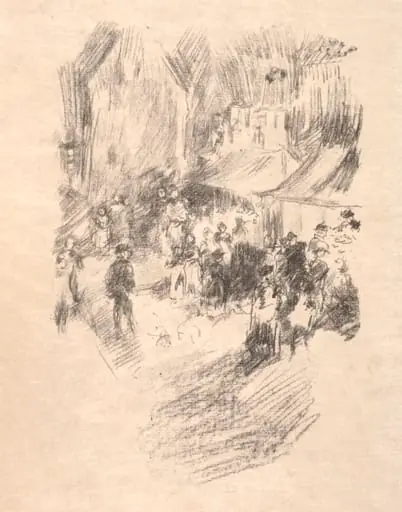 Fair, Lyme, -Regis
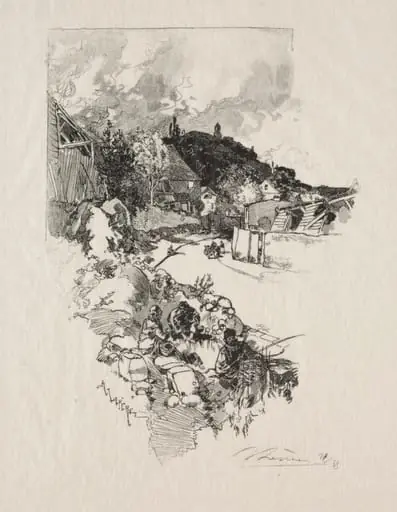 Route de Versailles
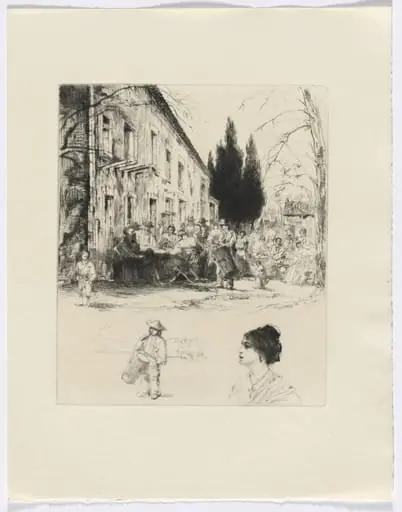 Frédéric Mistral: Mémoires et Recits by Frédéric Mistral: figures at outdoor table/ man playing drum and bust of a woman (insert after p. 136)