Artwork
Fishermen on a Pier, Paris
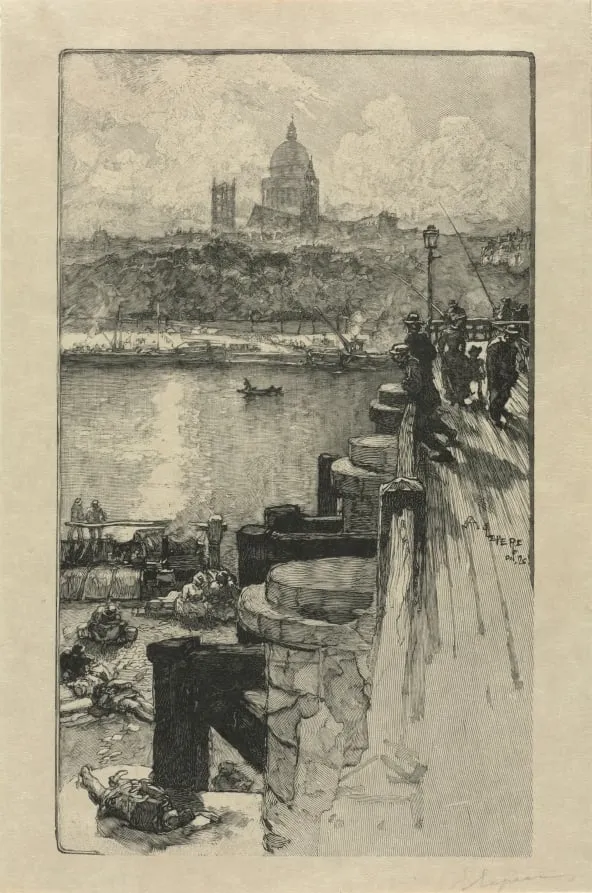
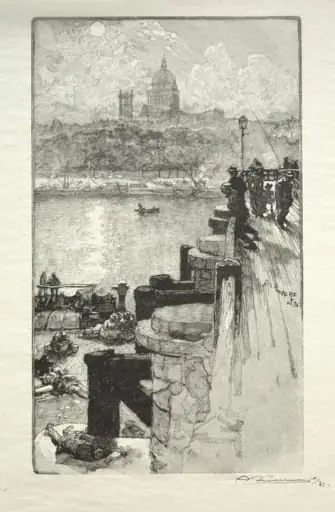
Fishermen on a Pier, Paris is a print by the Impressionist artist Auguste Lepère. It dates from 1894 and is held in the collection of the Cleveland Museum of Art. Created in 1894 by French artist Auguste Louis Lepère, this wood engraving captures a quiet moment along a Parisian riverbank.
About this work
Overview
The work is held in the collection of The Cleveland Museum of Art, reflecting its significance in the revival of printmaking traditions in Europe.
Created in 1894 by French artist Auguste Louis Lepère, this wood engraving captures a quiet moment along a Parisian riverbank. Lepère, instrumental in the 19th-century revival of wood engraving as a fine art medium, used precise carving techniques to render a scene of daily labor and stillness. The work is held in the collection of The Cleveland Museum of Art, reflecting its significance in the revival of printmaking traditions in Europe.
Subject & Meaning
The print portrays fishermen seated along a wooden pier, engaged in the quiet tasks of mending nets or resting between duties. Small boats drift nearby, while figures cross a distant bridge. The composition avoids dramatic action, instead emphasizing routine and contemplation. The presence of a monumental building on the hill suggests the proximity of urban life, framing the fishermen’s labor as part of a larger, unobtrusive urban rhythm.
Technique & Style
Lepère employed fine, controlled lines carved into wood to achieve subtle tonal gradations. Light and shadow are carefully modulated to define the texture of the pier’s steps, the folds of clothing, and the water’s surface. The use of chiaroscuro enhances spatial depth without relying on perspective alone. The medium’s inherent precision lends the scene a quiet clarity, characteristic of Lepère’s commitment to the expressive potential of wood engraving.
History & Provenance
The print was produced during a period when Lepère was actively promoting wood engraving as a legitimate artistic form, distinct from commercial illustration. It entered the collection of The Cleveland Museum of Art in the 20th century, where it remains as part of a broader effort to document the resurgence of handcrafted printmaking in late 19th-century France. Its preservation underscores its role in the transition of printmaking from craft to fine art.
Context
In 1890s Paris, industrialization and urban expansion reshaped the Seine’s waterfronts. While artists often depicted grand boulevards or leisure scenes, Lepère turned to quieter, working edges of the city. His focus on fishermen reflects a broader interest among printmakers in documenting everyday life with dignity and restraint, countering the dominant trends of Impressionism and academic painting.
Legacy
Lepère’s work helped reestablish wood engraving as a vehicle for artistic expression in Europe, influencing later generations of printmakers. *Fishermen on a Pier, Paris* exemplifies his ability to merge technical mastery with quiet observation. Though not widely known today, his prints remain important for understanding the evolution of printmaking as a medium capable of conveying both intimacy and social nuance.
Artist & collection
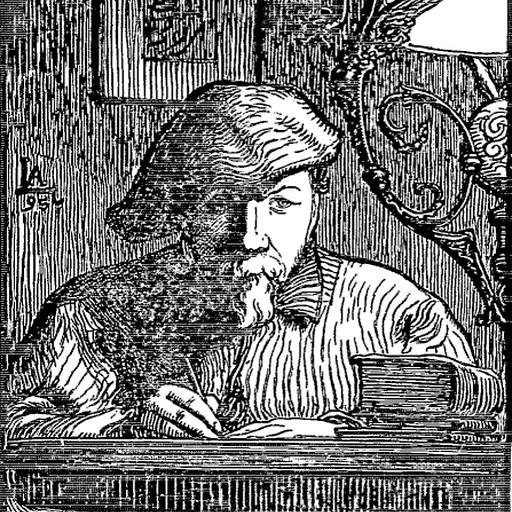
Artist
Louis-Auguste Lepère (30 November 1849 – 20 November 1918) was a French painter and etcher. Lepère is also considered a leader in the creative revival of wood engraving in Europe.

 Montagne Ste. Genevieve
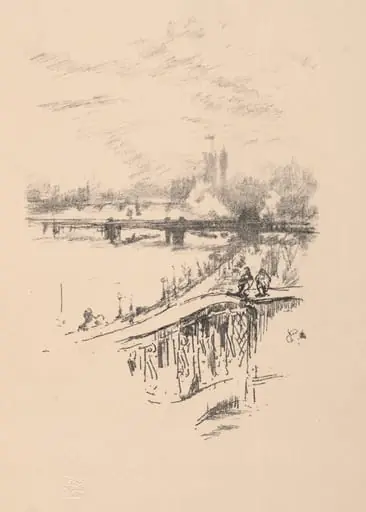 Savoy Pigeons
![[Large Steamer Ship at Dock, Paris], by Auguste Lepère](https://artifactworldgallery.com/img/auguste-lepere--large-steamer-ship-at-dock-paris--ed31099e42153820-w320.webp) [Large Steamer Ship at Dock, Paris]
[Large Steamer Ship at Dock, Paris]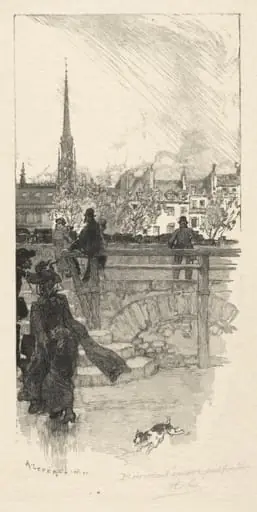 Quai des Grands Augustins, Paris
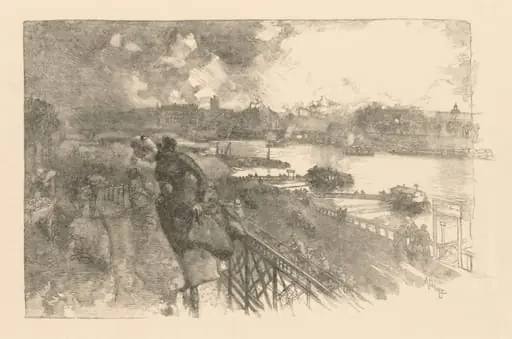 La Seine au Pont d'Austerlitz
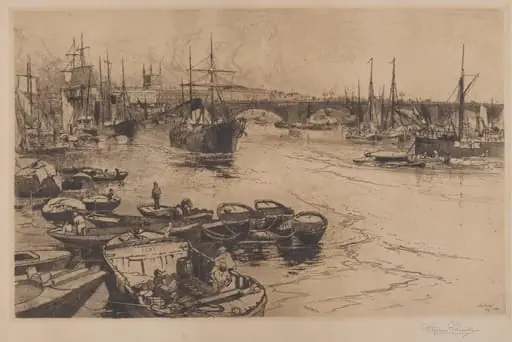 London Bridge
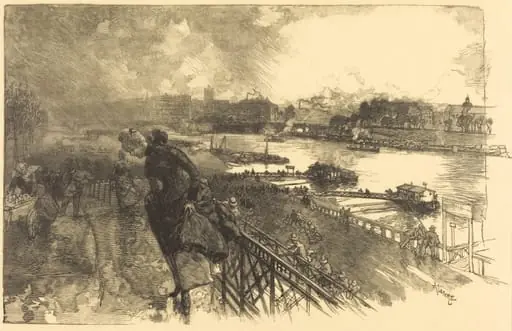 The Seine near the Austerlitz Bridge
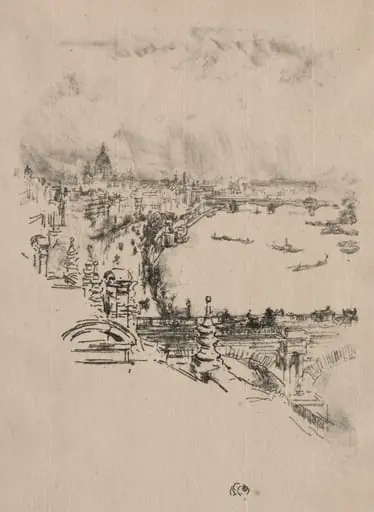 Little London
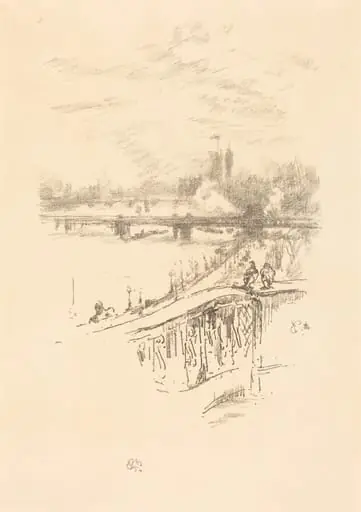 Savoy Pigeons
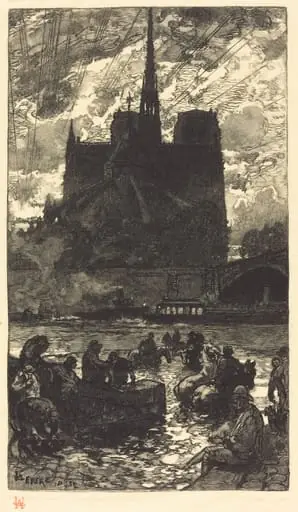 Watering-place behind Notre-Dame (L'abreuvoirderriere Notre-Dame)
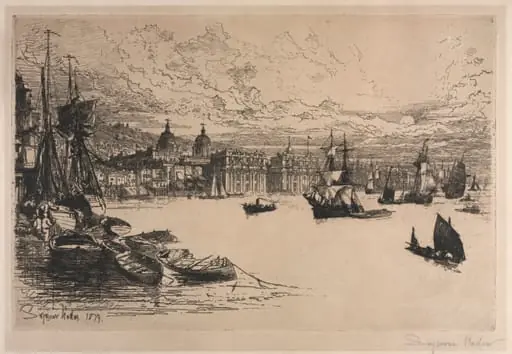 Greenwich
 Eads Bridge, St. Louis