Artwork
Montagne Ste. Genevieve
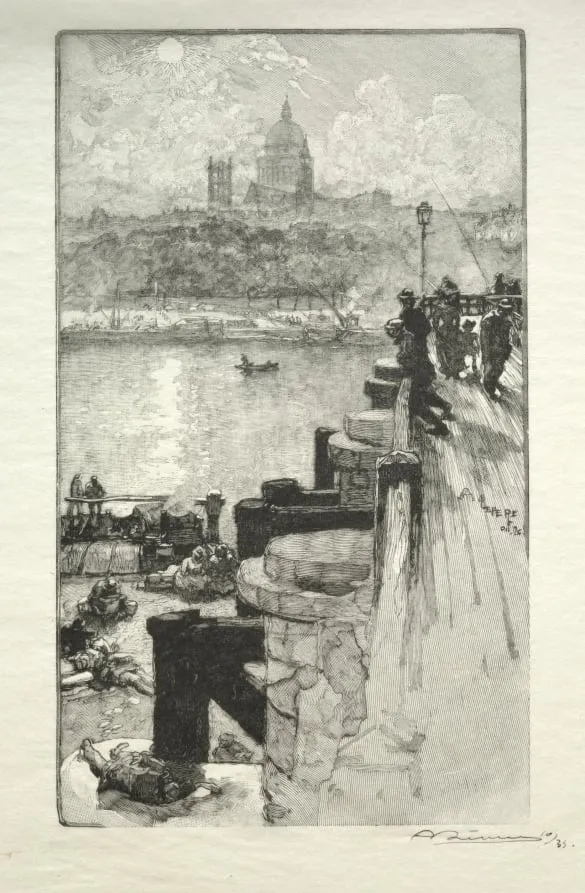
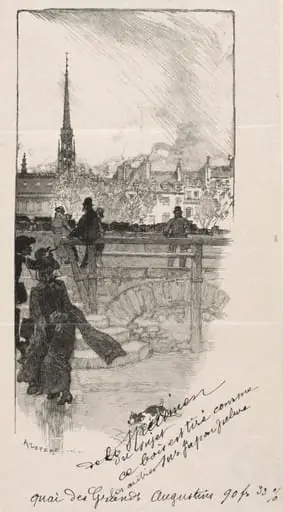
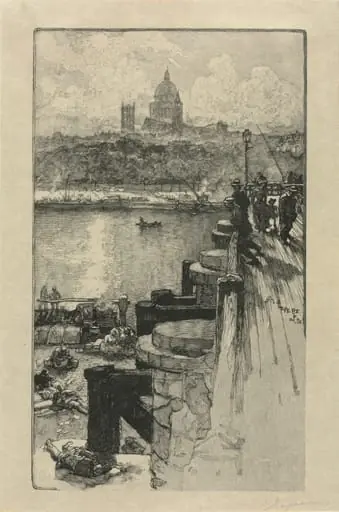
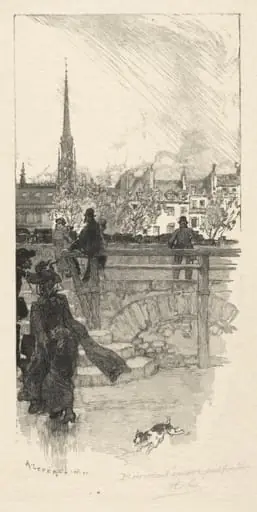
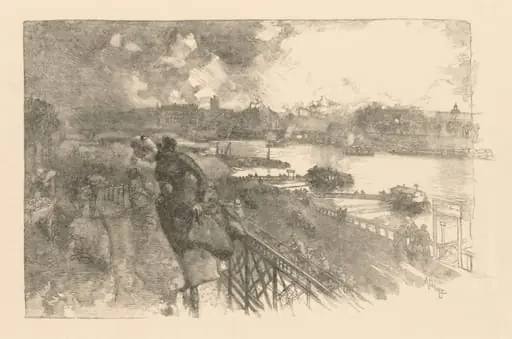
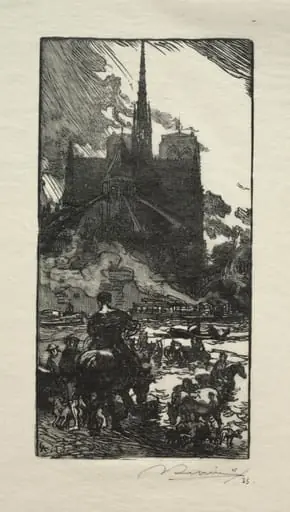
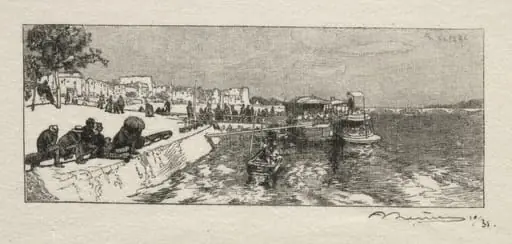
Montagne Ste. Genevieve is a print by the Impressionist artist Auguste Lepère. It dates from 1890 and is held in the collection of the Cleveland Museum of Art. Created in 1890 by French artist Auguste Louis Lepère, *Montagne Ste.
About this work
Overview
It resides in the collection of The Cleveland Museum of Art, where it is recognized for its technical precision and atmospheric quietude.
Created in 1890 by French artist Auguste Louis Lepère, *Montagne Ste. Genevieve* is a wood engraving that exemplifies his role in the late 19th-century revival of the medium. The print captures a tranquil riverside view near Paris, rendered with delicate tonal gradations. It resides in the collection of The Cleveland Museum of Art, where it is recognized for its technical precision and atmospheric quietude.
Subject & Meaning
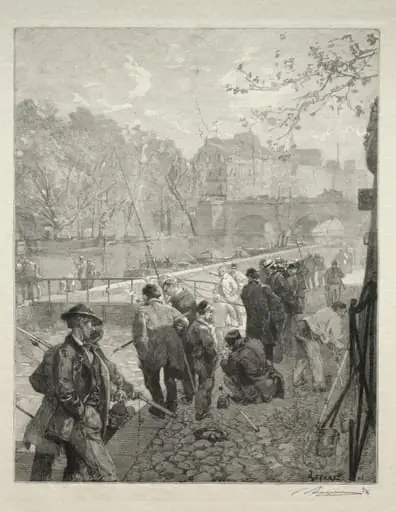
The scene depicts the southern bank of the Seine at dusk, with the dome of the Panthéon visible on the hilltop. A stone bridge arches over the water, lined with pedestrians, while small boats drift near the shore and a solitary fisherman sits in stillness. The composition evokes a moment of pause, emphasizing solitude and the gentle rhythm of daily life, without overt narrative or symbolism.
Technique & Style
Lepère employed fine, layered wood engraving to achieve subtle shifts in light and shadow. The soft blending of lines mimics the fading twilight, particularly over the water and distant architecture. Unlike bold linear styles, his approach favors muted contrasts and delicate textures, aligning with the quiet realism of late Impressionist printmaking while retaining the precision of traditional engraving.
History & Provenance
Lepère, a key figure in the French print revival, produced this work during a period of renewed interest in handcrafted prints. *Montagne Ste. Genevieve* was likely made for a limited audience of collectors and artists. It entered The Cleveland Museum of Art’s collection in the 20th century, where it remains as part of their holdings in European graphic arts from the late 1800s.
Context
In the 1890s, French artists sought to elevate printmaking beyond reproductive roles, embracing it as an expressive medium. Lepère’s work responded to this movement, drawing inspiration from both Japanese woodcuts and the plein-air sensibilities of Impressionist painting. The view of Montagne Sainte-Geneviève reflects a familiar Parisian landmark, rendered not as a monument but as a quiet, lived-in landscape.
Legacy
Lepère’s technical innovations in wood engraving influenced a generation of printmakers who valued handcrafted detail over mass production. *Montagne Ste. Genevieve* stands as a representative example of his commitment to atmospheric nuance and the quiet dignity of everyday scenes. Though not widely known today, his work remains a touchstone in the history of modern printmaking.
Artist & collection

Artist
Louis-Auguste Lepère (30 November 1849 – 20 November 1918) was a French painter and etcher. Lepère is also considered a leader in the creative revival of wood engraving in Europe.

![[Large Steamer Ship at Dock, Paris], by Auguste Lepère](https://artifactworldgallery.com/img/auguste-lepere--large-steamer-ship-at-dock-paris--ed31099e42153820-w320.webp)