Artwork
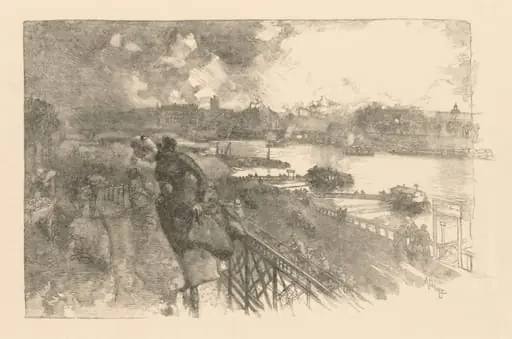
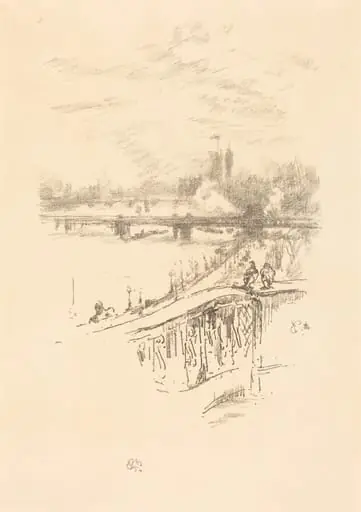
The Seine near the Austerlitz Bridge
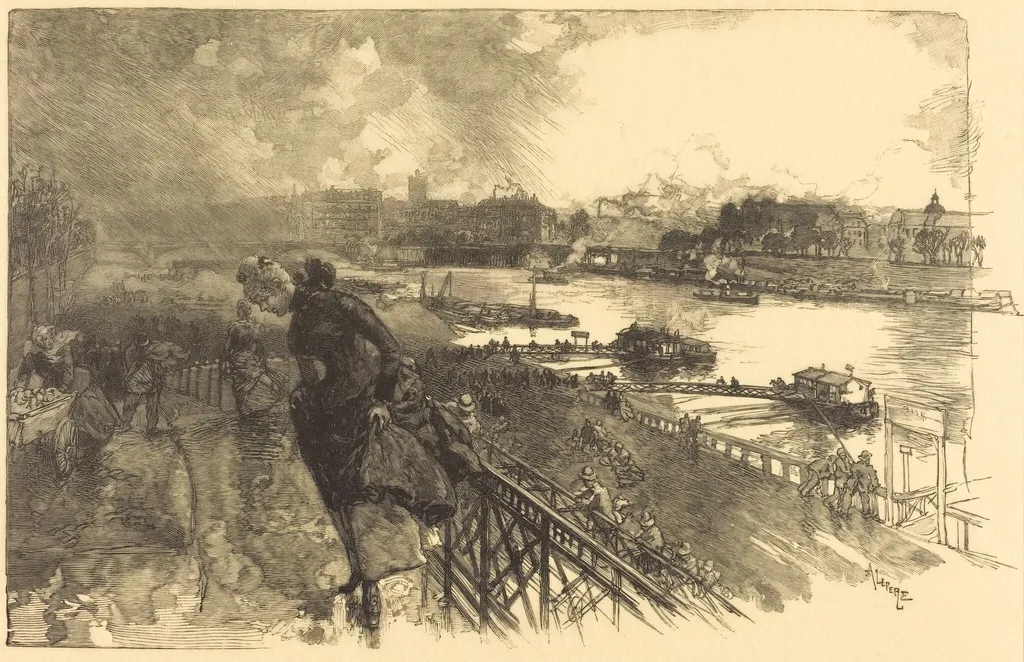
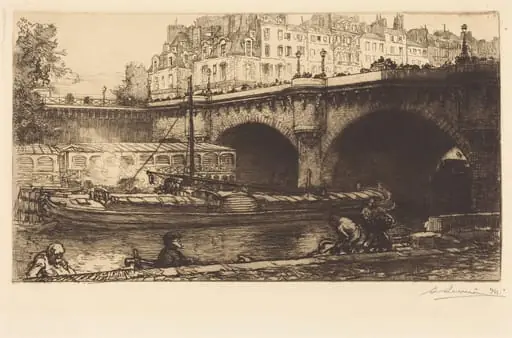
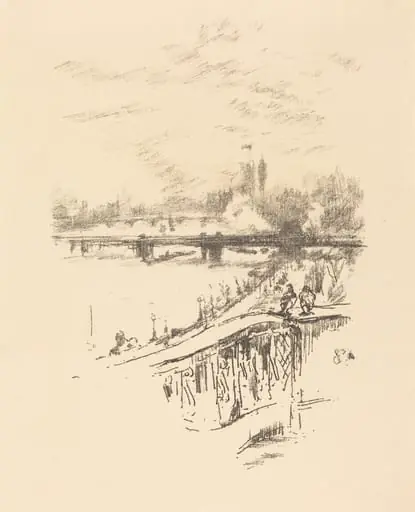
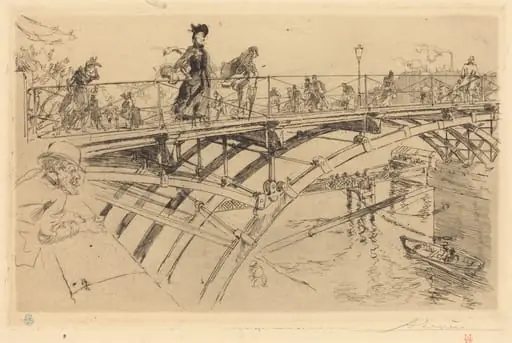
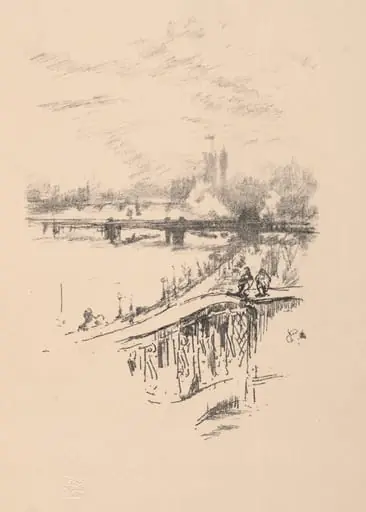
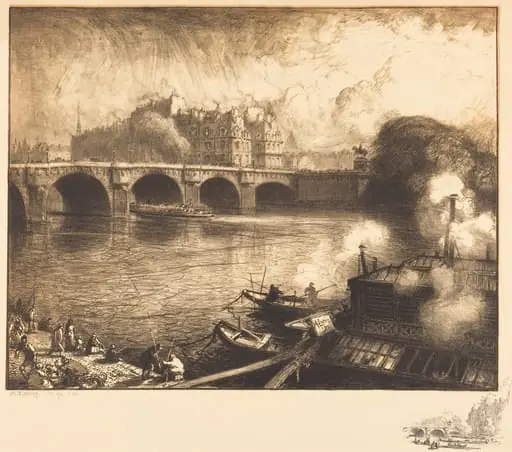
The Seine near the Austerlitz Bridge is an ink print by the Impressionist artist Auguste Lepère. It dates from 1888 and is held in the collection of the National Gallery of Art.
About this work
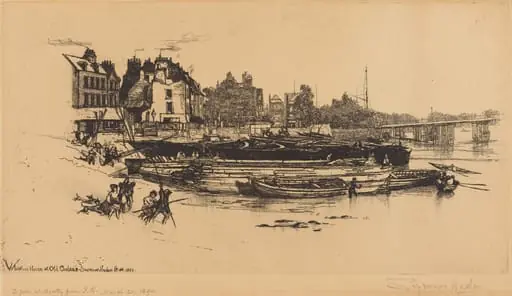
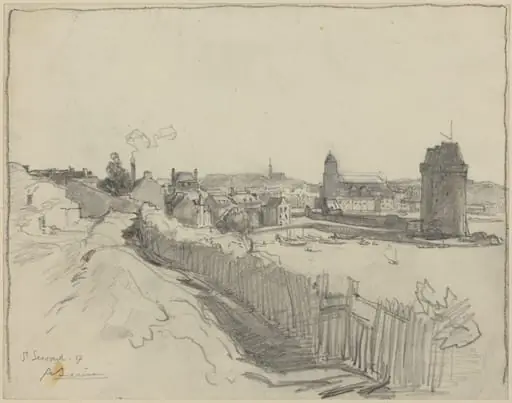
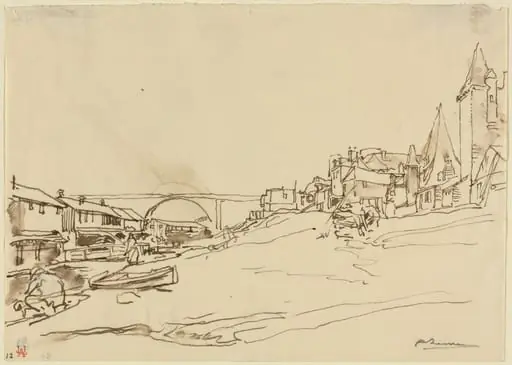
Auguste Lepère shows the Seine in 1888. A narrow wooden bridge cuts the river in half. Trees line both banks in soft summer green.
He carved this image on wood, then printed it on thin paper. The lines are crisp and cross-hatched. That means lots of tiny lines make shadows and textures.
The view feels quiet and real. It’s not fancy or busy.
If you like this, look up Lepère, Auguste.
Overview
The Seine near the Austerlitz Bridge is a wood engraving created by Auguste Lepère in 1888. It is executed in black on tissue paper.
Subject & Meaning
The engraving depicts a serene view of the Seine River, bisected by the Austerlitz Bridge, with trees lining its banks in soft summer foliage. The scene conveys a sense of quiet realism.
Technique & Style
Lepère employed the precise lines characteristic of wood engraving, utilizing cross-hatching to create shadows and textures. The resulting image is marked by crisp, detailed lines.
History & Provenance
Auguste Lepère, a French painter and etcher active from the late 19th century until his death in 1918, was instrumental in reviving wood engraving as an artistic medium in Europe.
Artist & collection
Artist
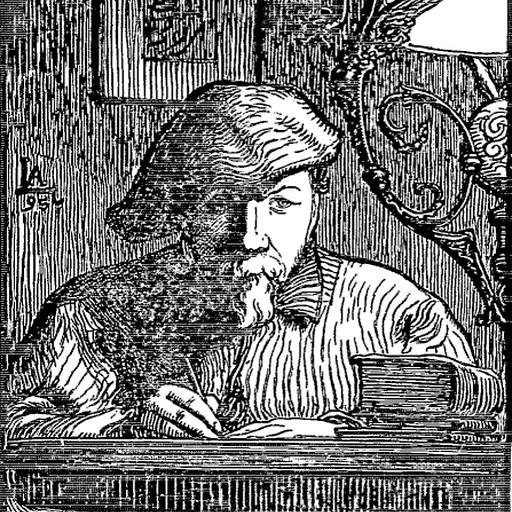
Louis-Auguste Lepère (30 November 1849 – 20 November 1918) was a French painter and etcher. Lepère is also considered a leader in the creative revival of wood engraving in Europe.

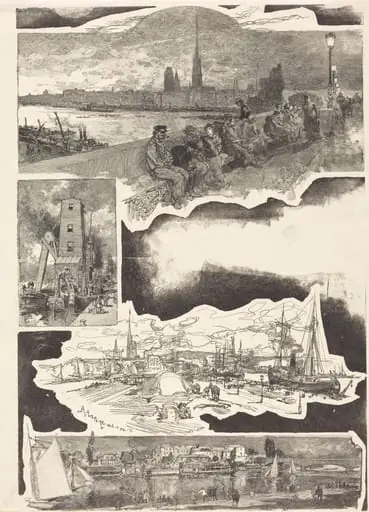
![[Large Steamer Ship at Dock, Paris], by Auguste Lepère](https://artifactworldgallery.com/img/auguste-lepere--large-steamer-ship-at-dock-paris--ed31099e42153820-w320.webp)