Artwork
Fontainebleau Forest: The Cirque of Long-Rocher
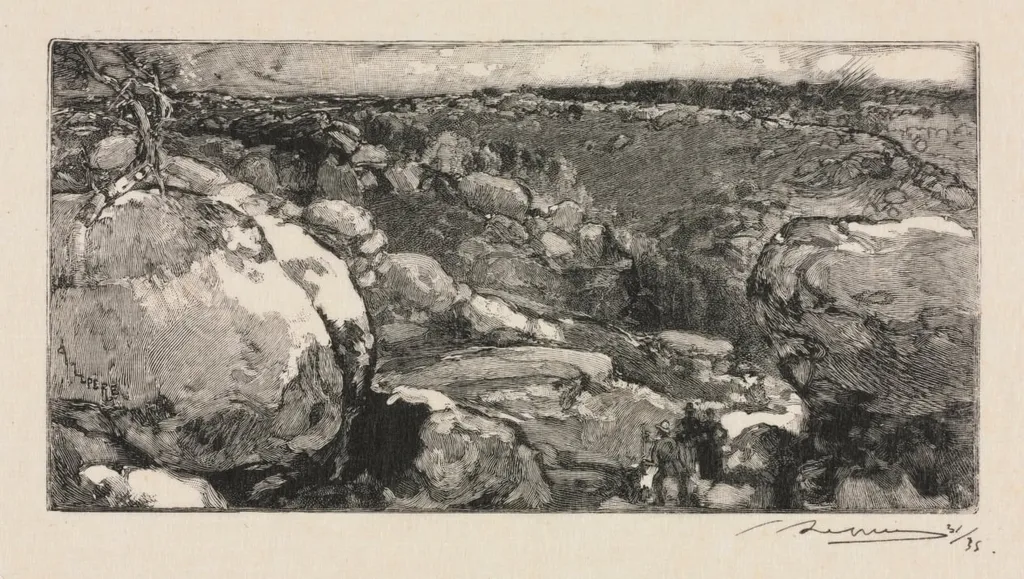
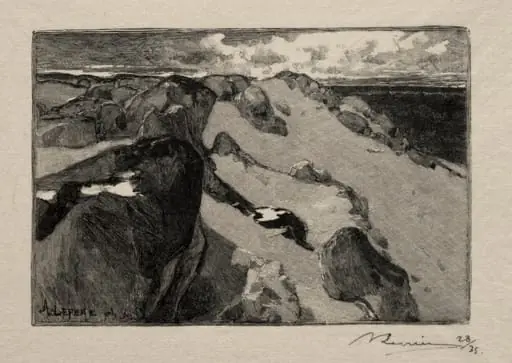
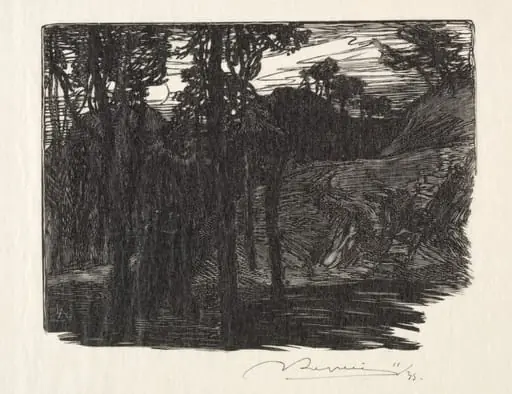
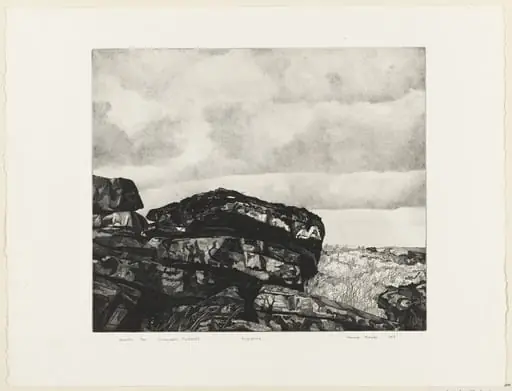
Fontainebleau Forest: The Cirque of Long-Rocher is a print by the Impressionist artist Auguste Lepère. It dates from 1888 and is held in the collection of the Cleveland Museum of Art. Created in 1888 by French artist Auguste Louis Lepère, this wood engraving captures a secluded section of the Fontainebleau Forest.
About this work
Overview
Created in 1888 by French artist Auguste Louis Lepère, this wood engraving captures a secluded section of the Fontainebleau Forest.
Created in 1888 by French artist Auguste Louis Lepère, this wood engraving captures a secluded section of the Fontainebleau Forest. Lepère was instrumental in revitalizing wood engraving as a fine art medium in 19th-century Europe. The print is held in the Cleveland Museum of Art’s collection and exemplifies his commitment to detailed, tonal rendering through hand-carved woodblocks, emphasizing natural forms over narrative.
Subject & Meaning
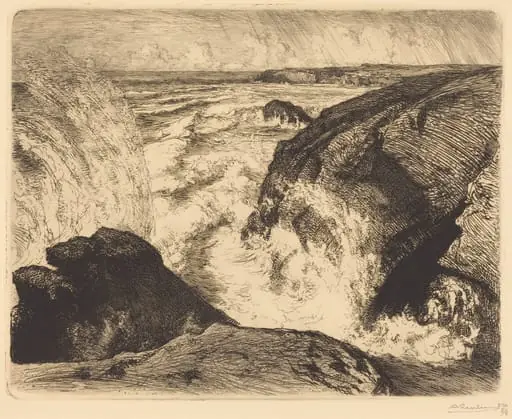
The scene portrays the Cirque of Long-Rocher, a rocky amphitheater within the forest, devoid of human presence. Jagged boulders and sparse, leafless trees dominate the composition, suggesting a landscape shaped by time and weather. The absence of figures directs attention to the enduring, unaltered character of the land, reflecting a quiet reverence for nature’s geological persistence.
Technique & Style
Lepère employed fine, controlled lines carved into a woodblock to build texture and depth. Delicate hatching and cross-hatching model the surfaces of rocks, while varying line density creates contrast between shadowed crevices and sunlit surfaces. The sky is rendered with minimal detail, enhancing the sense of distance and isolating the earthy forms below, a hallmark of his tonal wood engraving approach.
History & Provenance
The print entered the Cleveland Museum of Art’s collection as part of its broader acquisition of 19th-century European prints. Lepère’s work gained recognition during the revival of wood engraving, which sought to elevate the medium beyond commercial illustration. This piece reflects his technical mastery and aligns with contemporary interest in landscape as a subject worthy of intimate, handcrafted representation.
Context
In the late 19th century, French artists increasingly turned to rural landscapes as a counterpoint to industrialization. The Fontainebleau Forest was a favored subject among painters and printmakers drawn to its wild, ancient terrain. Lepère’s engraving aligns with this movement, emphasizing natural form over romanticized sentiment, and contributing to a broader reevaluation of printmaking as a serious artistic practice.
Legacy
Lepère’s work helped reestablish wood engraving as a legitimate fine art medium in Europe, influencing later generations of printmakers. His emphasis on texture, tonal gradation, and direct engagement with natural subjects set a precedent for artists seeking to convey the physicality of landscape without embellishment. This print remains a key example of his technical innovation and quiet aesthetic.
Artist & collection
Artist
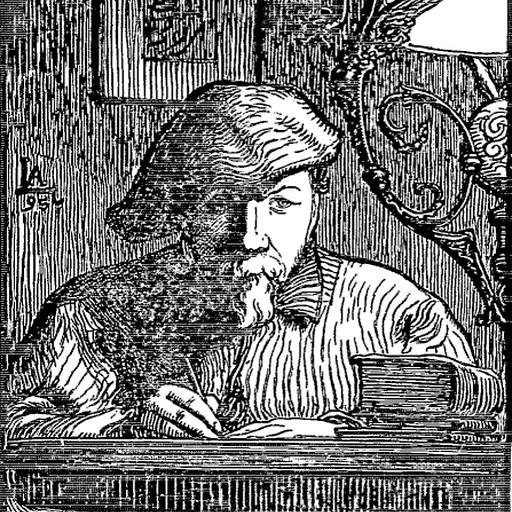
Louis-Auguste Lepère (30 November 1849 – 20 November 1918) was a French painter and etcher. Lepère is also considered a leader in the creative revival of wood engraving in Europe.

![Landscape [Paesaggio], by Carlo Paolo Agazzi](https://artifactworldgallery.com/img/carlo-paolo-agazzi--landscape-paesaggio--e606f4ada87d2052-w320.webp)