Artwork
Arbonne, le Gros-Sablon
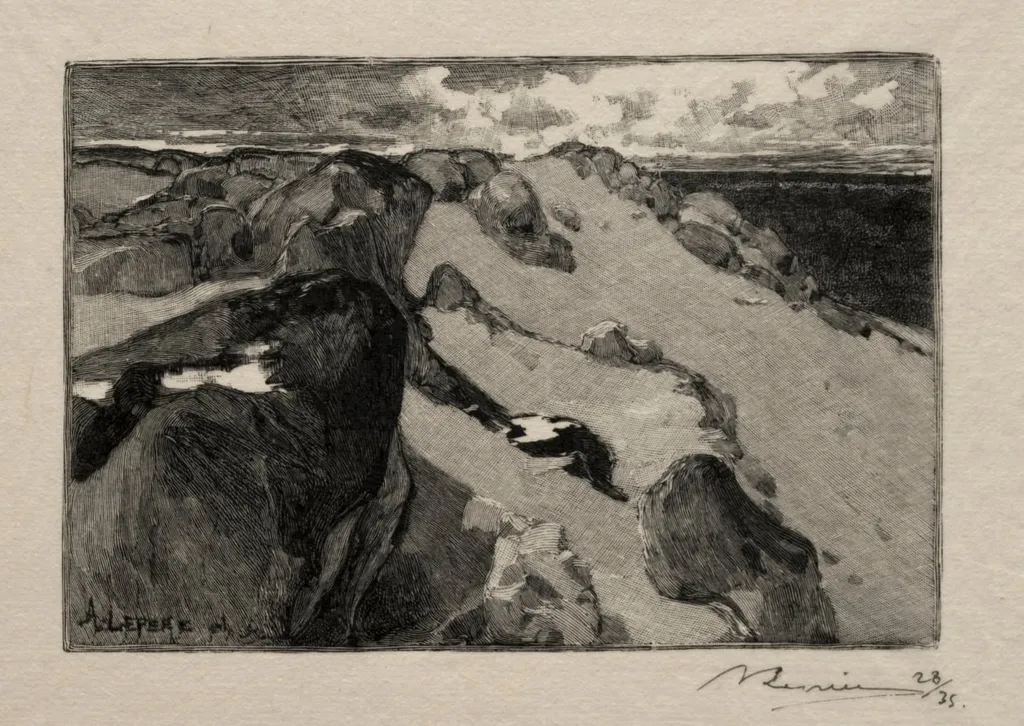
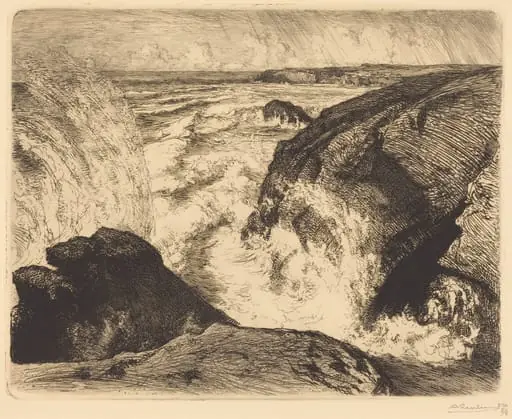
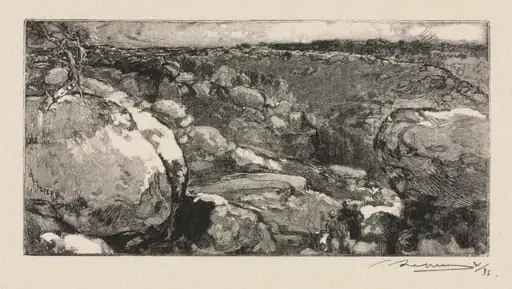
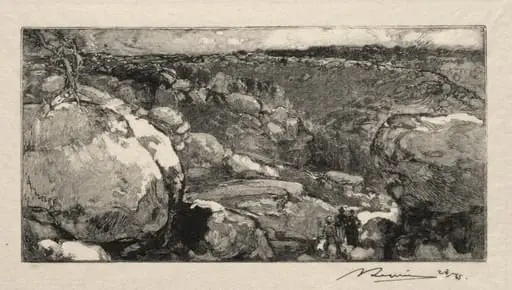
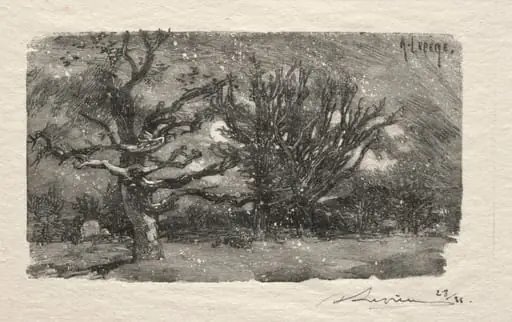
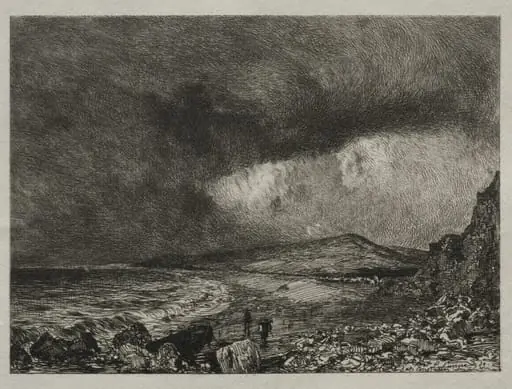
Arbonne, le Gros-Sablon is a print by the Impressionist artist Auguste Lepère. It dates from 1888 and is held in the collection of the Cleveland Museum of Art.
About this work
Overview
The print captures a coastal landscape near Arbonne, characterized by rugged terrain and quiet waters.
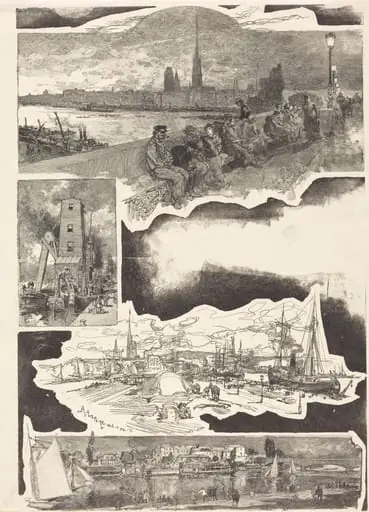
Created in 1888 by French artist Auguste Louis Lepère, *Arbonne, le Gros-Sablon* is a wood engraving that exemplifies the late 19th-century revival of the medium in Europe. The print captures a coastal landscape near Arbonne, characterized by rugged terrain and quiet waters. Its composition emphasizes natural forms through precise line work and tonal variation, reflecting Lepère’s technical mastery and commitment to printmaking as a serious artistic discipline.
Subject & Meaning
The scene depicts a secluded stretch of the Basque coast, where jagged cliffs descend to a still shoreline. A narrow path winds through the rocks, suggesting quiet human presence amid wild nature. The interplay of shadow and light evokes a moment of stillness, neither celebratory nor melancholic, but observant. The work invites contemplation of place rather than narrative, aligning with the era’s interest in landscape as a subject of quiet introspection.
Technique & Style
Lepère employed wood engraving to achieve fine detail and dramatic contrast. Sharp, incised lines define the cliffs’ texture, while smoother, broader strokes suggest the water’s surface. The use of chiaroscuro—strong contrasts between light and dark—enhances spatial depth and material presence. The technique avoids soft blending, relying instead on precise carving to render natural forms with clarity and tactile realism.
History & Provenance
The print entered the collection of The Cleveland Museum of Art as part of its broader commitment to European graphic arts of the 19th century. Lepère’s work was widely exhibited during his lifetime, and *Arbonne, le Gros-Sablon* reflects his role in elevating wood engraving beyond reproductive use to an independent artistic form. Its preservation in a major American institution underscores its significance in the transnational revival of printmaking.
Context
In the late 1800s, European artists sought to renew printmaking through direct carving and personal expression, moving away from industrial reproduction. Lepère was part of this movement, influenced by Japanese woodcuts and the Barbizon School’s naturalism. *Arbonne, le Gros-Sablon* aligns with this trend, emphasizing direct observation of nature and the expressive potential of hand-carved surfaces over painterly effects.
Legacy
Lepère’s technical innovations in wood engraving influenced later generations of printmakers who valued craftsmanship and tonal nuance. *Arbonne, le Gros-Sablon* remains a reference point for the medium’s capacity to convey atmosphere through line and contrast. While not widely reproduced, it continues to be studied for its disciplined execution and quiet poetic resonance within the history of print.
Artist & collection
Artist
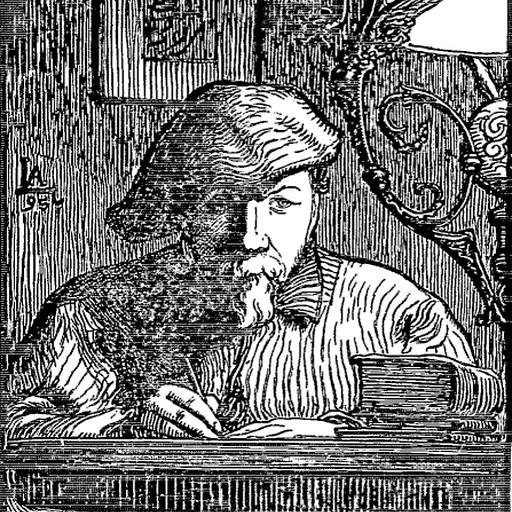
Louis-Auguste Lepère (30 November 1849 – 20 November 1918) was a French painter and etcher. Lepère is also considered a leader in the creative revival of wood engraving in Europe.