Artwork
Général Leman
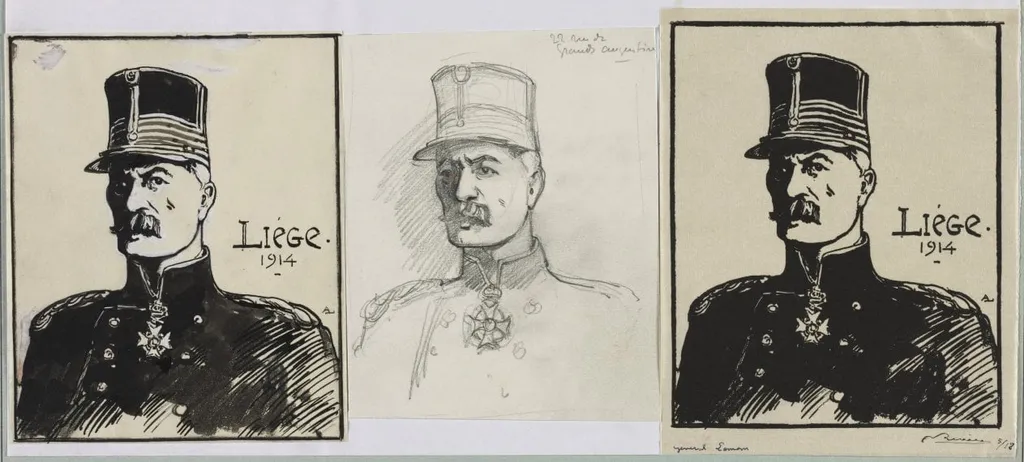
Général Leman is a drawing by Auguste Lepère. It dates from 1914 and is held in the collection of the Cleveland Museum of Art.
About this work
A notable detail in the painting is the use of chiaroscuro, a technique that emphasizes contrasts between light and dark to create a sense of volume and depth.
The painting depicts a man in a military uniform, adorned with a high hat and a medal around his neck. The man's face is rendered in a somber expression, with a mustache and a serious gaze. The background of the painting is a muted color, which helps to focus attention on the subject.
A notable detail in the painting is the use of chiaroscuro, a technique that emphasizes contrasts between light and dark to create a sense of volume and depth. This technique is evident in the way the light falls on the subject's face and uniform, creating a sense of depth and dimensionality.
The painting is a portrait of Général Leman, created by Auguste Louis Lepère in 1914. It is held at The Cleveland Museum of Art. If you're interested in exploring more works that utilize chiaroscuro, you might want to look into the technique itself.
Overview
Auguste Louis Lepère, a French artist known for his work in painting and printmaking, produced this portrait drawing of General Leman in 1914. Though primarily recognized for reviving wood engraving, Lepère also worked in other graphic media. The piece is part of the collection at The Cleveland Museum of Art, reflecting his engagement with portraiture during the final years of his career.
Subject & Meaning
The subject is General Leman, a Belgian military officer noted for his defense of Liège during the early days of World War I. Lepère captures him in full uniform, adorned with insignia, conveying authority and solemn duty. The restrained expression and direct gaze suggest a man burdened by responsibility, aligning the portrait with the gravity of wartime leadership rather than personal glorification.
Technique & Style
Lepère employs chiaroscuro to model the general’s face and uniform, using sharp contrasts between light and shadow to suggest volume and texture. The background is deliberately muted, eliminating distraction and focusing attention on the figure. The drawing’s precision and tonal control reflect the artist’s printmaking background, where subtlety of line and value was essential to expressive effect.
History & Provenance
Created in 1914, the drawing emerged during a period of intense political tension in Europe. Lepère, then in his late sixties, was nearing the end of a long career spanning painting and printmaking. The work entered The Cleveland Museum of Art’s collection through documented acquisition, though its immediate provenance prior to museum ownership remains unrecorded in public sources.
Context
The portrait coincides with the outbreak of World War I, a moment when military figures became symbols of national resolve. Leman’s defense of Liège had recently drawn international attention, making his image culturally significant. Lepère’s choice to depict him reflects broader European interest in wartime leadership, rendered not as propaganda but as a quiet, dignified study.
Legacy
While Lepère is better known for his etchings and wood engravings, this drawing stands as a rare example of his portraiture in a graphic medium. It preserves his technical finesse and demonstrates his ability to convey psychological depth with minimal means. The work contributes to understanding how artists of the era responded to contemporary events through intimate, restrained imagery.
Artist & collection
Artist
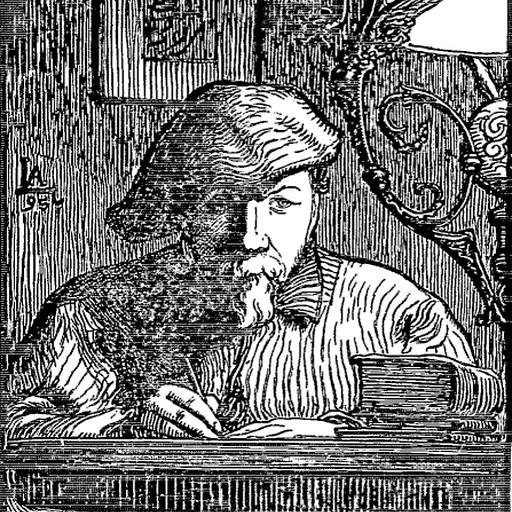
Louis-Auguste Lepère (30 November 1849 – 20 November 1918) was a French painter and etcher. Lepère is also considered a leader in the creative revival of wood engraving in Europe.

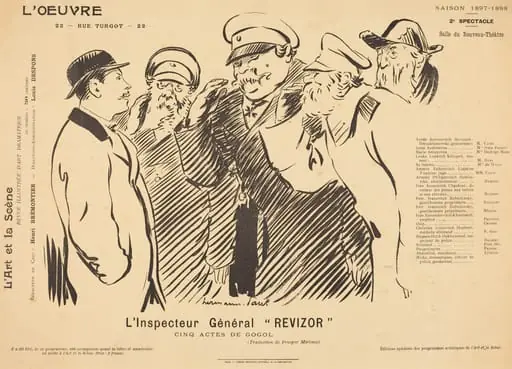 L'Inspecteur Général Revizor
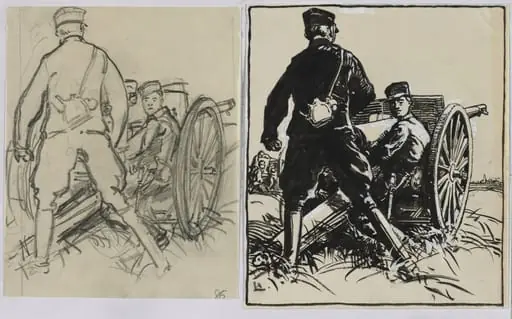 Artillelurs belges
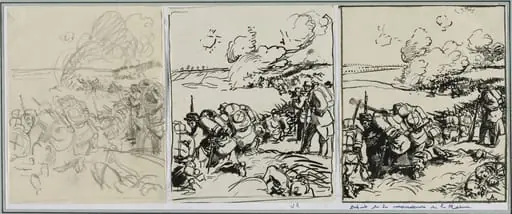 Dêbut de la manoeuvre de la Marne
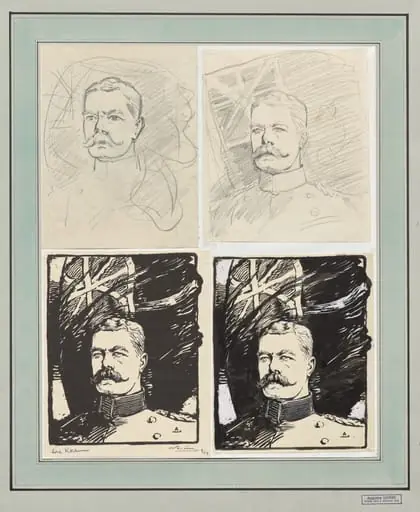 Lord Kitchener
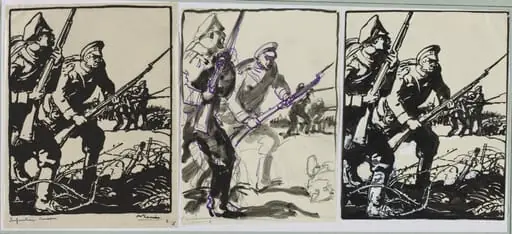 Infanterie russe
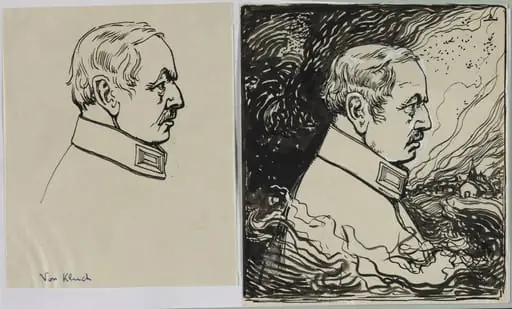 Von Kluck
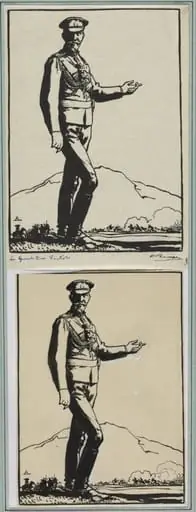 Le Grand Duc Victor
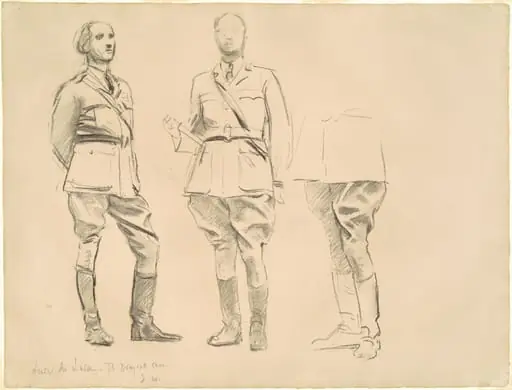 Studies for "General Officers of World War I"
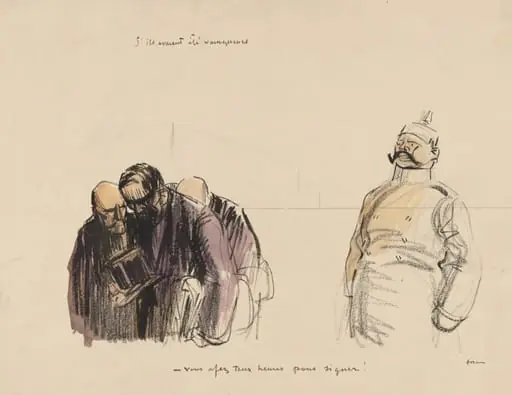 If they had been victorious - "You Have Two Hours in which to Sign"
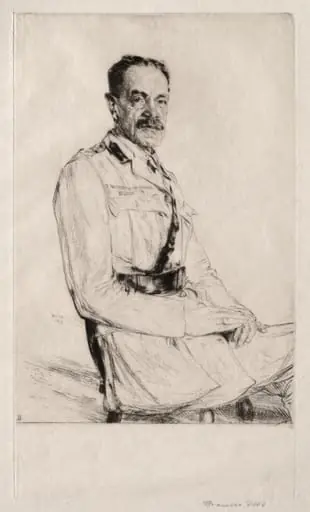 Major-General Sir John Edward Cooper
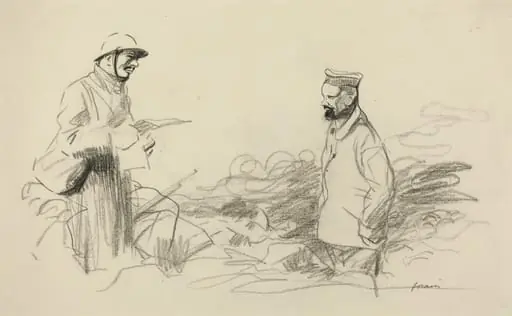 Poilu Acknowledging German Soldier
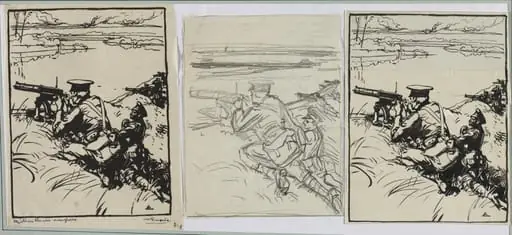 Mitrailleurs anglais