Artwork
L'Incendie de Louvain
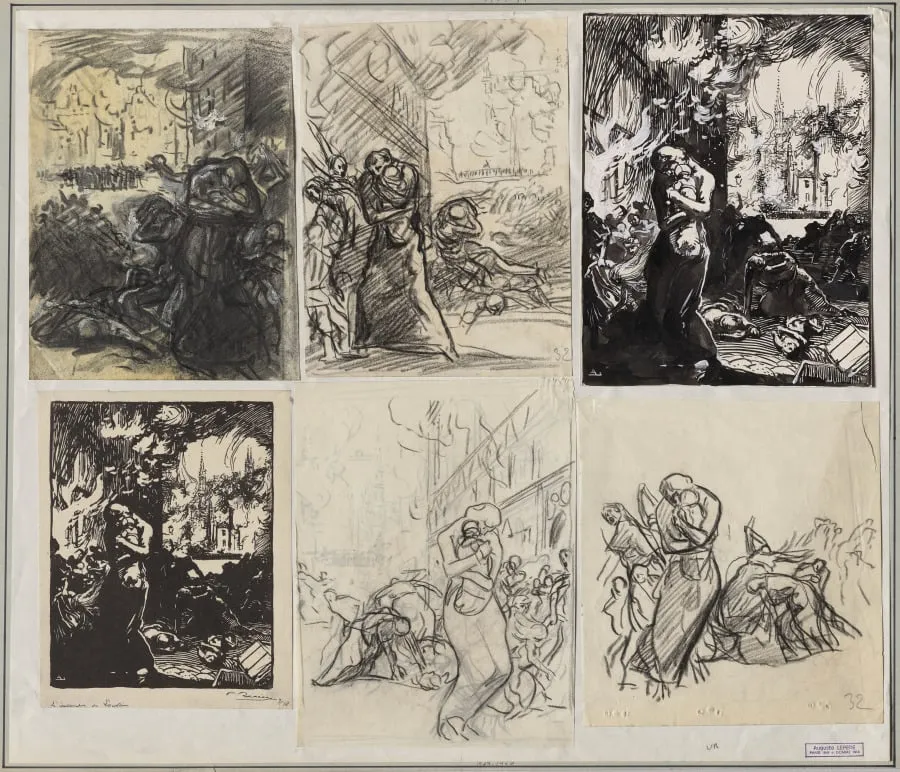
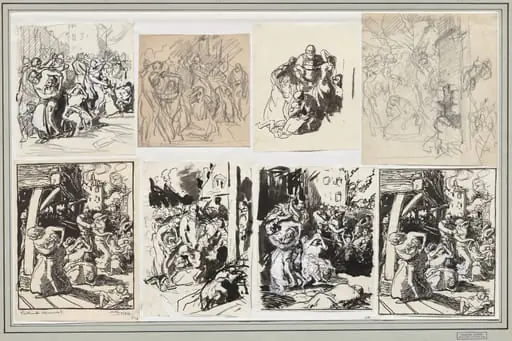
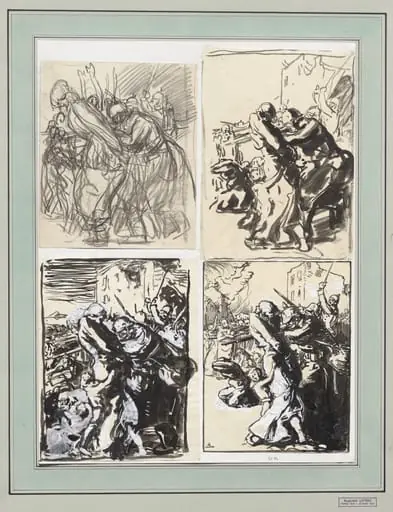
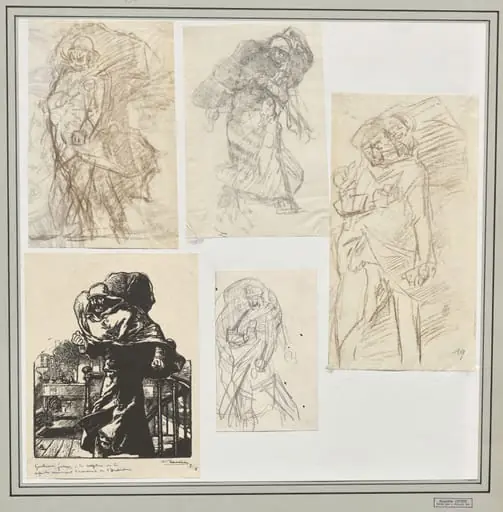
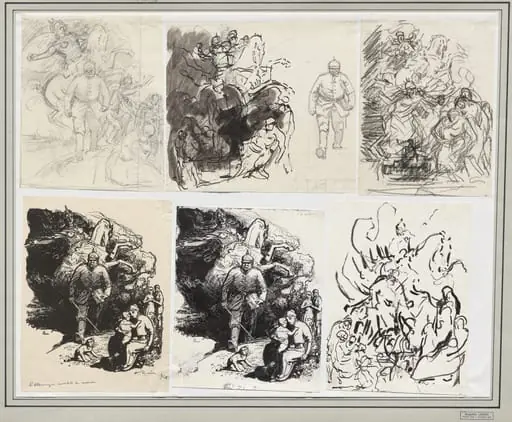
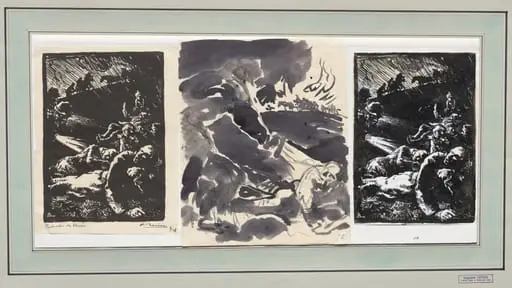
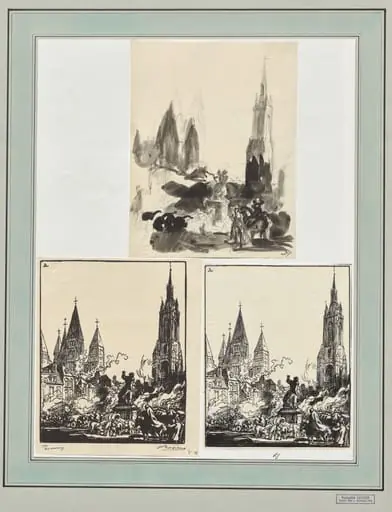
L'Incendie de Louvain is a drawing by Auguste Lepère. It dates from 1914 and is held in the collection of the Cleveland Museum of Art. Created in 1914 by French artist Auguste Louis Lepère, this drawing captures the burning of Louvain during the early months of World War I.
About this work
Overview
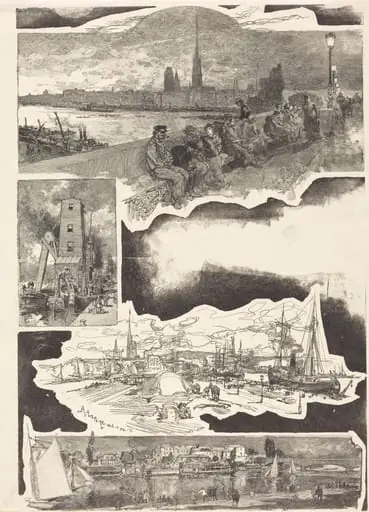
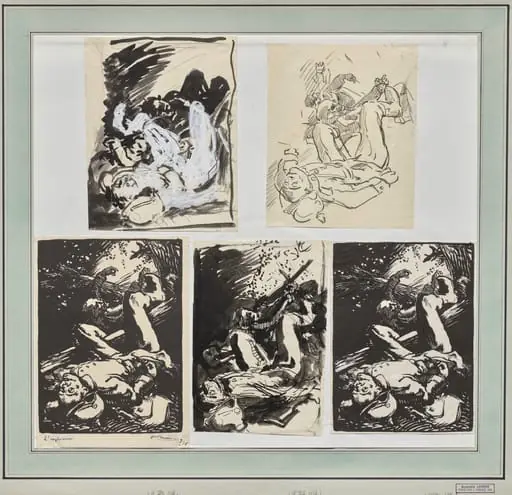
Created in 1914 by French artist Auguste Louis Lepère, this drawing captures the burning of Louvain during the early months of World War I. Lepère, recognized for his role in revitalizing wood engraving as a fine art medium, used the medium to document the devastation wrought by conflict, blending documentary precision with expressive line work.
Subject & Meaning
The scene portrays the town of Louvain engulfed in flames, with collapsing buildings and smoke obscuring the sky. The destruction of cultural landmarks, including the university library, is implied through the chaos of the composition. The image serves as a visual testimony to civilian suffering and the erasure of heritage during wartime.
Technique & Style
Lepère employed wood engraving, a technique involving incised lines on hard wood blocks, to achieve sharp contrasts and intricate detail. The dense, controlled hatching conveys the intensity of fire and collapse, while the monochrome palette heightens the somber tone. His method reflects a revivalist commitment to handcrafted printmaking over industrial reproduction.
History & Provenance
Produced shortly after German forces occupied Louvain in August 1914, the drawing was likely made in response to international reports of the town’s burning. It circulated among French and Allied audiences as part of wartime propaganda efforts, though Lepère’s focus remained on the physical ruin rather than political messaging.
Context
The destruction of Louvain became a symbol of cultural aggression in Allied narratives. Lepère’s work emerged amid a surge of artistic responses to the war, particularly in France, where printmakers turned to intimate, hand-made formats to convey the gravity of events too vast for traditional painting to capture effectively.
Legacy
Though not widely exhibited today, the drawing remains a significant example of early 20th-century printmaking used to document wartime trauma. Lepère’s commitment to wood engraving helped preserve the technique’s relevance in an age of mechanical reproduction, influencing later generations of artists who sought to merge craftsmanship with social witness.
Artist & collection
Artist
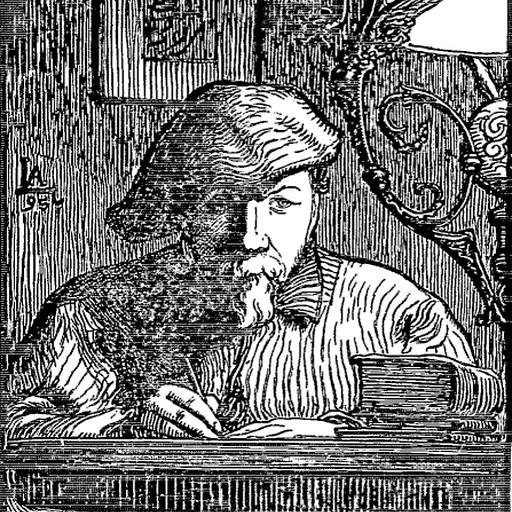
Louis-Auguste Lepère (30 November 1849 – 20 November 1918) was a French painter and etcher. Lepère is also considered a leader in the creative revival of wood engraving in Europe.