Artwork
Tournai
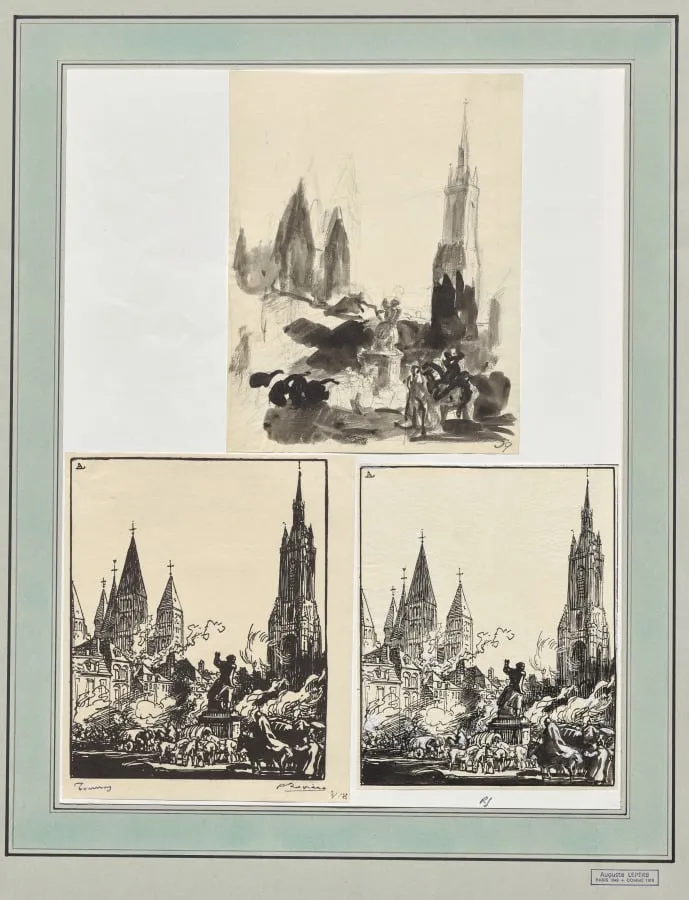
Tournai is a drawing by Auguste Lepère. It dates from 1914 and is held in the collection of the Cleveland Museum of Art.
About this work
Overview
Created in 1914 by French artist Auguste Louis Lepère, *Tournai* is a black-and-white drawing that captures the urban landscape of the Belgian city.
Created in 1914 by French artist Auguste Louis Lepère, *Tournai* is a black-and-white drawing that captures the urban landscape of the Belgian city. Executed in wood engraving, the work reflects Lepère’s dedication to reviving the medium in late 19th- and early 20th-century Europe. It is part of the permanent collection at The Cleveland Museum of Art, where it stands as an example of his precise, tonal approach to architectural and civic scenes.
Subject & Meaning
The drawing depicts Tournai’s skyline dominated by a tall church steeple, surrounded by dense, closely packed buildings. Figures in the foreground—walking, pausing, or gathered—suggest daily life in a medieval urban center. The church, both visually and symbolically central, anchors the composition, implying its enduring role in civic identity. The absence of color and the focus on structure and movement convey a quiet, observational tone rather than narrative drama.
Technique & Style
Lepère employed wood engraving to achieve fine gradations of gray through delicate line work and cross-hatching. The contrast between light and shadow defines architectural forms and creates a sense of depth without perspective distortion. The meticulous rendering of textures—stone facades, cobblestones, clothing—demonstrates his technical command. The composition is tightly controlled, with no overt embellishment, favoring clarity and atmospheric nuance over dramatic effect.
History & Provenance
The drawing was made during a period when Lepère was actively promoting wood engraving as a fine art form, distinct from commercial printing. It entered The Cleveland Museum of Art’s collection through documented acquisition, likely as part of broader efforts in the early 20th century to preserve European graphic arts. Its preservation reflects institutional interest in printmaking’s revival and the artist’s role within it.
Context
In 1914, Europe stood on the brink of war, and cities like Tournai carried centuries of layered history. Lepère’s focus on architectural permanence amid transient human activity may reflect a broader cultural preoccupation with endurance. His choice of a Belgian city, rather than a French one, suggests an interest in regional identity beyond national borders, aligning with contemporary artistic trends that valued local character over grandeur.
Legacy
Lepère’s *Tournai* exemplifies the quiet revival of wood engraving as a medium for artistic expression rather than reproduction. While not widely known outside specialized circles, his work influenced later printmakers who sought to elevate hand-carved imagery. The drawing remains a reference point for studies of early 20th-century graphic art, particularly in its balance of technical precision and observational realism.
Artist & collection
Artist
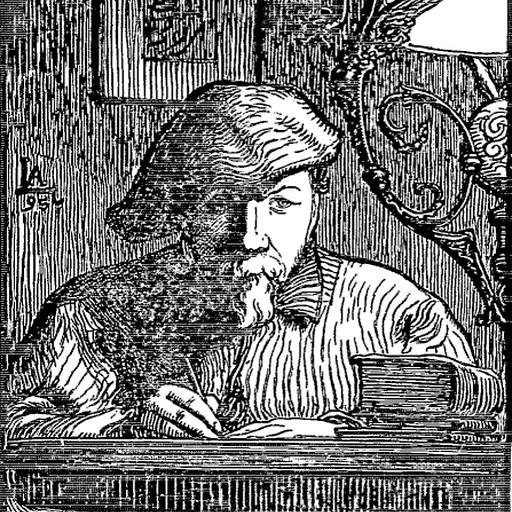
Louis-Auguste Lepère (30 November 1849 – 20 November 1918) was a French painter and etcher. Lepère is also considered a leader in the creative revival of wood engraving in Europe.

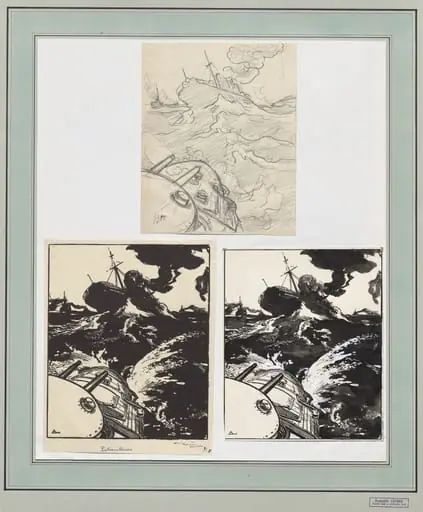 Patrouilleurs
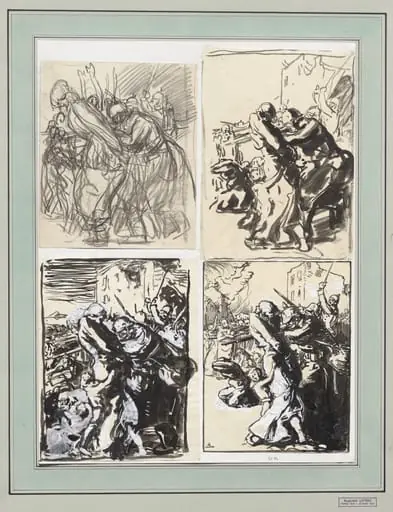 Fusilade dans une rue
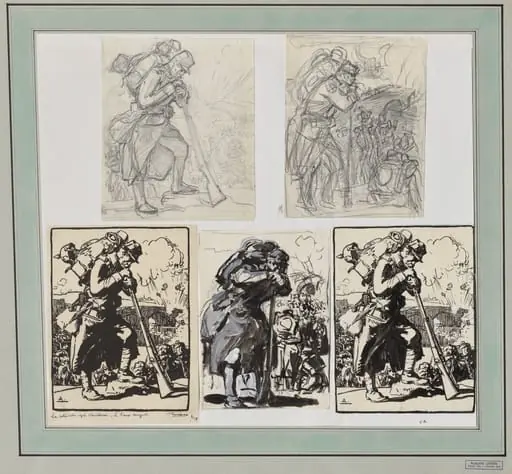 La Retraite après Charleroi...
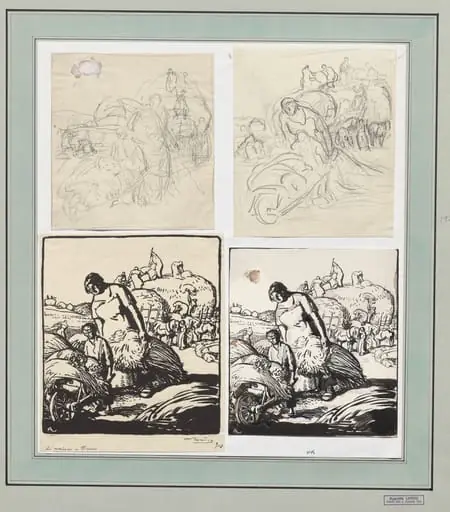 La Moisson en France
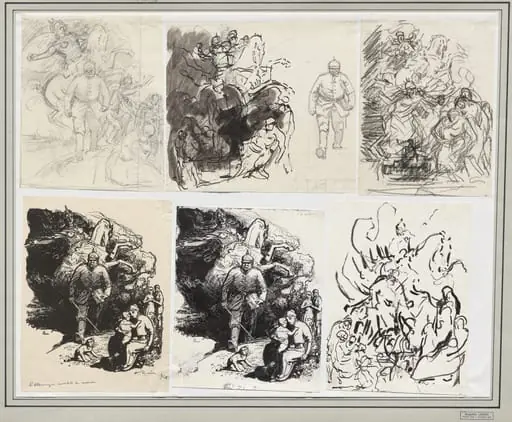 L'Allemagne envahit le monde
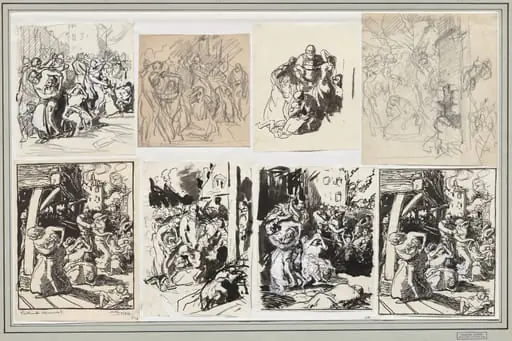 Vaillants Allemands!!
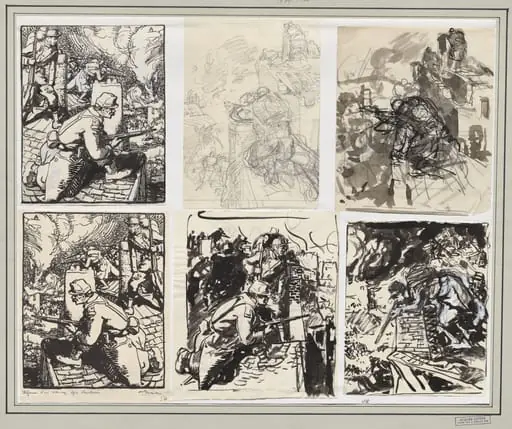 Défense d'un village après Charleroi
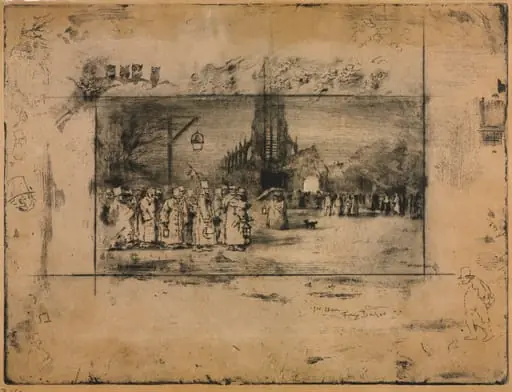 The Midnight Mass
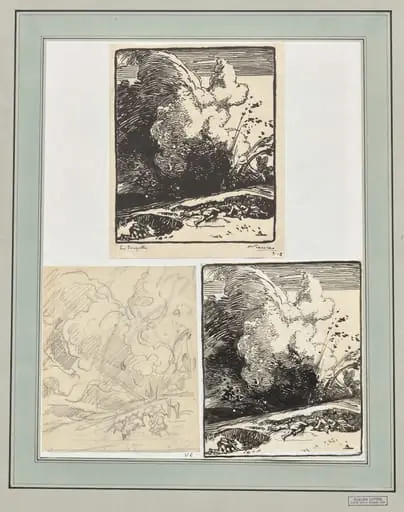 The Mine
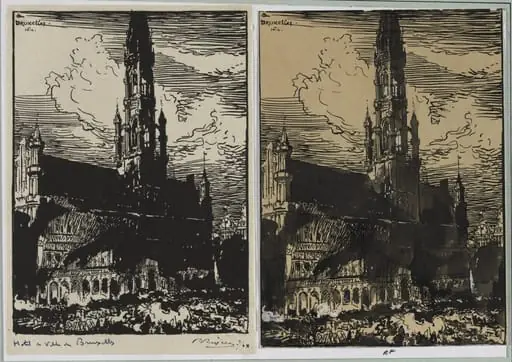 Hôtel de Ville de Bruxelles en feu
 The Stagecoach for Parliamentary Purposes (recto) Study for Cab and Front Left Wheel of Coach and Study for Head of Crowned Figure Seated on Top of Coach (verso)
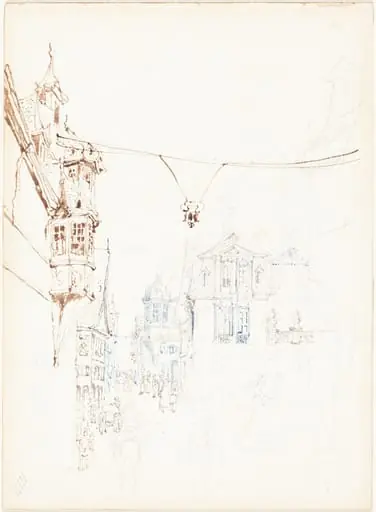 Continental Street Scene