Artwork
La Procession de la Fête-Dieu à Nantes
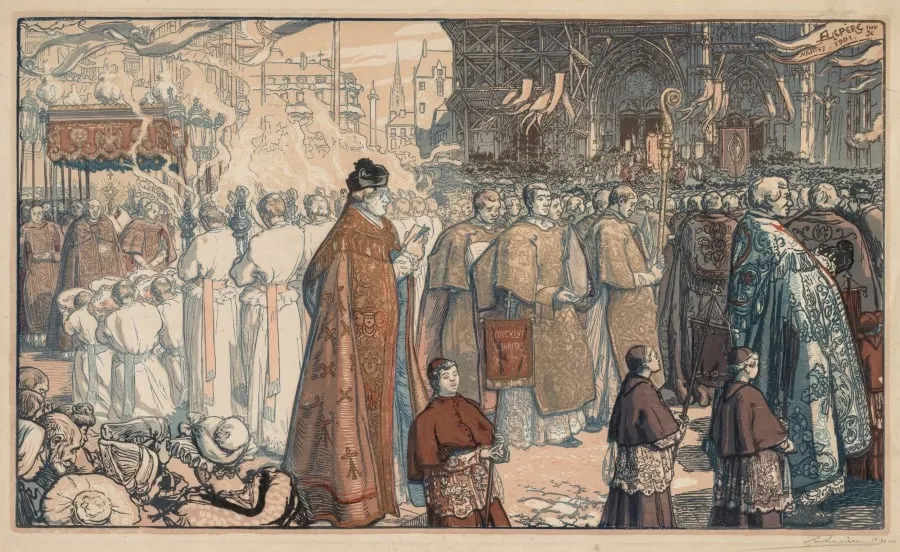
La Procession de la Fête-Dieu à Nantes is a print by Auguste Lepère. It dates from 1901 and is held in the collection of the Cleveland Museum of Art. Created in 1901 by French artist Auguste Louis Lepère, this wood engraving captures a religious procession in Nantes.
About this work
Overview
The work is part of the permanent collection at The Cleveland Museum of Art, where it stands as a quiet testament to early 20th-century printmaking revival.
Created in 1901 by French artist Auguste Louis Lepère, this wood engraving captures a religious procession in Nantes. Lepère, instrumental in revitalizing wood engraving as a fine art medium in Europe, rendered the scene with delicate, flowing lines and restrained tonal gradations. The work is part of the permanent collection at The Cleveland Museum of Art, where it stands as a quiet testament to early 20th-century printmaking revival.
Subject & Meaning
The print depicts the Fête-Dieu, a Catholic feast celebrating the Eucharist, as it moved through the streets of Nantes. Participants, dressed in traditional garments, carry religious banners and symbols, reflecting communal devotion. The procession’s structure—led by figures in ornate robes—emphasizes ritual order, while the dense crowd suggests civic participation. The scene is not idealized but grounded in observed social practice.
Technique & Style
Lepère employed fine, controlled wood engraving to achieve subtle texture and depth. Soft, interwoven lines suggest movement through the crowd, while muted tones preserve the quiet solemnity of the occasion. Facial features are simplified yet expressive, and the intricate folds of robes are rendered with precision. The composition draws the eye toward the distant cathedral, anchoring the scene in its architectural context.
History & Provenance
The print was made in 1901 during Lepère’s active period of promoting wood engraving as a serious artistic medium. It entered the collection of The Cleveland Museum of Art through documented acquisition, likely as part of early 20th-century efforts to expand holdings in European graphic arts. Its preservation reflects institutional recognition of Lepère’s role in the revival of traditional print techniques.
Context
In early 1900s France, religious processions remained culturally significant despite growing secularism. Lepère’s work documents a fading tradition with ethnographic care, aligning with broader artistic interest in regional customs. His choice of wood engraving—historically used for reproduction—elevated it to a vehicle for personal expression, bridging craft and fine art in an era of rapid industrial change.
Legacy
Lepère’s print contributed to the reestablishment of wood engraving as a respected artistic form in Europe. While not widely reproduced, the work remains a key example of how traditional techniques could convey contemporary social observation. Its presence in a major American museum underscores its role in transnational appreciation of French graphic art at the turn of the century.
Artist & collection
Artist
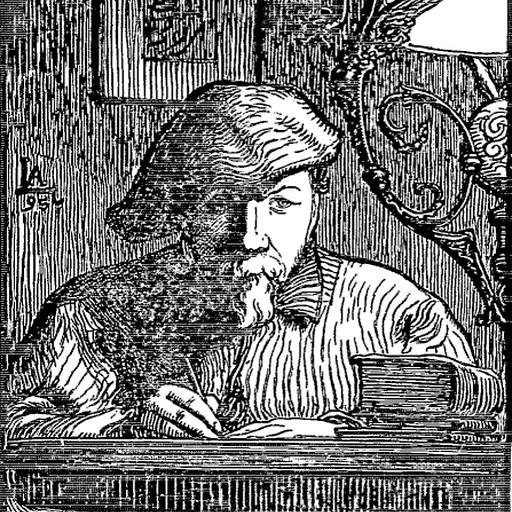
Louis-Auguste Lepère (30 November 1849 – 20 November 1918) was a French painter and etcher. Lepère is also considered a leader in the creative revival of wood engraving in Europe.

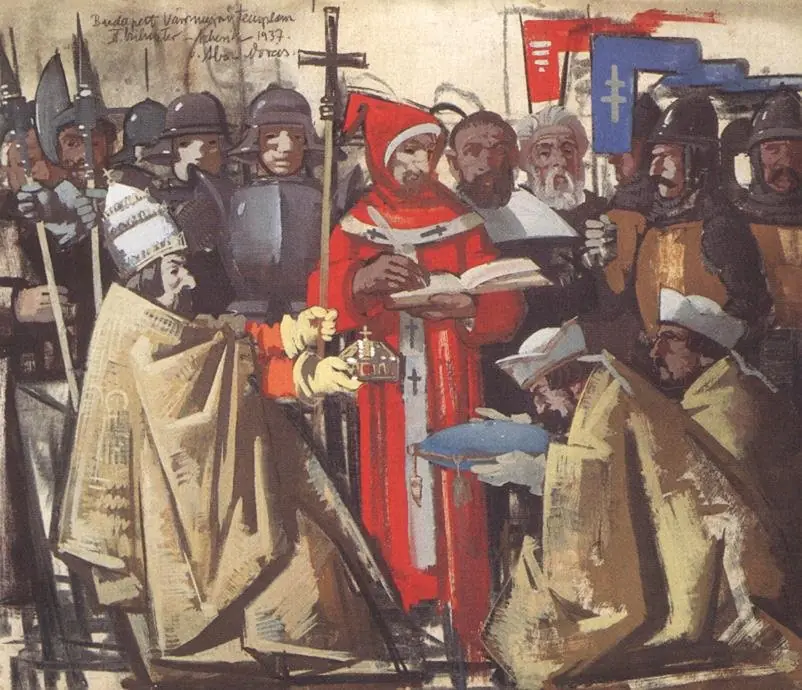 Pope Sylvester II and Abbot Asztrik
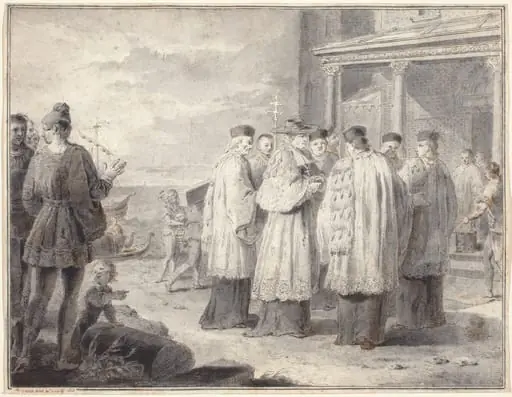 Paulinus, Cardinal and Patriarch of Aquileia, Transfers His Seat to Grado
 The arrival of Cardinal Wolsey at Leicester Abbey, 1530
 The Festival of the Ommegang in Brussels: the procession of Our Lady of Sablon
![Presentation of the Virgin in the Temple [center plate], by John Baptist Jackson](https://artifactworldgallery.com/img/john-baptist-jackson--presentation-of-the-virgin-in-the-temple-center-plate--ef15e741baf4b279-w320.webp) Presentation of the Virgin in the Temple [center plate]
Presentation of the Virgin in the Temple [center plate] Plague Victims of Rome (Les pestiferes de Rome)
 Sketches in Belgium and Germany, First Series, Tomb of Maximilian 1st, Innsbruck
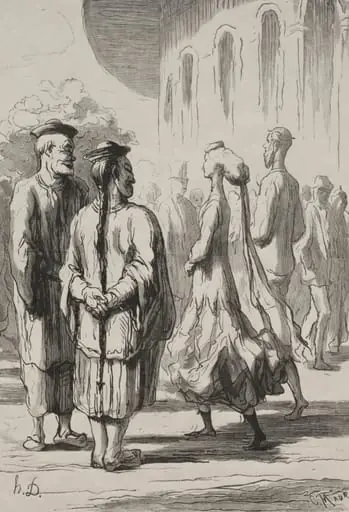 At the Universal Exhibition: Who are the real Chinese?
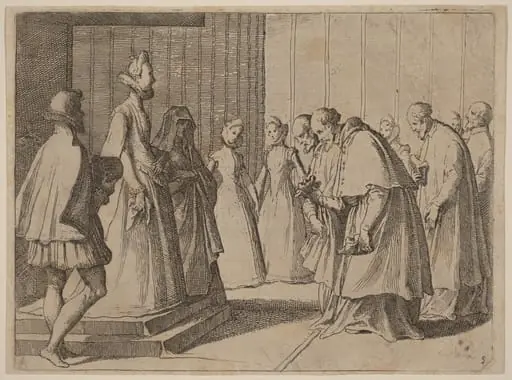 Margaret of Austria Receiving the Homage of Cardinals and Prelates
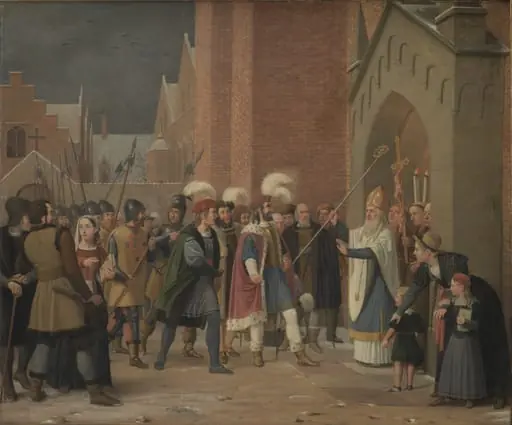 Svend Estridsen and Bishop Vilhelm