Artwork
Plague Victims of Rome (Les pestiferes de Rome)
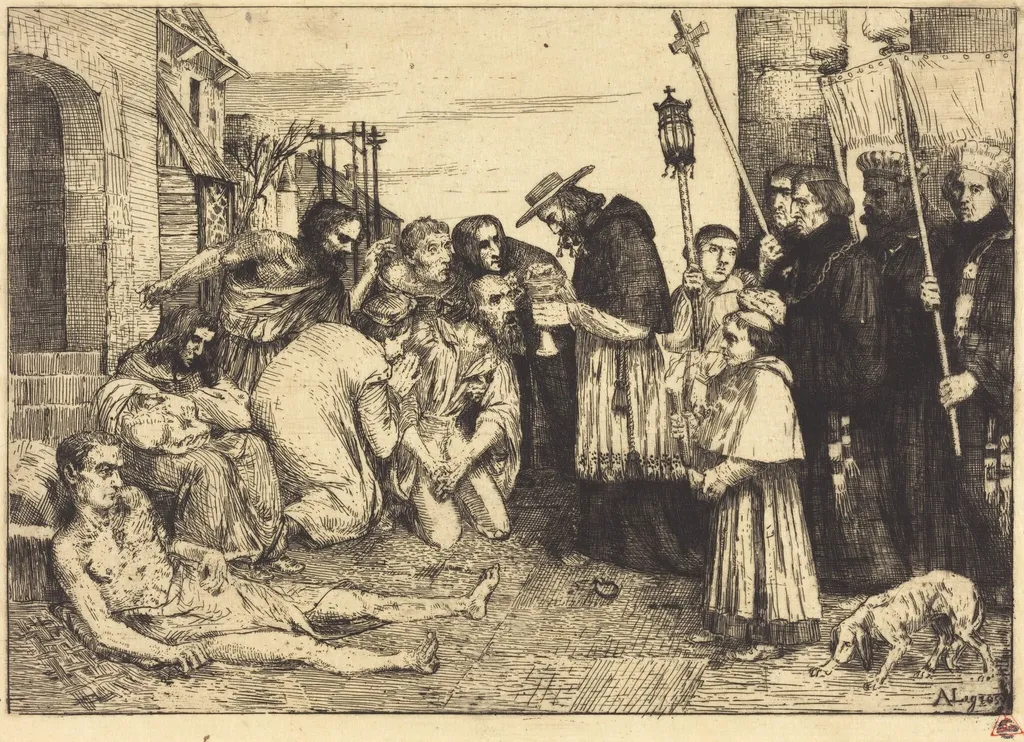
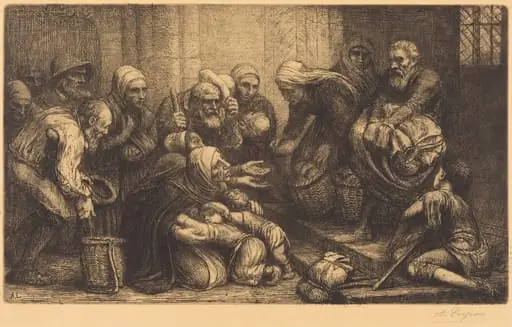
Plague Victims of Rome (Les pestiferes de Rome) is an ink print by the Romanticist artist Alphonse Legros. It dates from 1874 and is held in the collection of the National Gallery of Art.
About this work
Overview
A dog in the foreground and a distant building with an arched doorway and cross reinforce the atmosphere of desolation.
Alphonse Legros’s 1874 etching *Plague Victims of Rome* presents a bleak tableau of a city struck by disease. The composition centers on a cleric holding a staff and lantern, flanked by a figure that may be a physician, while surrounding figures kneel or lie prostrate, suggesting widespread suffering. A dog in the foreground and a distant building with an arched doorway and cross reinforce the atmosphere of desolation.
Subject & Meaning
The work captures a moment of collective anguish during a plague outbreak, emphasizing the interplay of religious authority and medical intervention. The priest’s illuminated staff suggests guidance amid darkness, while the possible doctor hints at early attempts at care. The fallen bodies and the dog’s presence underscore the indiscriminate reach of mortality, inviting reflection on human vulnerability and communal response to catastrophe.
Technique & Style
Executed as an etching, Legros employs fine line work and varied hatching to render texture and depth, creating stark contrasts between light and shadow. The crisp delineation of figures against a muted background highlights the central drama, while the subtle gradations convey atmospheric gloom. This approach reflects Legros’s broader commitment to reviving the expressive potential of printmaking in late‑19th‑century Britain.
History & Provenance
Born in France and naturalised as a British citizen after settling in London in 1863, Legros was a pivotal figure in the British etching revival, both as a practitioner and educator. *Plague Victims of Rome* was produced during his mature period, illustrating his interest in historical and somber themes. The print has since been held in several public collections, documenting its continued relevance to studies of Victorian print culture.
Context
The etching emerges from a Victorian fascination with historic calamities, aligning with contemporary concerns about public health and moral order. By invoking a Roman plague, Legros connects past epidemic narratives to his own era’s anxieties, while the religious iconography reflects the period’s preoccupation with moral instruction through art.
Own this work as a print
Artist & collection

Artist
Alphonse Legros (French pronunciation: ; 8 May 1837 – 8 December 1911) was a French, later British, painter, etcher, sculptor, and medallist.

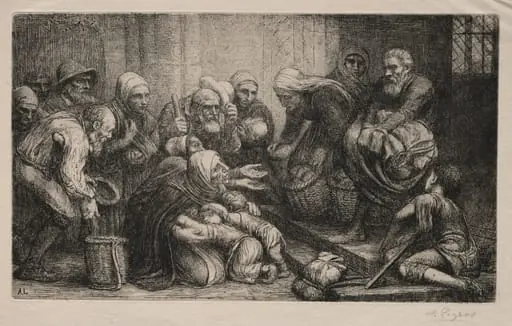 The Beggars of Bruges
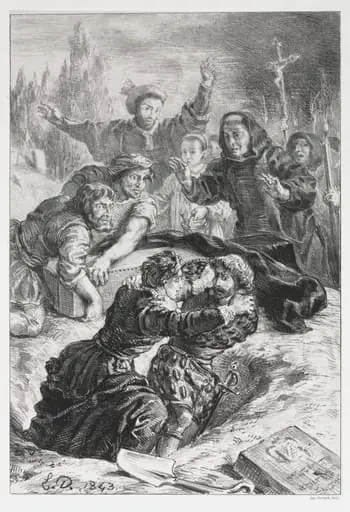 Hamlet: Hamlet and Laertes in the Grave of Ophelia
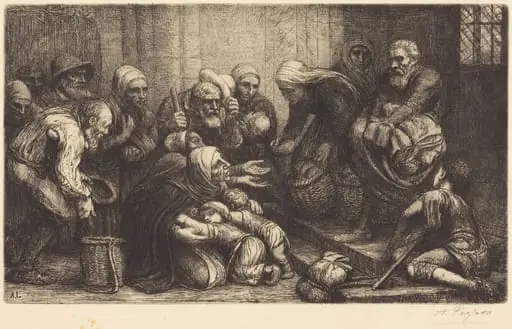 Beggars of Brussels (Les mendiants de Bruges)
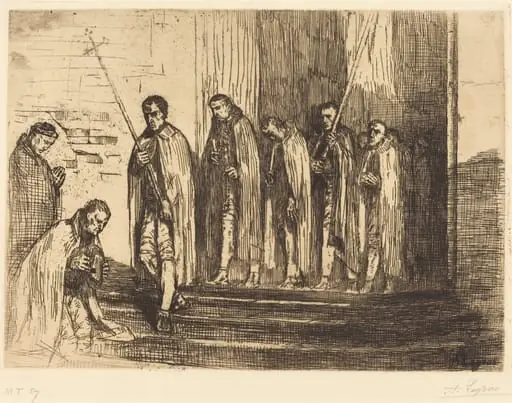 Procession Leaving a Church (La sortie de la procession)
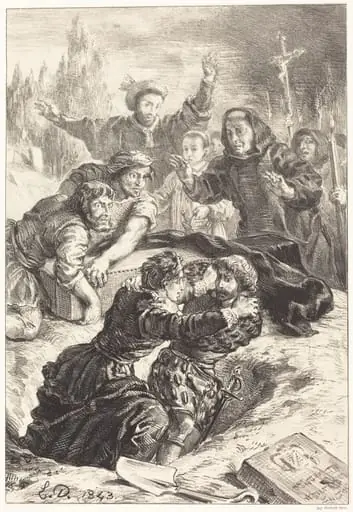 Hamlet and Laertes in the Grave of Ophelia (Act V, Scene I)
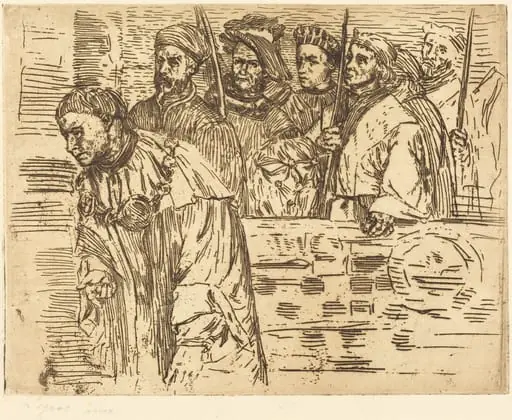 Archers (Les archers)
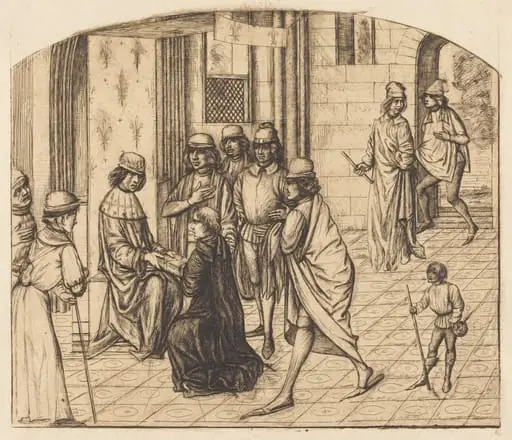 Présentation du Valère Maxime au Rois Louis XI (The Printer Valerius Maximus Being Presented to King Louis XI)
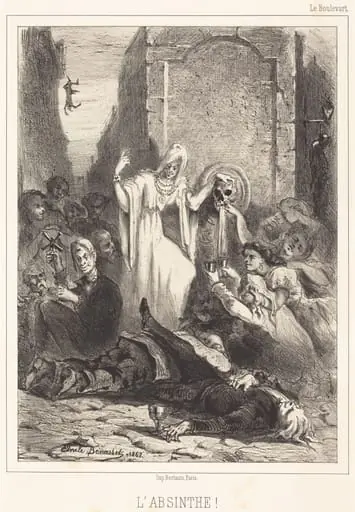 L'Absinthe!
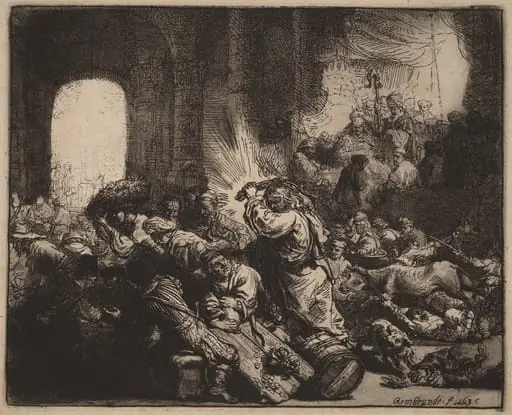 Christ Driving the Money Changers from the Temple
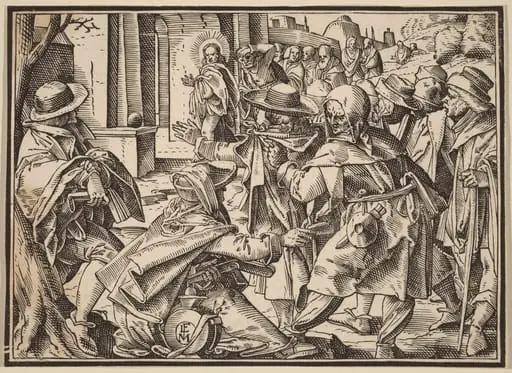 Christ Tells His Disciples of the Last Judgment
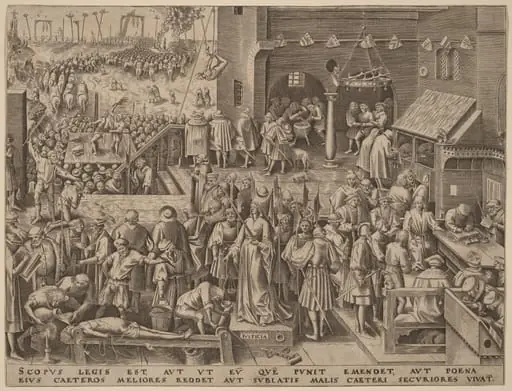 Justice
 Beggars of Brussels (Les mendiants de Bruges)