Artwork
Le Permissionnaire
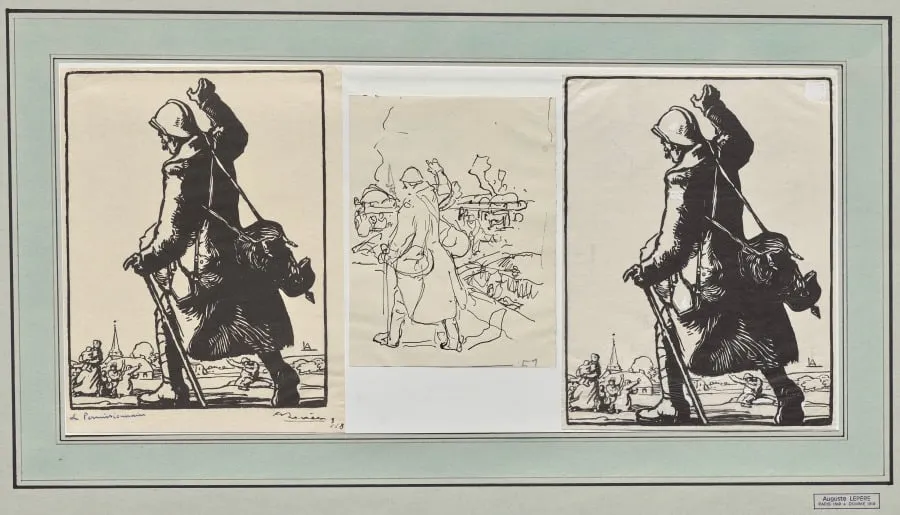
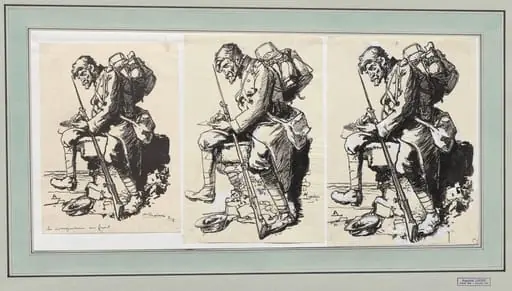
Le Permissionnaire is a drawing by Auguste Lepère. It dates from 1914 and is held in the collection of the Cleveland Museum of Art.
About this work
Overview
The drawing is part of the Cleveland Museum of Art’s collection, reflecting his interest in everyday military life during a period of rising tension in Europe.
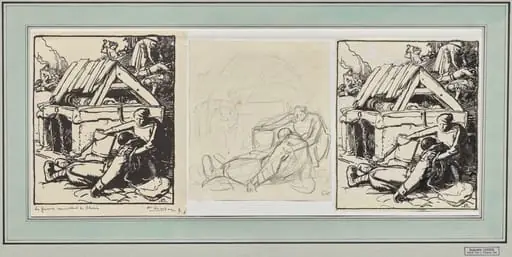
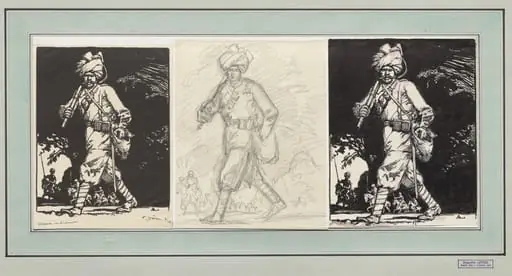
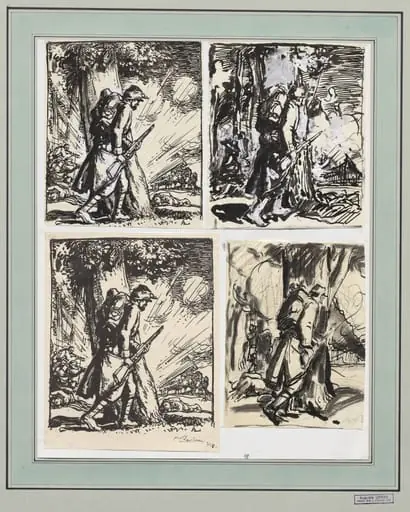
Created in 1914 by French artist Auguste Louis Lepère, *Le Permissionnaire* is a pencil drawing that captures a single figure in three sequential stages. Lepère, known for revitalizing wood engraving, used this work to explore movement and fatigue through incremental revisions. The drawing is part of the Cleveland Museum of Art’s collection, reflecting his interest in everyday military life during a period of rising tension in Europe.
Subject & Meaning
The central figure is a soldier on leave, depicted walking with a cane, a heavy coat, and a bundle. His slumped posture and weary stance suggest physical exhaustion or injury, possibly from frontline service. The sparse townscape behind him—a church steeple and modest buildings—hints at a return to civilian life, yet his demeanor conveys emotional distance. The repetition of his form underscores the lingering weight of war, even in moments of temporary respite.
Technique & Style
Lepère employed rapid pencil strokes to render three variations of the soldier, each with differing levels of finish. The central sketch is loose and gestural, while the outer versions are more defined but remain deliberately unpolished. This method reveals his process: observing motion and refining form through iteration. The minimal background and lack of detail focus attention on the figure’s physical state, aligning with his interest in expressive line over decorative composition.
History & Provenance
The drawing was produced in 1914, just before the outbreak of full-scale war in Europe. It entered the Cleveland Museum of Art’s collection through documented acquisition, though its earlier ownership remains unrecorded. As a work by Lepère, it reflects his broader engagement with printmaking and observational drawing during the early 20th century, a time when artists increasingly turned to intimate, human subjects amid societal upheaval.
Context
In 1914, France was mobilizing for war, and soldiers on temporary leave were common sights in towns. Lepère, though not a combatant, observed these figures closely, capturing their physical and psychological strain. His focus on the ordinary soldier aligns with broader European artistic trends that shifted from grand narratives to quiet, personal moments—prioritizing authenticity over idealization in the face of impending conflict.
Legacy
Lepère’s work, including *Le Permissionnaire*, contributed to the renewed appreciation for wood engraving and observational drawing in early 20th-century Europe. While not widely exhibited outside specialized circles, his approach influenced later artists interested in the expressive potential of line and the dignity of everyday subjects. The drawing remains a quiet testament to the human cost of war, preserved as a record of perception rather than propaganda.
Artist & collection
Artist
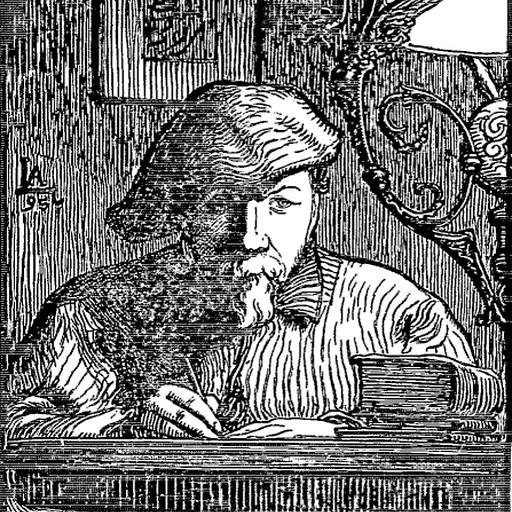
Louis-Auguste Lepère (30 November 1849 – 20 November 1918) was a French painter and etcher. Lepère is also considered a leader in the creative revival of wood engraving in Europe.