Artwork
Armée indienne
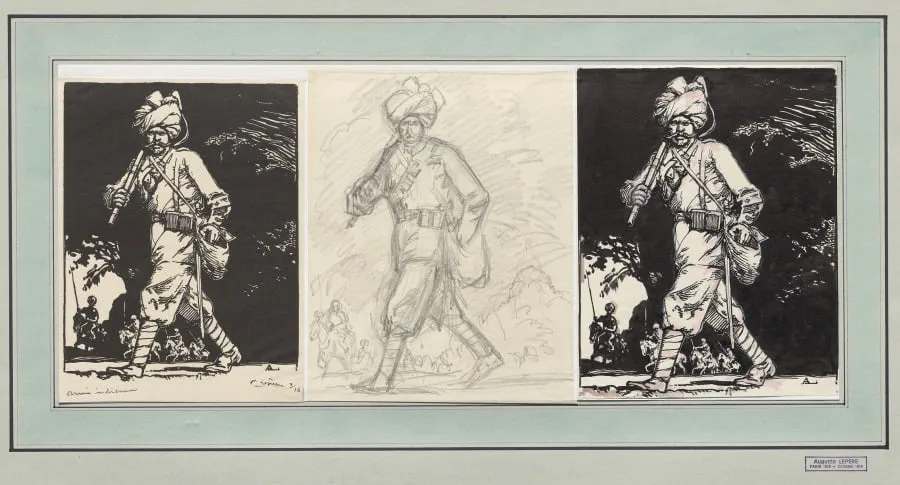
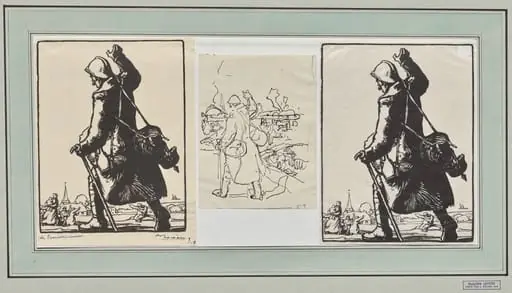
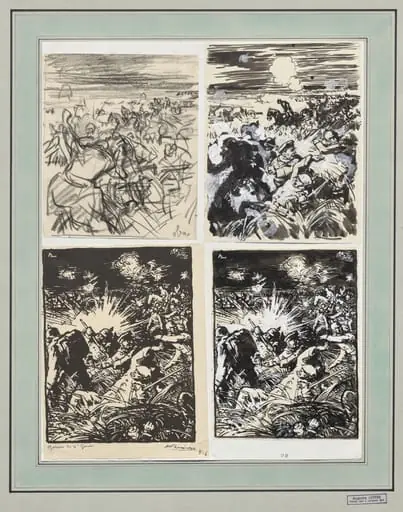
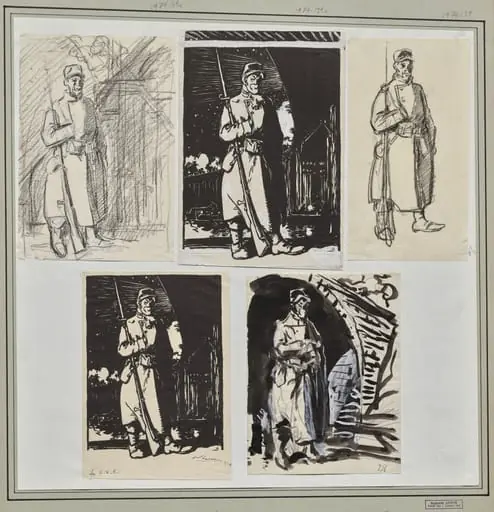
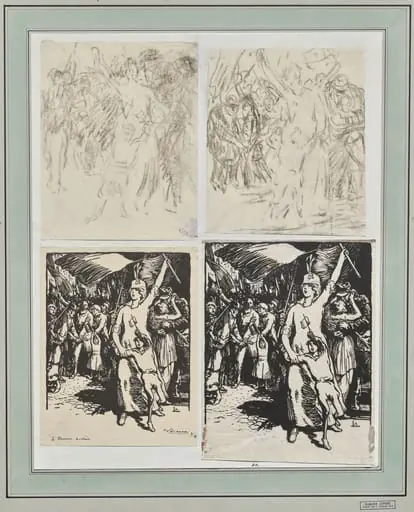
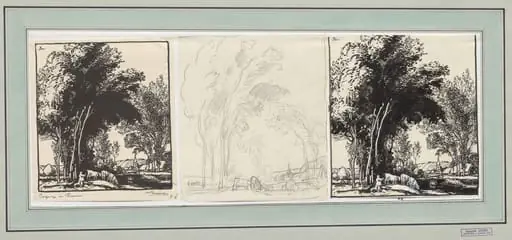
Armée indienne is a drawing by Auguste Lepère. It dates from 1914 and is held in the collection of the Cleveland Museum of Art.
About this work
Overview
The work reflects Lepère’s interest in dynamic representation and his broader engagement with graphic media during the early twentieth century.
Created in 1914 by French artist Auguste Louis Lepère, *Armée indienne* is a drawing held by the Cleveland Museum of Art. The composition consists of three adjoining sketches that together form a triptych, each portraying a similarly dressed figure in motion. The work reflects Lepère’s interest in dynamic representation and his broader engagement with graphic media during the early twentieth century.
Subject & Meaning
Each panel shows a man clad in a turban and military uniform, captured mid‑stride with his right leg extended forward. A vague crowd recedes in the background, their features indistinct, suggesting a larger, perhaps ceremonial or martial, context. The repeated figure and its forward motion convey a sense of urgency or purpose, inviting viewers to contemplate themes of identity, authority, and movement.
Technique & Style
The central image is executed in pencil, while the flanking panels rely on black‑and‑white drawing, creating a subtle tonal contrast across the triptych. Lepère’s handling of line and shading emphasizes volume and depth, employing chiaroscuro to model the figure against an ambiguous backdrop. The light blue border framing the sketches adds a modest decorative element without detracting from the drawing’s graphic clarity.
History & Provenance
Auguste Lepère, noted for revitalising wood engraving in Europe, produced *Armée indienne* toward the end of his career. The drawing entered the collection of the Cleveland Museum of Art, where it remains accessible to the public and scholars as part of the museum’s holdings of early twentieth‑century European works on paper.
Context
The work dates from the onset of World War I, a period when European artists frequently explored themes of conflict, displacement, and cultural encounters. Lepère’s choice of an Indian‑styled soldier reflects contemporary fascination with exotic subjects and the broader colonial discourse influencing artistic production at the time.
Artist & collection
Artist
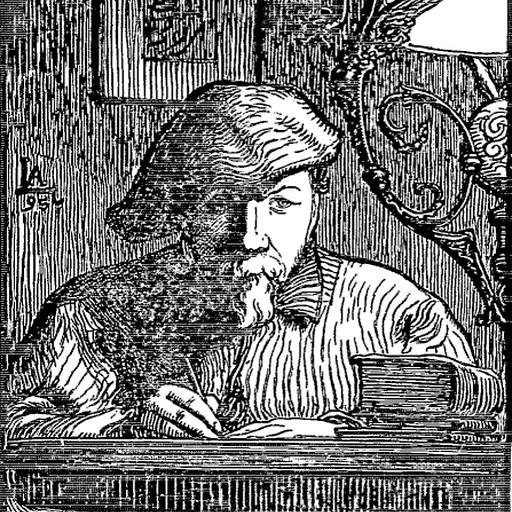
Louis-Auguste Lepère (30 November 1849 – 20 November 1918) was a French painter and etcher. Lepère is also considered a leader in the creative revival of wood engraving in Europe.