Artwork
Joffre, père du soldat
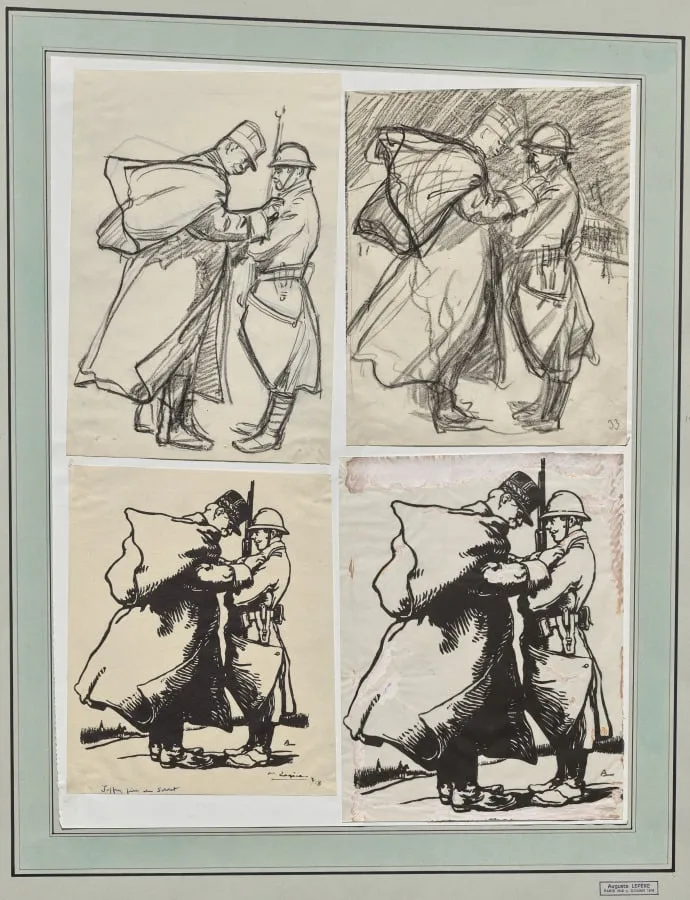
Joffre, père du soldat is a drawing by Auguste Lepère. It dates from 1914 and is held in the collection of the Cleveland Museum of Art.
About this work
Overview
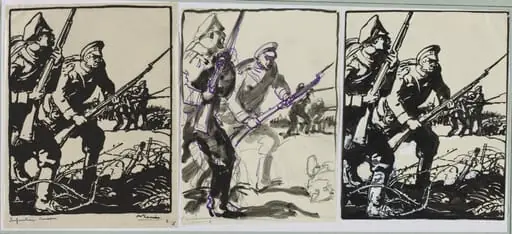
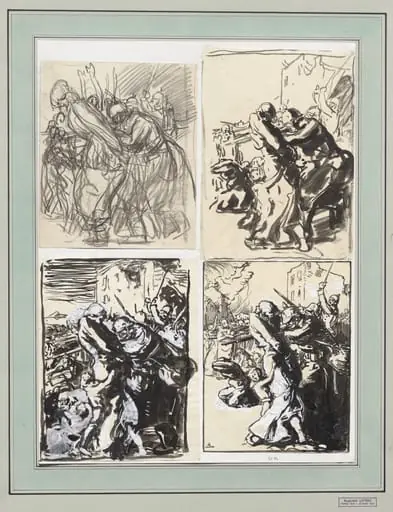
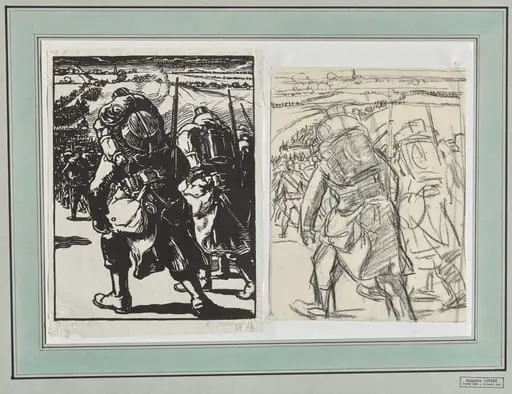
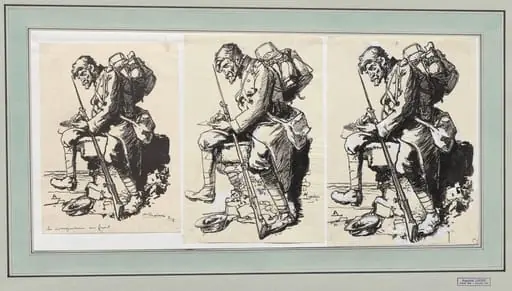
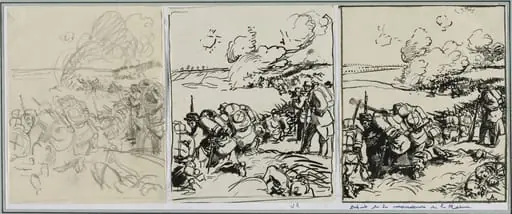
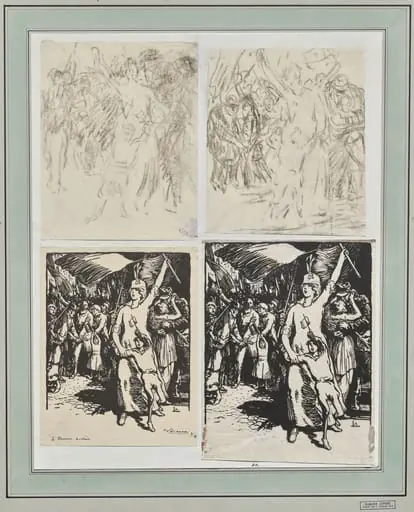
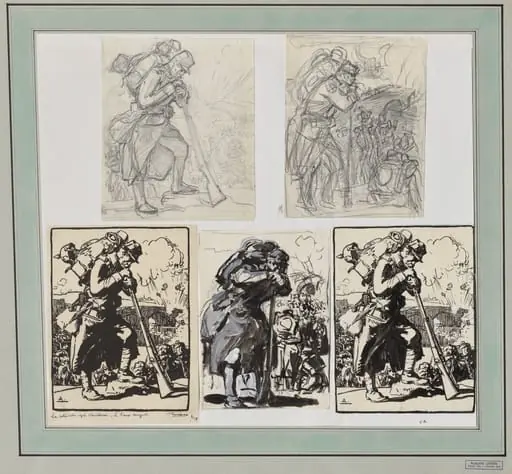
Auguste Louis Lepère’s 1914 wood engraving *Joffre, père du soldat* is a black-and-white print that captures the spirit of French soldiers at the outset of World War I. Created during a resurgence of interest in wood engraving as a serious artistic medium, the work reflects Lepère’s technical precision and his commitment to documenting contemporary military life through print.
Subject & Meaning
The image presents four dynamic sketches of French infantrymen in motion, each rendered with distinct posture and gesture. One figure holds a flag, suggesting national identity and resolve. The title, invoking Joffre as a paternal figure to the soldier, frames the military leadership as a protective force, reinforcing a collective sense of duty and sacrifice during wartime.
Technique & Style
Lepère employed wood engraving to achieve sharp contrasts and rhythmic linework. Bold, expressive strokes define the soldiers’ forms, while varying line density creates texture and movement. The absence of color heightens the emotional gravity, and the interplay of light and shadow—though not classical chiaroscuro—adds spatial depth and dramatic tension to the composition.
History & Provenance
The work’s original context was likely journalistic or propagandistic, though its artistic merit ensured its preservation in institutional collections.
Produced in 1914, the engraving emerged as France mobilized for war, aligning with state-sponsored imagery that sought to unify public sentiment. Lepère, already known for reviving traditional print methods, contributed to a wave of wartime graphics distributed in periodicals and posters. The work’s original context was likely journalistic or propagandistic, though its artistic merit ensured its preservation in institutional collections.
Context
In 1914, wood engraving was a vital medium for mass communication, bridging fine art and journalism. Lepère’s work responded to a cultural moment when visual imagery shaped national identity. The depiction of soldiers as active, individualized figures—rather than faceless masses—reflected a broader shift toward humanizing the common soldier in wartime representation.
Legacy
Lepère’s engraving stands as a quiet testament to the role of print in wartime memory. While not widely exhibited today, it remains a significant example of early 20th-century French graphic art that elevated technical craft to convey civic and emotional weight. Its influence endures in the tradition of socially engaged printmaking that followed.
Artist & collection
Artist
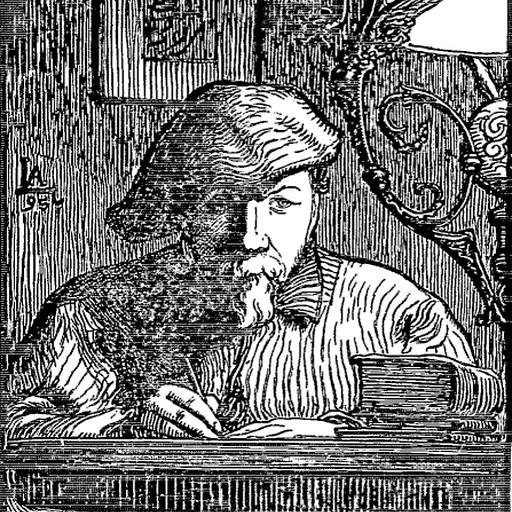
Louis-Auguste Lepère (30 November 1849 – 20 November 1918) was a French painter and etcher. Lepère is also considered a leader in the creative revival of wood engraving in Europe.