Artwork
Le roi des Belges dans les tranchées
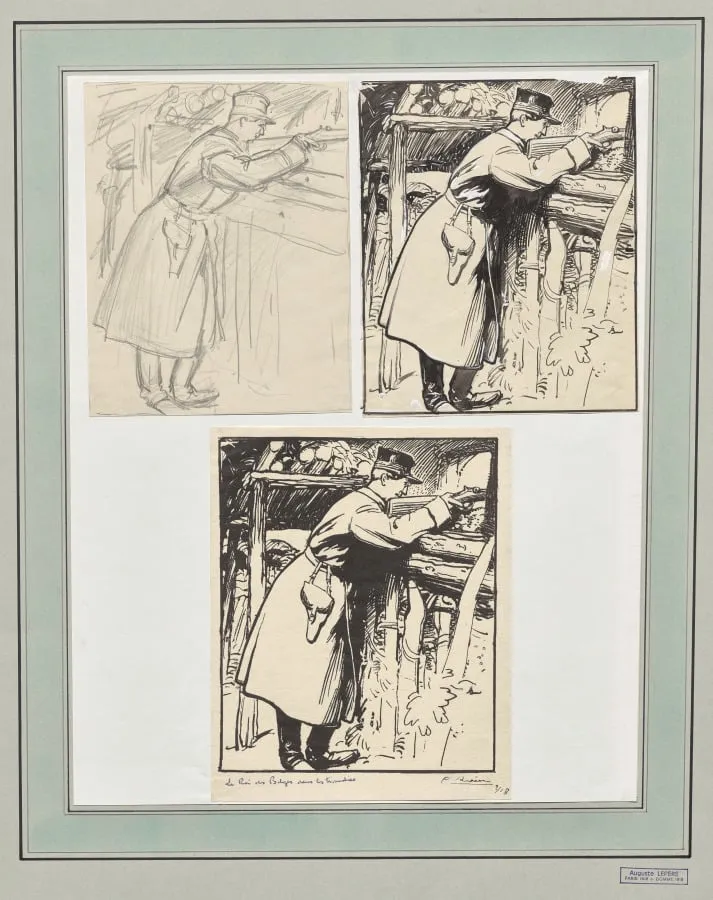
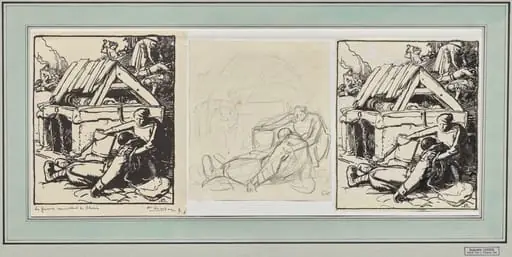
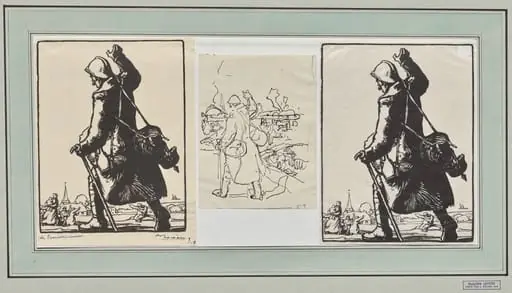
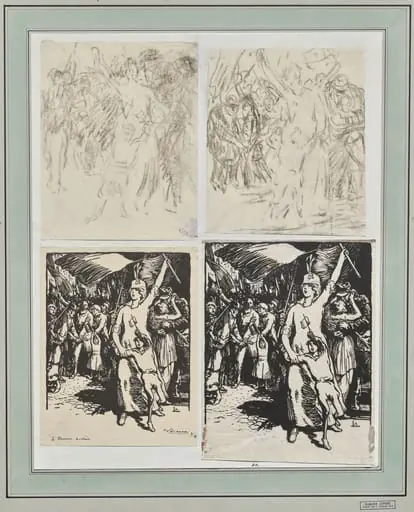
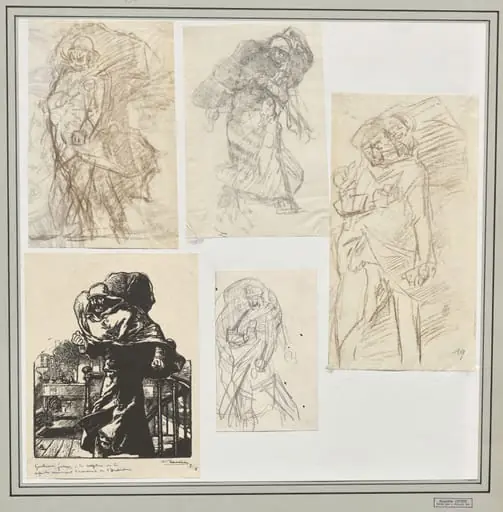
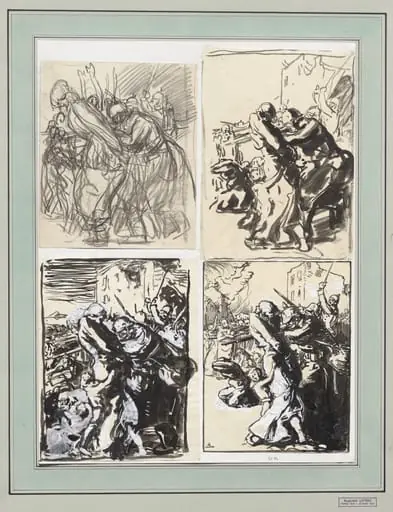
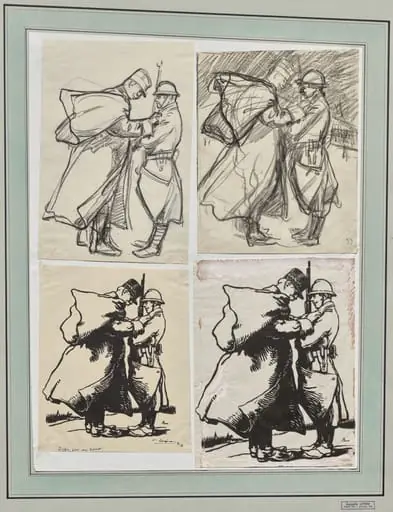
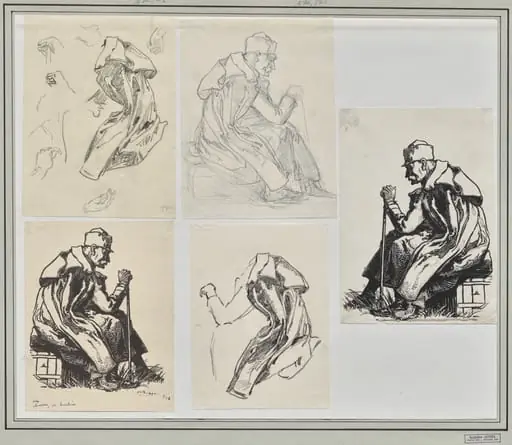
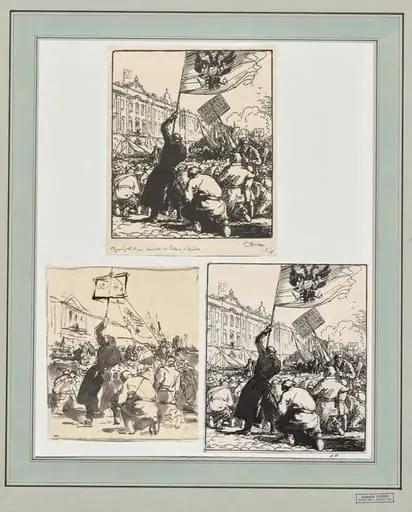
Le roi des Belges dans les tranchées is a drawing by Auguste Lepère. It dates from 1914 and is held in the collection of the Cleveland Museum of Art.
About this work
Overview
Le roi des Belges dans les tranchées is a 1914 drawing by Auguste Louis Lepère, a key figure in the European wood engraving revival. The work is part of The Cleveland Museum of Art's collection.
Subject & Meaning
The drawing depicts a dignified, coat-and-hatted figure, likely a monarch or leader, observing through binoculars from a trench. Attendants behind mirror his gaze, implying a scene of military inspection or observation, possibly referencing King Albert I of Belgium's wartime presence in trenches.
Technique & Style
Executed in black and white, the piece features expressive lines and nuanced shading, characteristic of Lepère's printmaking background. The monochrome palette and linear emphasis evoke a sense of sobriety and immediacy.
History & Provenance
Created in 1914, during World War I, the drawing's origins and early ownership are not detailed in available information. It is currently held in the collection of The Cleveland Museum of Art.
Context
The work reflects the wartime context of 1914, potentially alluding to King Albert I of Belgium's known presence in trenches during World War I. It may symbolize leadership or observation amidst conflict.
Legacy
As part of Lepère's oeuvre, the drawing contributes to the understanding of early 20th-century war art and the artist's role in wood engraving's revival. Its presence in a major museum collection ensures ongoing study and appreciation.
Artist & collection
Artist
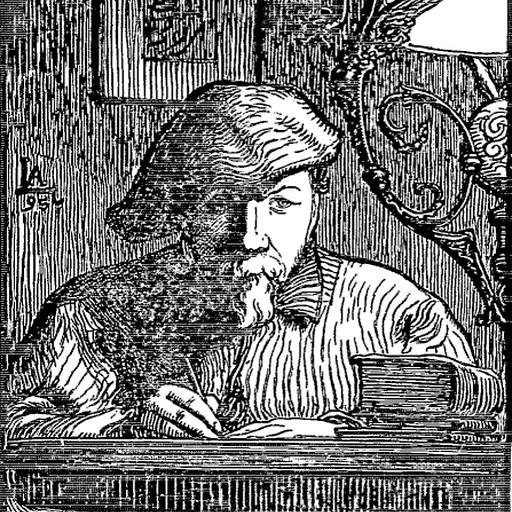
Louis-Auguste Lepère (30 November 1849 – 20 November 1918) was a French painter and etcher. Lepère is also considered a leader in the creative revival of wood engraving in Europe.