Artwork
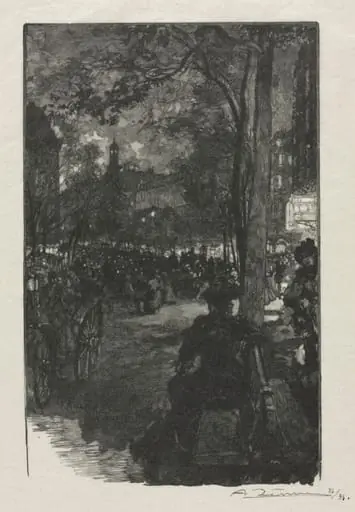
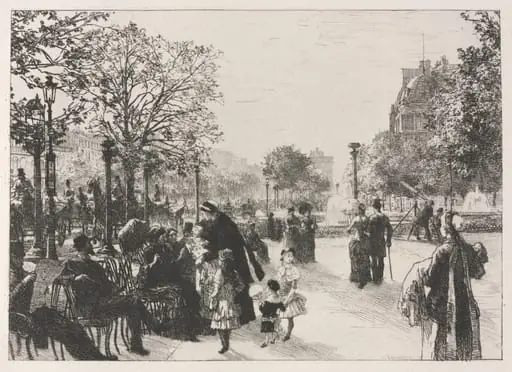
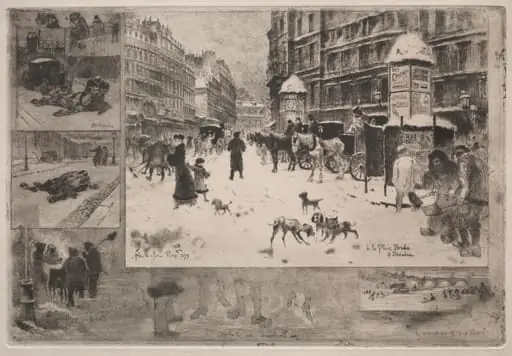
Les Boulevards, près de la Porte St. Denis
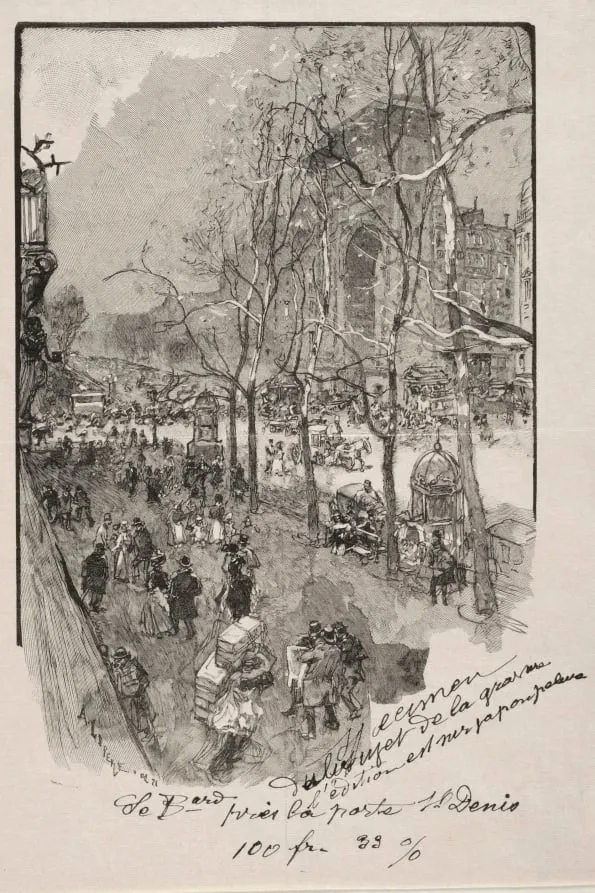
Les Boulevards, près de la Porte St. Denis is a print by the Impressionist artist Auguste Lepère. It dates from 1890 and is held in the collection of the Cleveland Museum of Art. Created in 1890 by French artist Auguste Louis Lepère, *Les Boulevards, près de la Porte St.
About this work
Overview
The work belongs to The Cleveland Museum of Art’s collection and reflects his interest in capturing everyday scenes through printmaking rather than painting.
Created in 1890 by French artist Auguste Louis Lepère, *Les Boulevards, près de la Porte St. Denis* is a wood engraving depicting a bustling street near one of Paris’s historic gates. Lepère, known for revitalizing wood engraving as a fine art medium, used this technique to render urban life with immediacy. The work belongs to The Cleveland Museum of Art’s collection and reflects his interest in capturing everyday scenes through printmaking rather than painting.
Subject & Meaning
The scene portrays a typical Parisian thoroughfare in late winter, with pedestrians in heavy coats and hats navigating the sidewalk, while a horse-drawn carriage draws a small crowd. Bare trees frame the composition, emphasizing the season’s chill. A church steeple rises behind the buildings, anchoring the view in a recognizable urban context. The composition conveys the rhythm of daily life without idealization, focusing on ordinary movement rather than grandeur.
Technique & Style
Lepère employed wood engraving, a labor-intensive method involving incised lines on a hardwood block, to achieve fine detail and tonal variation. His lines are fluid and loosely rendered, suggesting motion and fleeting moments rather than static form. The sketchlike quality evokes spontaneity, aligning with the observational spirit of Impressionism, though executed in black-and-white print rather than paint. The texture of the wood grain subtly enhances the sense of atmosphere.
History & Provenance
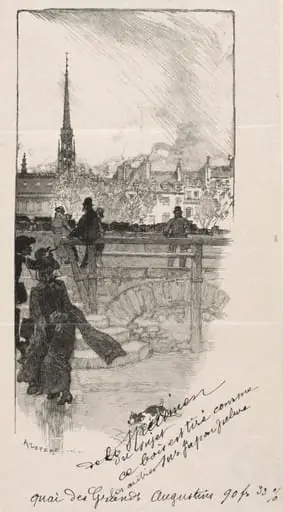
The print bears Lepère’s signature, a price of 100 francs, and notation of an edition, indicating it was produced for commercial distribution rather than as a unique artwork. This practice was common among printmakers seeking broader audiences in the late 19th century. Its presence in The Cleveland Museum of Art’s collection suggests it was acquired during a period of renewed interest in European printmaking, likely in the early 20th century.
Context
In 1890, Paris was undergoing rapid modernization, with Haussmann’s renovations reshaping its streets and infrastructure. Lepère’s focus on the Porte Saint-Denis—a medieval gateway now integrated into the expanding city—reflects a fascination with the coexistence of old and new. His choice of printmaking over painting positioned him within a movement that valued accessibility and technical innovation in art reproduction.
Legacy
Lepère’s work helped reestablish wood engraving as a respected medium in fine art circles, influencing later generations of printmakers. While not widely known today, his prints like this one remain important examples of how 19th-century artists used traditional techniques to document modern urban experience. His approach bridged the gap between illustration and fine art, contributing to the broader acceptance of print as a legitimate artistic form.
Artist & collection
Artist
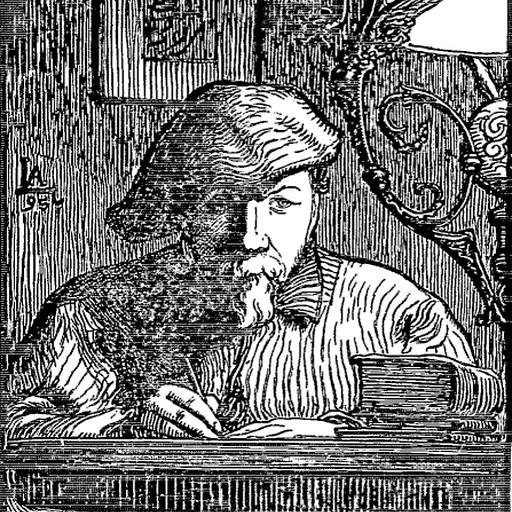
Louis-Auguste Lepère (30 November 1849 – 20 November 1918) was a French painter and etcher. Lepère is also considered a leader in the creative revival of wood engraving in Europe.

![[Large Steamer Ship at Dock, Paris], by Auguste Lepère](https://artifactworldgallery.com/img/auguste-lepere--large-steamer-ship-at-dock-paris--ed31099e42153820-w320.webp)