Artwork
Paris Almanac, 1897: Tail-piece, Winter
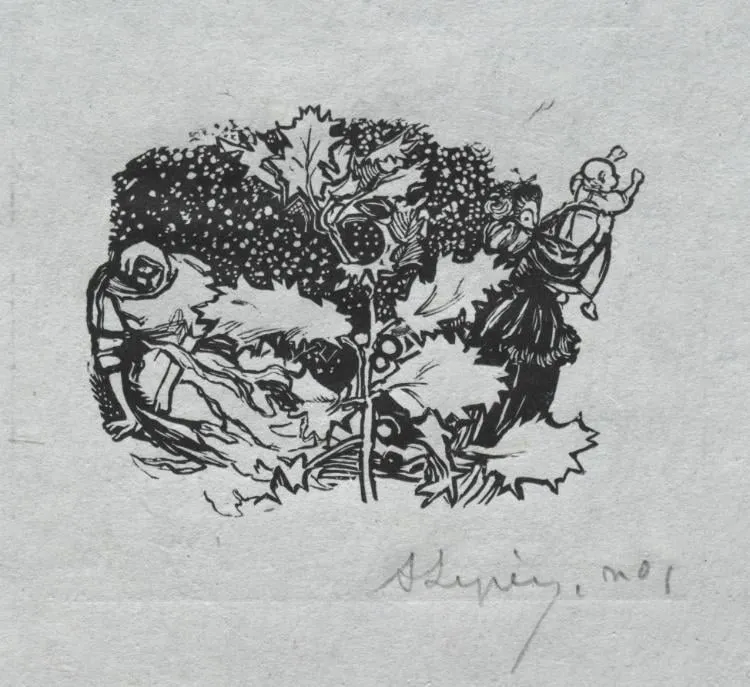
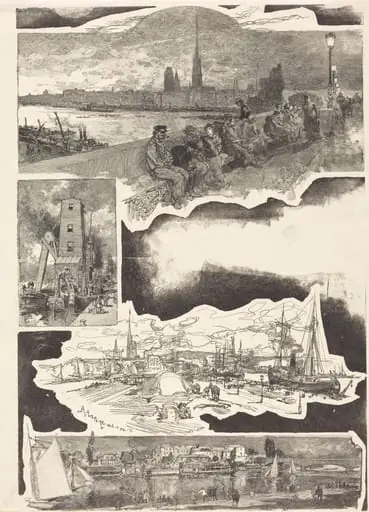
Paris Almanac, 1897: Tail-piece, Winter is a print by the Impressionist artist Auguste Lepère. It dates from 1897 and is held in the collection of the Cleveland Museum of Art.
About this work
Overview
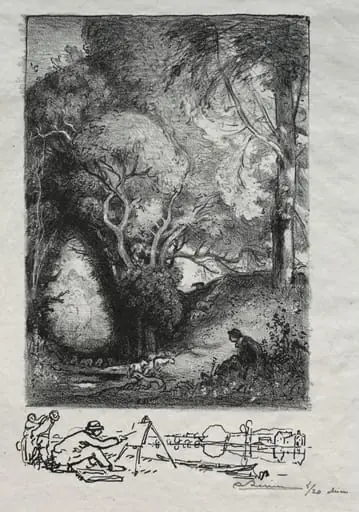
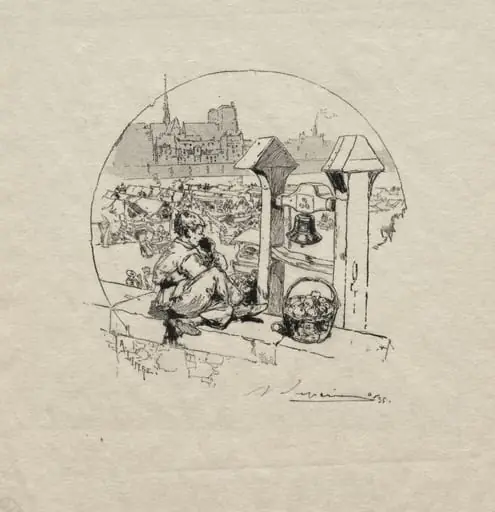
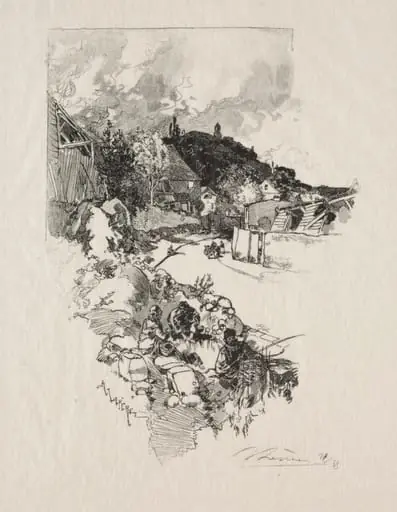
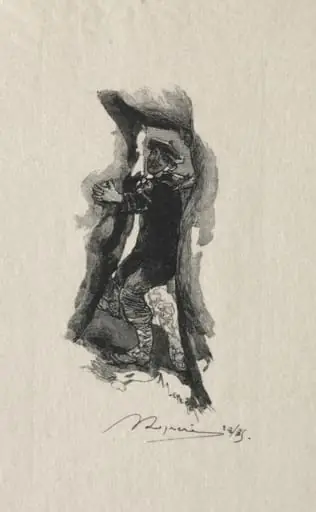
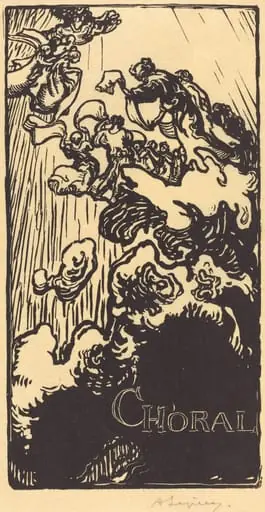
Created in 1897 by French artist Auguste‑Louis Lepère, this small print serves as the concluding illustration, or tail‑piece, for the Paris Almanac of that year. Executed in black line on a light ground, the work captures a compact winter tableau of Parisian street life, arranged with a dense, rhythmic composition that guides the eye across the scene.
Subject & Meaning
The image presents a bustling winter street, populated by a crowd of figures and foliage. A woman in a long dress raises her arm, suggesting a gesture of greeting or dance, while surrounding faces and leaves appear intertwined, evoking the anonymity and movement of urban life during the cold season.
Technique & Style
Lepère employed his characteristic wood‑engraving approach, using bold, decisive lines to define forms against a pale background. The contrast of dark strokes and negative space creates a sense of depth and motion, while the intricate interlacing of figures reflects his interest in the graphic possibilities of the medium.
History & Provenance
Originally printed for the 1897 edition of the Paris Almanac, the piece later entered the collection of the Cleveland Museum of Art, where it is currently held. Its inclusion in the almanac underscores Lepère’s role in the late‑19th‑century revival of wood engraving across Europe.
Artist & collection
Artist
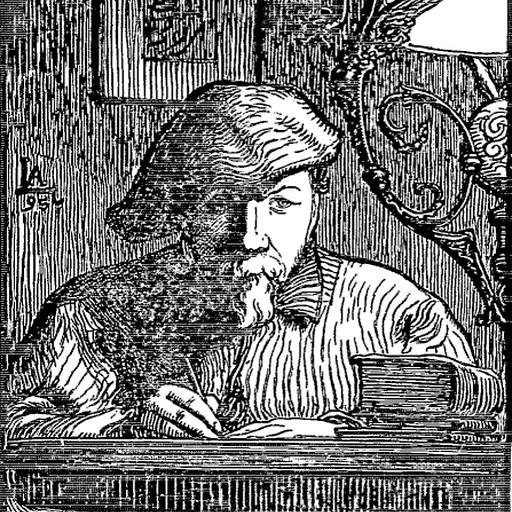
Louis-Auguste Lepère (30 November 1849 – 20 November 1918) was a French painter and etcher. Lepère is also considered a leader in the creative revival of wood engraving in Europe.