Artwork
Paris Almanac, 1897: Winter
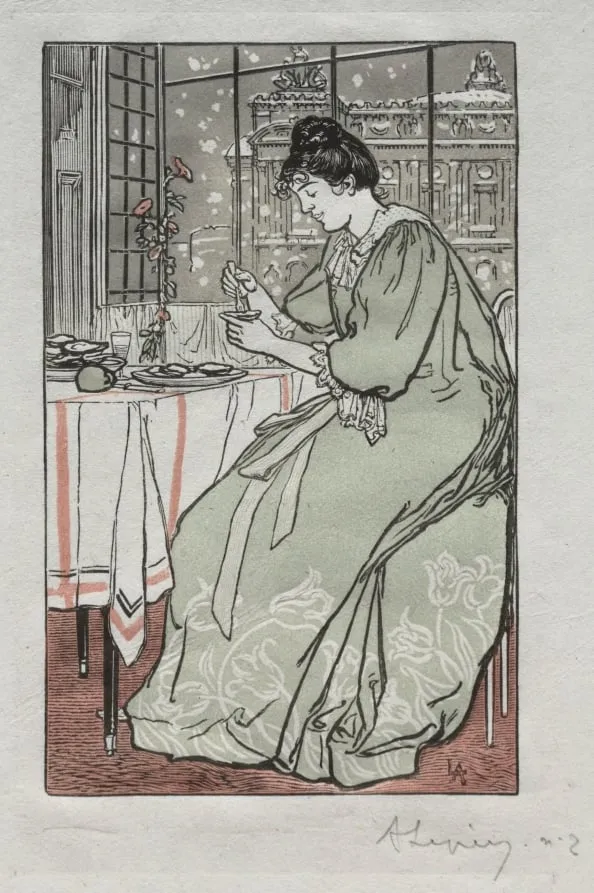
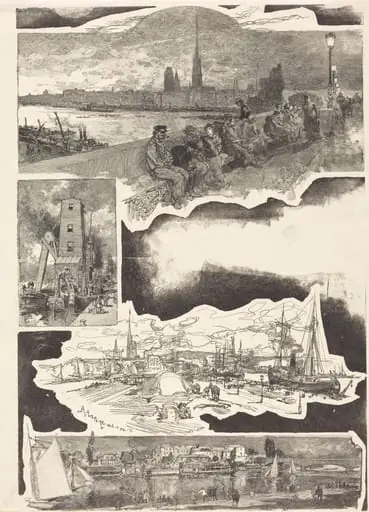
Paris Almanac, 1897: Winter is a print by the Impressionist artist Auguste Lepère. It dates from 1897 and is held in the collection of the Cleveland Museum of Art.
About this work
Overview
Created in 1897 by Auguste Louis Lepère, *Paris Almanac, 1897: Winter* is a wood engraving that captures a quiet domestic moment in late 19th-century Paris.
Created in 1897 by Auguste Louis Lepère, *Paris Almanac, 1897: Winter* is a wood engraving that captures a quiet domestic moment in late 19th-century Paris. Lepère, a key figure in the revival of wood engraving as a fine art medium, used this technique to achieve subtle tonal gradations. The work is held in the collection of The Cleveland Museum of Art and exemplifies his dedication to printmaking during a period of artistic experimentation in France.
Subject & Meaning
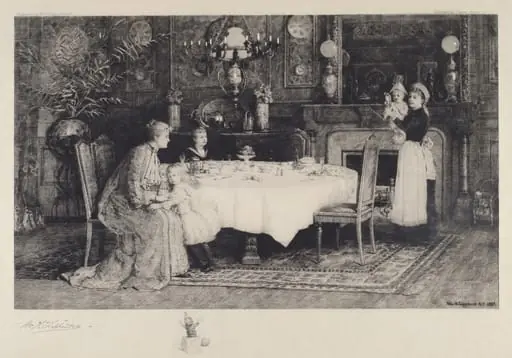
The scene portrays a woman seated at a table, absorbed in an object held in her hands, possibly a letter or small item. Surrounding her are elements of domestic life—dinnerware, a vase of flowers, and a window revealing a snow-covered city. Her stillness and focused demeanor suggest introspection, evoking the solitude often found in winter months. The composition invites quiet contemplation rather than narrative drama, emphasizing mood over action.
Technique & Style
Lepère employed wood engraving, a labor-intensive method involving incising fine lines into end-grain wood blocks, to render delicate textures and soft contrasts. The muted palette of grays and pale tones enhances the winter atmosphere, while the detailed rendering of fabric folds and glassware demonstrates technical precision. Unlike broad brushwork in painting, this medium allowed for controlled, intimate expression suited to the scene’s stillness.
History & Provenance
The print was produced in 1897 as part of Lepère’s broader engagement with the revival of wood engraving in Europe, a movement that sought to elevate printmaking beyond reproductive functions. It entered the collection of The Cleveland Museum of Art through documented acquisition, reflecting institutional interest in late 19th-century French prints. Its preservation underscores its significance within the history of printmaking revival.
Context
During the 1890s, French artists like Lepère turned to traditional print techniques as a counterpoint to industrial reproduction and the dominance of photography. Wood engraving offered a handcrafted alternative valued for its tactile quality and artistic autonomy. This work aligns with broader cultural interests in domestic intimacy and seasonal rhythms, themes also explored in literature and painting of the era.
Legacy
Lepère’s work contributed to the reestablishment of wood engraving as a respected artistic medium in Europe. Though less widely known than his contemporaries in painting, his technical rigor influenced later printmakers and helped preserve the craft’s relevance. *Paris Almanac, 1897: Winter* remains a quiet testament to the potential of printmaking to convey nuanced emotional states through meticulous craftsmanship.
Artist & collection
Artist
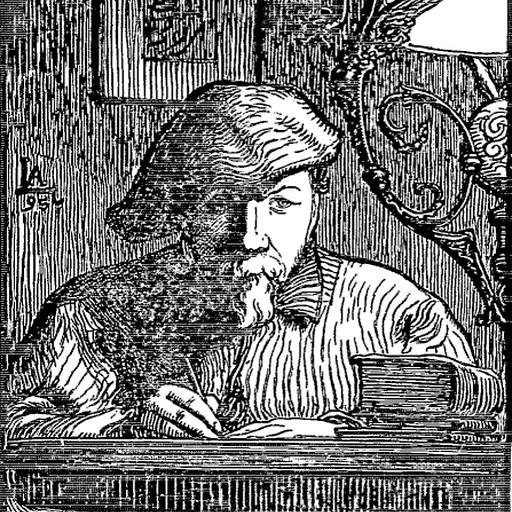
Louis-Auguste Lepère (30 November 1849 – 20 November 1918) was a French painter and etcher. Lepère is also considered a leader in the creative revival of wood engraving in Europe.