Artwork
Paris, vu du Pavillon de Flore
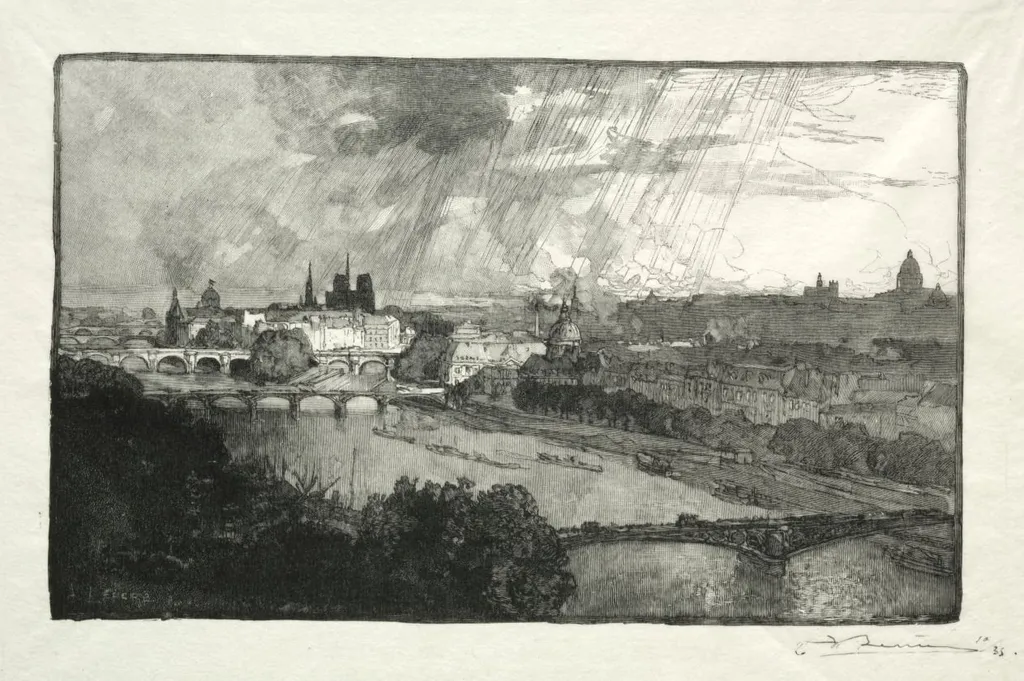
Paris, vu du Pavillon de Flore is a print by the Impressionist artist Auguste Lepère. It dates from 1890 and is held in the collection of the Cleveland Museum of Art.
About this work
Overview
Auguste Louis Lepère’s 1890 print, *Paris, vu du Pavillon de Flore*, offers a panoramic glimpse of the French capital as seen from the Pavillon de Flore, a wing of the Louvre. The composition captures a rain‑soaked skyline, with the Seine bisecting the scene, flanked by rows of buildings and a spanning bridge beneath a brooding sky.
Subject & Meaning
The image portrays a muted, atmospheric Paris, emphasizing the interplay of light, mist and architecture. Heavy rain streaks across the sky, softening the outlines of structures and lending the city a veil of melancholy, suggesting the transient mood of an urban landscape under inclement weather.
Technique & Style
Executed in wood engraving, the work reflects Lepère’s pivotal role in the late‑19th‑century revival of the medium. His precise incisions create dense tonal contrasts, while the use of fine, slanted lines conveys the rain’s motion and the subtle gradations of shadow that define the city’s forms.
History & Provenance
Created during a period when French printmakers were exploring new expressive possibilities, the print now belongs to the collection of the Cleveland Museum of Art. Its acquisition underscores the museum’s commitment to representing pivotal developments in European graphic art of the era.
Artist & collection
Artist
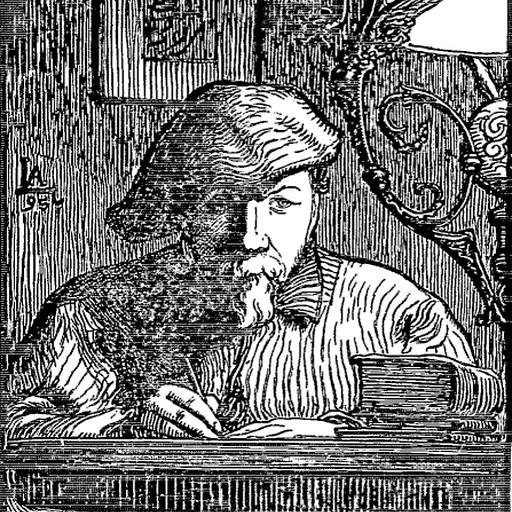
Louis-Auguste Lepère (30 November 1849 – 20 November 1918) was a French painter and etcher. Lepère is also considered a leader in the creative revival of wood engraving in Europe.

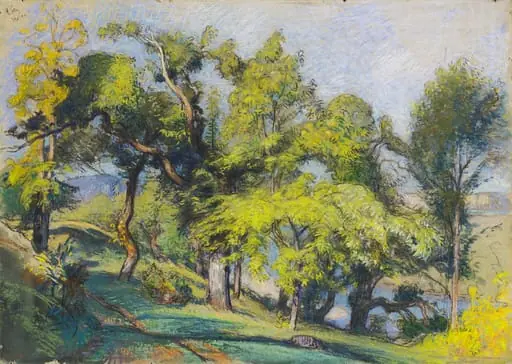
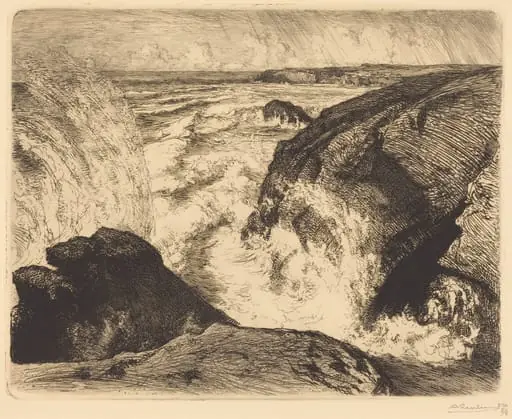
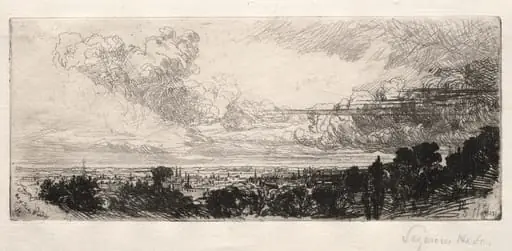 Out of Study Window
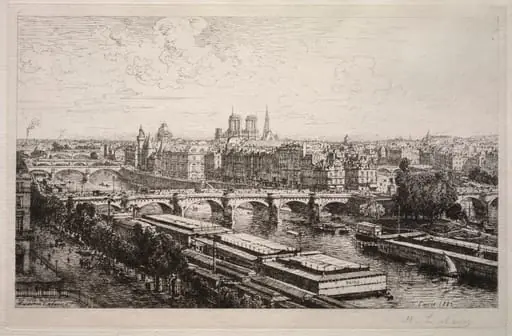 View from the Louvre
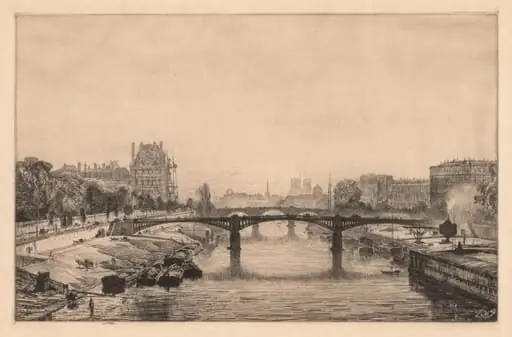 Paris, View from the Concorde Bridge
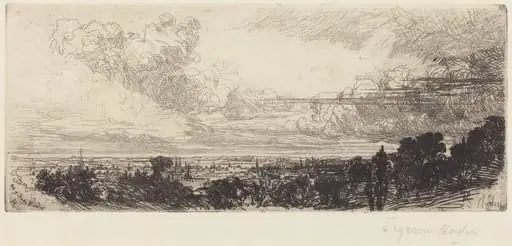 Out of Study Window
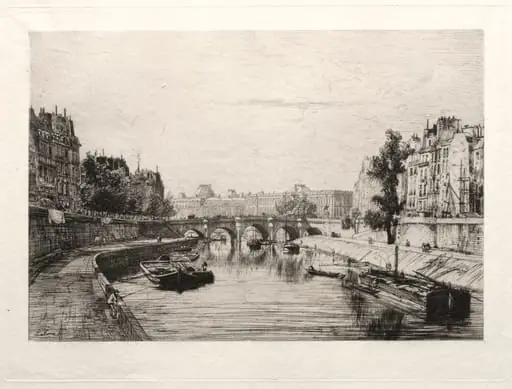 View from Pont St. Michel
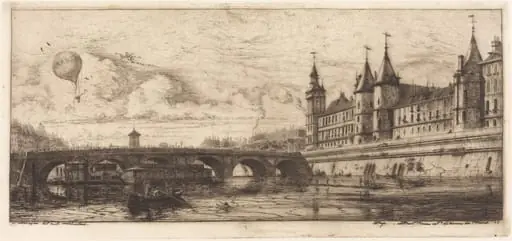 Le Pont-au-Change, Paris
 Out of Study Window
 Waterloo Bridge
 Le Louvre, vu du Pont Neuf
 View of the Pont au Change and the Palais de Justice, Paris
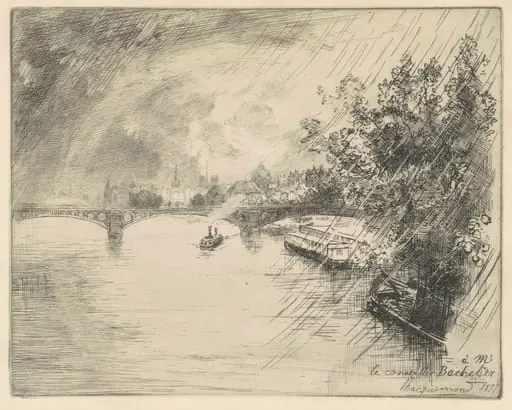 View of the Pont des Saints-Pères
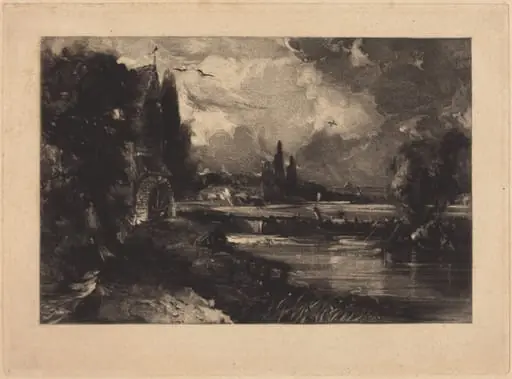 Mill near Colchester