Artwork
Rue Grenier sur l'Eau
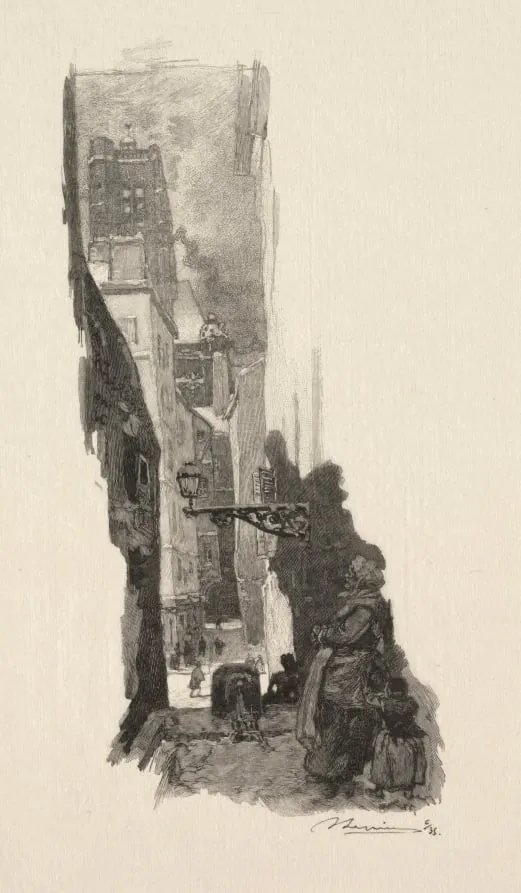
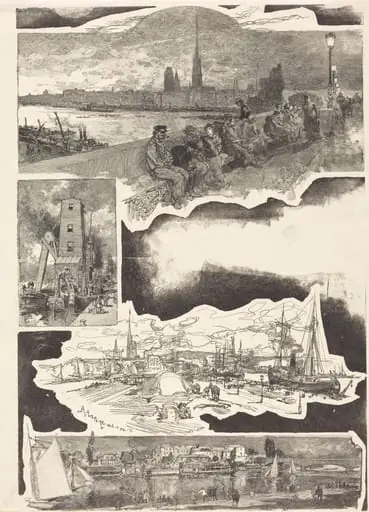
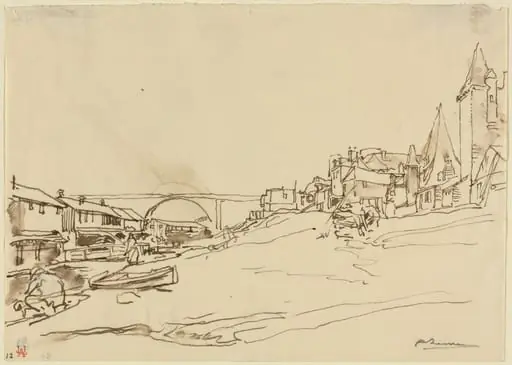
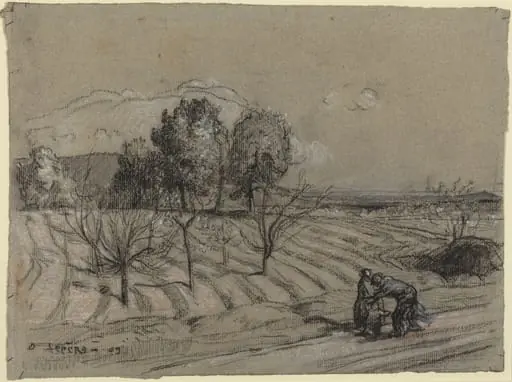
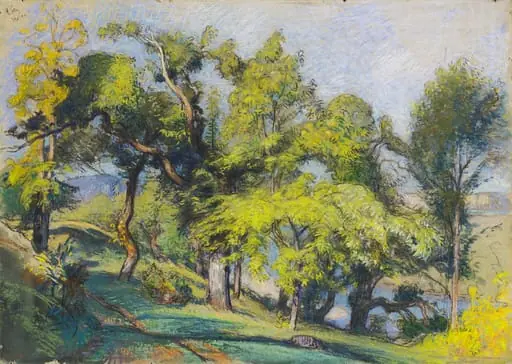
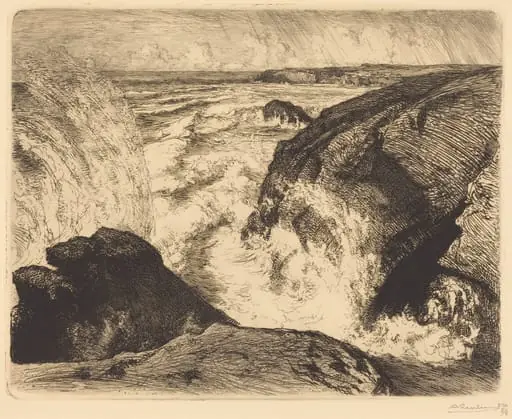
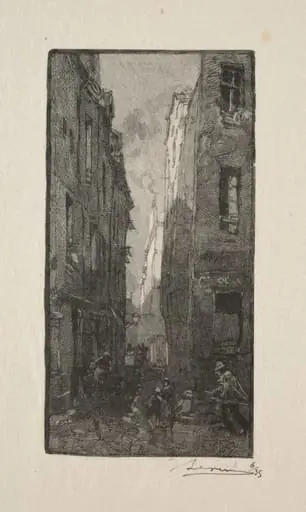
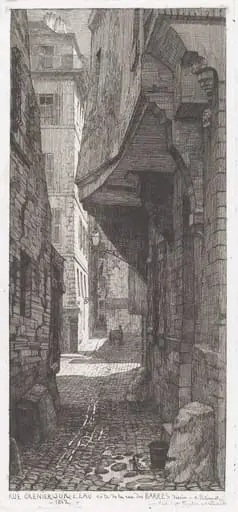
Rue Grenier sur l'Eau is a print by the Impressionist artist Auguste Lepère. It dates from 1894 and is held in the collection of the Cleveland Museum of Art.
About this work
Overview
The print is held in the collection of the Cleveland Museum of Art, reflecting its significance in the revival of hand-carved printmaking in Europe.
Created in 1894 by French artist Auguste Louis Lepère, *Rue Grenier sur l'Eau* is a wood engraving that captures a modest urban alleyway in Paris. Lepère, instrumental in the 19th-century revival of wood engraving as a fine art medium, used this technique to achieve fine tonal contrasts and textured detail. The print is held in the collection of the Cleveland Museum of Art, reflecting its significance in the revival of hand-carved printmaking in Europe.
Subject & Meaning
The scene depicts a narrow, densely packed street lined with leaning buildings, their windows and signage reduced to faint impressions. A woman, seated on the sidewalk with her back turned, rests beside a dog and a small bag, suggesting a pause in daily routine. The cluttered ground—cobblestones, scattered debris—emphasizes the unidealized reality of working-class urban life, aligning with Realist values that prioritized authenticity over romanticism.
Technique & Style
Lepère employed hand-carved wood blocks to produce intricate, linear textures that mimic the spontaneity of a sketch. Fine, uneven lines convey the roughness of stone, the texture of clothing, and the dimness of narrow alleys. The tonal range is restrained, relying on contrast rather than shading, a hallmark of wood engraving. The deliberate looseness of the marks enhances the immediacy of the moment, avoiding polished finish in favor of observational truth.
History & Provenance
Lepère was a central figure in the French revival of wood engraving during the late 19th century, promoting it as a legitimate artistic medium alongside etching and lithography. *Rue Grenier sur l'Eau* was produced during the height of this movement, when artists sought to reconnect printmaking with direct, manual labor. The work entered the Cleveland Museum of Art’s collection through established acquisition channels, likely as part of broader interest in European graphic arts of the period.
Context
In the 1890s, Paris was undergoing rapid modernization, yet many narrow streets like Rue Grenier sur l'Eau retained their pre-industrial character. Artists such as Lepère turned to these overlooked spaces to document the persistence of traditional urban life. This work aligns with broader Realist and Naturalist currents in art, which rejected academic idealism in favor of unembellished portrayals of everyday existence, particularly among the urban poor.
Legacy
Lepère’s dedication to wood engraving helped elevate the technique beyond commercial illustration into the realm of fine art. His works, including *Rue Grenier sur l'Eau*, influenced later printmakers who valued the tactile quality and labor-intensive process of hand-carved images. Though less widely known than his painter contemporaries, his contributions preserved a vital link between traditional craftsmanship and modern artistic expression.
Artist & collection
Artist
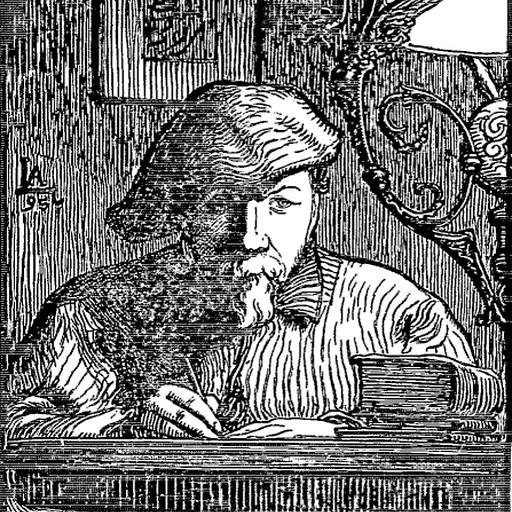
Louis-Auguste Lepère (30 November 1849 – 20 November 1918) was a French painter and etcher. Lepère is also considered a leader in the creative revival of wood engraving in Europe.