Artwork
Une loge de carrier
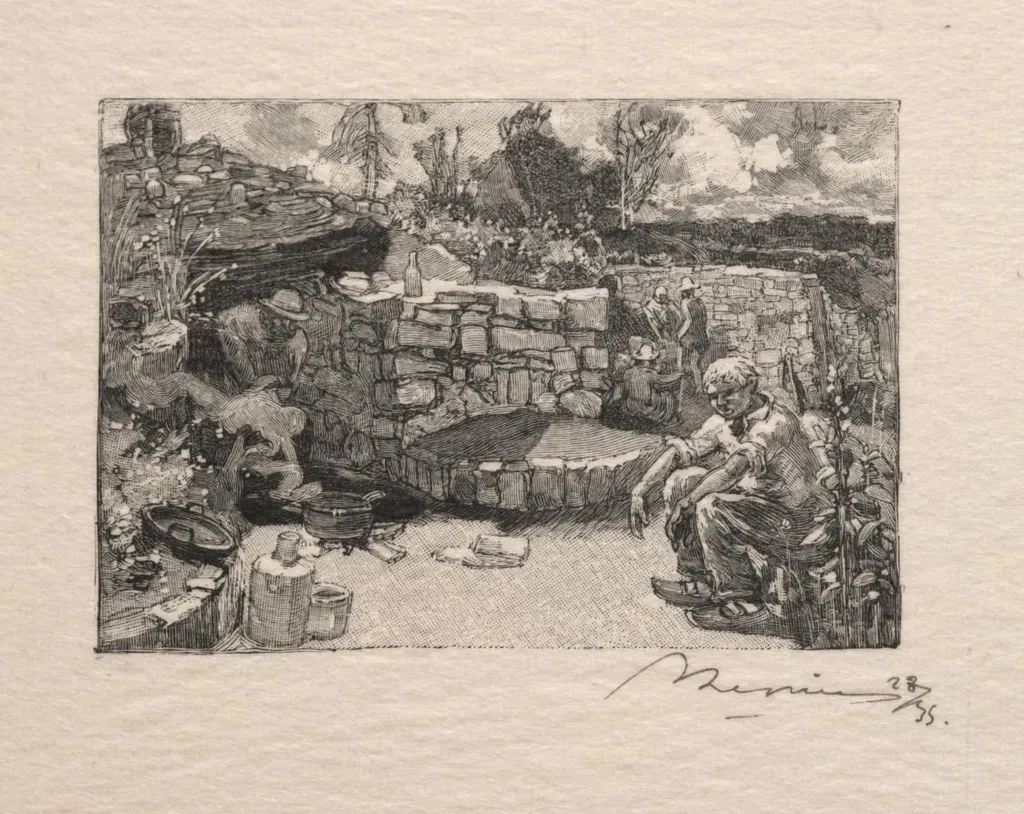
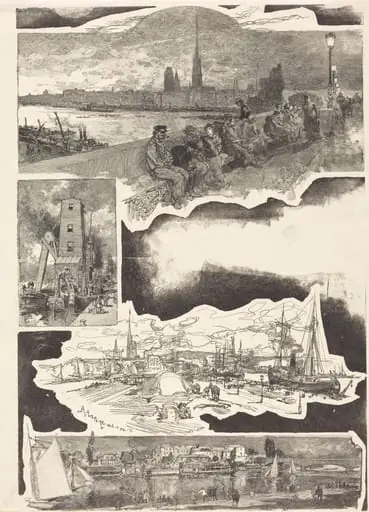
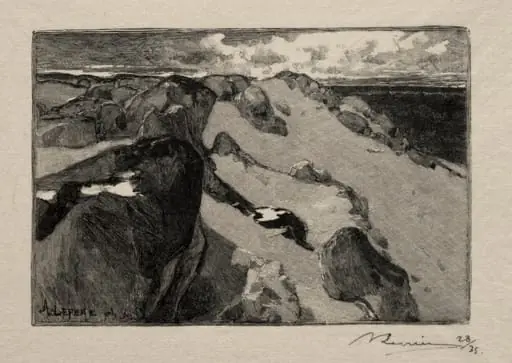
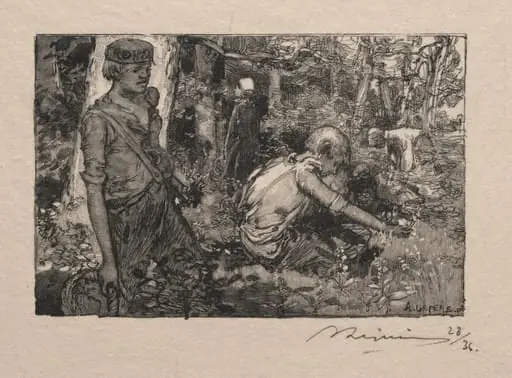
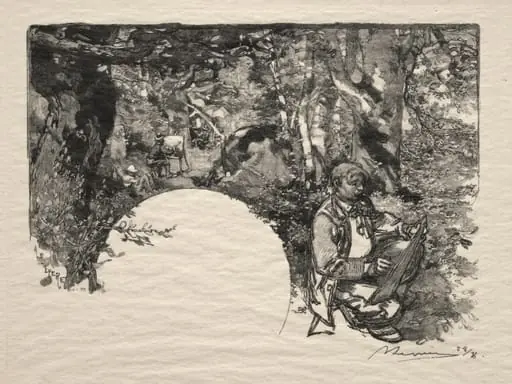
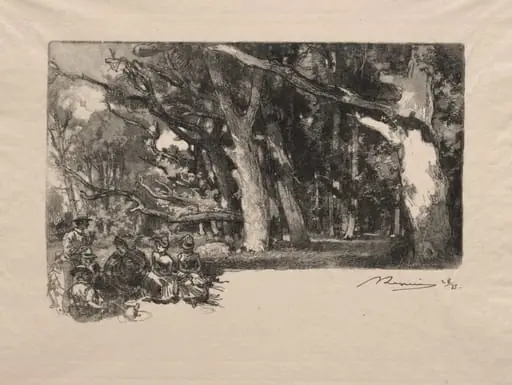
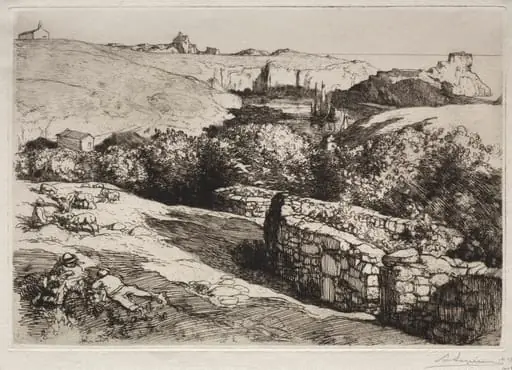
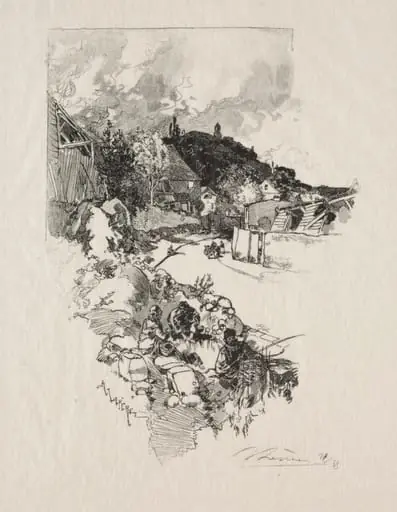
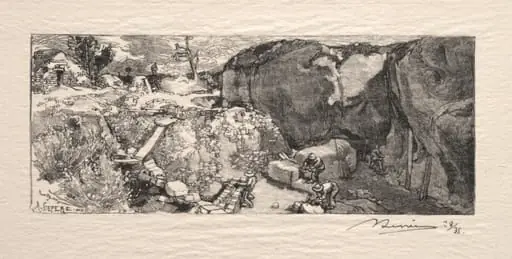
Une loge de carrier is a print by the Impressionist artist Auguste Lepère. It dates from 1894 and is held in the collection of the Cleveland Museum of Art.
About this work
Overview
The print is part of the Cleveland Museum of Art’s collection, reflecting its significance in the history of printmaking.
Created in 1894 by French artist Auguste Louis Lepère, *Une loge de carrier* is a wood engraving that captures a quiet moment in the daily labor of stone workers. Lepère, instrumental in the 19th-century revival of wood engraving as a fine art medium, used this technique to render subtle tonal contrasts and textured surfaces. The print is part of the Cleveland Museum of Art’s collection, reflecting its significance in the history of printmaking.
Subject & Meaning
The scene depicts two laborers at rest near a stone wall, one bending over stacked timber, the other seated with a bundle in hand. Tools, pots, and a small hearth suggest a temporary worksite, emphasizing the mundane rhythms of manual labor. There is no drama or idealization—only the quiet dignity of work. The composition invites contemplation of the workers’ endurance and the simplicity of their environment.
Technique & Style
Lepère employed fine, controlled lines in wood engraving to convey texture—rough-hewn logs, worn fabric, and uneven ground. The monochrome palette enhances the tactile quality of the scene, with careful gradations of black and white suggesting light and shadow. His technique avoids ornamentation, favoring clarity and realism, aligning with the broader aesthetic of 19th-century naturalism in printmaking.
History & Provenance
The print was produced during a period when Lepère was actively promoting wood engraving as a serious artistic medium in Europe, countering the dominance of lithography and photography. It entered the Cleveland Museum of Art’s collection in the 20th century, where it remains as part of a broader effort to preserve works that document the transition of printmaking from reproduction to original art.
Context
In late 19th-century France, artists increasingly turned to scenes of rural and industrial labor as subjects worthy of serious representation. Lepère’s work aligns with Realist traditions, rejecting romanticized narratives in favor of unembellished observation. His focus on laborers reflects broader social interest in the lives of the working class during a time of rapid industrial change.
Legacy
Lepère’s dedication to wood engraving helped reestablish it as a respected medium for original artistic expression. *Une loge de carrier* exemplifies his commitment to capturing everyday life with precision and restraint. His influence extended to later printmakers who valued craftsmanship and the quiet power of ordinary moments over spectacle.
Artist & collection
Artist
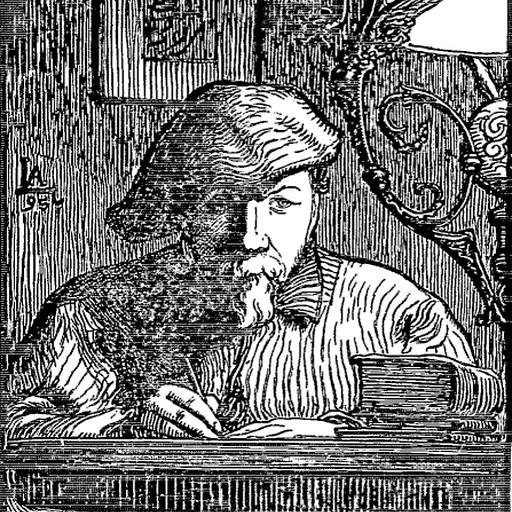
Louis-Auguste Lepère (30 November 1849 – 20 November 1918) was a French painter and etcher. Lepère is also considered a leader in the creative revival of wood engraving in Europe.