Artwork
The Crucifixion
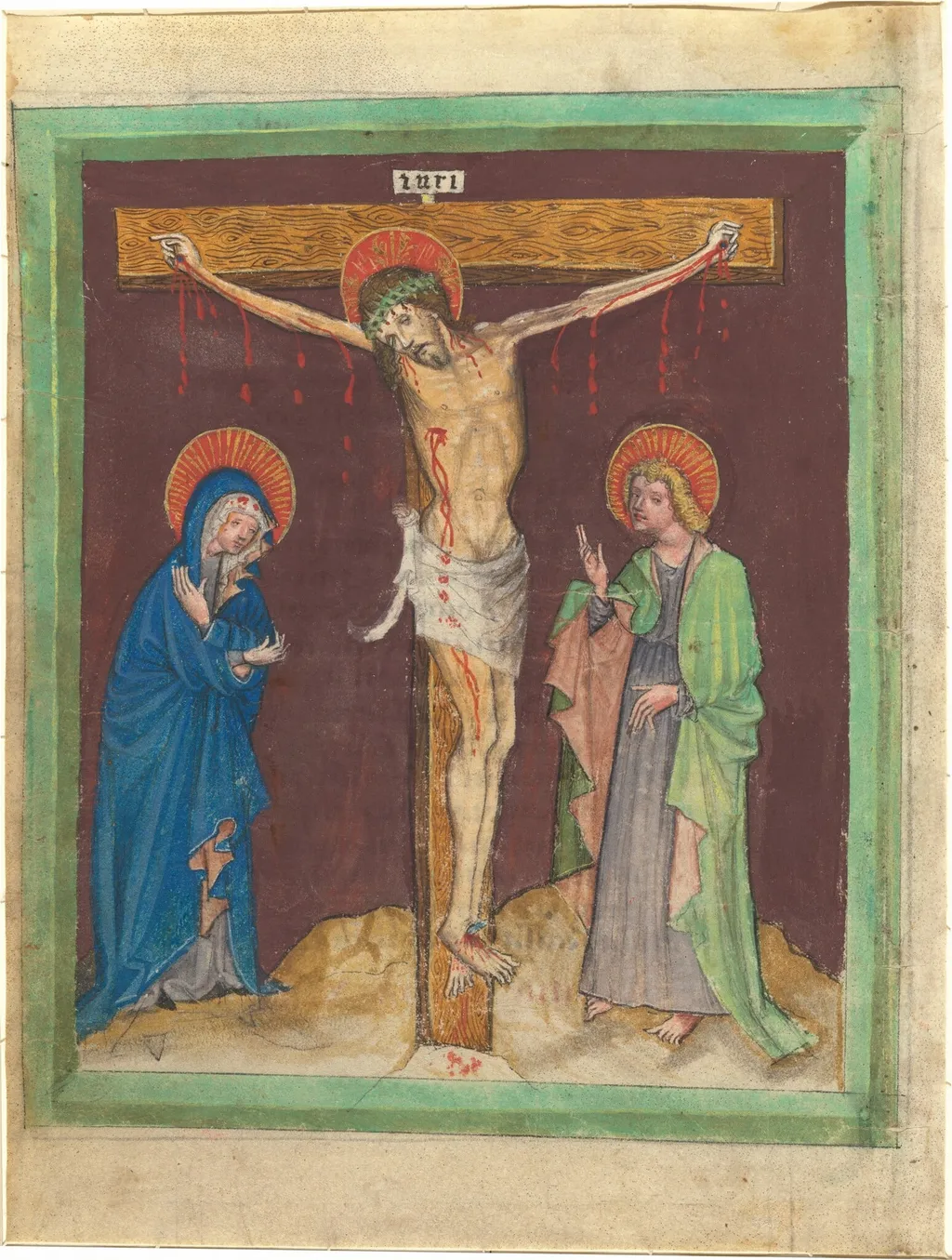
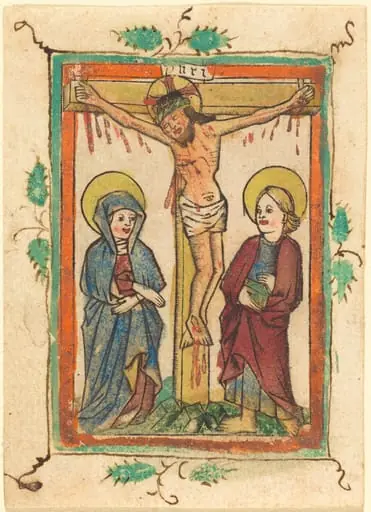
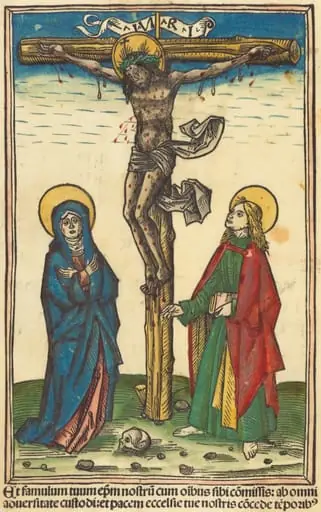
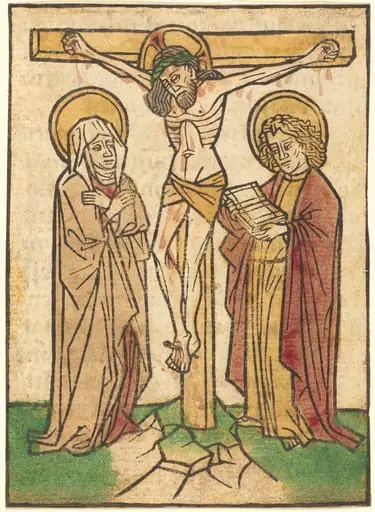
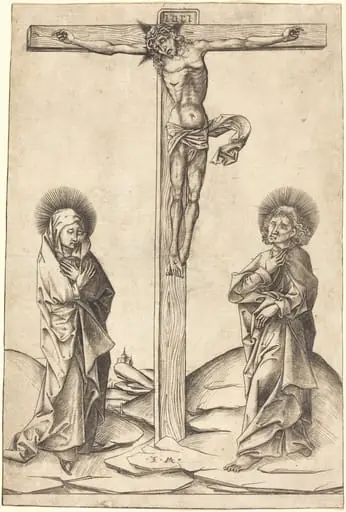
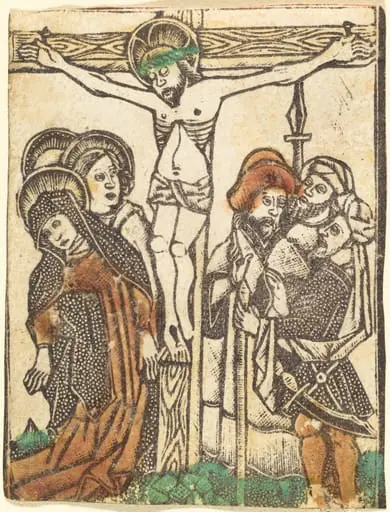
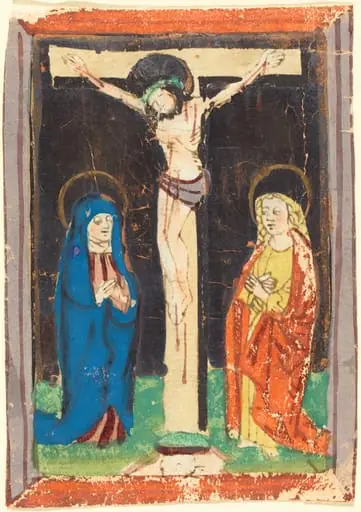
The Crucifixion is a drawing by the Renaissance artist Austrian 15th Century. It dates from 1430 and is held in the collection of the National Gallery of Art. This miniature depicts a crucifixion scene rendered on vellum, a durable writing material commonly used in medieval manuscripts.
About this work
Overview
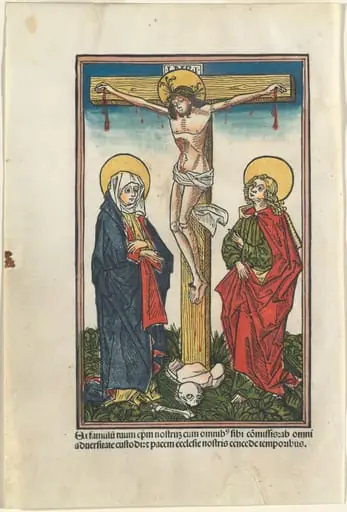
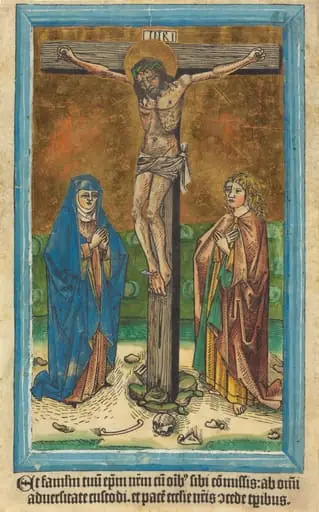
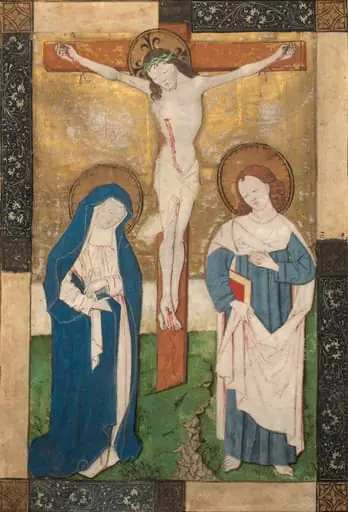
This miniature depicts a crucifixion scene rendered on vellum, a durable writing material commonly used in medieval manuscripts. The small-scale work features a central figure affixed to a cross, flanked by two onlookers. Executed with flat, symbolic coloration and rigid figural forms, the image adheres to devotional conventions of its period rather than naturalistic representation.
Subject & Meaning
The composition centers on the crucified Christ, identified by the monogram 'IHS' above the cross—a Christogram derived from the first three letters of the Greek name for Jesus. The flanking figures, one in prayerful posture and the other gesturing upward, likely represent the Virgin Mary and John the Evangelist. Their presence underscores themes of mourning, faith, and divine witness.
Technique & Style
The work employs tempera or ink on vellum, a medium suited to intricate detail despite its modest dimensions. Figures are delineated with linear precision, their forms simplified and devoid of anatomical accuracy. The dark red ground and uniform color fields emphasize symbolic content over spatial illusion, reflecting the stylistic priorities of pre-Renaissance devotional art.
History & Provenance
The miniature’s origins lie within the late medieval period, likely produced as part of a larger illuminated manuscript or as an independent devotional object. Its precise creator and original patron remain unattributed, though the use of vellum and symbolic motifs aligns with practices common in European monastic or courtly workshops of the 14th or early 15th century.
Context
The inclusion of the 'IHS' monogram further situates the work within a broader tradition of Christocentric imagery used in liturgical and personal devotion.
Such images served as focal points for private prayer, reinforcing Christian narratives through visual repetition. The stiff, hieratic style reflects a period in which art prioritized doctrinal clarity and emotional resonance over lifelike depiction. The inclusion of the 'IHS' monogram further situates the work within a broader tradition of Christocentric imagery used in liturgical and personal devotion.
Artist & collection

Artist
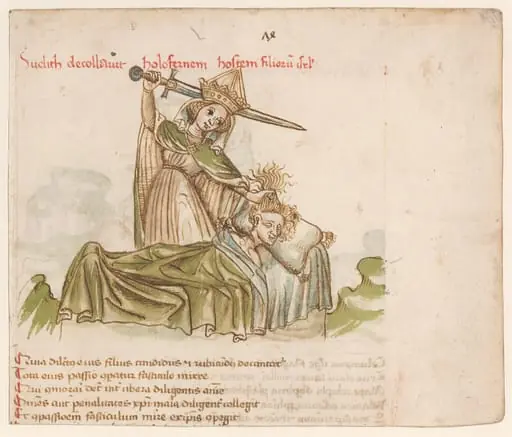
This artist left only fragments, but they’re sharp little daggers: vivid pen strokes, inked blood on stone, Judith’s blade flash-frozen mid-swipe.