Artwork
Christ on the Mount of Olives
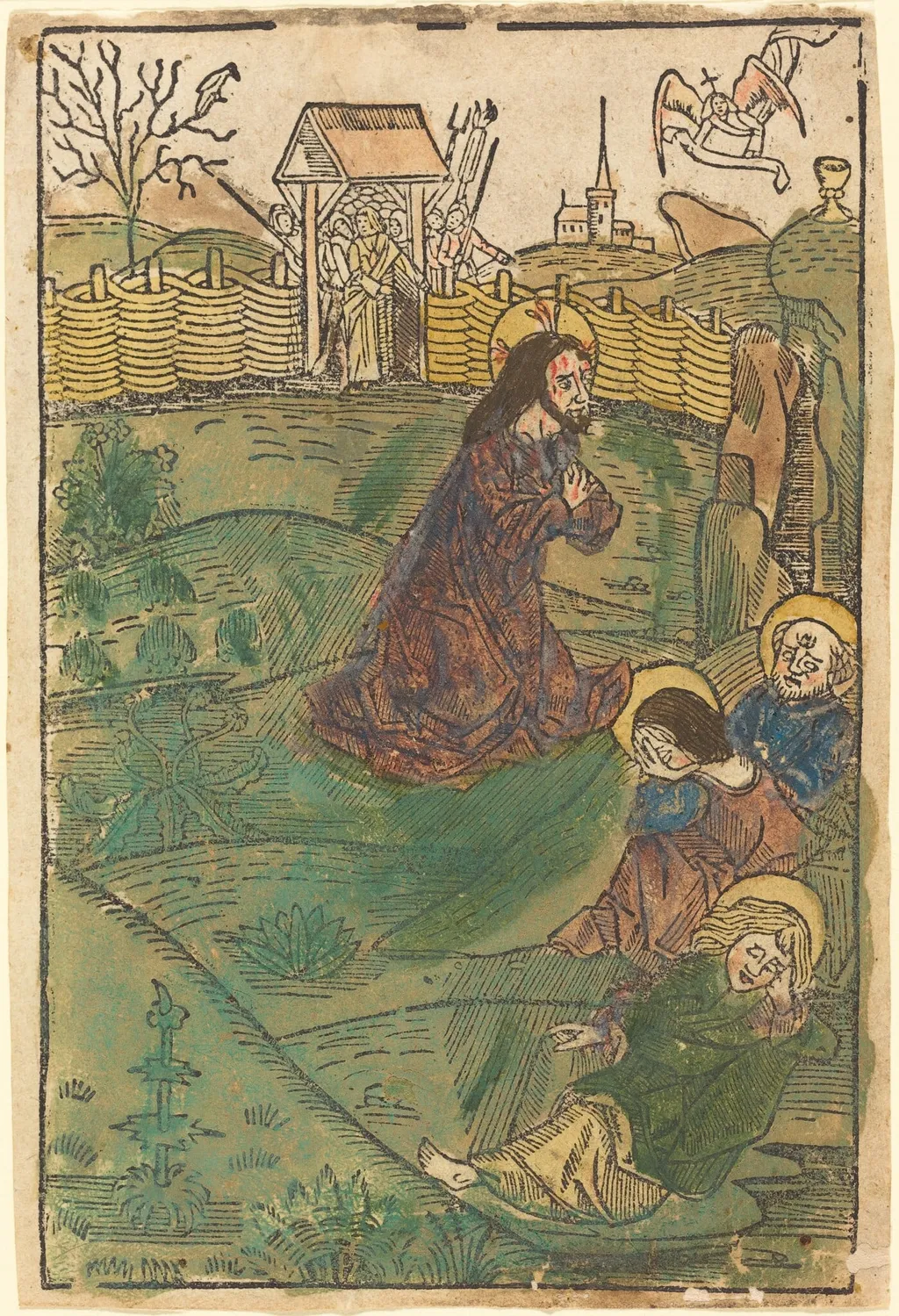
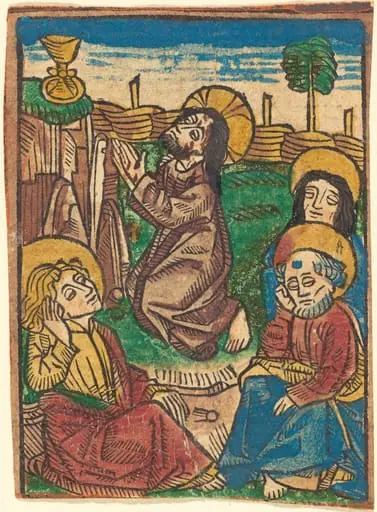
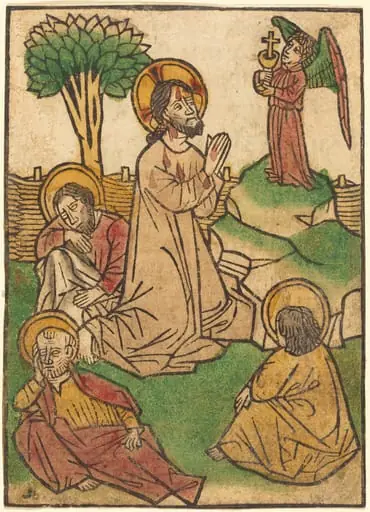
Christ on the Mount of Olives is an ink print by the Renaissance artist German 15th Century. It dates from 1490 and is held in the collection of the National Gallery of Art. The work is a hand‑colored woodcut depicting a biblical episode on a modestly rendered hill.
About this work
Overview
The work is a hand‑colored woodcut depicting a biblical episode on a modestly rendered hill. Three figures are shown kneeling in prayer, set against a simple landscape that includes a small village with a church perched on a rise. The composition is organized in flat planes of color, with limited hues of green, brown, blue, and touches of red and yellow.
Subject & Meaning
The scene illustrates the episode of Christ on the Mount of Olives, a moment of contemplation and prayer before his arrest. The three kneeling figures represent the disciples in a state of supplication, emphasizing themes of devotion and impending sacrifice within the narrative.
Technique & Style
Executed as a woodcut, the image relies on crisp, incised lines and solid blocks of pigment applied by hand. The artist employed a limited palette—green, carmine, rose, yellow, gray, blue, and brown—to accentuate the stark, graphic quality typical of early printmaking before the advent of photographic reproduction.
History & Provenance
The print belongs to the tradition of early modern religious prints, where woodcut was a primary medium for disseminating devotional images. Its hand‑coloring suggests it was intended for a market that valued affordable yet visually appealing religious illustrations.
Context
Produced in an era when printed images served both instructional and devotional purposes, the work reflects the broader use of woodcut for mass‑produced religious art. Its flat, stylized representation aligns with contemporary aesthetic conventions that prioritized clarity and narrative over naturalistic detail.
Legacy
While not widely cited in major art historical surveys, the piece exemplifies the role of woodcut prints in spreading biblical narratives to a broad audience, illustrating the intersection of craft, color, and religious storytelling in pre‑photographic visual culture.
Artist & collection

Artist
This 15th-century German artist carved vivid religious scenes into metal and wood, then hand-painted them in bright, symbolic colors.

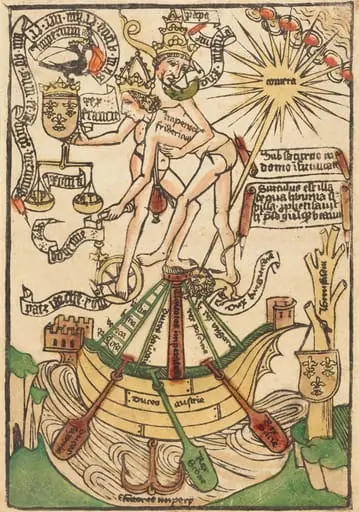 Allegory of the Meeting of Pope Paul II and Emperor Frederick III
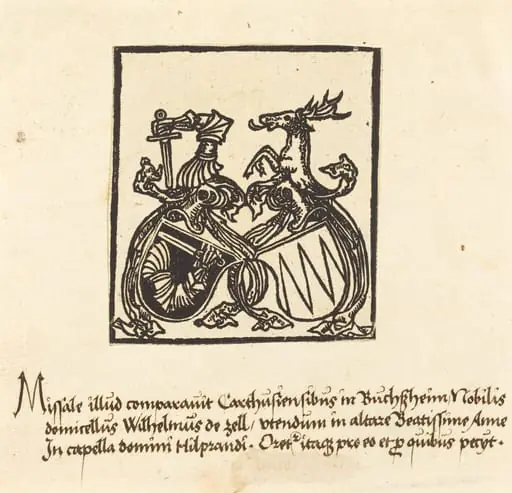 Bookplate of Wilhelm von Zell
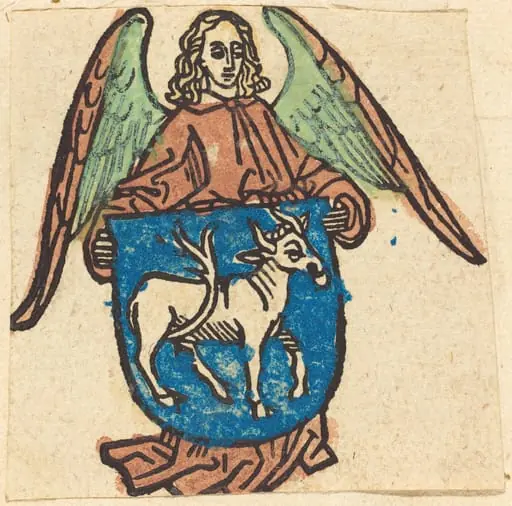 Bookplate of Hilprand Brandenburg of Bibrach
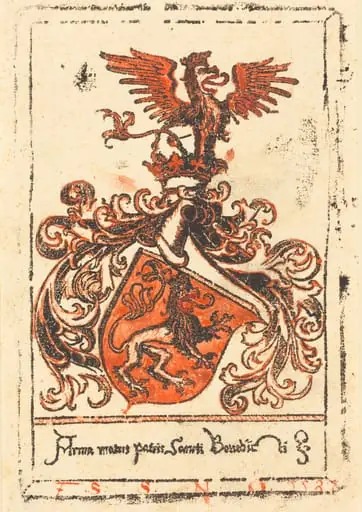 Bookplate of the Abbey of Ottobeuren
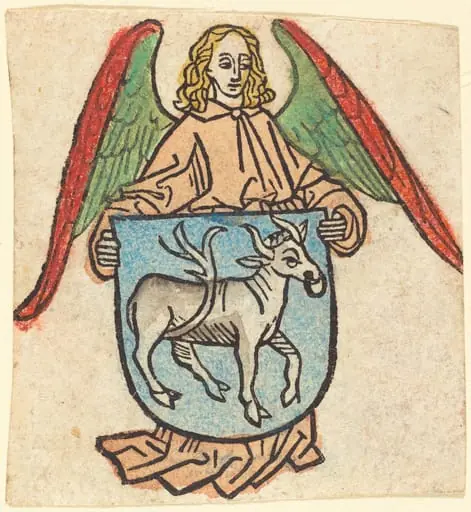 Bookplate of Hilprand Brandenburg of Bibrach
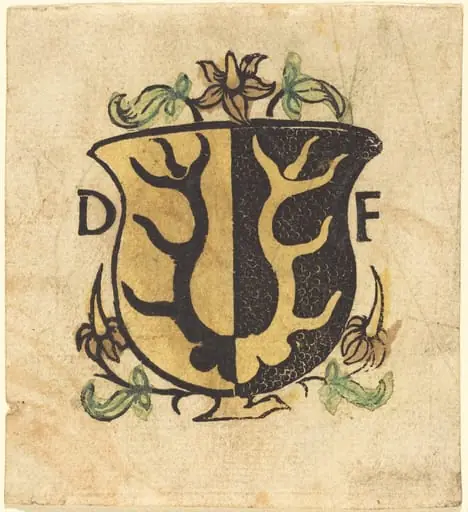 Bookplate of Dominicus Frauenfelder
![Studies for Six Figures (sheet from a model book) [recto], by German 15th Century](https://artifactworldgallery.com/img/german-15th-century--studies-for-six-figures-sheet-from-a-model-book-recto--4837429e0755bc3f-w320.webp) Studies for Six Figures (sheet from a model book) [recto]
Studies for Six Figures (sheet from a model book) [recto]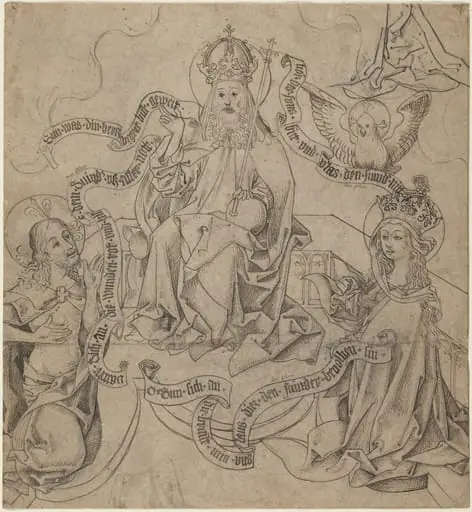 Christ and Mary Interceding with God the Father