Artwork
Judith Killing Holofernes
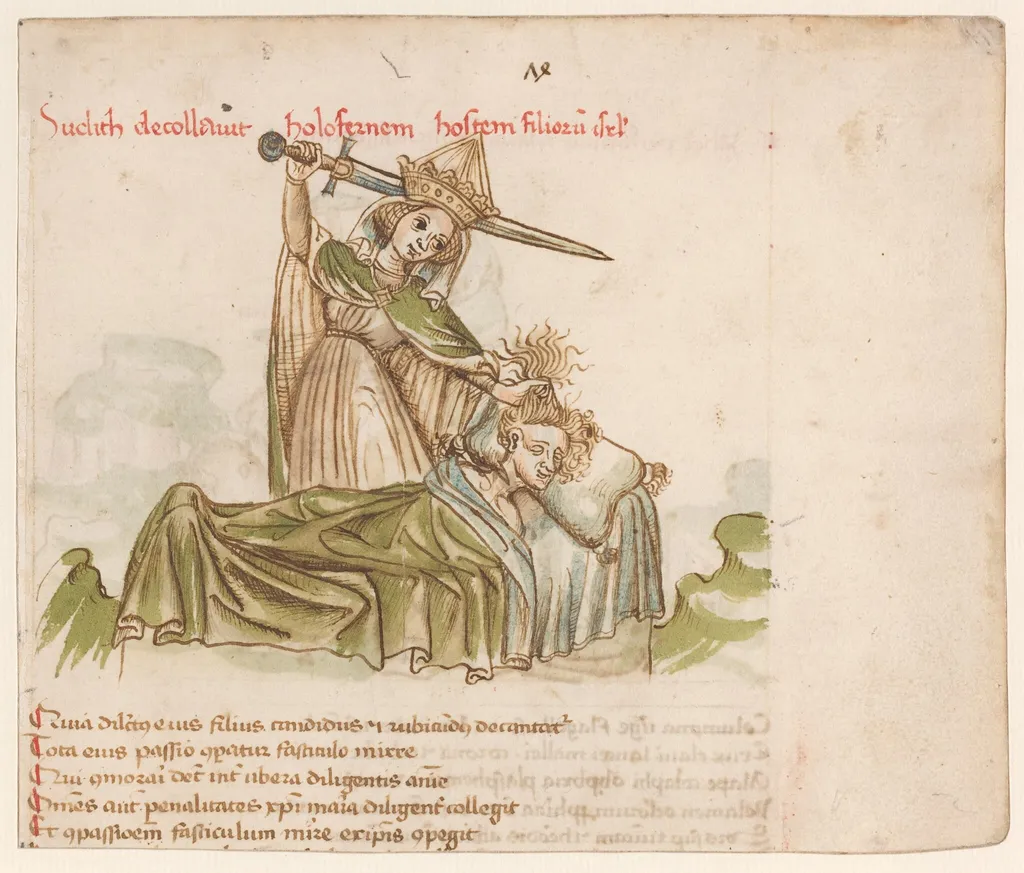
Judith Killing Holofernes is an ink drawing by the Renaissance artist Austrian 15th Century. It dates from 1460 and is held in the collection of the National Gallery of Art.
About this work
Overview
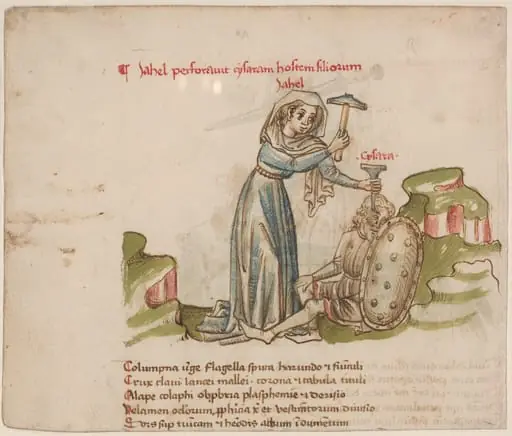
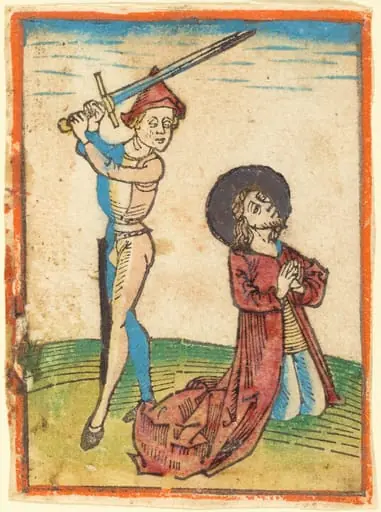
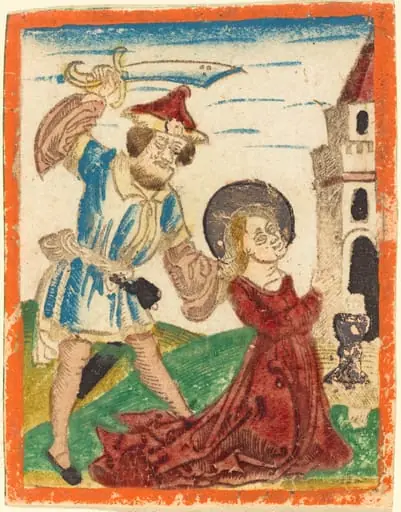
Judith Killing Holofernes is a pen‑and‑ink drawing enhanced with watercolor on laid paper. The composition captures the decisive moment when Judith beheads the Assyrian general Holofernes, his blood spilling across the surface. The setting is rendered as a modest interior, reminiscent of a simple bedroom, focusing attention on the violent act rather than elaborate surroundings.
Subject & Meaning
The work illustrates the biblical story of Judith, a heroine who saves her people by assassinating the enemy commander. Judith’s expression remains composed, underscoring themes of moral resolve and divine sanction, while her accomplice assists by pulling Holofernes’ hair. The stark contrast between calm determination and brutal execution highlights the tension between virtue and violence.
Technique & Style
The artist employs fine, meticulous lines to delineate textures, from the folds of clothing to the intricate play of light and shadow on flesh. Watercolor washes add subtle tonal variation, particularly in the red glaze that accentuates the blood, echoing a similar treatment observed in a work at the National Gallery of Art, Washington. The overall effect is precise yet expressive.
History & Provenance
Created as a drawing rather than a painted canvas, the piece reflects the artist’s practice of using paper as a portable medium for narrative studies. Its provenance includes acquisition by a private collector before entering a public institution, where it has been displayed alongside other works exploring biblical martyrdom.
Context
The depiction aligns with a long tradition of Judith narratives in European art, which often served as moral exemplars during periods of religious conflict. By choosing a domestic interior, the artist situates the dramatic episode within a familiar space, inviting viewers to contemplate the intersection of everyday life and extraordinary moral action.
Artist & collection

Artist
This artist left only fragments, but they’re sharp little daggers: vivid pen strokes, inked blood on stone, Judith’s blade flash-frozen mid-swipe.