Artwork
The Crucifixion
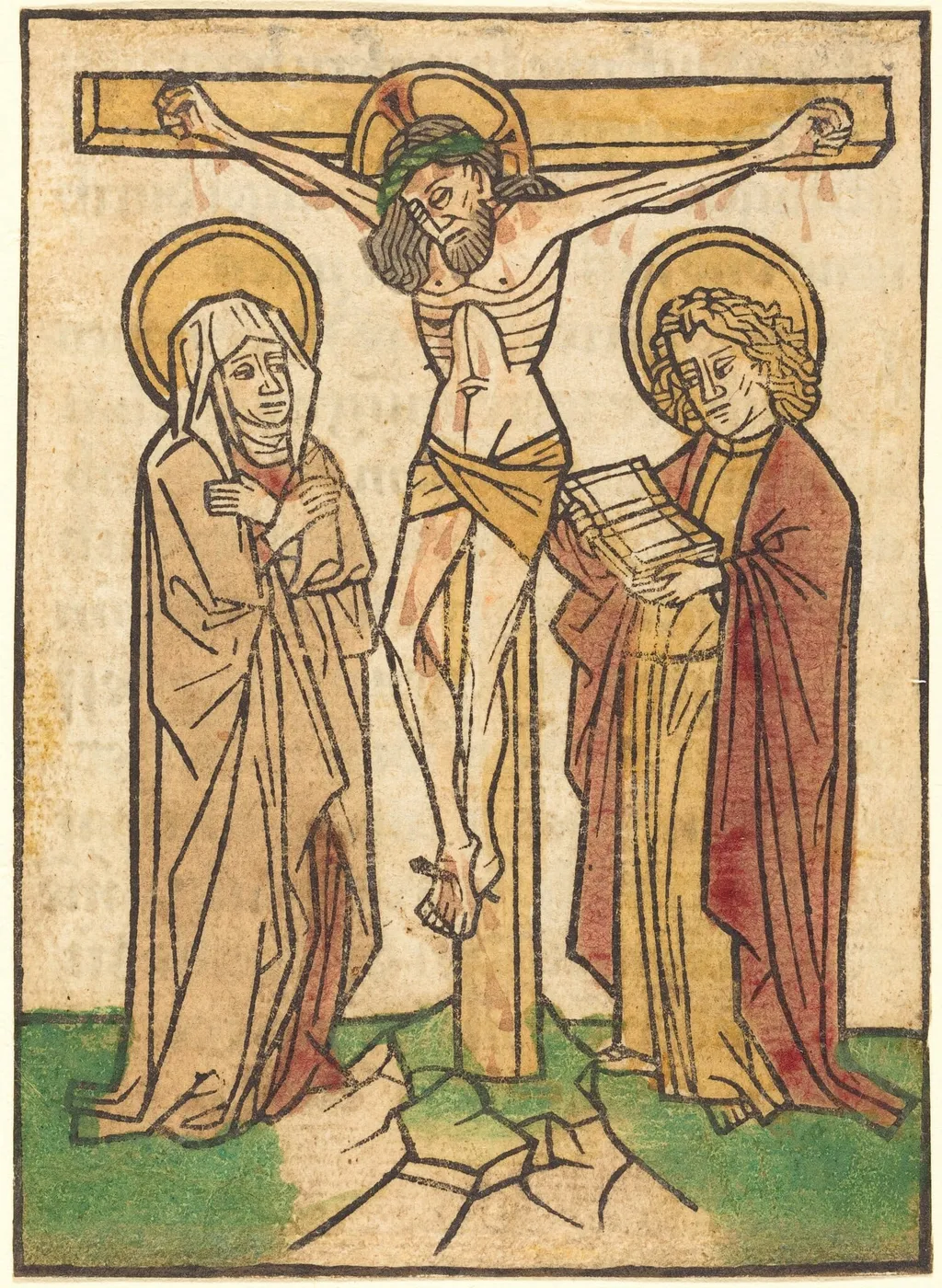
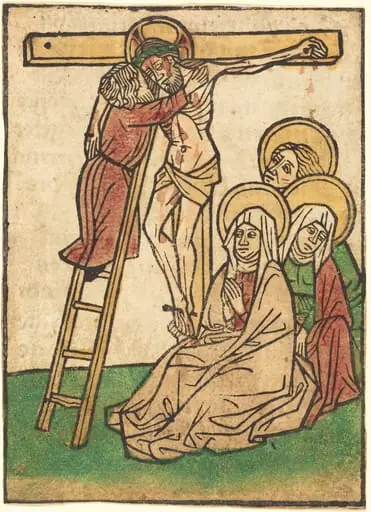
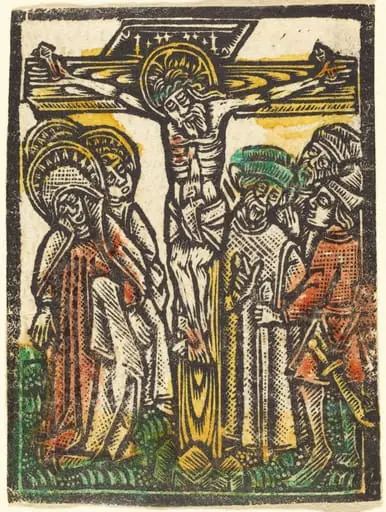
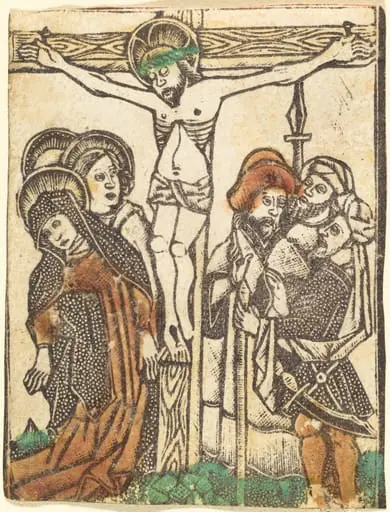
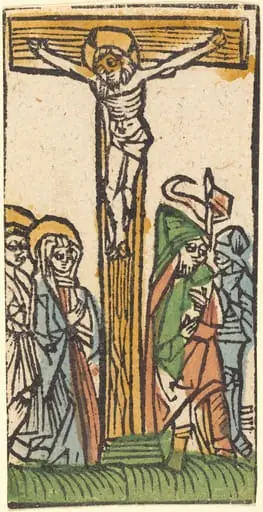
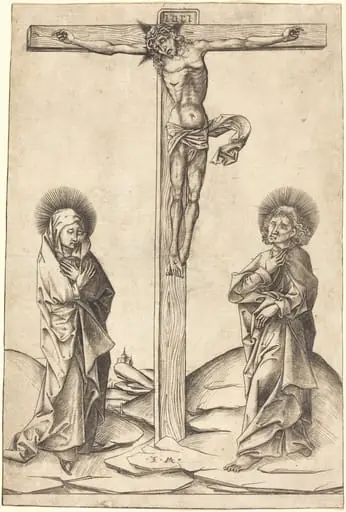
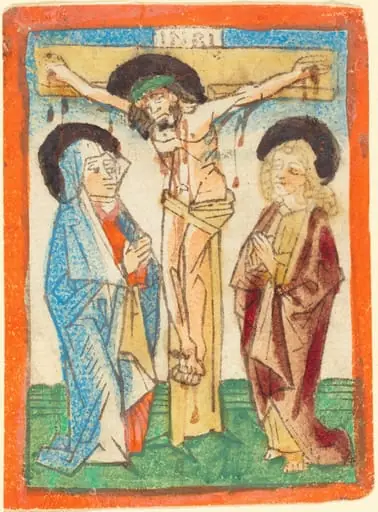
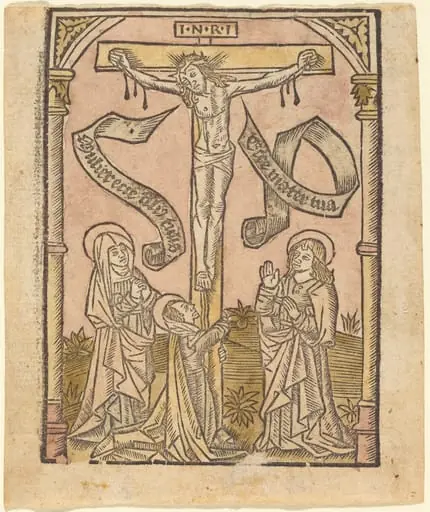
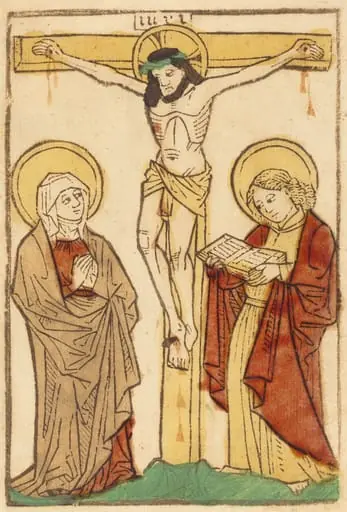
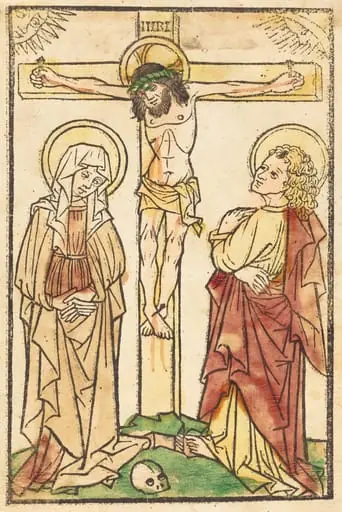
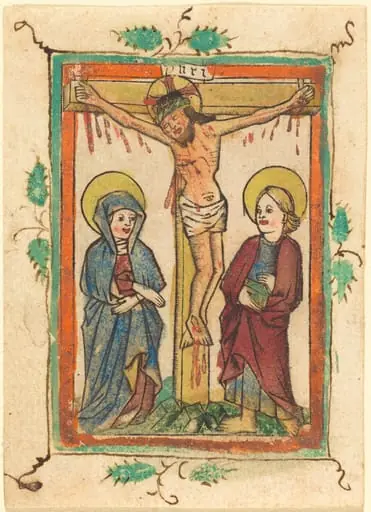
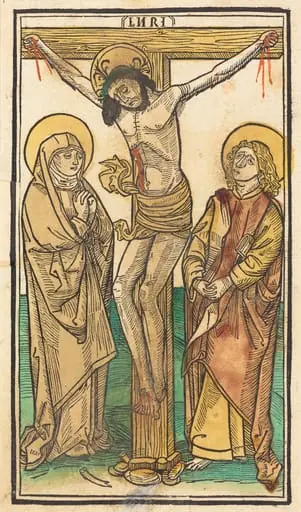
The Crucifixion is an ink print by Ludwig of Ulm. It dates from 1450 and is held in the collection of the National Gallery of Art.
About this work
Overview
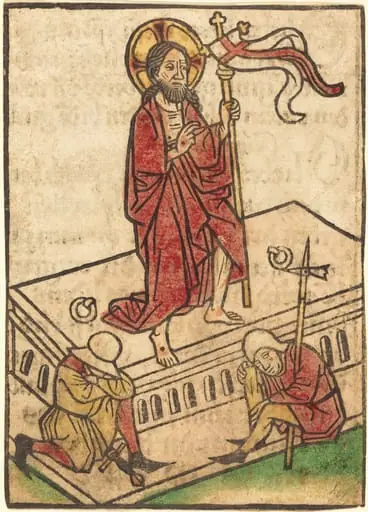
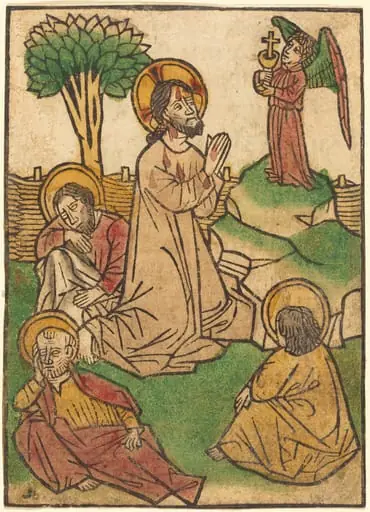
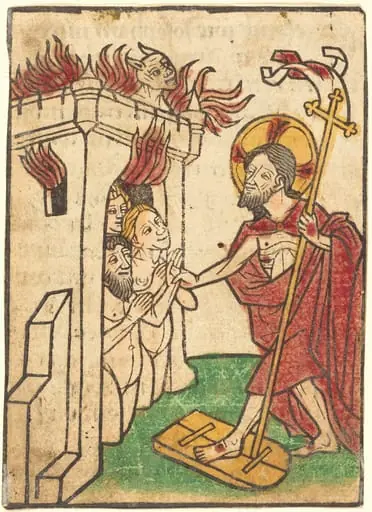
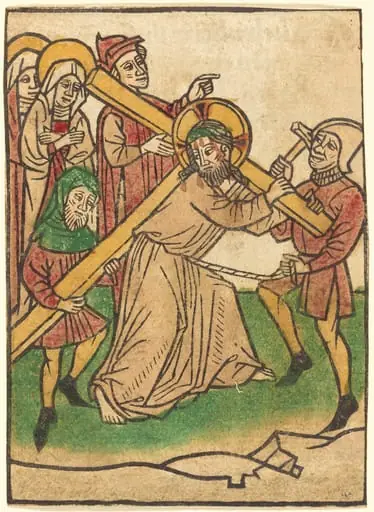
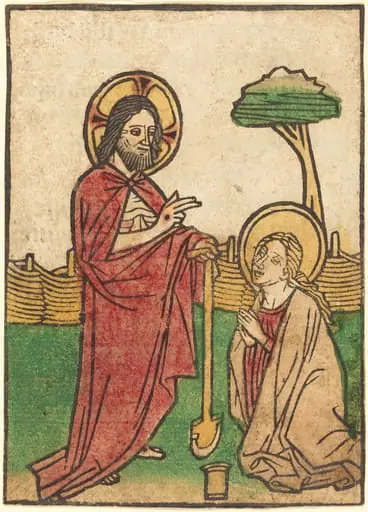
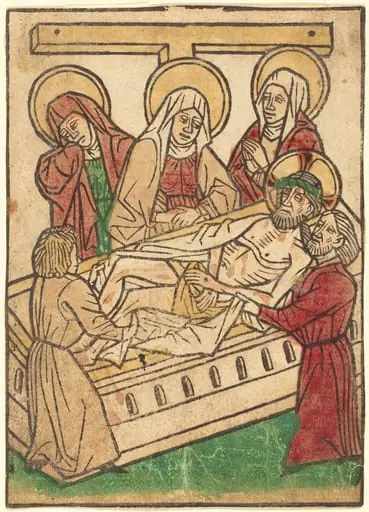
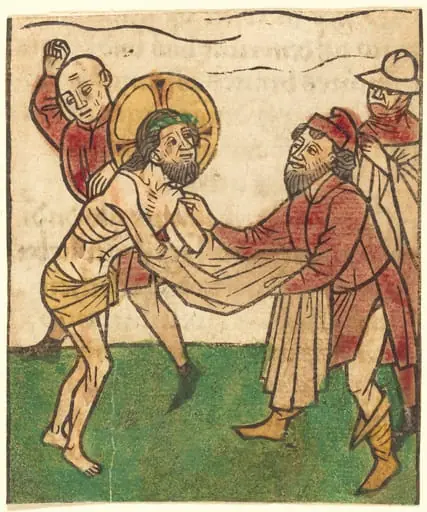
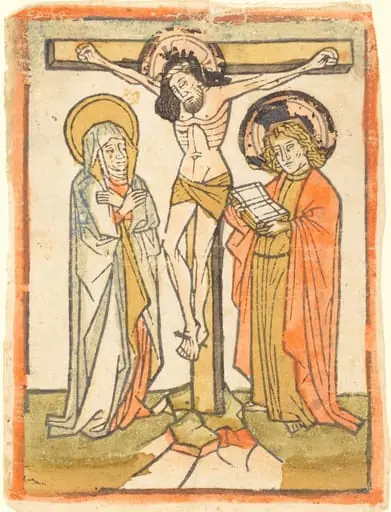
Created around 1450, this hand-colored woodcut is attributed to Ludwig of Ulm and originates from a blockbook, a precursor to movable-type printing.
Created around 1450, this hand-colored woodcut is attributed to Ludwig of Ulm and originates from a blockbook, a precursor to movable-type printing. The image depicts the Crucifixion in a compact, devotional format, designed for private contemplation. Its production method—carving an image into a wooden block, inking it, and pressing it onto paper—was common in late medieval Europe before the rise of the printing press.
Subject & Meaning
The scene centers on Christ nailed to a cross, his head bowed in death. Below him, two figures stand in silent reverence: one clasps his hands in prayer, the other gazes at a small book, possibly a scripture. The composition emphasizes solemnity over drama, inviting the viewer into personal meditation on sacrifice and redemption. The absence of bystanders or elaborate architecture focuses attention on the spiritual moment.
Technique & Style
Executed in woodcut, the image relies on bold, clean outlines and flat areas of hand-applied color. The background features a simplified green ground with textured cracks suggesting barren earth. Figures are rendered with minimal modeling, their forms defined by sharp contours rather than shading. This stylistic restraint reflects the limitations and aesthetic priorities of early blockbook production, prioritizing clarity over naturalism.
History & Provenance
The print likely belonged to a devotional blockbook, a series of religious images bound into small volumes for lay use. Produced in southern Germany or the Rhineland, such books were circulated among the literate middle class before the advent of metal-type printing. While the exact provenance of this sheet is undocumented, similar prints survive in ecclesiastical and private collections across Europe.
Context
In mid-15th-century Europe, religious imagery was central to personal piety, especially among those who could not read Latin. Blockbooks like this one offered affordable, portable visual aids for prayer. The Crucifixion was a frequent subject, reinforcing themes of suffering and salvation. This print reflects a transitional moment in visual culture, bridging manuscript illumination and the coming age of printed books.
Legacy
Though overshadowed by later printed works, this woodcut exemplifies the early integration of image and text in mass-produced religious media. Its simplicity and directness influenced the visual language of Protestant devotional prints in the following century. As one of the earliest printed images of the Crucifixion, it stands as a quiet milestone in the democratization of sacred imagery.
Artist & collection