Artwork
The Crucifixion
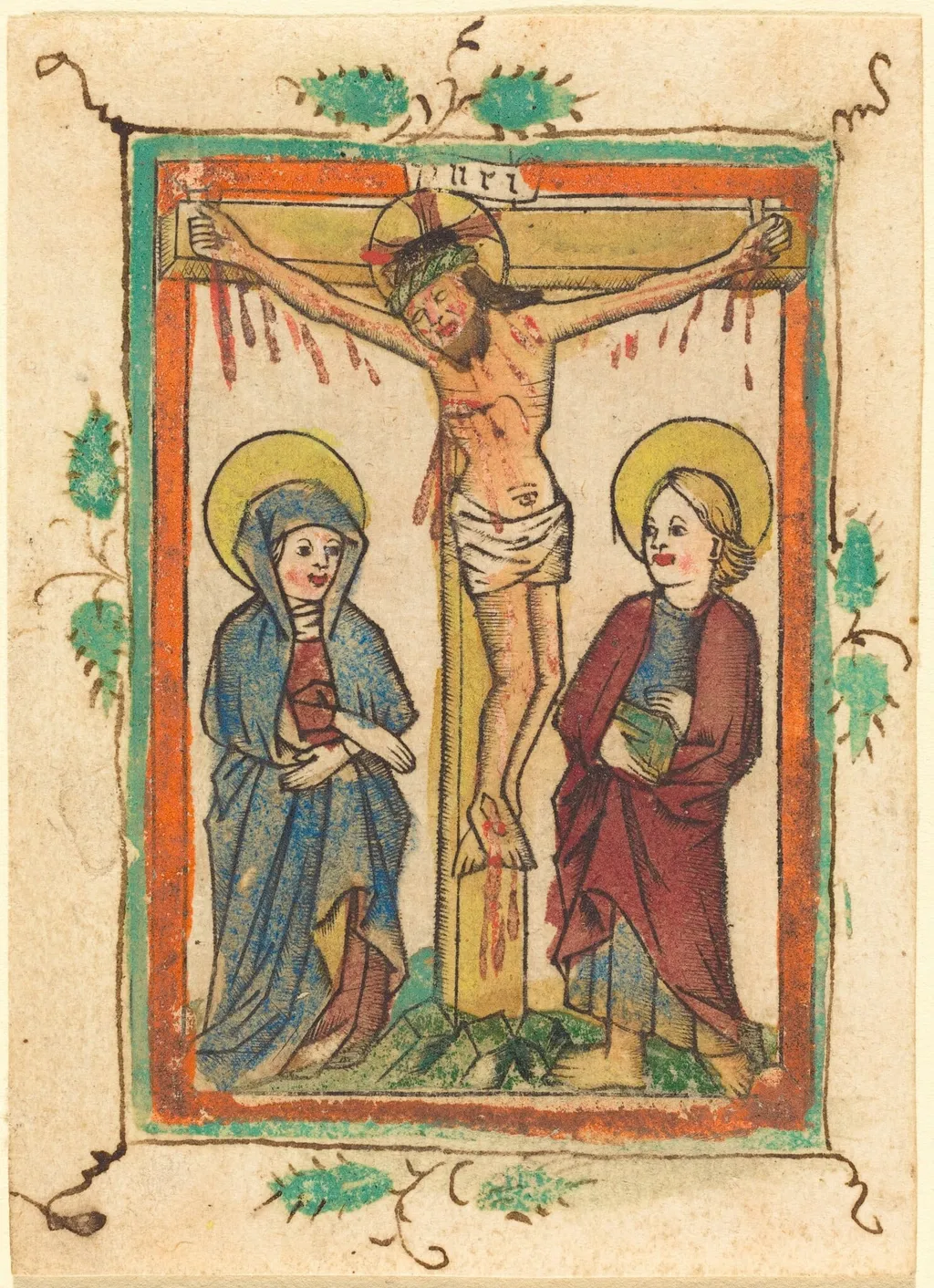
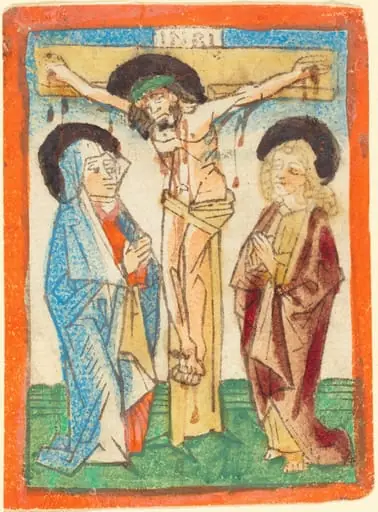
The Crucifixion is an ink print by the Renaissance artist Master of the Dutuit Mount of Olives. It dates from 1460 and is held in the collection of the National Gallery of Art.
About this work
Overview
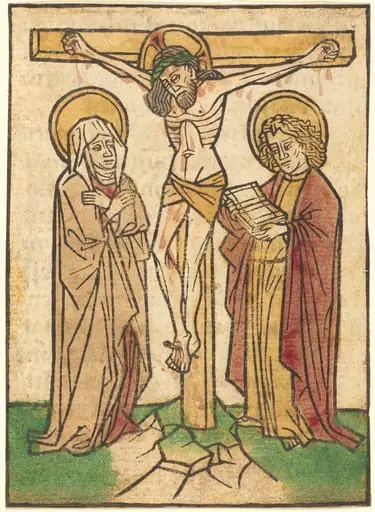
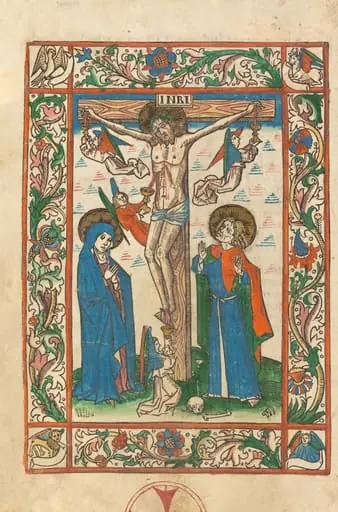
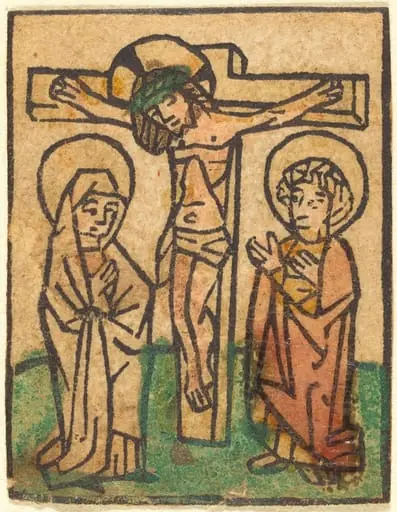
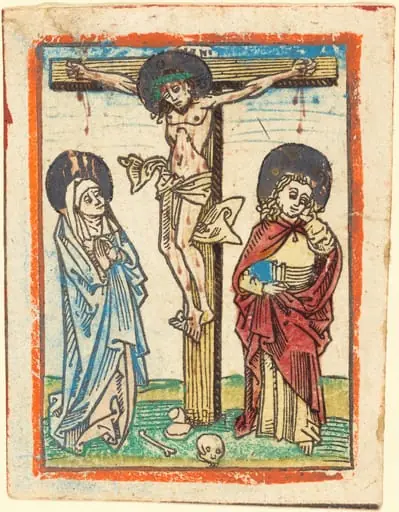
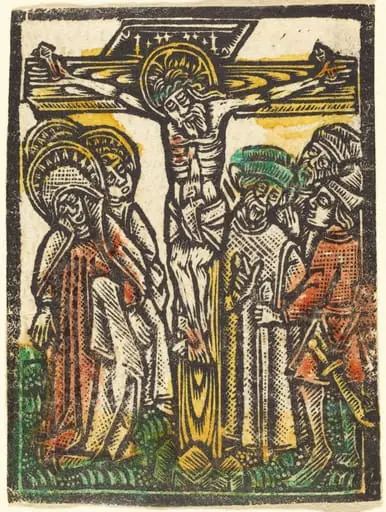
Created around 1460, this hand‑colored engraving titled “The Crucifixion” is attributed to the anonymous workshop known as the Master of the Dutuit Mount of Olives. The print depicts the crucified Christ flanked by two onlookers, set against a gold‑toned sky and framed by a vivid border of red, green and orange.
Subject & Meaning
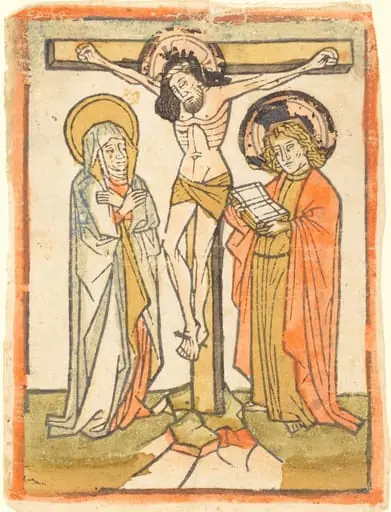
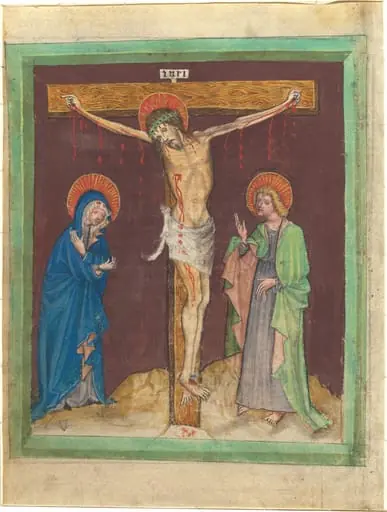
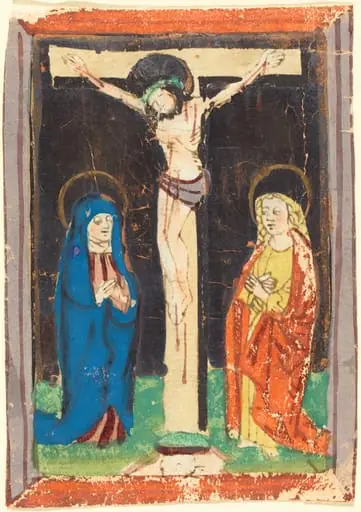
The central figure is a man nailed to a cross, his torso slightly curved, with blood visible at the wrists and side. Two standing figures, one dressed in blue and the other in red, observe the scene, underscoring the devotional focus on Christ’s suffering and the witness of the faithful.
Technique & Style
The image was produced by engraving, a process in which lines are incised into a metal plate, inked, and pressed onto paper, yielding crisp, precise outlines. After printing, the work was colored by hand, adding the bright hues of the border and the figures’ garments, a common practice in mid‑15th‑century Northern European prints.
History & Provenance
The work is linked to the Master of the Dutuit Mount of Olives, a notname assigned to a group of prints sharing stylistic traits. Its dating to the early 1460s places it within the period when devotional prints began to circulate widely among lay audiences, though its exact ownership record prior to modern collections remains undocumented.
Context
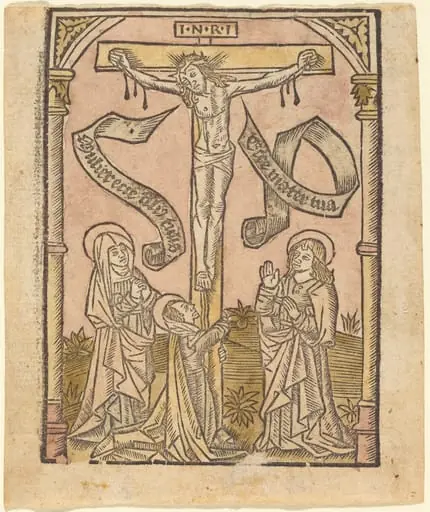
During the mid‑15th century, religious imagery such as crucifixion scenes served both liturgical and private devotional purposes. The use of a gold background and Latin inscription reflects contemporary conventions that combined visual narrative with textual affirmation of the sacred event.
Artist & collection

Artist
Master of the Dutuit Mount of Olives
Master of the Dutuit Mount of Olives (1460–1460) was an artist.