Artwork
The Crucifixion
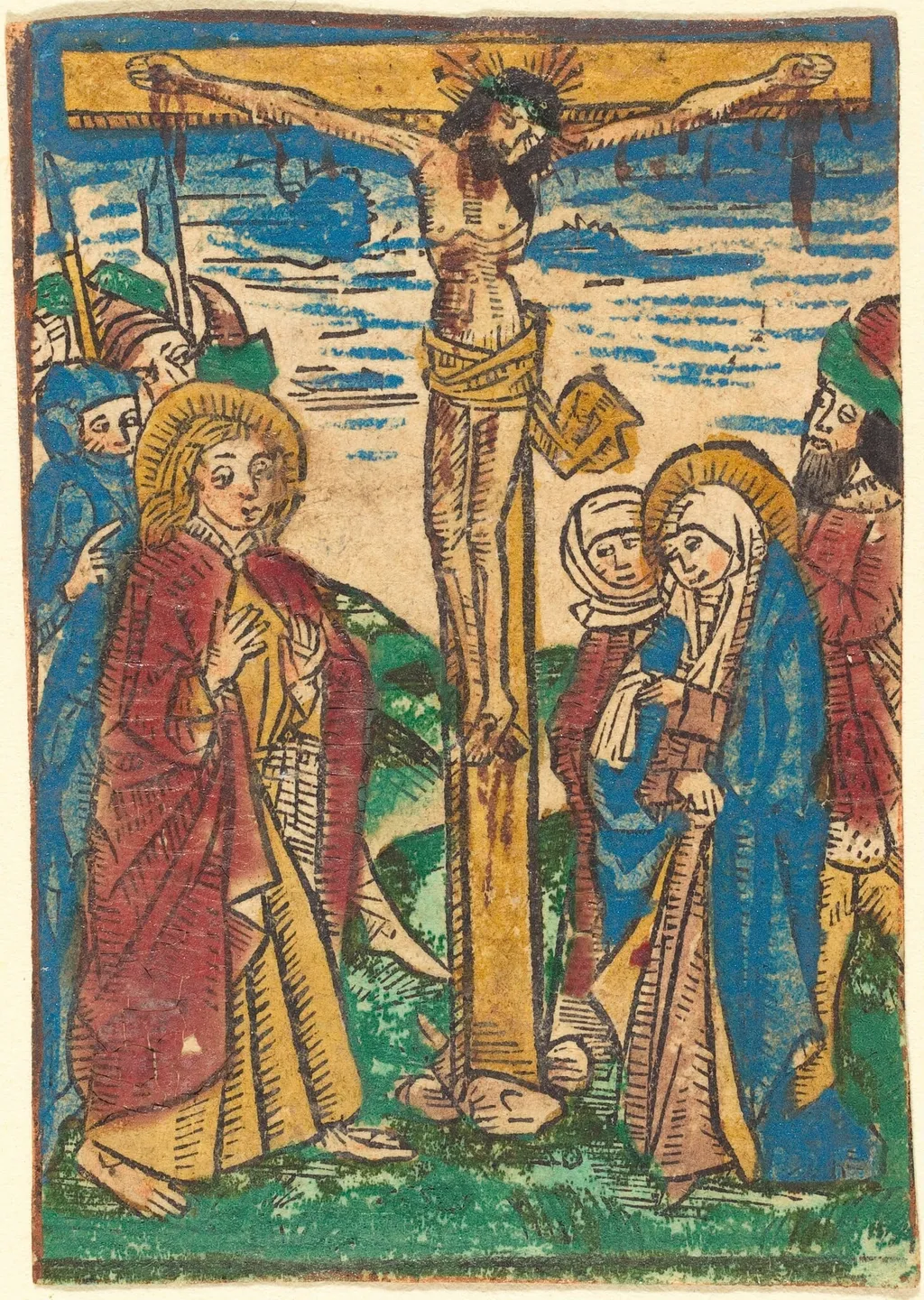
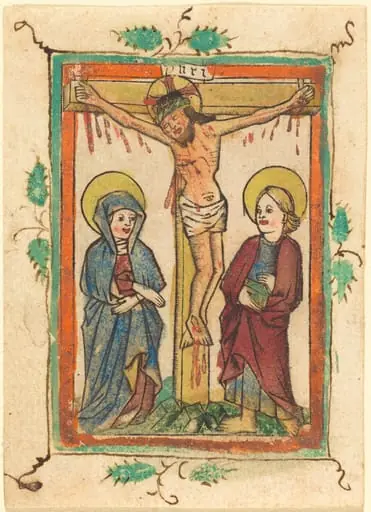
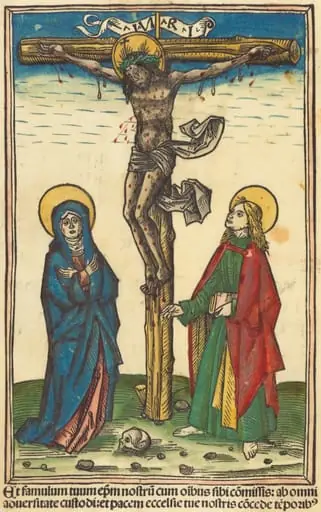
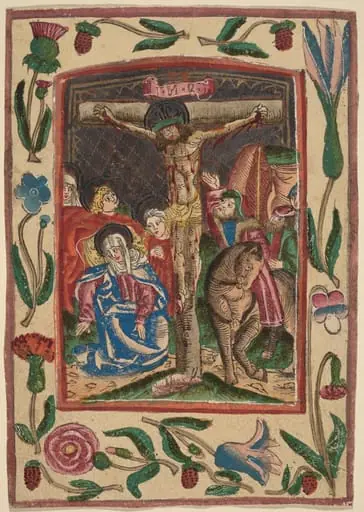
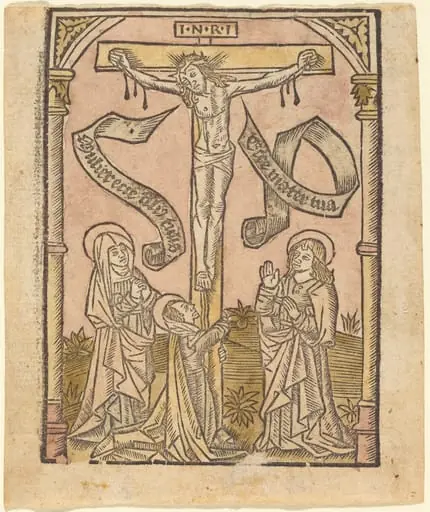
The Crucifixion is an ink print by the Renaissance artist German 15th Century. It dates from 1490 and is held in the collection of the National Gallery of Art.
About this work
Overview
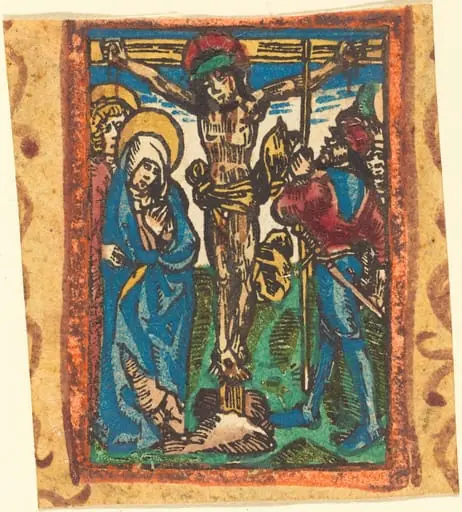
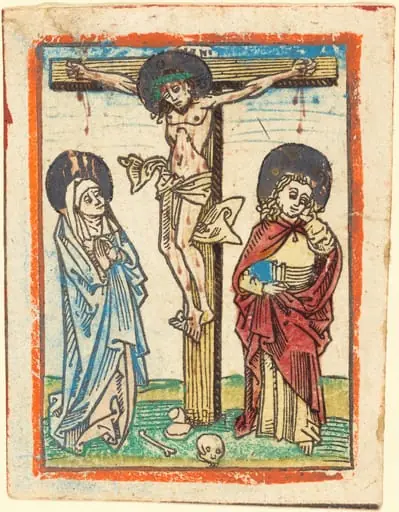
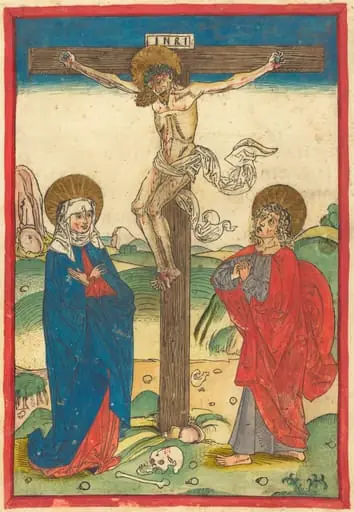
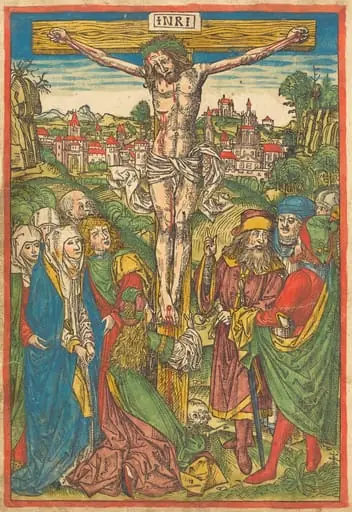
The work is a hand‑colored woodcut depicting the crucifixion of a man bearing a crown of thorns. The scene is rendered in flat, vivid hues: two women in blue and red garments, two haloed men, a simple blue sky with wavy lines, and a grassy ground dotted with small trees. The figures appear blocky, outlined in bold lines, characteristic of early printmaking.
Subject & Meaning
At its core, the image presents the biblical moment of Christ’s death on the cross, surrounded by witnesses traditionally identified as the Virgin Mary, Mary Magdalene, and the two thieves. The inclusion of halos signals the sanctity of the male figures, while the bright clothing of the women emphasizes their devotional presence.
Technique & Style
Created through woodcut, the artist carved the composition into a wooden block, inked the relief, and transferred the image onto paper. After printing, the work was hand‑colored, a common practice that added chromatic detail to otherwise monochrome prints. The stylized, stiff forms and strong outlines reflect the conventions of early European religious prints.
Context
Woodcut prints of religious subjects were widely circulated in the late medieval and early modern periods as affordable devotional images. This piece fits within that tradition, serving both as a visual aid for personal piety and as a means of disseminating biblical narratives to a broader audience.
Artist & collection

Artist
This 15th-century German artist carved vivid religious scenes into metal and wood, then hand-painted them in bright, symbolic colors.

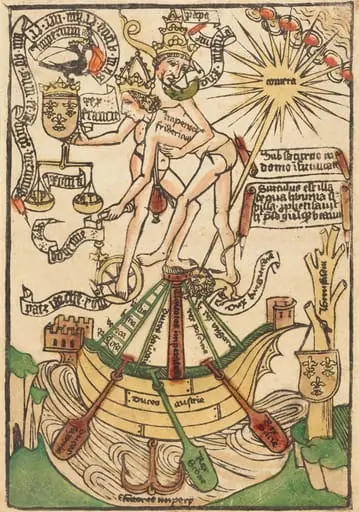 Allegory of the Meeting of Pope Paul II and Emperor Frederick III
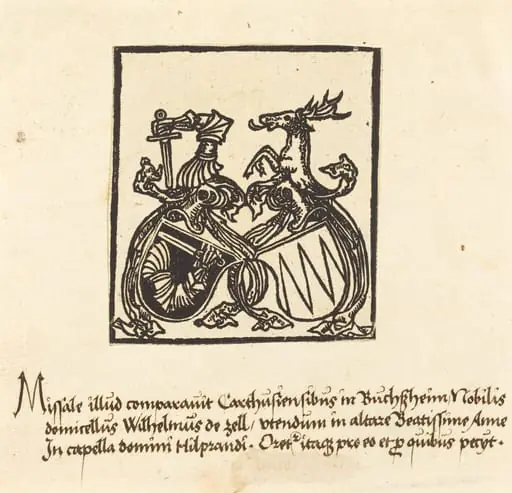 Bookplate of Wilhelm von Zell
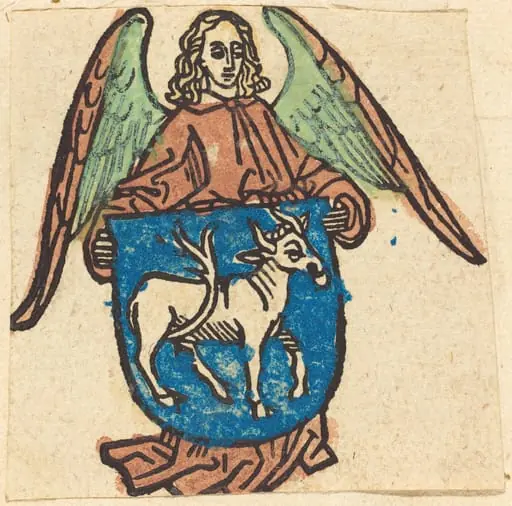 Bookplate of Hilprand Brandenburg of Bibrach
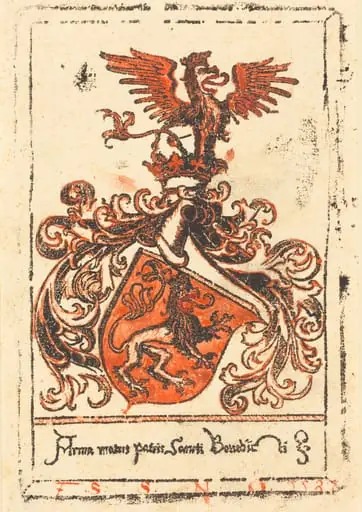 Bookplate of the Abbey of Ottobeuren
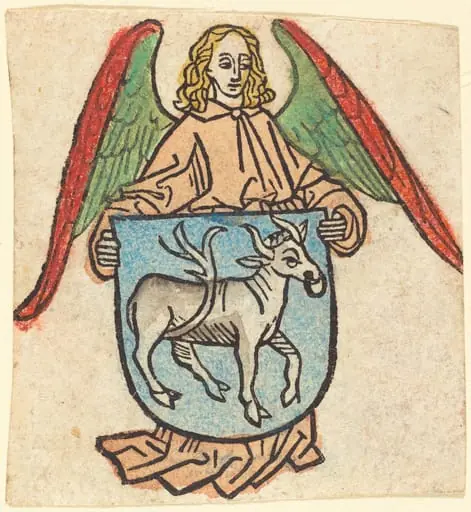 Bookplate of Hilprand Brandenburg of Bibrach
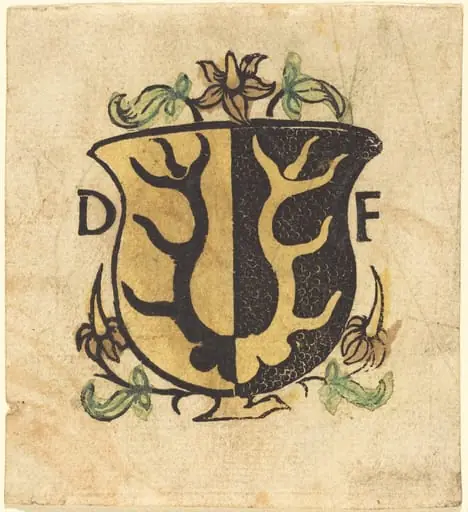 Bookplate of Dominicus Frauenfelder
![Studies for Six Figures (sheet from a model book) [recto], by German 15th Century](https://artifactworldgallery.com/img/german-15th-century--studies-for-six-figures-sheet-from-a-model-book-recto--4837429e0755bc3f-w320.webp) Studies for Six Figures (sheet from a model book) [recto]
Studies for Six Figures (sheet from a model book) [recto]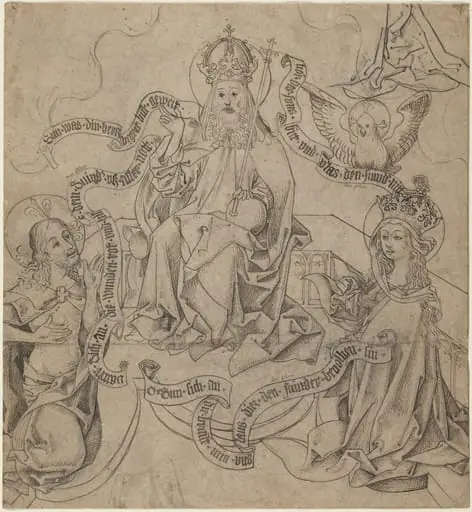 Christ and Mary Interceding with God the Father