Artwork
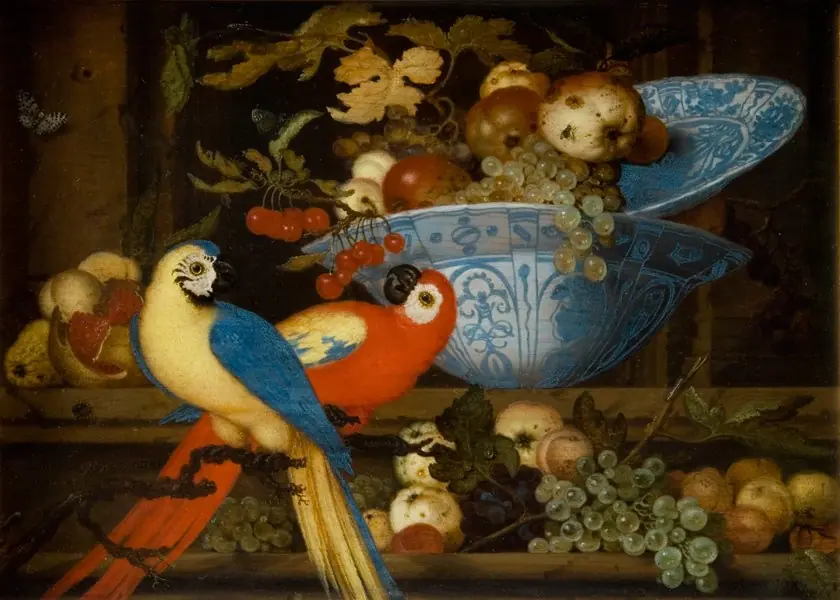
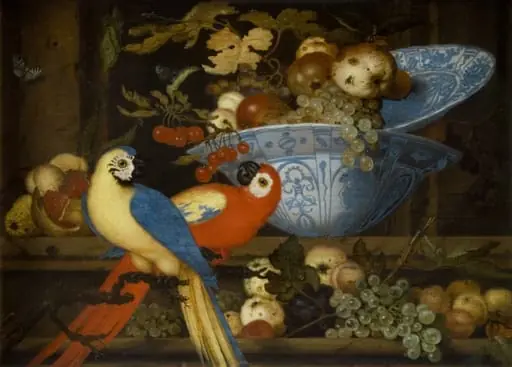
Still-life with fruit and macaws
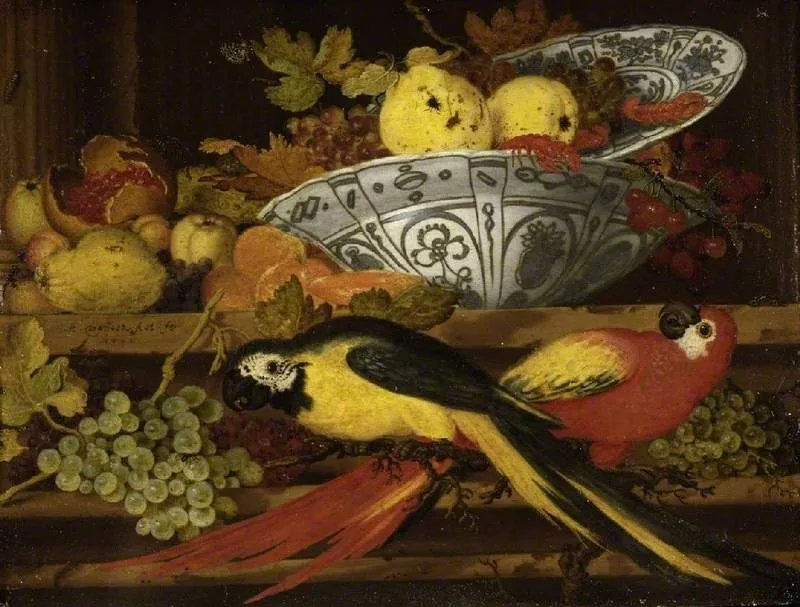
Still-life with fruit and macaws is an oil painting by the Dutch Golden Age artist Balthasar van der Ast. It dates from 1622 and is held in the collection of the Fitzwilliam Museum.
About this work
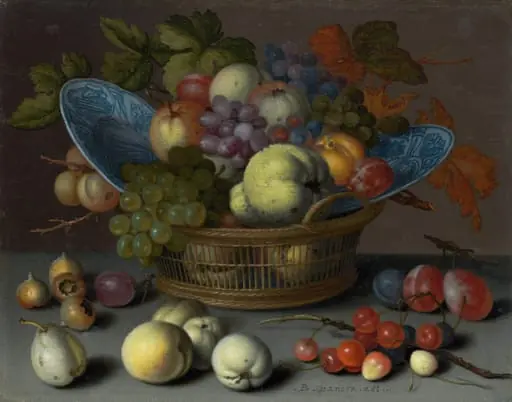
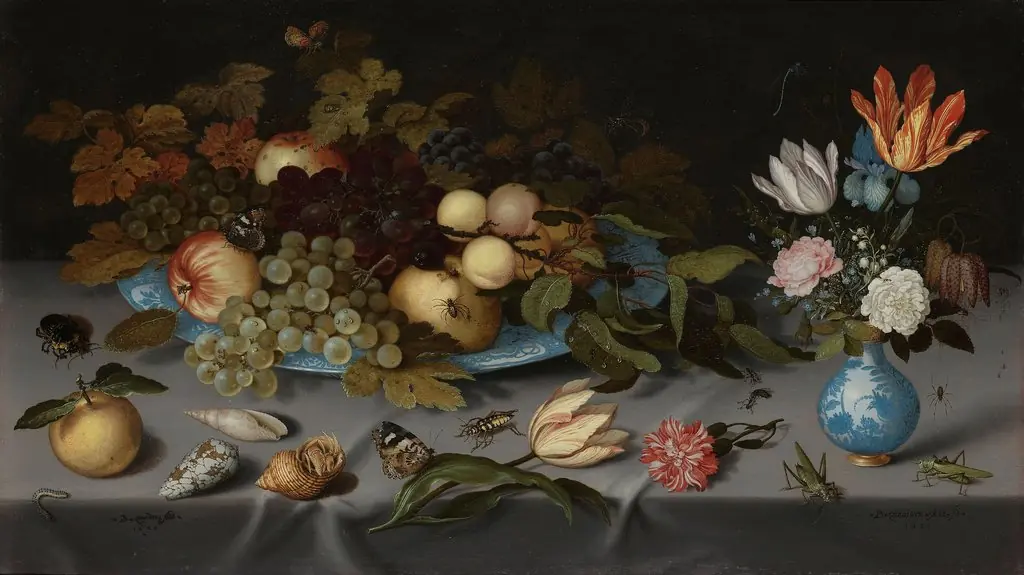
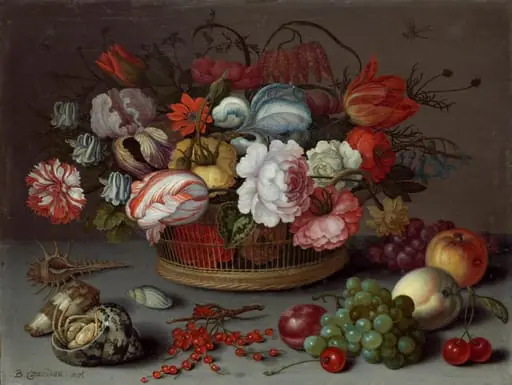
The bowl has a decorative pattern, and the fruit includes grapes, pears, and other types of fruit.
This painting shows a still life with fruit and two macaws. The fruit is in a bowl and on a table, and the macaws are perched on the table. The bowl has a decorative pattern, and the fruit includes grapes, pears, and other types of fruit.
The macaws are brightly colored, with red, yellow, and black feathers. They are looking at each other, and one of them is leaning forward. The background of the painting is dark, which makes the fruit and macaws stand out.
The painting is done in a realistic style, with a lot of detail and texture. It's a beautiful example of a still life from the 17th century. If you like this painting, you might also like the work of artist Balthasar van der Ast.
Overview
Created in 1622, this copper painting by Dutch artist Balthasar van der Ast presents a meticulously arranged still life. A darkened backdrop accentuates a cluster of fruit—grapes, pears and assorted pieces—arranged in a patterned bowl and scattered across a table. Two vividly feathered macaws perch nearby, their bright reds, yellows and blacks drawing the eye toward the composition’s central tableau.
Subject & Meaning
The work juxtaposes natural abundance with exotic wildlife, reflecting a fascination with the global trade of the early seventeenth century. The fruit symbolizes seasonal bounty, while the macaws, recently introduced to Europe, suggest curiosity about far‑off lands. Their attentive gazes toward one another create a subtle narrative of interaction between the familiar and the foreign.
Technique & Style
Executed on a copper plate, the painting benefits from the metal’s smooth surface, allowing van der Ast to render fine detail and luminous color. Precise brushwork captures the texture of skin, feather and fruit peel, while a chiaroscuro treatment deepens the background, heightening the three‑dimensional effect. The realistic approach aligns with the Dutch Golden Age’s emphasis on observation.
History & Provenance
After its creation, the piece entered private collections before being acquired by the Fitzwilliam Museum in Cambridge, where it remains on display. Its documented provenance traces a typical path for Dutch still lifes, moving from Dutch merchants to English collectors during the eighteenth and nineteenth centuries.
Context
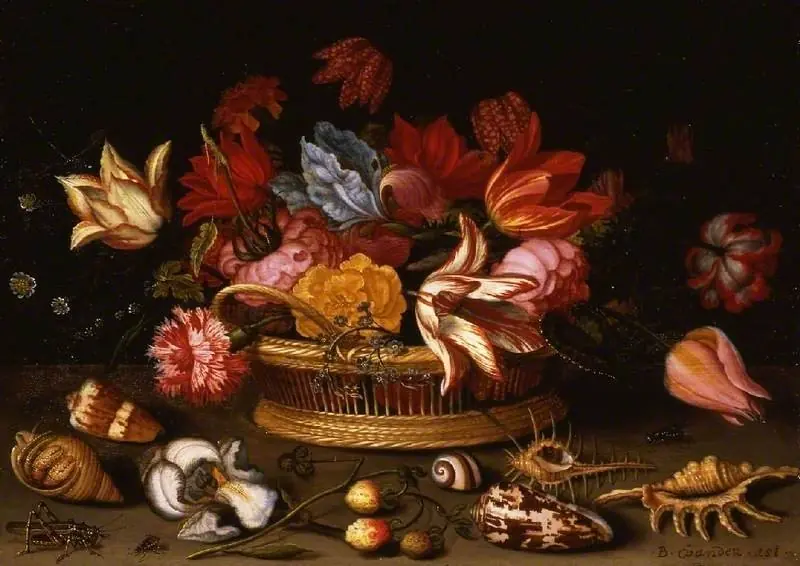
Van der Ast was a leading figure in the development of still‑life painting, especially noted for his depictions of shells, insects and delicate flora. This composition illustrates his expansion into more exotic subjects, integrating the popular motif of parrots and macaws that appeared in Dutch art following increased contact with the Americas and the East Indies.
Artist & collection

Artist
Balthasar van der Ast (Middelburg, 1593/94 – Delft, 7 March 1657) was a Dutch Golden Age painter who specialized in still lifes of flowers and fruit, as well as painting a number of remarkable shell still lifes; he is…