Artwork
Niobe and Her Daughter
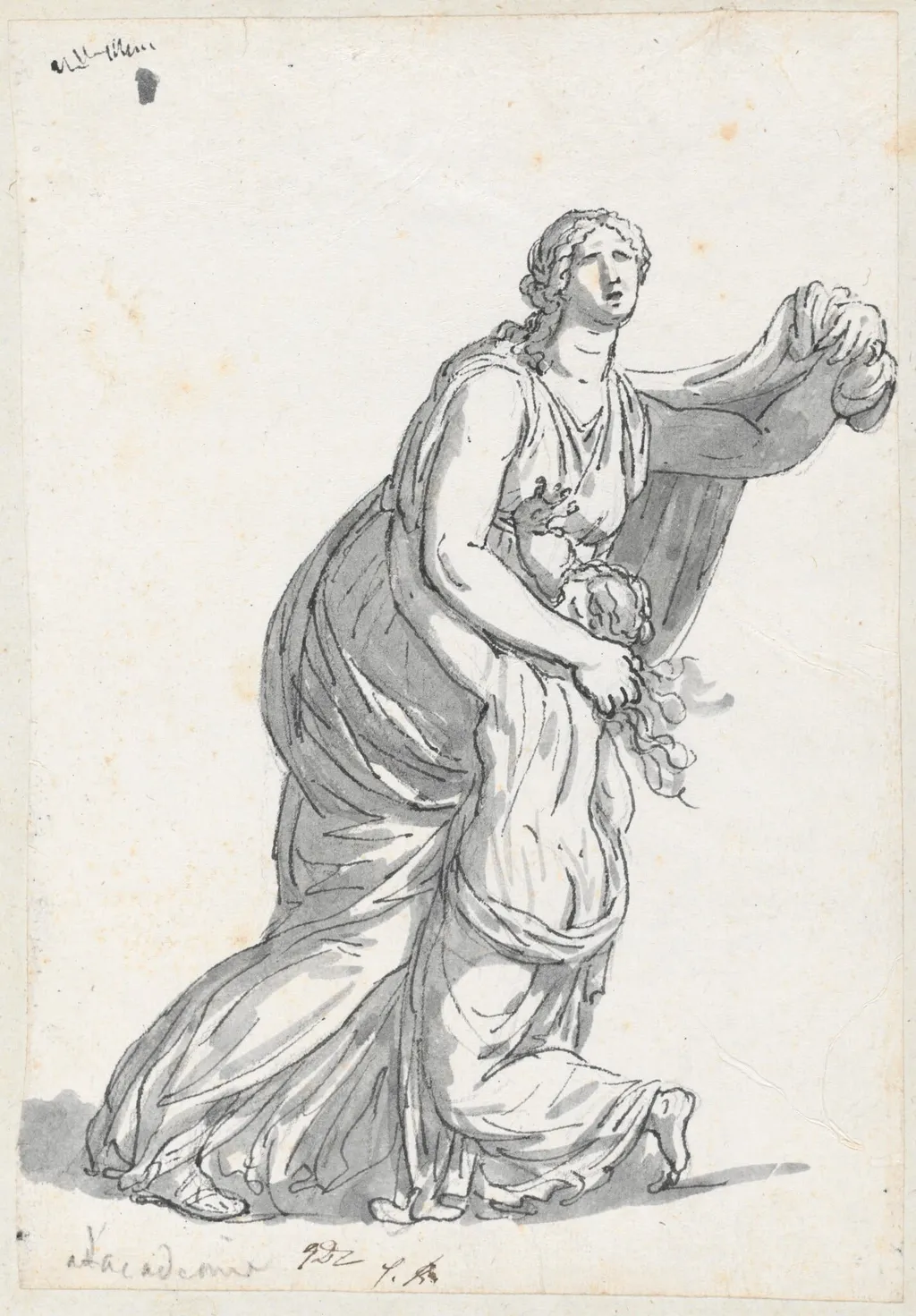
Niobe and Her Daughter is an ink drawing by the Neoclassicist artist Jacques-Louis David. It dates from 1778 and is held in the collection of the National Gallery of Art.
About this work
Overview
Jacques‑Louis David’s drawing titled *Niobe and Her Daughter* dates from 1778. Executed on laid paper, the work combines pen, black ink and a gray wash applied over preliminary graphite sketches. The composition presents a kneeling woman in a flowing robe, cradling a child whose head rests on her shoulder, both enveloped in the same draped fabric.
Subject & Meaning
The scene evokes the mythic figure of Niobe, whose grief over the loss of her children is a recurrent theme in classical literature. Here the mother’s upward gaze and sorrowful expression convey a moment of private mourning, while the child’s turned-away face reinforces the sense of loss and contemplation.
Technique & Style
David employs a restrained palette of ink and gray wash, allowing the underlying graphite to suggest form and volume. The delicate handling of line defines the folds of the robes, while subtle shading creates depth without overt coloration. This approach reflects the Neoclassical emphasis on drawing and controlled composition, preceding his later, more dramatic works.
History & Provenance
Created in the late 1770s, the drawing belongs to David’s early period, before his full immersion in the revolutionary politics that later shaped his career. The work has remained in the collection of a European museum, where it is displayed as an example of his preparatory studies and his engagement with classical subjects.
Artist & collection
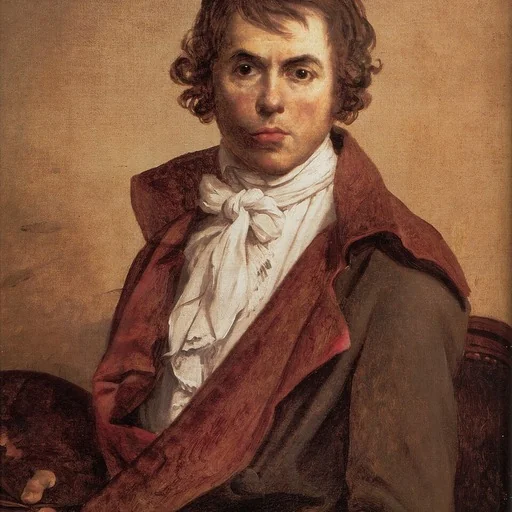
Artist
Jacques-Louis David was born in Paris on 30 August 1748 into a bourgeois family; his father died in a duel when the boy was nine, and a maternal uncle guided his education.

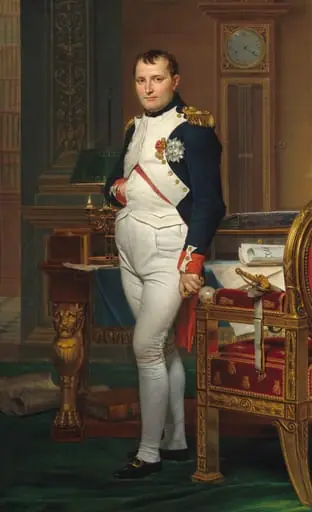 The Emperor Napoleon in His Study at the Tuileries
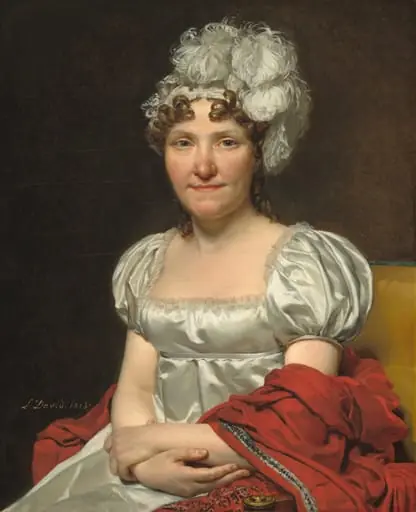 Madame David
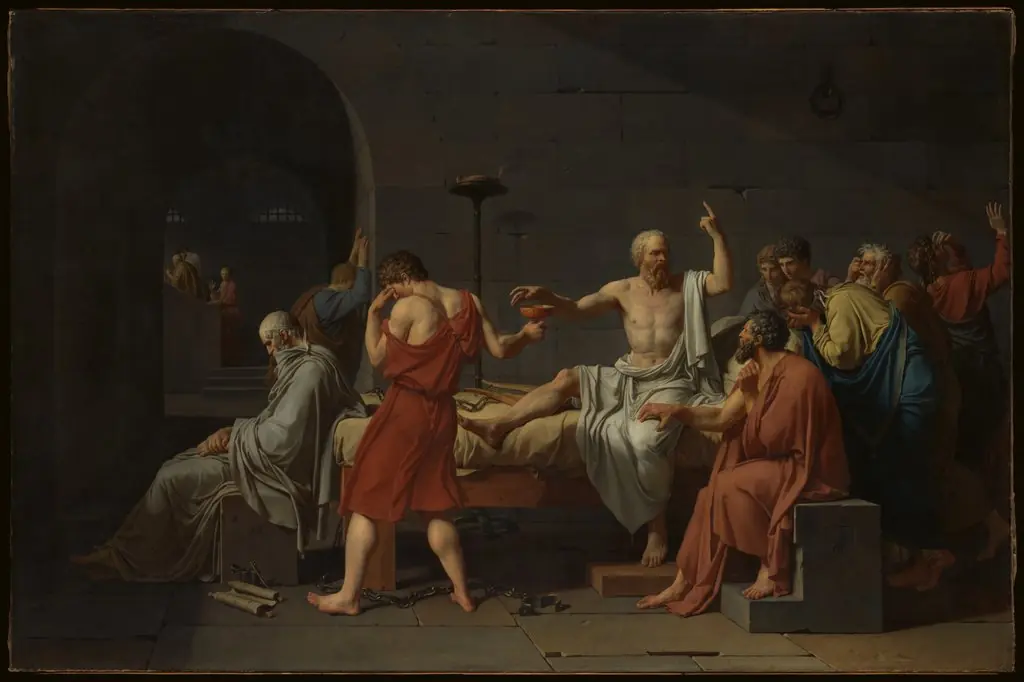 The Death of Socrates
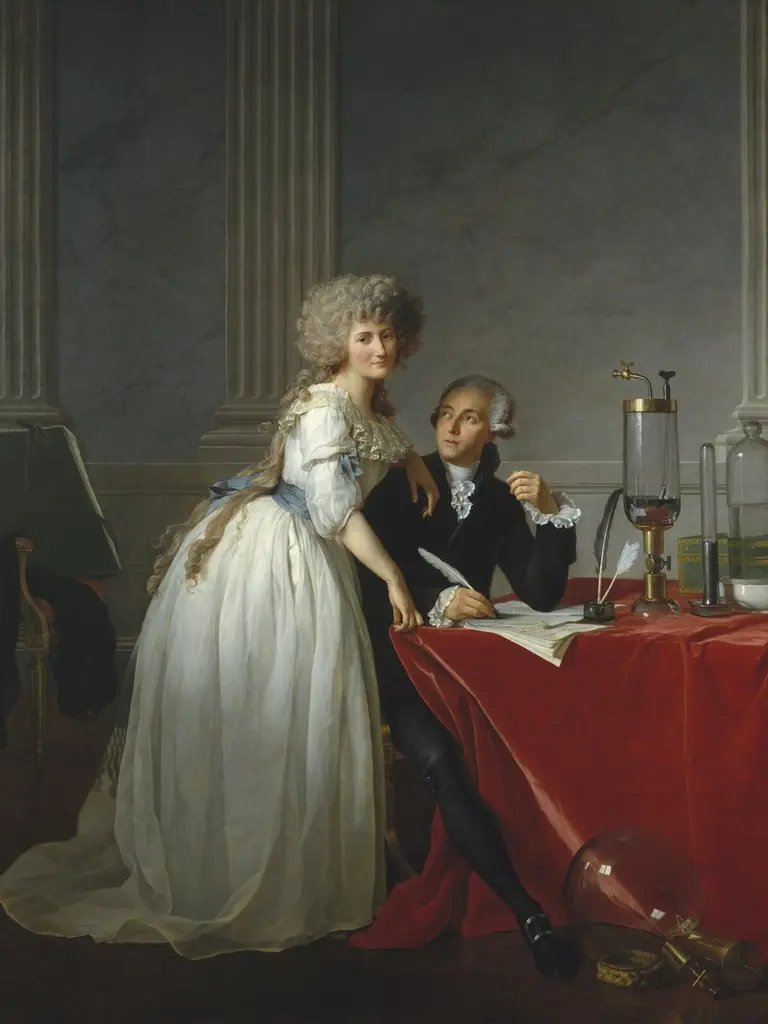 Portrait of Antoine-Laurent Lavoisier and his wife
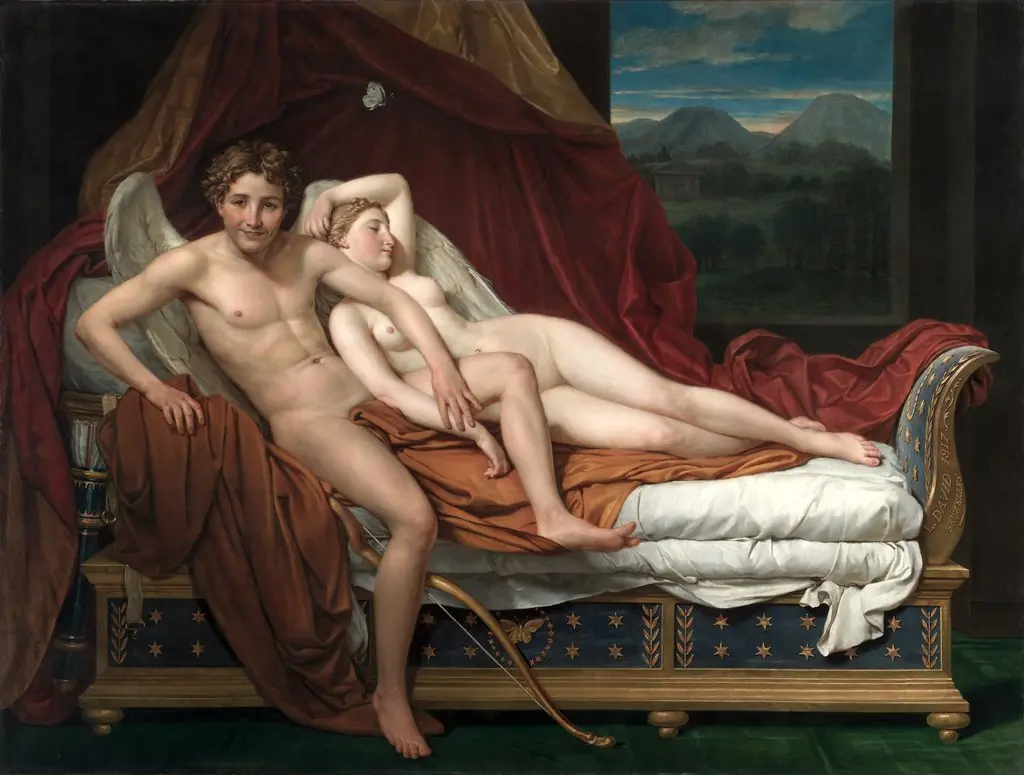 Cupid and Psyche
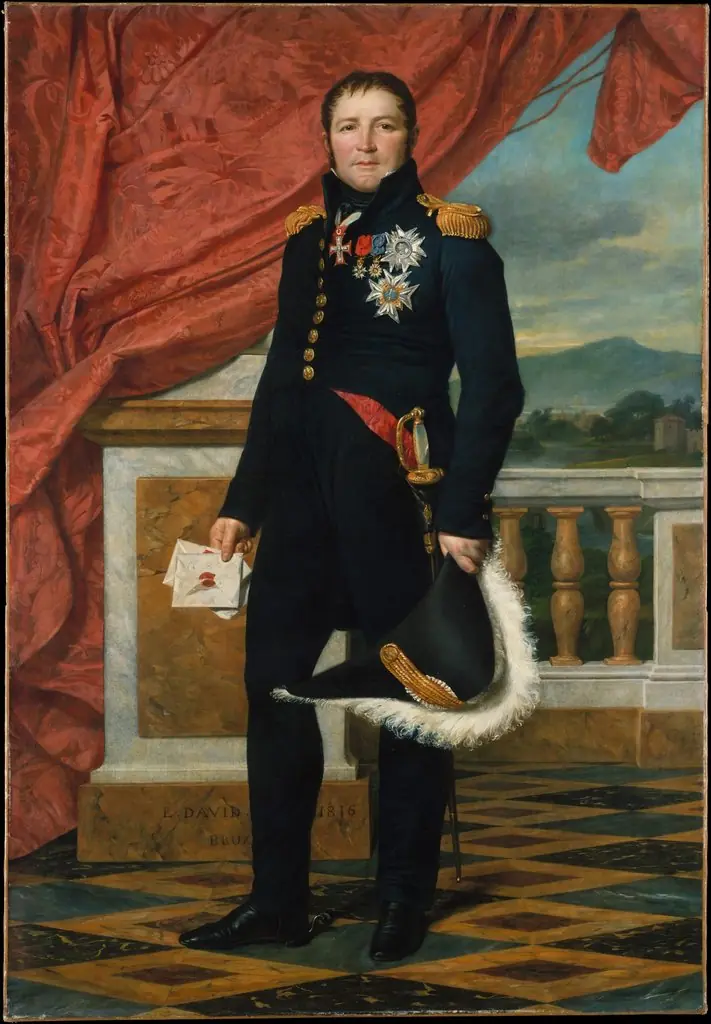 General Étienne-Maurice Gérard (1773–1852), Marshal of France
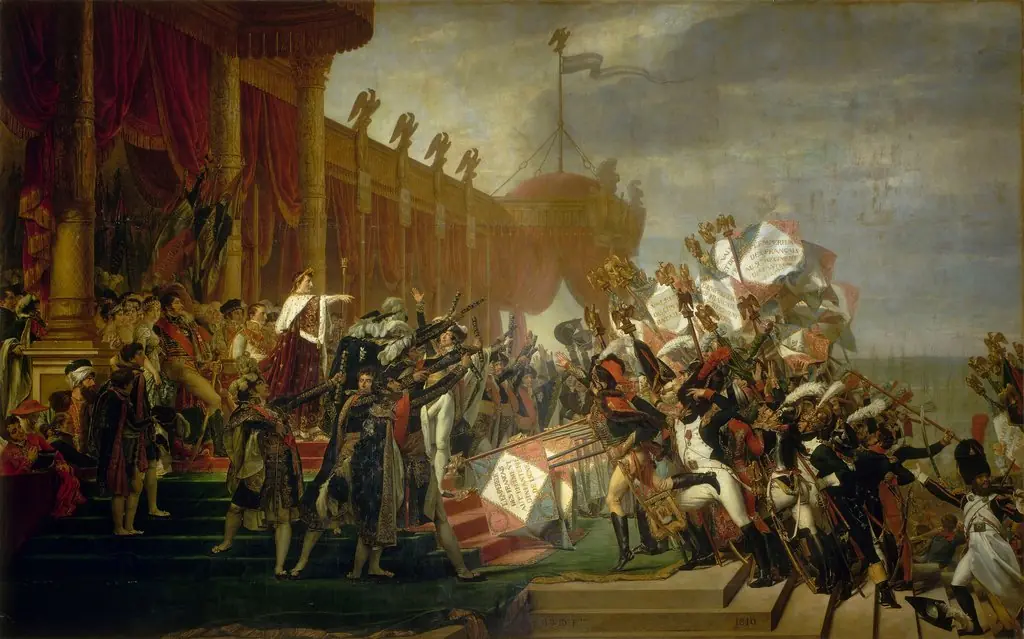 The Distribution of the Eagle Standards
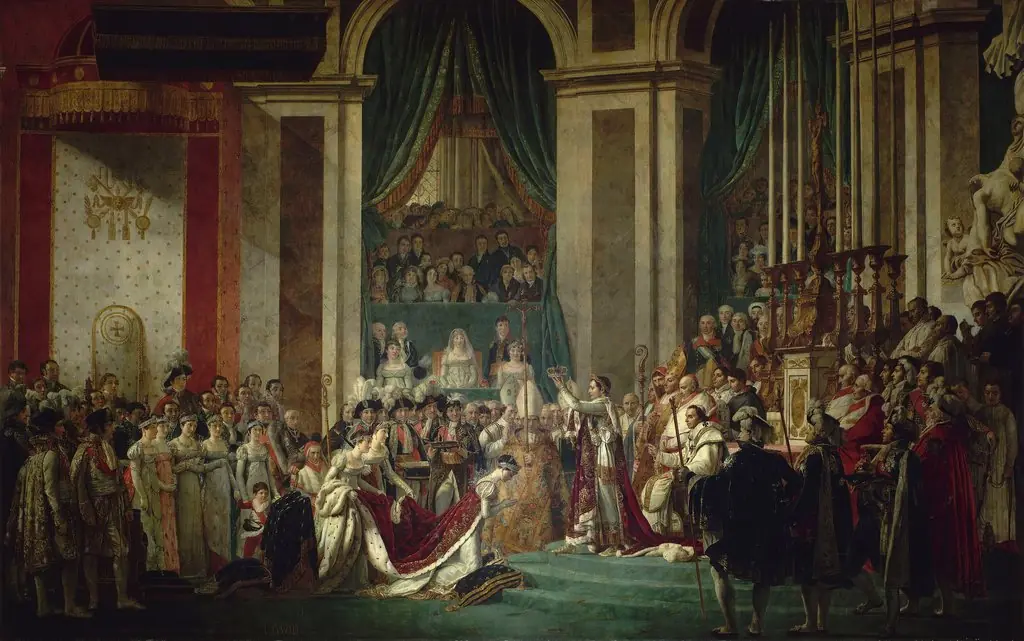 Coronation of Emperor Napoleon I and Coronation of the Empress Josephine
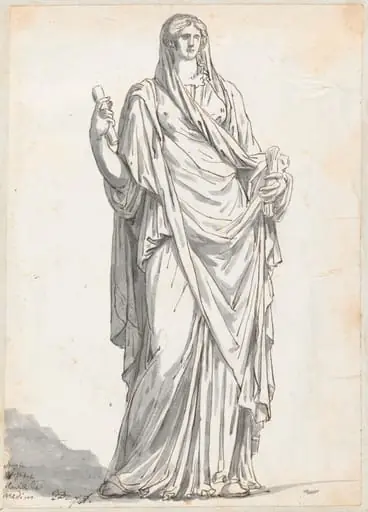 Orante from the Villa Medici
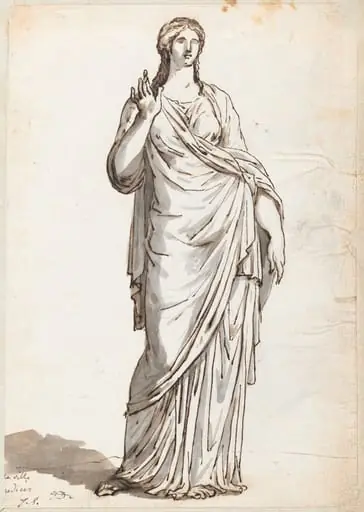 Woman with a Raised Hand, from the Villa Medici
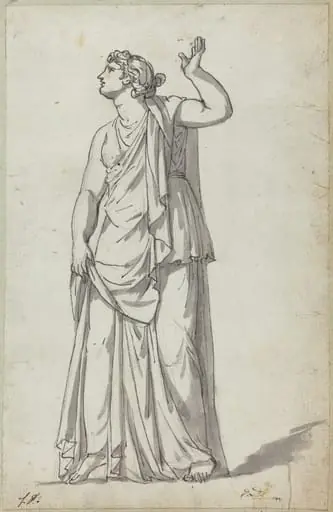 Roman Statue of a Muse (Anchyrrhoe)
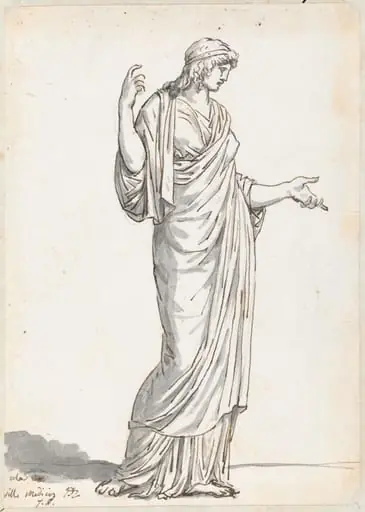 Woman from the Villa Medici
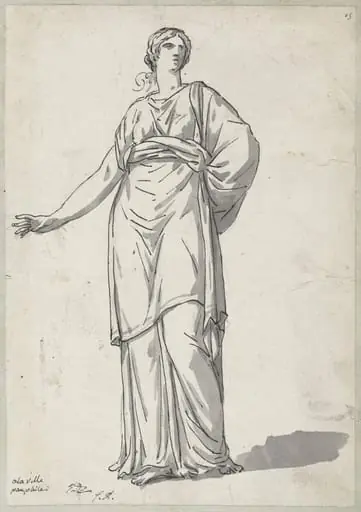 Woman from the Villa Pamphili
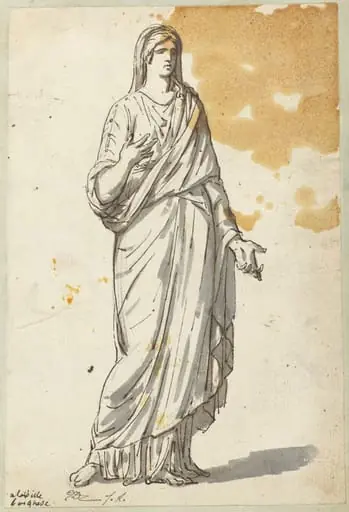 Woman from the Villa Borghese
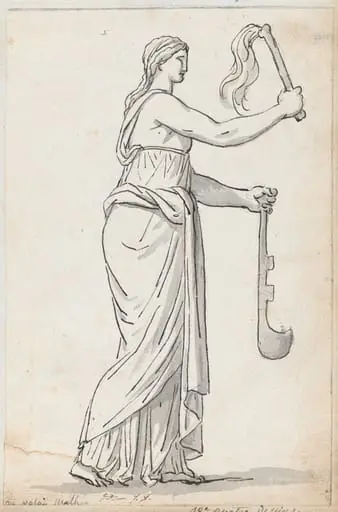 Woman from a Procession, from the Palazzo Mattei
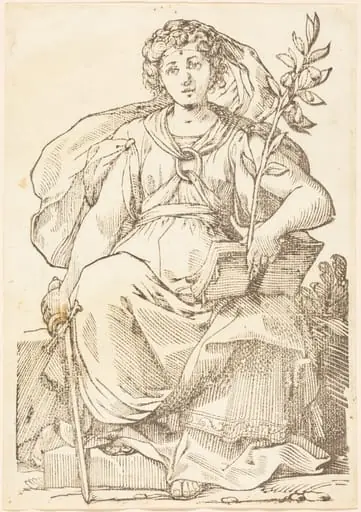 Sibylla Europa
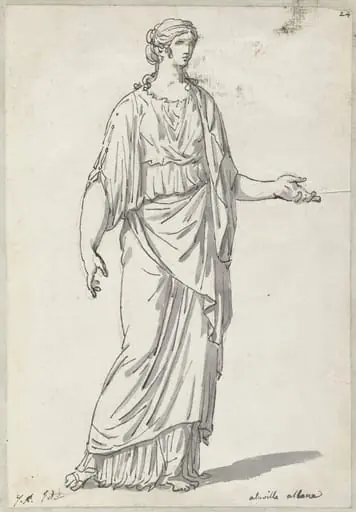 Classical Sculpture of a Woman with an Outstretched Arm
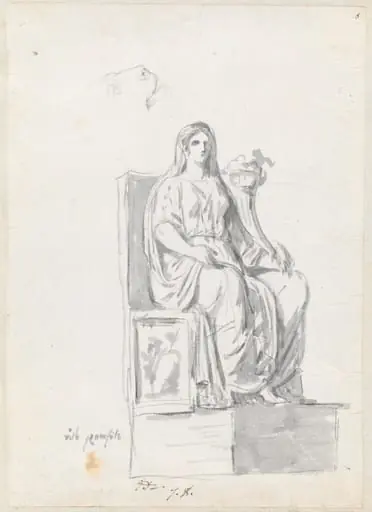 Abundance and the Face of a Lion, from the Villa Pamphili