Artwork
Victory Reclining Amid Trophies
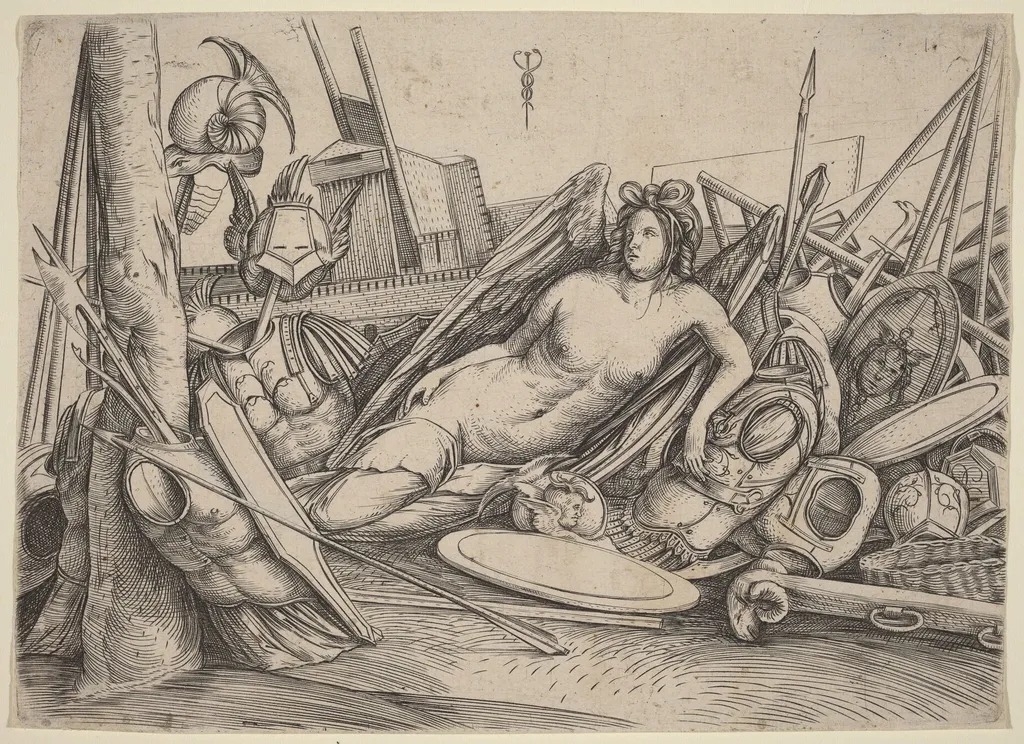
Victory Reclining Amid Trophies is an ink print by the Renaissance artist Jacopo de' Barbari. It dates from 1502 and is held in the collection of the National Gallery of Art.
About this work
Overview
Jacopo de' Barbari’s engraving *Victory Reclining Amid Trophies*, dated circa 1502, presents a classical allegory of triumph set amid an array of martial spoils. Executed in the intaglio technique, the print measures roughly 30 × 20 cm and is signed by the artist, who was active in both Italy and the German lands at the turn of the sixteenth century.
Subject & Meaning
At the centre lies a reclining female figure, identified as Victory, whose relaxed posture contrasts sharply with the surrounding weapons—spears, shields, and pieces of armor. Flanked by two helmeted soldiers gazing toward a distant fortress, the composition suggests a narrative of conquered foes and the peaceful aftermath of war, using the personified Victory to embody the triumph of the victorious power.
Technique & Style
De' Barbari employs fine, intersecting lines of cross‑hatching to model form and generate deep shadows, a hallmark of early Northern European printmaking.
De' Barbari employs fine, intersecting lines of cross‑hatching to model form and generate deep shadows, a hallmark of early Northern European printmaking. The engraving’s crisp outlines and layered hatching create a sense of three‑dimensionality, while the controlled yet dynamic arrangement of figures reflects the artist’s synthesis of Italian Renaissance compositional balance with Germanic attention to detail.
History & Provenance
After relocating from Venice to Germany in 1500, de' Barbari produced a series of twenty‑nine engravings that circulated widely across Europe. *Victory Reclining Amid Trophies* was likely disseminated through the burgeoning print market of the early sixteenth century, influencing contemporaneous artists in both the Italian and Northern traditions. Surviving copies are held in several major museum collections, attesting to its historical reach.
Context
The work emerges at a time when allegorical representations of triumph were popular in courtly and civic commissions, often used to celebrate military successes. De' Barbari’s choice to render such a theme in print rather than fresco or panel reflects the growing importance of portable, reproducible art forms for the dissemination of Renaissance ideas beyond their places of origin.
Artist & collection
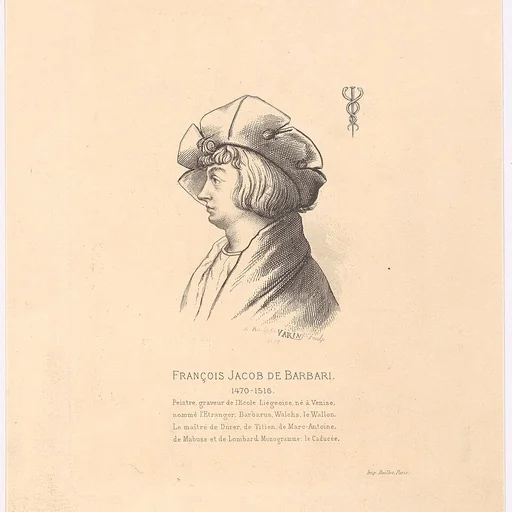
Artist
Jacopo de' Barbari, sometimes known or referred to as de'Barbari, de Barberi, de Barbari, Barbaro, Barberino, Barbarigo or Barberigo (c.

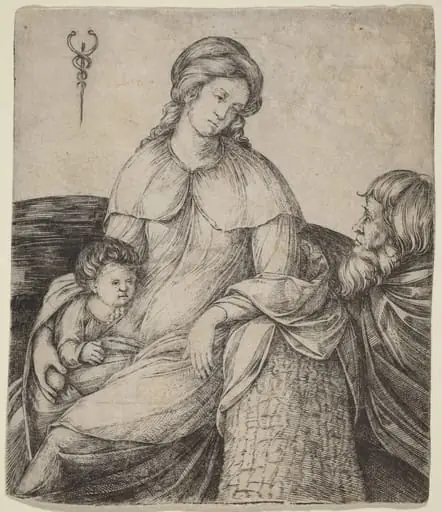
![View of Venice [lower right block], by Jacopo de' Barbari](https://artifactworldgallery.com/img/jacopo-de-barbari--view-of-venice-lower-right-block--371460ae957995b9-w320.webp)
![Battle of the Sea Gods [left half], by Andrea Mantegna](https://artifactworldgallery.com/img/andrea-mantegna--battle-of-the-sea-gods-left-half--084dd803fb0016b2-w320.webp) Battle of the Sea Gods [left half]
Battle of the Sea Gods [left half]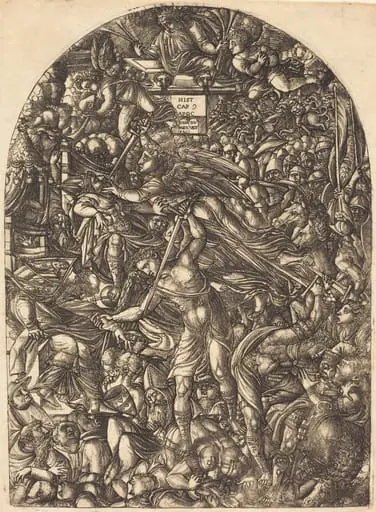 The Angel Sounding the Sixth Trumpet
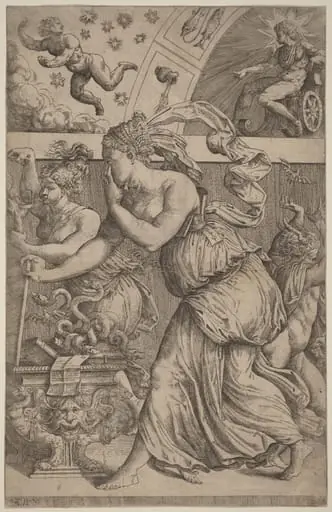 Pandora Opening Her Box
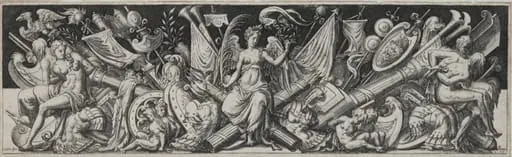 Combats and Triumphs No. 3
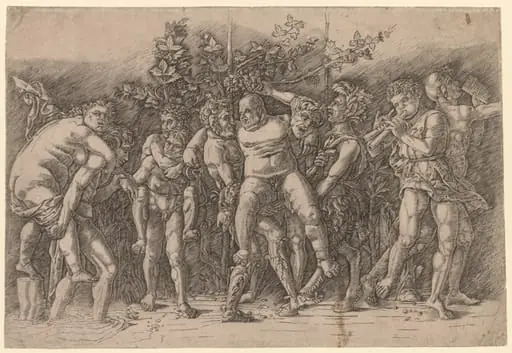 Bacchanal with Silenus
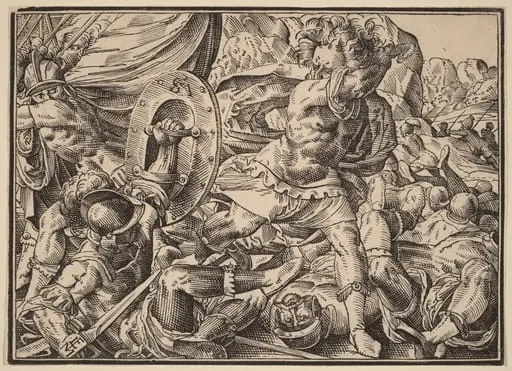 Christ Tells His Disciples of the Last Judgment
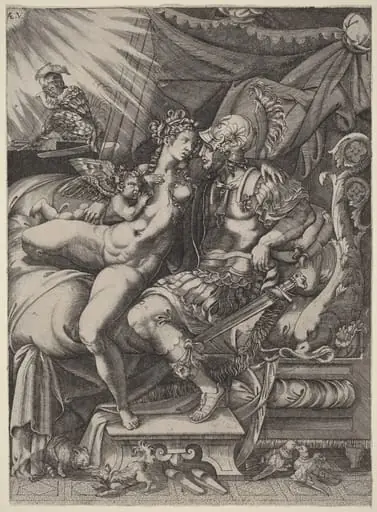 The Loves of Mars and Venus
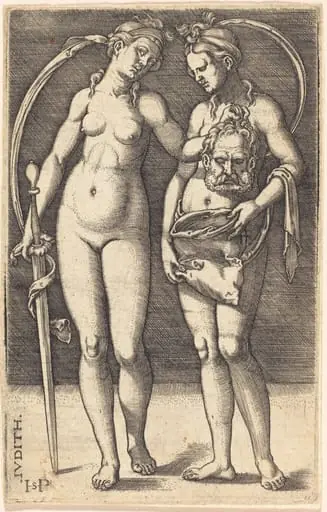 Judith and Her Servant Standing
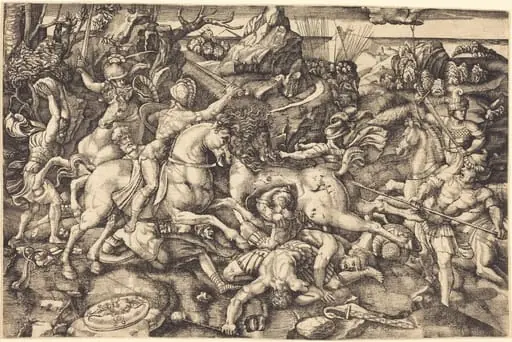 Combat between Horsemen and Foot Soldiers
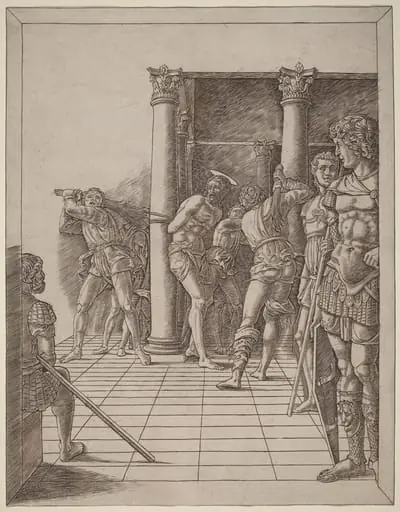 Flagellation of Christ, with the Pavement