Artwork
The Angel Sounding the Sixth Trumpet
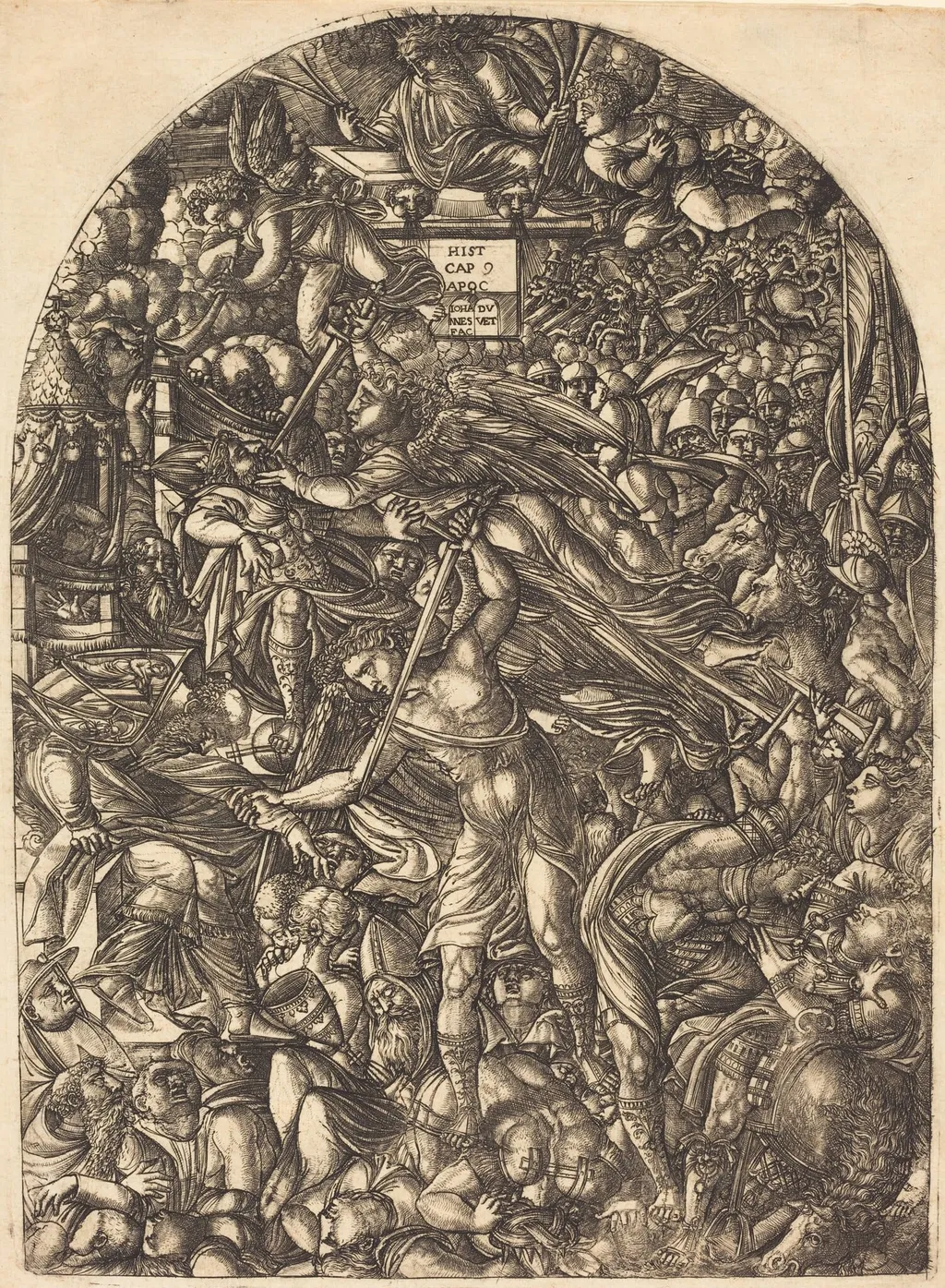
The Angel Sounding the Sixth Trumpet is an ink print by the Renaissance artist Jean Duvet. It dates from 1551 and is held in the collection of the National Gallery of Art.
About this work
Overview
Created in 1551 by the French goldsmith Jean Duvet, this engraving on laid paper is one of approximately 73 known plates by the artist.
Created in 1551 by the French goldsmith Jean Duvet, this engraving on laid paper is one of approximately 73 known plates by the artist. Duvet emerged as a distinctive voice in 16th-century French printmaking, working outside mainstream Renaissance conventions. His technique involved meticulous line work to render complex, densely packed scenes, often rooted in apocalyptic biblical narratives. This piece exemplifies his singular approach to the medium.
Subject & Meaning
The image illustrates the sixth trumpet judgment from the Book of Revelation, a moment of divine wrath heralding catastrophe. A central angel unleashes sound through a trumpet, while below, figures scramble in panic—some shielding their heads, others fleeing collapsing architecture. The chaotic assembly of bodies and crumbling structures conveys a world unraveling under heavenly judgment, reflecting the era’s preoccupation with eschatological themes.
Technique & Style
Duvet employed fine, incised lines to build dense tonal contrasts and intricate detail across the entire surface. His engraving avoids smooth transitions, instead using sharp, angular strokes to define forms and movement. The composition is intentionally cluttered, with overlapping figures and architectural fragments creating visual tension. This method produces a sense of urgency and emotional intensity, distinct from the balanced harmony of contemporaneous Italian prints.
History & Provenance
Duvet worked primarily in France during the mid-1500s, a period when printmaking was still developing as an independent art form in the region. Few of his plates were widely circulated, and most survive in limited impressions. This engraving, like others by him, was likely produced for private collectors or religious patrons rather than mass distribution, contributing to its rarity and the obscurity of its early ownership history.
Context
In mid-16th-century France, religious upheaval and fears of divine punishment were widespread amid the Reformation and Wars of Religion. Duvet’s apocalyptic imagery resonated with anxieties of the time, offering visual meditations on sin, judgment, and redemption. His style, though technically refined, deliberately rejected classical ideals, aligning more with folk expression and personal vision than with prevailing academic trends.
Legacy
Duvet’s work was largely overlooked until the 19th century, when his intense, visionary compositions drew renewed attention. His unorthodox approach—marked by emotional rawness and compositional density—has since been compared to later Romantic and Symbolist artists. Though not influential in his own lifetime, his prints are now recognized as unique expressions of individual spirituality within the Renaissance print tradition.
Artist & collection

Artist
Jean Duvet (1485 – after 1562) was a French Renaissance goldsmith and engraver, now best known for his engravings.

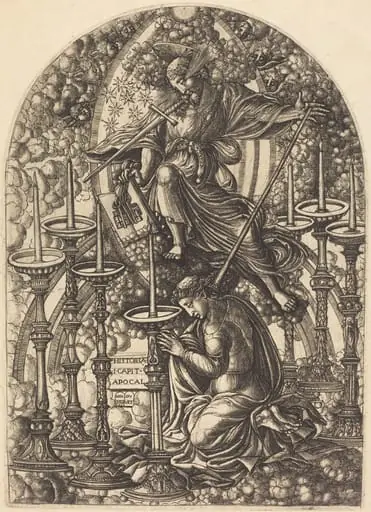
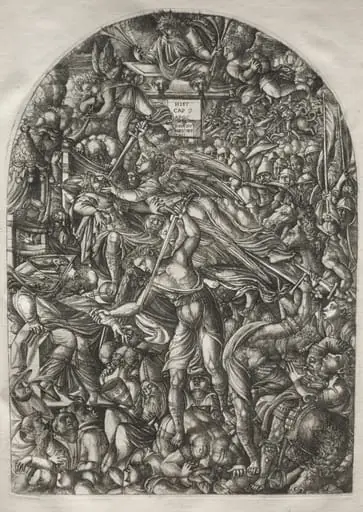 The Apocalypse: The Angel Sounding the Sixth Trumpet
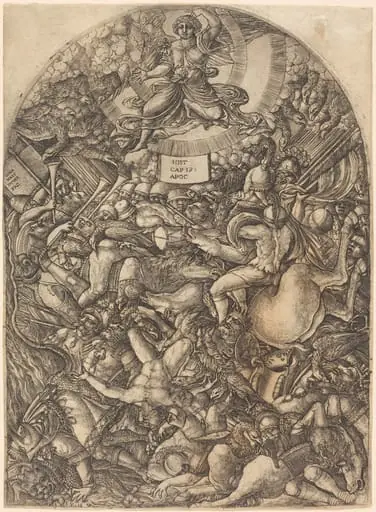 The Angel in the Sun Calling the Birds of Prey
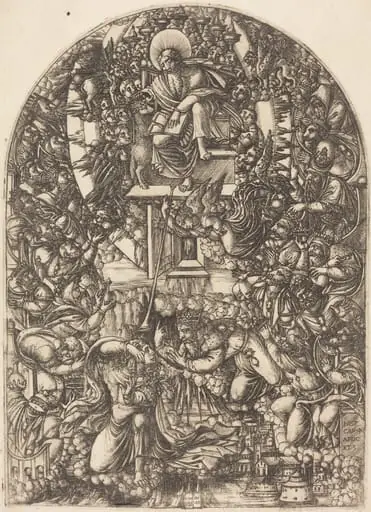 Saint John Summoned to Heaven
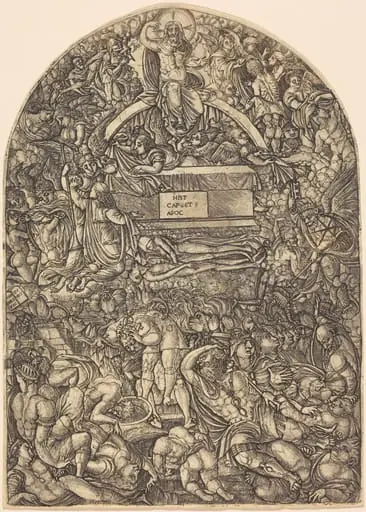 A Star Falls and Makes Hell to Open
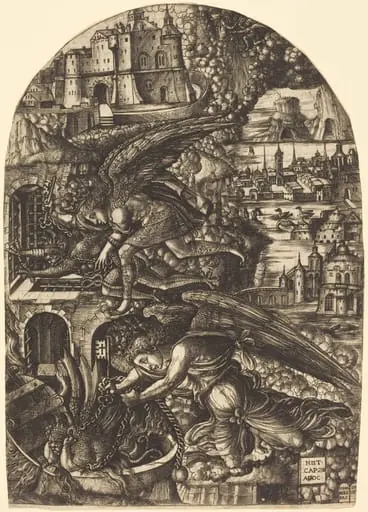 Satan Bound for a Thousand Years
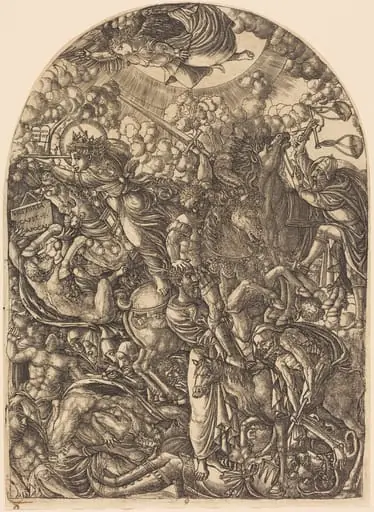 Saint John Sees the Four Horsemen
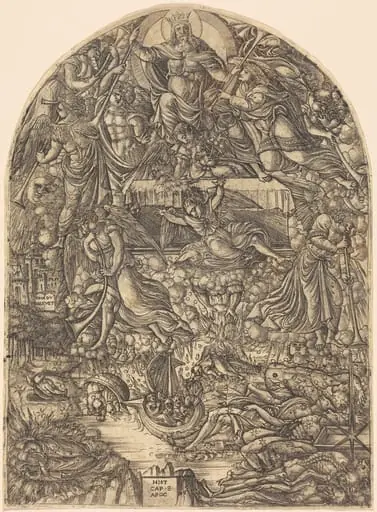 The Opening of the Seventh Seal
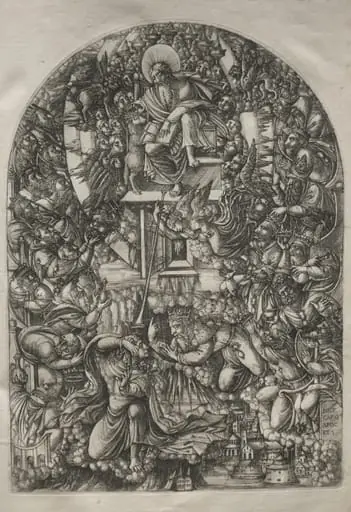 The Apocalypse: St. John Summoned to Heaven
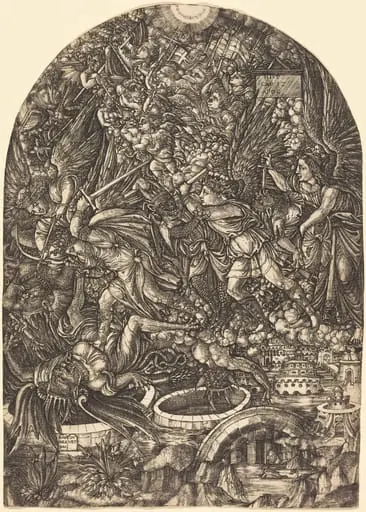 Saint Michael and the Dragon
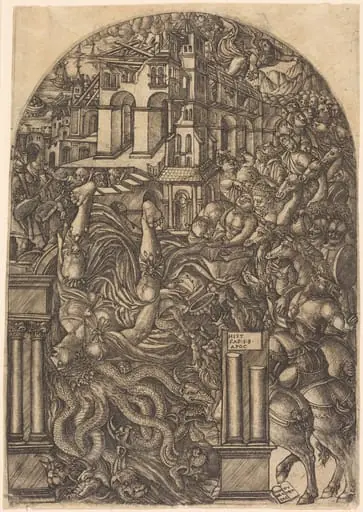 The Fall of Babylon