Artwork
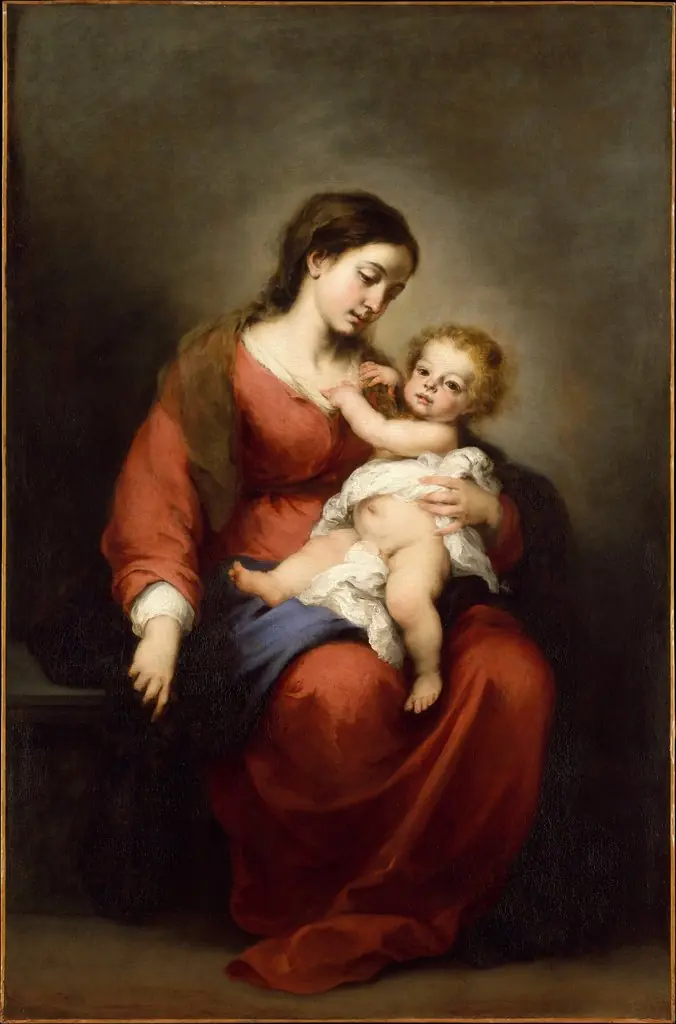
Madonna Nursing the Christ Child
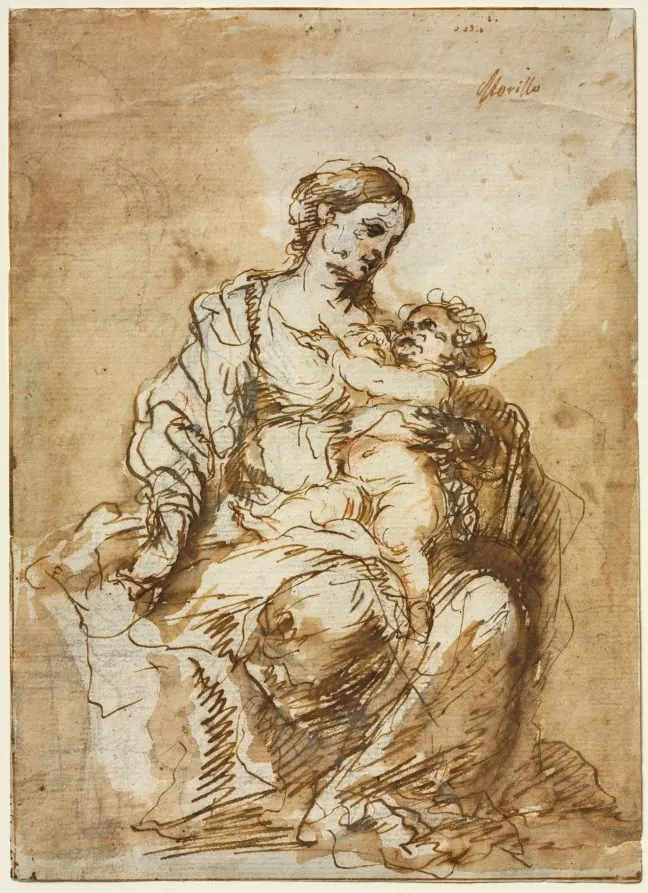
Madonna Nursing the Christ Child is a drawing by the Baroque artist Bartolomé Esteban Murillo. It dates from 1671 and is held in the collection of the Cleveland Museum of Art.
About this work
The gentle curve of Mary’s arm and Jesus’s tiny hands create a warm, quiet moment.
This painting shows Mary in a blue robe holding a peaceful baby Jesus. Soft light falls on their faces, making them glow. The gentle curve of Mary’s arm and Jesus’s tiny hands create a warm, quiet moment.
Murillo uses loose, sketchy lines here. They catch the movement of the figures before he finished the final painting. The drawing feels alive—less stiff than his polished oils.
See how the lines zigzag? That’s his trick to show energy. Look up Bartolomé Esteban Murillo (Spanish, 1617–1682) to see more like it.
Overview
This drawing by Bartolomé Esteban Murillo is one of a small group of surviving preparatory studies for religious compositions. Executed in ink and wash, it was made as a working model for a commissioned altarpiece intended for the chapel of the Marqués de Santiago in Madrid. Unlike his finished paintings, this sheet reveals the artist’s process—fluid, spontaneous, and focused on capturing emotional and physical presence before refining form.
Subject & Meaning
The composition depicts the Virgin Mary nursing the infant Christ, a quiet moment of intimacy between mother and child. Their eyes meet with a gentle, unspoken connection, emphasizing tenderness over grandeur. Murillo avoids theatricality, instead focusing on the physical closeness and emotional stillness of the pair. The gesture of Mary’s arm cradling Jesus, combined with the child’s relaxed posture, conveys a sense of natural affection rooted in human experience.
Technique & Style
Murillo employed loose, energetic ink lines and dynamic zigzag hatching to suggest movement and volume. Ink washes deepen shadows around the figures, modeling their forms with subtle gradations rather than rigid outlines. The sketchy quality of the drawing captures fleeting gestures, preserving the immediacy of the moment. This approach contrasts with the polished finish of his oil paintings, revealing his reliance on drawing to explore composition and expression.
History & Provenance
The drawing was created as a study for a painting commissioned for the family chapel of the Marqués de Santiago in Madrid. The final painting later entered the collection of the Metropolitan Museum of Art in New York. This preparatory sheet remained in private hands for centuries before being acquired by a major public institution, where it is now recognized as a rare and significant example of Murillo’s graphic work.
Context
In 17th-century Spain, religious imagery was central to artistic production, and artists often produced detailed studies for altarpieces. Murillo’s drawings were functional tools, not merely artistic expressions. His use of rapid, expressive lines reflected a broader trend among Spanish draftsmen to prioritize emotional resonance and naturalism over idealized form, aligning with Counter-Reformation ideals of accessible piety.
Legacy
Murillo’s drawings are valued today for their insight into his creative process and their expressive vitality. This sheet exemplifies how his preparatory work informed the emotional depth of his finished paintings. Though few of his drawings survive, this one stands as a testament to his ability to convey humanity and movement with minimal means, influencing later generations of artists who sought authenticity in religious representation.
Artist & collection
Artist
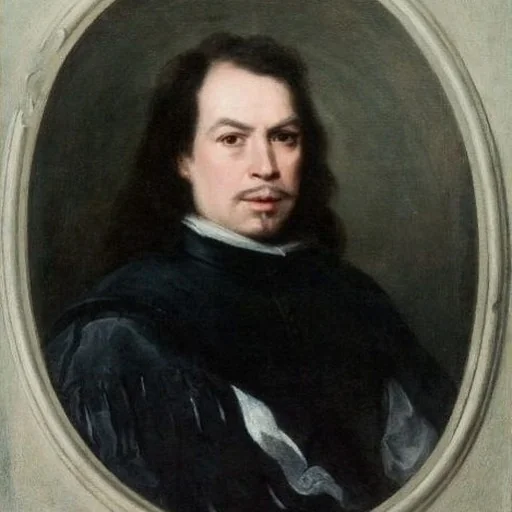
Bartolomé Esteban Murillo ( mure-IL-oh, m(y)uu-REE-oh, Spanish: ; late December 1617, baptised 1 January 1618 – 3 April 1682) was a Spanish Baroque painter.

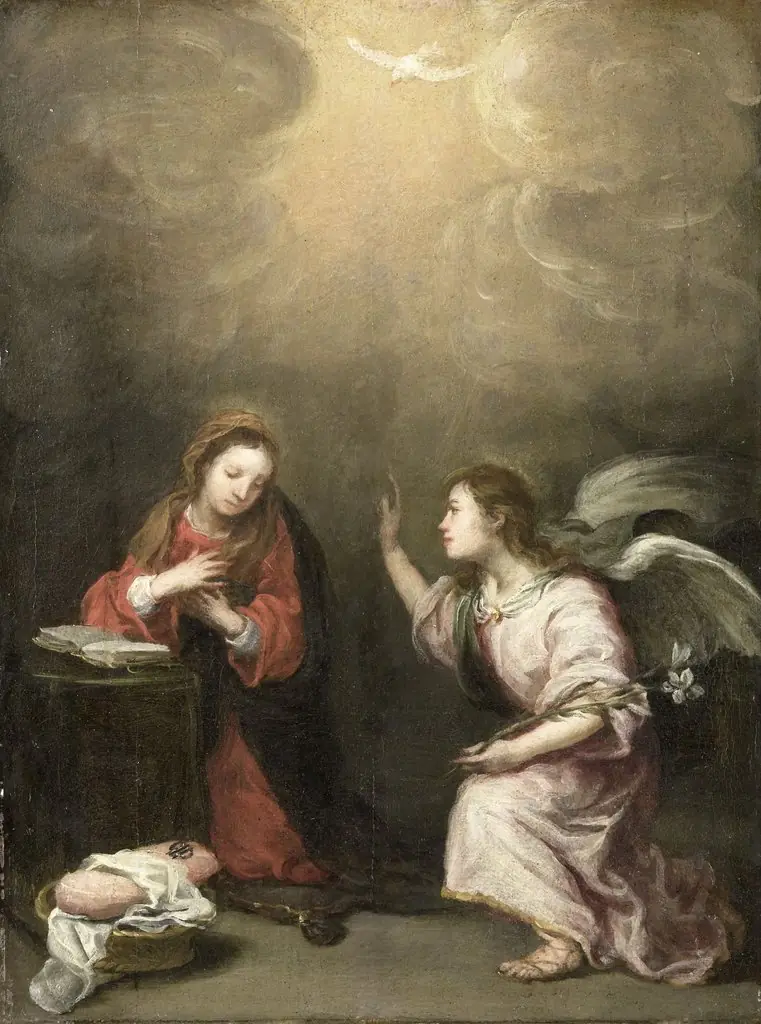
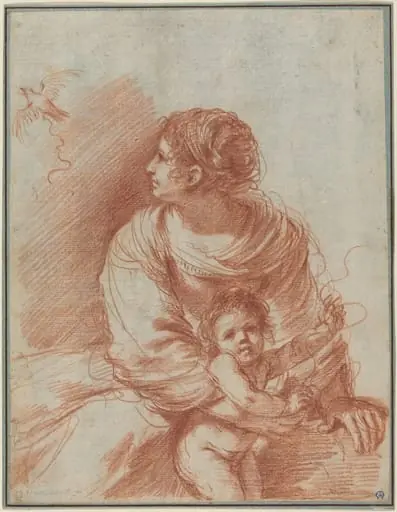 The Madonna and Child with an Escaped Goldfinch
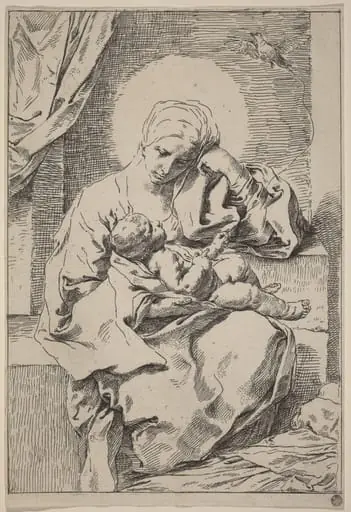 The Virgin and Child with a Bird
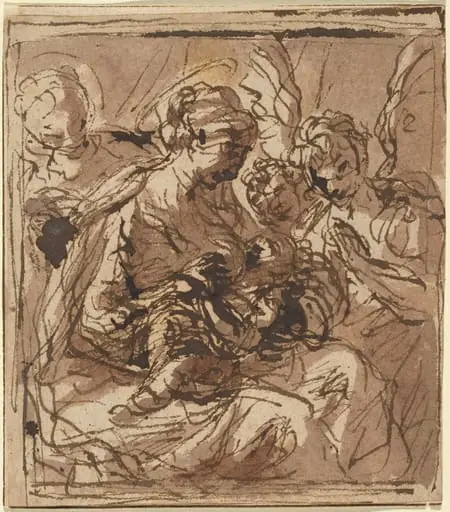 Holy Family
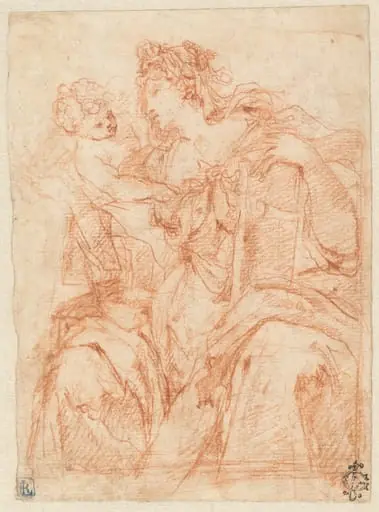 Study for the Sibyl of the Casa Budrioli
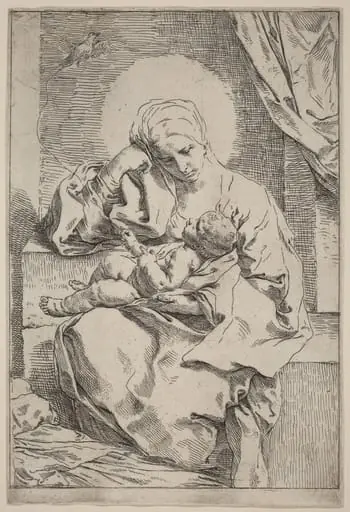 The Virgin and Child with a Bird
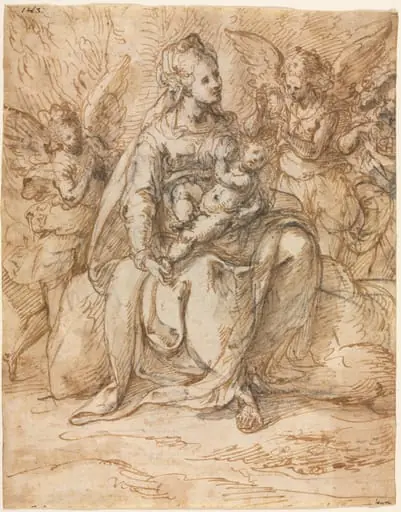 Madonna and Child with Angels
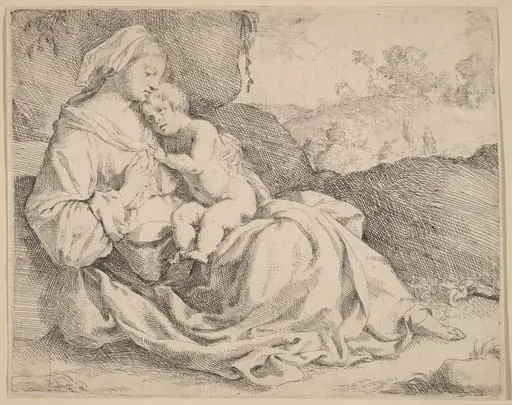 The Virgin and Child on a Grassy Bank
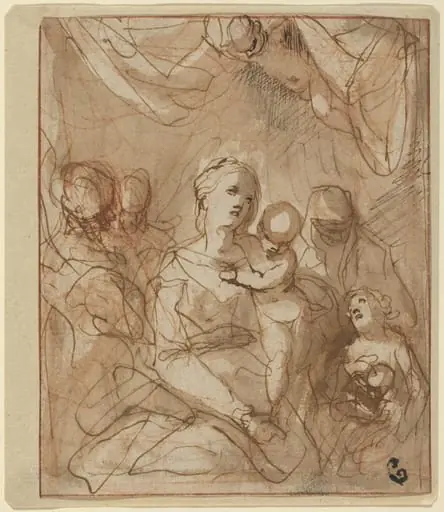 The Virgin and Infant Jesus with Saints
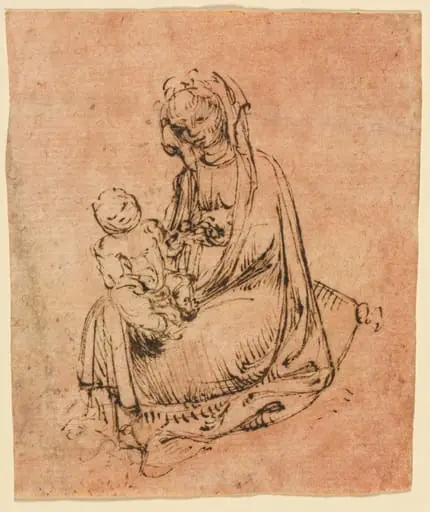 Madonna and Child
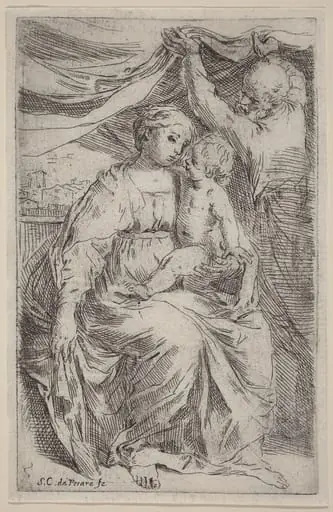 The Holy Family
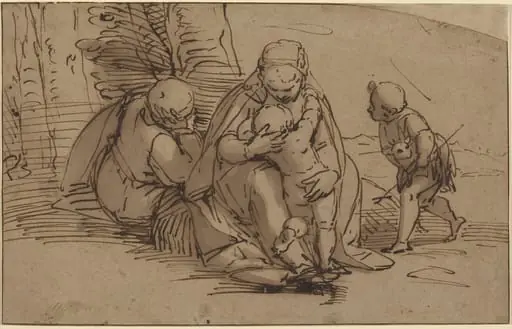 Holy Family with Infant Saint John
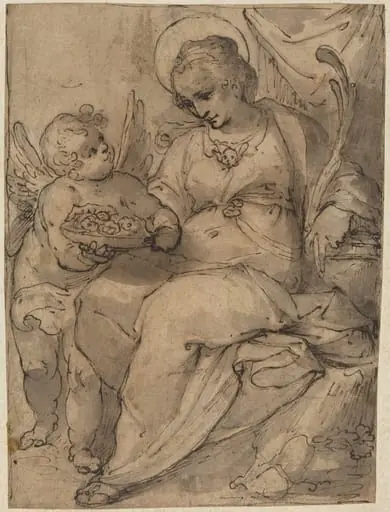 Martyr with an Angel