Artwork
Study for the Nude Youth over the Prophet Daniel (recto)
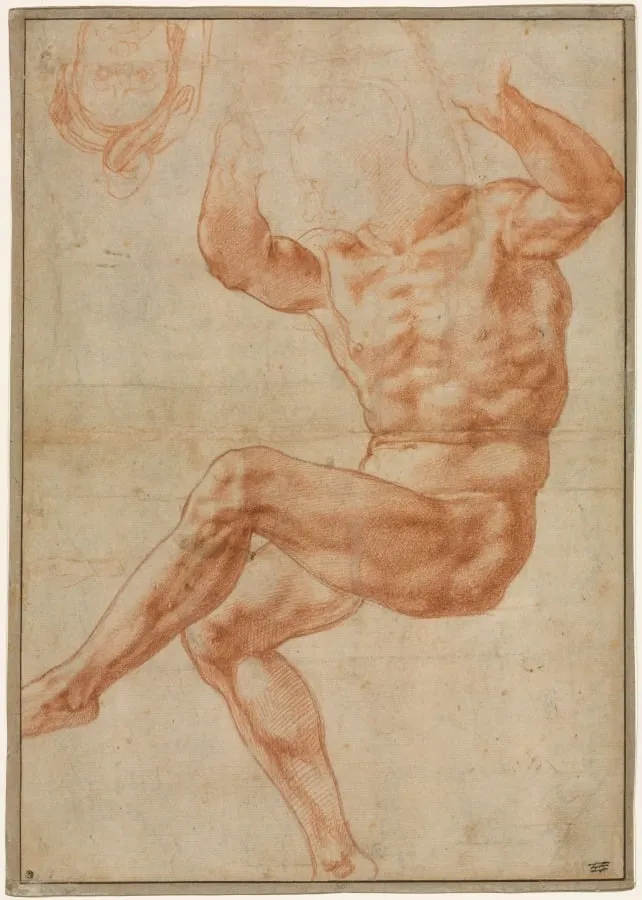
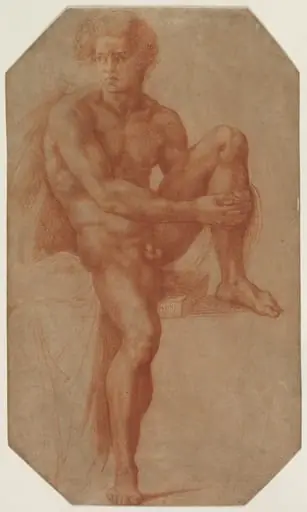
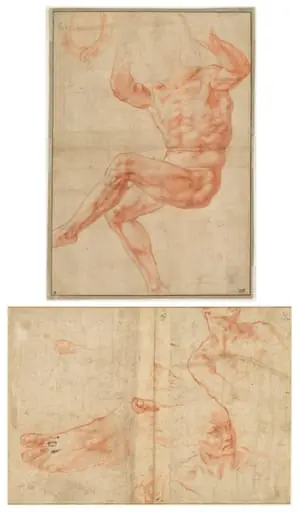
Study for the Nude Youth over the Prophet Daniel (recto) is a drawing by the Renaissance artist Michelangelo. It dates from 1510 and is held in the collection of the Cleveland Museum of Art.
About this work
Overview
Created during the four-year project to paint the ceiling between 1508 and 1512, it captures a dynamic, twisting youth in motion.
This red chalk drawing is a preparatory study by Michelangelo for one of the ignudi—nude male figures positioned at the corners of the Sistine Chapel ceiling frescoes. Created during the four-year project to paint the ceiling between 1508 and 1512, it captures a dynamic, twisting youth in motion. The figure extends beyond the paper’s edge, suggesting spatial expansion and physical tension. The drawing was not a finished work but a tool for resolving form and posture before applying paint to wet plaster.
Subject & Meaning
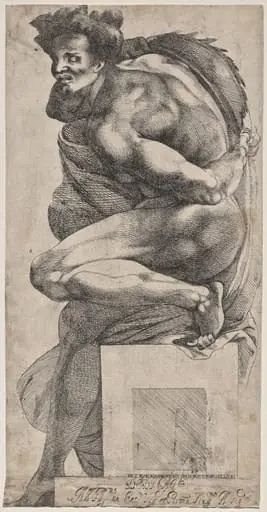
The figure represents one of twenty ignudi, decorative nudes that frame the biblical narratives along the ceiling’s center. Though non-narrative, they embody classical ideals of human strength and grace, acting as visual anchors between the Old Testament scenes. Their muscular, contorted poses reflect Michelangelo’s fascination with the expressive potential of the male form, drawing from both ancient sculpture and his own sculptural practice to convey vitality and divine energy.
Technique & Style
Executed in red chalk, the drawing features rapid, confident strokes that capture movement without correction or refinement. Michelangelo used the medium’s warmth and fluidity to explore weight, balance, and torsion. The lines are economical yet forceful, conveying anatomy through gesture rather than detail. The absence of erasure or hesitation reveals a mind working directly through the body’s motion, prioritizing energy over precision in this stage of development.
History & Provenance
Created during the Sistine Chapel commission, this study was part of a larger group of preparatory drawings Michelangelo made for the ceiling. After completion, many such sheets were retained by the artist or his circle. This particular drawing remained in private collections before entering a public collection in the 19th century. Its survival is notable, as many preparatory works were discarded or lost after serving their purpose in the fresco process.
Context
Michelangelo’s approach to the Sistine ceiling combined architectural planning with anatomical experimentation. The ignudi were innovations in fresco decoration, departing from traditional ornamental figures. Their poses were tested in drawings like this one, allowing Michelangelo to translate three-dimensional sculptural thinking into two-dimensional painting. The use of red chalk was standard for preparatory work, but his handling elevated it into a language of movement and intention.
Legacy
This drawing exemplifies Michelangelo’s method of thinking through the body in motion, influencing generations of artists studying anatomy and composition. Its raw immediacy contrasts with the polished final frescoes, offering insight into the creative process behind one of the Renaissance’s most ambitious projects. Today, it stands as a testament to the artist’s ability to convey monumental form through fleeting, uncorrected marks.
Artist & collection

Artist
Michelangelo di Lodovico Buonarroti Simoni (6 March 1475 – 18 February 1564), known mononymously as Michelangelo, was an Italian sculptor, painter, architect, and poet of the High Renaissance.

![Male Nude [recto], by Michelangelo](https://artifactworldgallery.com/img/michelangelo--male-nude-recto--8c3354d89884753a-w320.webp)
![Male Nude [verso], by Michelangelo](https://artifactworldgallery.com/img/michelangelo--male-nude-verso--d48a81b2ad2bdbb8-w320.webp)
 Seated Male Nude
 Study for the Nude Youth over the Prophet Daniel (recto); Figure Studies for the Sistine Ceiling (verso)
 Ignudo (after Michelangelo)
 Study of a Flayed Torso (verso)
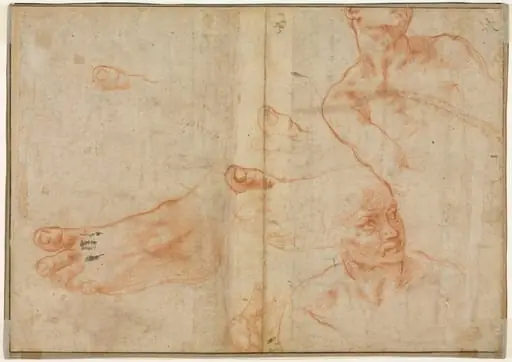 Figure Studies for the Sistine Ceiling (verso)
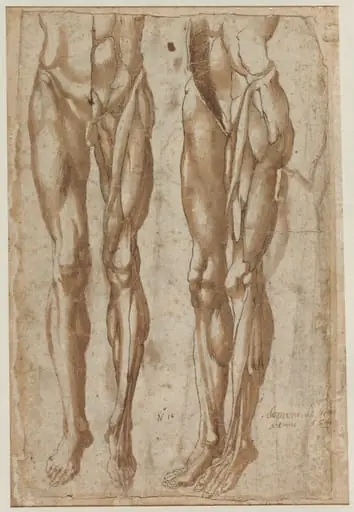 Two Studies of a Flayed Man (recto)
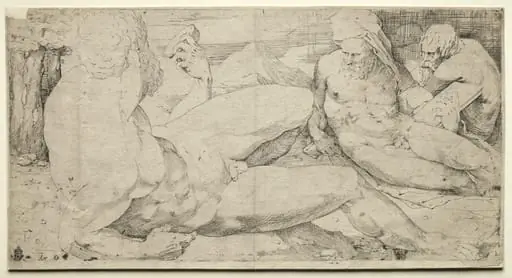 Three Male Nudes
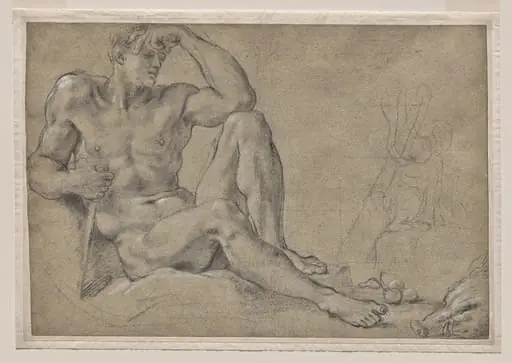 Hercules Resting (recto)
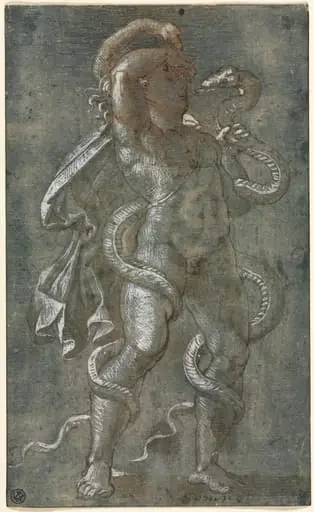 Man Entwined by Two Snakes