Artwork
Study for the Nude Youth over the Prophet Daniel (recto); Figure Studies for the Sistine Ceiling (verso)
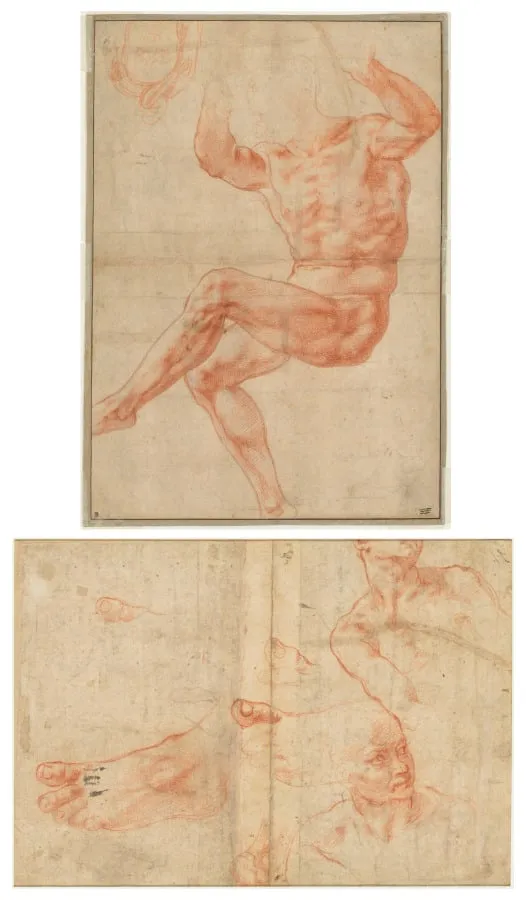
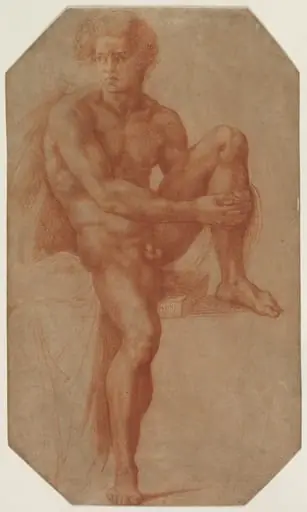
Study for the Nude Youth over the Prophet Daniel (recto); Figure Studies for the Sistine Ceiling (verso) is a drawing by the Renaissance artist Michelangelo. It dates from 1510 and is held in the collection of the Cleveland Museum of Art.
About this work
Overview
These were not finished works but working tools, used to refine the positioning and anatomy of the ignudi—nude male figures framing the biblical scenes above.
This double-sided drawing by Michelangelo contains preparatory studies for the Sistine Chapel ceiling, executed in red chalk. One side depicts a youthful nude leaning over a seated older figure; the reverse holds rapid sketches of torsos and limbs in varied poses. These were not finished works but working tools, used to refine the positioning and anatomy of the ignudi—nude male figures framing the biblical scenes above.
Subject & Meaning
The central figure on the recto is a study for one of the ignudi, athletic nudes that flank the Old Testament panels on the ceiling. Their presence is structural and symbolic, anchoring the narrative scenes with a sense of human vitality. The interaction between the young and older figure may reflect a contemplative contrast, though the drawing’s primary function was formal: testing posture, balance, and musculature before painting.
Technique & Style
Michelangelo employed red chalk with controlled, fluid strokes to capture volume and motion. The lines are economical yet expressive, suggesting form without outline. On the verso, quick, overlapping sketches reveal his process of exploring multiple poses. The chalk’s warmth and the paper’s texture enhance the sense of flesh and movement, revealing how he translated sculptural thinking into two dimensions.
History & Provenance
Created between 1508 and 1512 during the Sistine Chapel commission, this sheet was part of Michelangelo’s private working archive. It remained in his possession until his death, later entering collections through inheritance and acquisition. Its survival is rare; most preparatory drawings were discarded after use. Its dual-sided format reflects the practical reuse of materials common among Renaissance artists.
Context
Michelangelo approached the ceiling not as a painter but as a sculptor, treating the human form as three-dimensional mass. The ignudi were his invention, blending classical ideals with Christian iconography. These drawings were essential to his method: testing poses on paper before transferring them to wet plaster, ensuring anatomical precision under the physical constraints of fresco painting.
Legacy
This drawing exemplifies Michelangelo’s method of visual problem-solving through iterative sketching. Its survival offers insight into the labor behind one of the Renaissance’s most ambitious projects. Later artists studied such sheets to understand his approach to anatomy and composition, cementing the role of preparatory drawing as a vital link between conception and execution.
Artist & collection

Artist
Michelangelo di Lodovico Buonarroti Simoni (6 March 1475 – 18 February 1564), known mononymously as Michelangelo, was an Italian sculptor, painter, architect, and poet of the High Renaissance.

![Male Nude [recto], by Michelangelo](https://artifactworldgallery.com/img/michelangelo--male-nude-recto--8c3354d89884753a-w320.webp)
![Male Nude [verso], by Michelangelo](https://artifactworldgallery.com/img/michelangelo--male-nude-verso--d48a81b2ad2bdbb8-w320.webp)
 Seated Male Nude
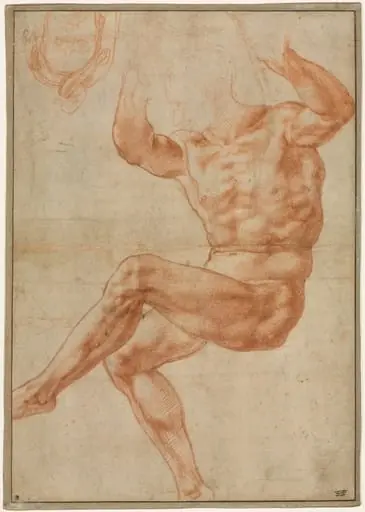 Study for the Nude Youth over the Prophet Daniel (recto)
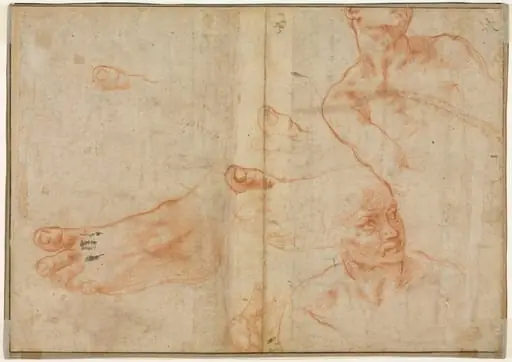 Figure Studies for the Sistine Ceiling (verso)
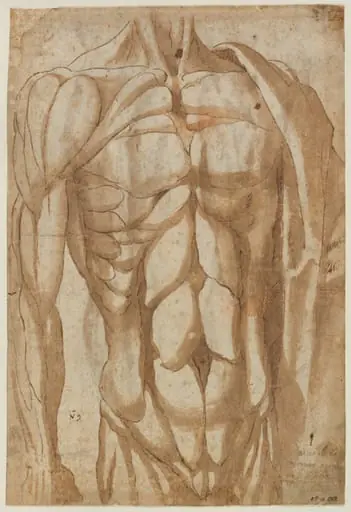 Study of a Flayed Torso (verso)
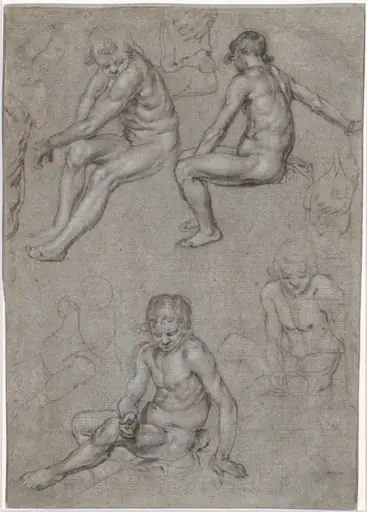 Studies of a Naked Seated Boy
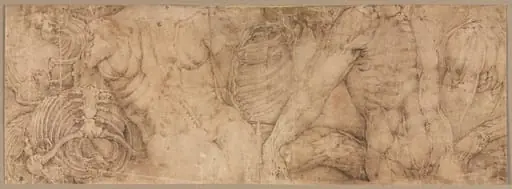 Torsos with Rib Cages
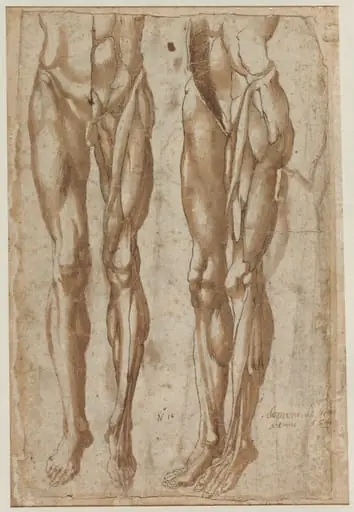 Two Studies of a Flayed Man (recto)
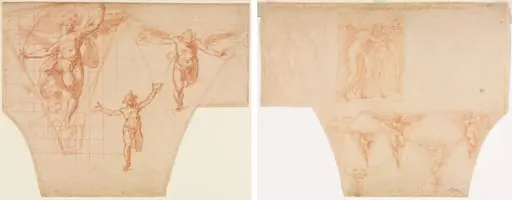 Three Studies of Angels for a Pendentive (recto); Studies for Christ Meeting His Mother on the Road to Calvary, Studies of an Angel in a Pendentive (verso)
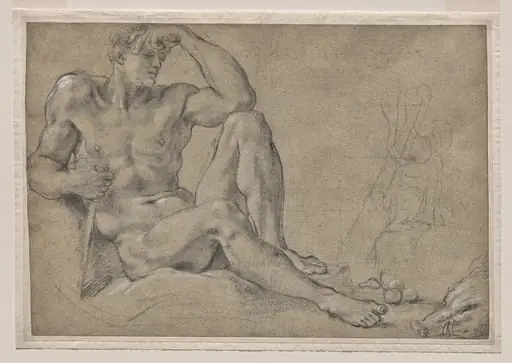 Hercules Resting (recto); Footed Vessel with Handle (verso)