Artwork
The Last Judgment
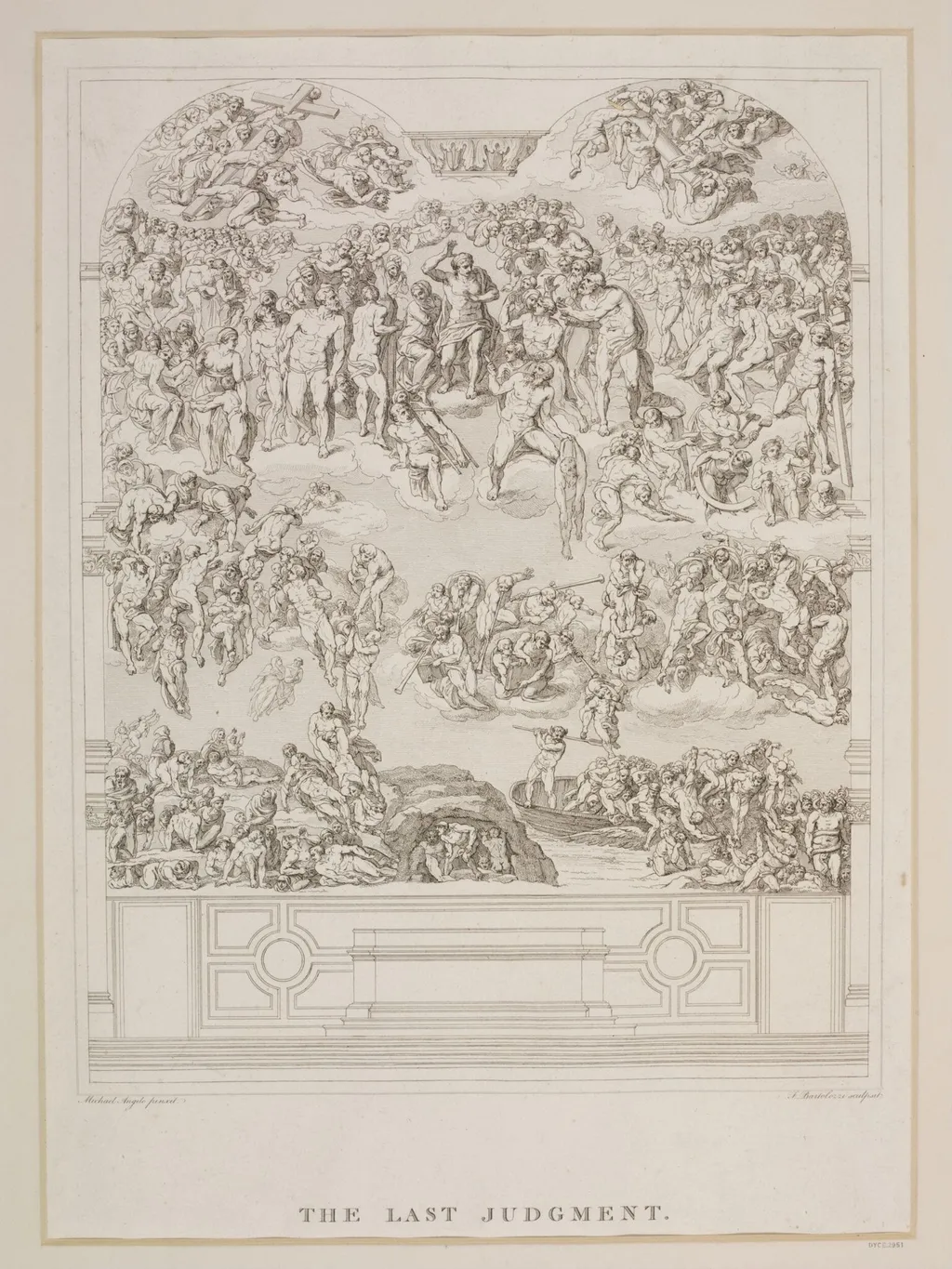
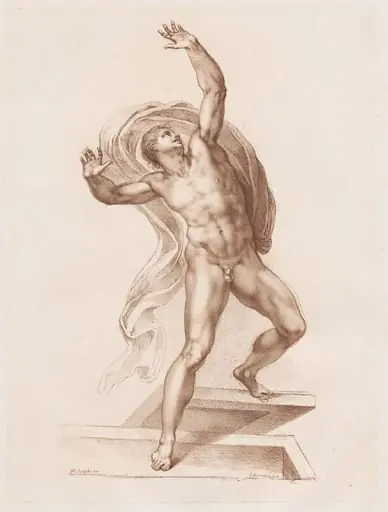
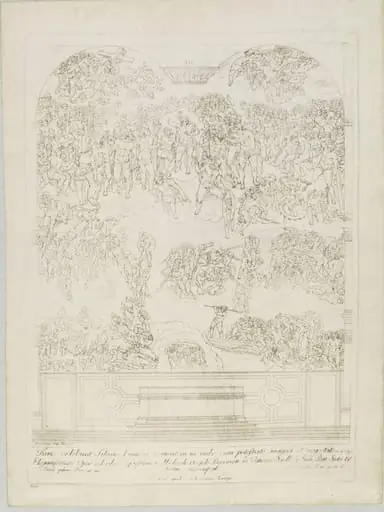
The Last Judgment is a print by the Baroque artist Francesco Bartolozzi. It dates from 1740 and is held in the collection of the Victoria and Albert Museum.
About this work
Overview
The absence of color emphasizes tonal contrast and anatomical detail, translating the fresco’s grandeur into the medium of print for wider dissemination.
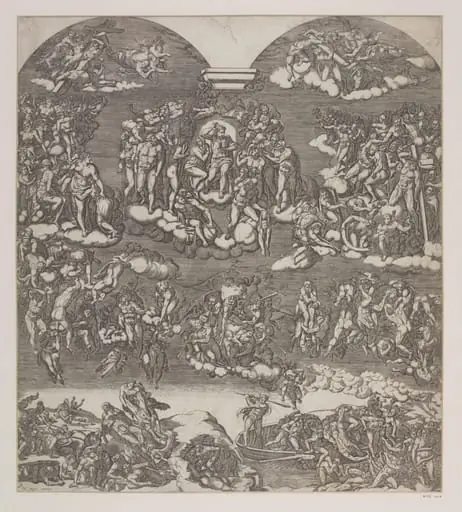
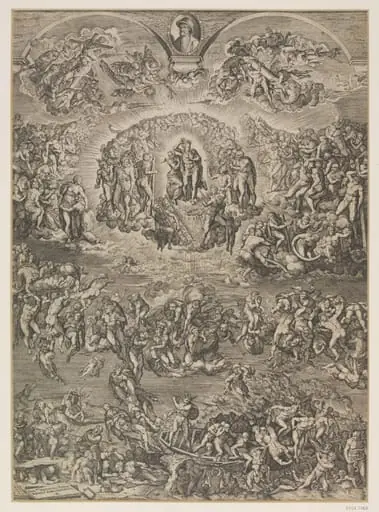
This engraving by Francesco Bartolozzi, dated 1740, is a monochrome reproduction of Michelangelo’s Sistine Chapel fresco, *The Last Judgment*. Executed in fine, precise lines, it captures the overwhelming density and movement of the original composition. The absence of color emphasizes tonal contrast and anatomical detail, translating the fresco’s grandeur into the medium of print for wider dissemination.
Subject & Meaning
The scene illustrates the biblical apocalypse, when souls are separated for eternal reward or damnation. Hundreds of figures are shown in motion—rising from graves, floating through air, or clutching books and trumpets—each reacting to divine judgment. Faces convey varied emotions: terror, resignation, or awe. The composition reflects theological ideas of final reckoning, rendered not as static doctrine but as a visceral, human drama.
Technique & Style
Bartolozzi employed stippling and fine hatching to render form and texture without color. The sharp, controlled lines define musculature, drapery, and spatial depth, emphasizing the sculptural quality of Michelangelo’s figures. The dense arrangement of bodies creates rhythmic movement across the page, while the lack of background detail focuses attention entirely on the human forms and their emotional intensity.
History & Provenance
Created in 1740, the print was part of an 18th-century effort to disseminate Renaissance masterpieces through reproductive engravings. Bartolozzi, an Italian artist working in England, was renowned for his precision in translating frescoes into print. This version likely served collectors and scholars, making Michelangelo’s complex composition accessible beyond the Vatican’s walls.
Context
In the mid-18th century, there was renewed interest in classical and Renaissance art across Europe. Engravings like this one fulfilled both educational and aesthetic demands, allowing audiences to engage with religious themes through established artistic authority. Bartolozzi’s work aligned with broader trends in print culture that valued technical mastery and fidelity to canonical sources.
Legacy
Bartolozzi’s engraving preserved and propagated Michelangelo’s vision for generations before photographic reproduction. It influenced how later audiences perceived the Sistine Chapel’s fresco, reinforcing its status as a defining image of divine judgment. Though not original, the print became a key intermediary between high art and public consciousness in the Enlightenment era.
Artist & collection

Artist
Francesco Bartolozzi (21 September 1727 – 7 March 1815) was an Italian engraver, whose most productive period was spent in London. He is noted for popularizing the "crayon" method of engraving.