Artwork
Interior of the Criterion Theatre
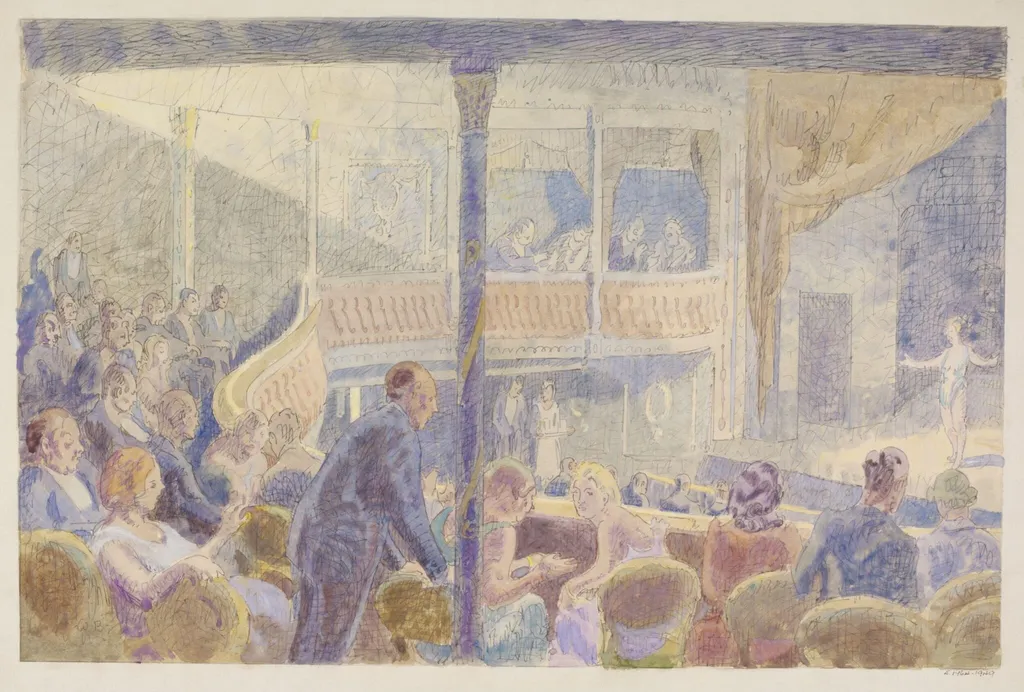
Interior of the Criterion Theatre is a watercolor work on paper by the British Romanticist artist Bayes. It dates from 1940 and is held in the collection of the Victoria and Albert Museum.
About this work
Overview
Executed in soft, muted tones, the work records a quiet moment during a performance, emphasizing the stillness of the audience rather than the drama on stage.
Painted in 1940 by John Bayes, this watercolour captures the interior of the Criterion Theatre from a rear balcony perspective. Executed in soft, muted tones, the work records a quiet moment during a performance, emphasizing the stillness of the audience rather than the drama on stage. It was created as part of the Recording Britain project, a wartime effort to document everyday scenes vulnerable to disruption during the Second World War.
Subject & Meaning
The scene presents a cross-section of audience behavior: some gaze toward the stage, others converse quietly or rest with closed eyes. The absence of theatrical spectacle shifts focus to the human experience of leisure amid wartime uncertainty. Bayes portrays not the performance itself, but the contemplative, sometimes weary, presence of those who came to witness it—offering a subtle reflection on civilian life during conflict.
Technique & Style
Bayes employed delicate watercolour washes to render the dimly lit interior with a sense of atmospheric depth. Gentle brushwork defines the contours of seats, figures, and the distant stage backdrop without sharp detail, allowing light and shadow to suggest form. The restrained palette and soft edges contribute to a hushed, introspective mood, aligning with the project’s aim to capture quiet, enduring moments rather than dramatic events.
History & Provenance
Commissioned by the Recording Britain project, funded by the Pilgrim Trust and directed by Sir Kenneth Clark, the painting was one of hundreds produced between 1939 and 1945. Artists were sent across Britain to record architecture, landscapes, and social spaces at risk from bombing or cultural erosion. Bayes’s work entered the Victoria and Albert Museum’s collection as part of this archive, preserving a visual record of pre-war civilian culture.
Context
Created during the early years of the Second World War, the painting reflects a national effort to safeguard cultural memory. While cities faced bombardment and daily life grew austere, the theatre remained a space of temporary respite. Bayes’s focus on audience stillness, rather than stage action, mirrors a broader societal preoccupation with endurance, routine, and the quiet persistence of ordinary rituals under pressure.
Legacy
The Recording Britain collection endures as a vital historical archive, offering insight into Britain’s domestic landscape during wartime. Bayes’s watercolour, though not widely exhibited, contributes to a nuanced understanding of how artists responded to crisis—not through heroism, but through attentive observation of everyday life. Its quiet realism continues to inform studies of wartime culture and the role of art in preservation.
Artist & collection
Artist
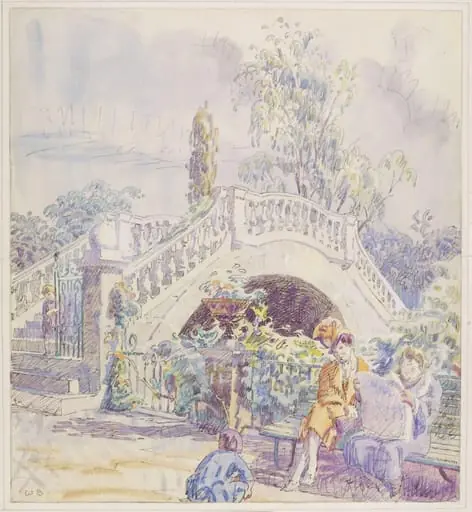
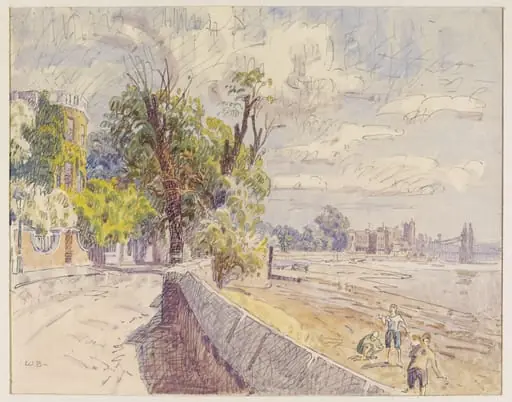
This artist painted watercolours around London in the 1940s. They captured quiet spots like The Gateway at Royal Naval College, Greenwich, The Garden at York House in Twickenham, and London Dock, Wapping. Each sheet…

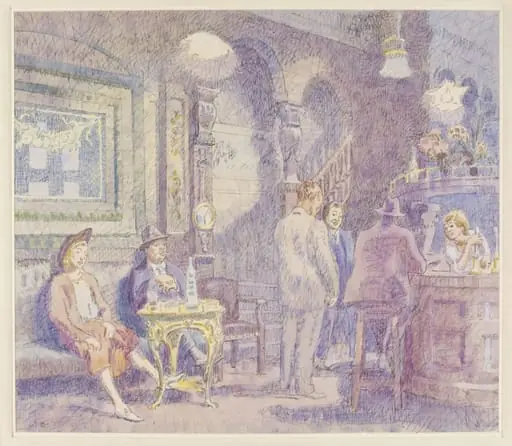 Saloon Bar, Blue Posts, Tottenham Court Road, St. Pancras
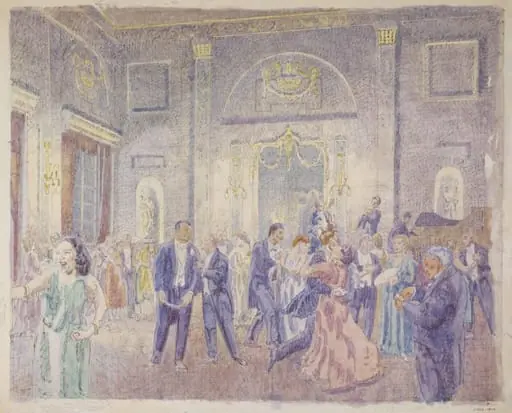 Ballroom at the Shire Hall, Chelmsford
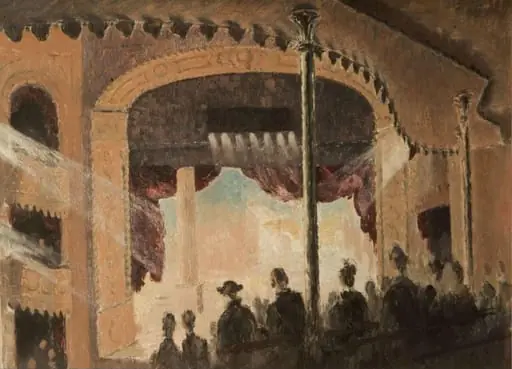 Interior of the Old Vic
 Print Collection
 Varieteeteatteri Pariisissa
 Untitled
 The Variety Theatre in Paris
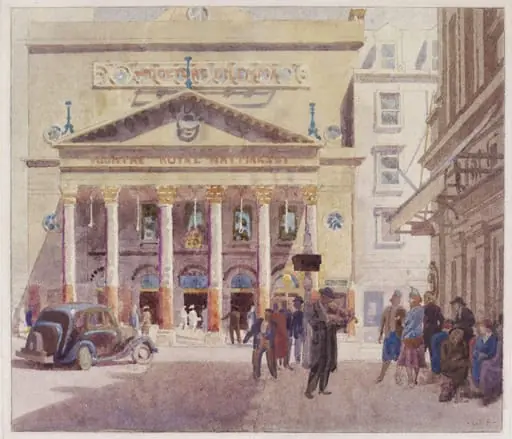 Porch of the Haymarket Theatre
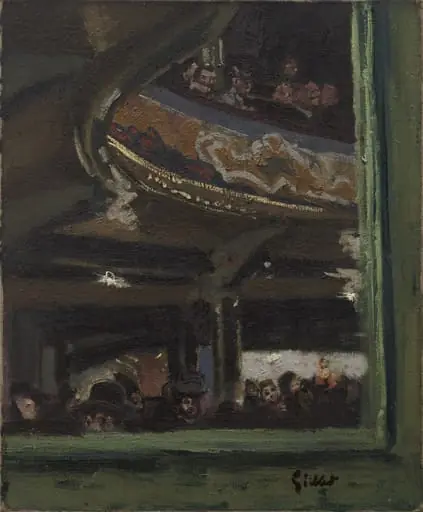 Untitled
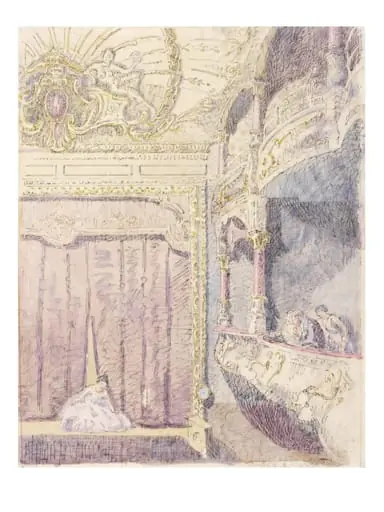 Interior, showing a box and the stage, of the Old Grand Theatre, now the Gaumont Hippodrome, Colchester