Artwork
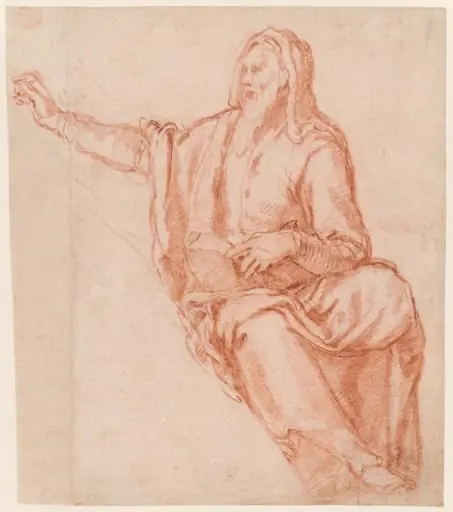
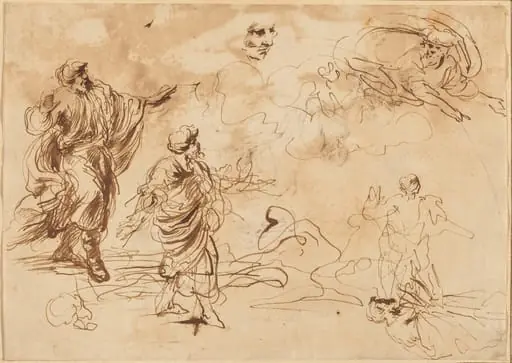
Standing Bearded Man Pointing Toward the Left
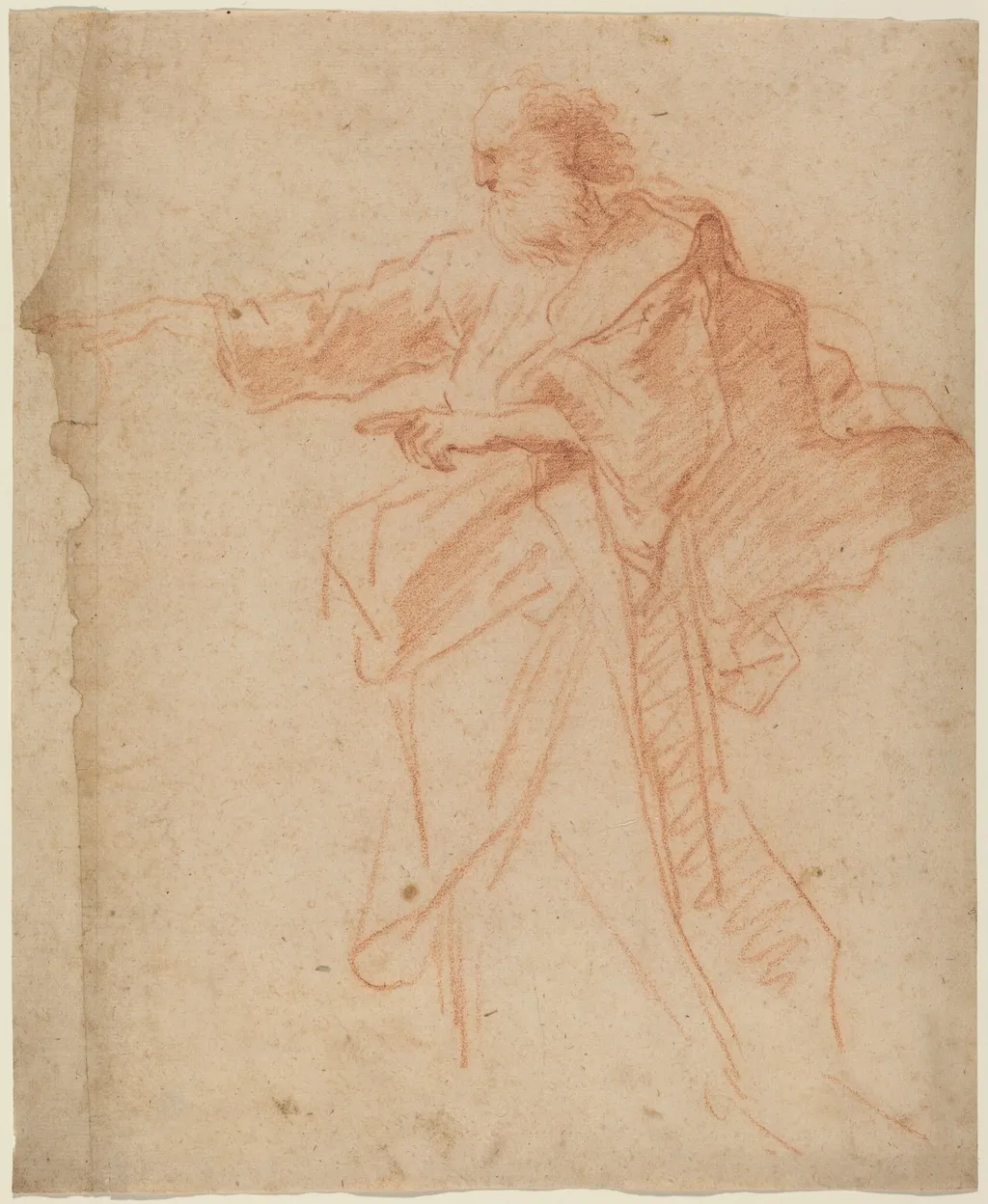
Standing Bearded Man Pointing Toward the Left is a chalk drawing by the Baroque artist Italian 17th Century. It dates from 1601 and is held in the collection of the National Gallery of Art. A red chalk drawing on laid paper depicts a standing male figure with a full beard, arms extended and one hand pointing left.
About this work
Overview
A red chalk drawing on laid paper depicts a standing male figure with a full beard, arms extended and one hand pointing left. The lines are rapid and uneven, suggesting a spontaneous study rather than a polished composition. The paper’s texture is evident in the chalk’s grainy application, and areas of the figure remain lightly suggested, indicating the artist’s focus on gesture over detail.
Subject & Meaning
The figure’s pose—arms open, pointing left—suggests direction, warning, or invocation, though no narrative context is provided. The lack of facial features beyond the beard and the absence of clothing or setting imply the study was intended to capture posture and movement, possibly for a larger work or as an exercise in human expression.
Technique & Style
Red chalk was applied with varying pressure, creating bold strokes where the hand pressed firmly and faint traces where it hovered. The loose, unblended lines emphasize immediacy. The roughness of the paper enhances the chalk’s texture, reinforcing the drawing’s sketch-like quality. No sfumato is present; instead, the artist favored direct, energetic marks.
History & Provenance
The drawing’s origin is unattributed, but its materials and method align with Renaissance figure studies. It likely belonged to an artist’s preparatory portfolio, used to explore form and motion. No documented provenance exists beyond its current classification as a study drawing from the period.
Context
During the Renaissance, artists routinely used chalk on paper to record poses, gestures, and anatomical variations. Such studies were private tools, not intended for display. This drawing reflects a common practice: capturing the human form in motion to inform later compositions, often without concern for finish or detail.
Legacy
This drawing exemplifies the Renaissance emphasis on observation and the human body as a subject of disciplined study. Its unfinished state preserves the artist’s process, offering insight into how forms were developed through repetition and gesture. It remains a quiet testament to the working methods of early modern draftsmen.
Artist & collection

Artist
This Italian artist worked in the 17th century, making engravings, ink drawings, and oil paintings.

 Jeremiah (Design for a Lunette)
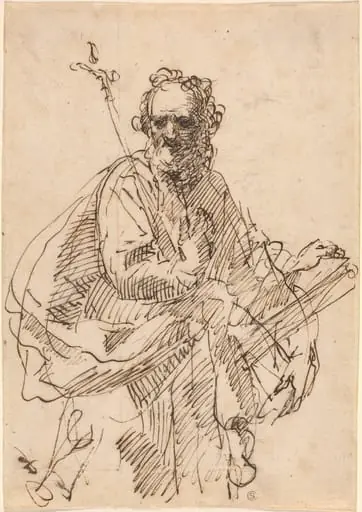 A Standing Saint with a Crucifix and a Book
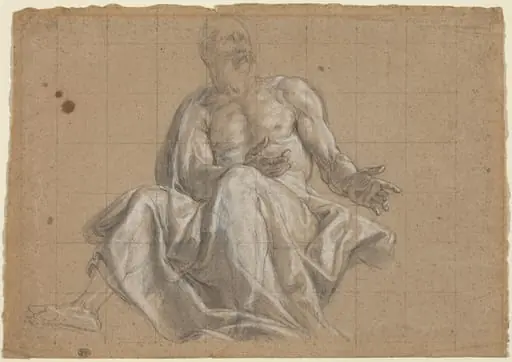 An Elderly Man in Classical Drapery
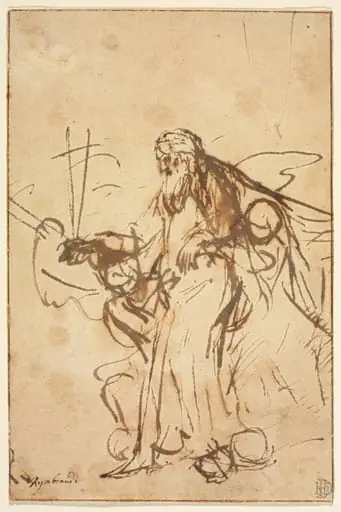 God the Father Supported by Angels
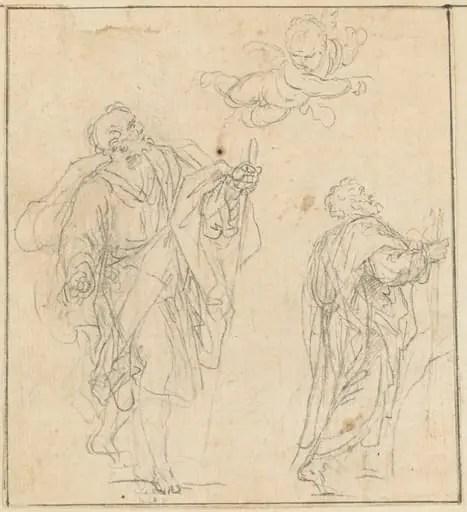 An Apostle Guided by an Angel
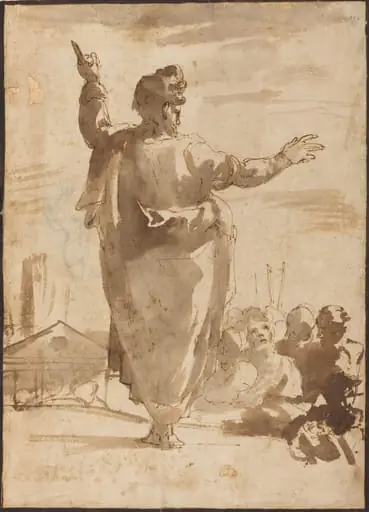 Saint Paul Preaching
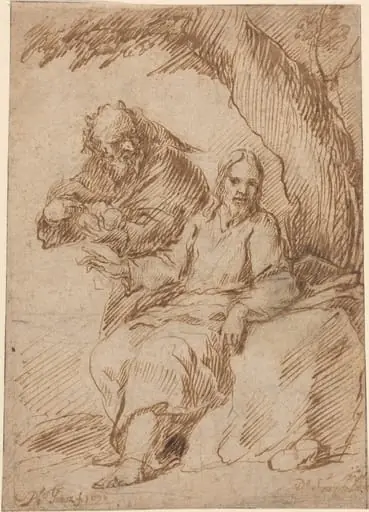 The Temptation of Christ in the Desert
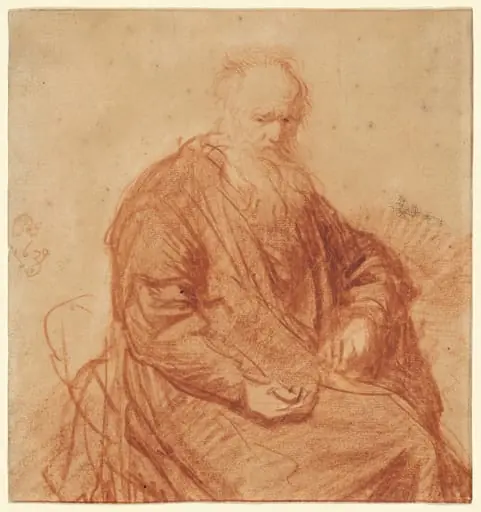 Seated Old Man
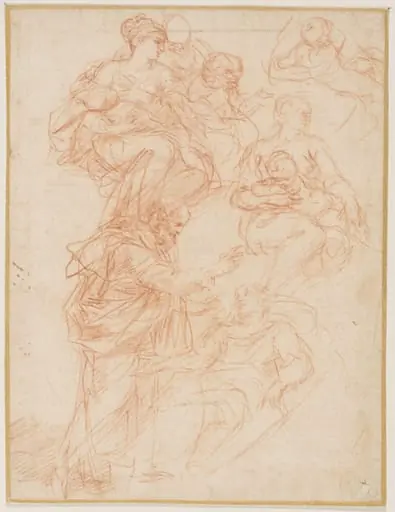 St Peter healing the lame man
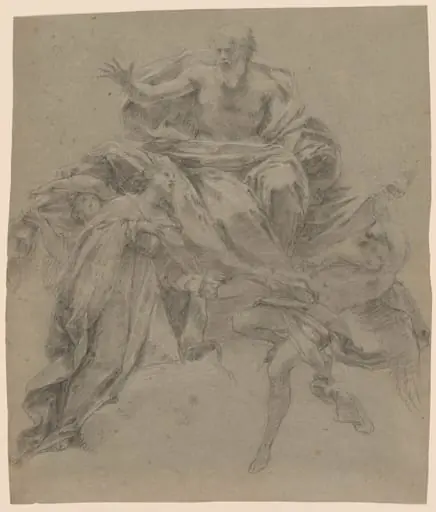 The Immaculate Conception with God the Father and Angels
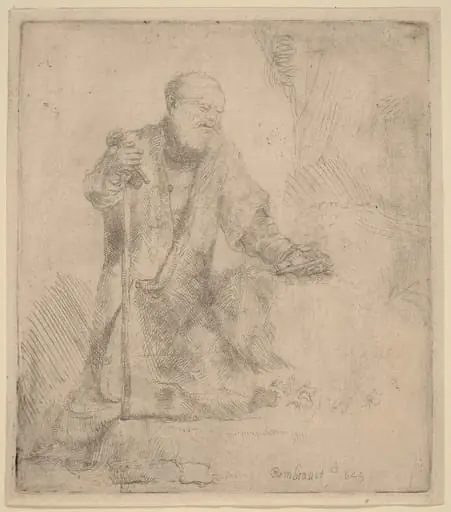 Saint Peter in Penitence
 Studies for a Biblical Scene with God the Father Appearing to a Bearded Male Figure