Artwork
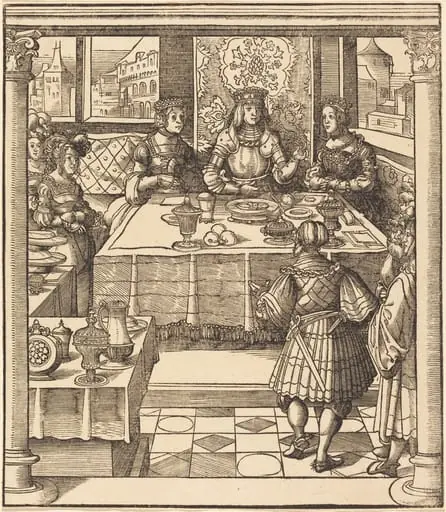
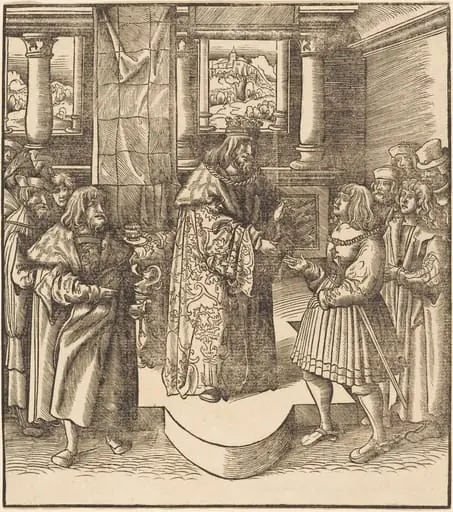
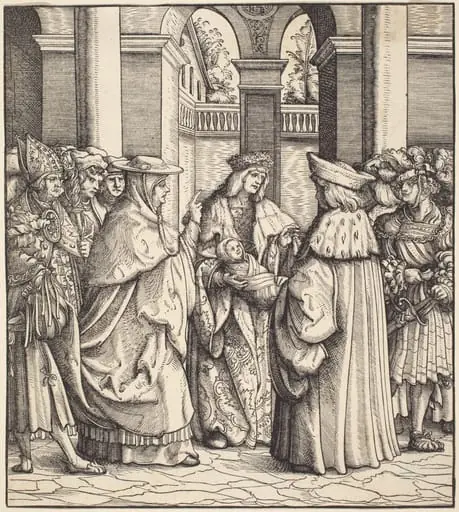
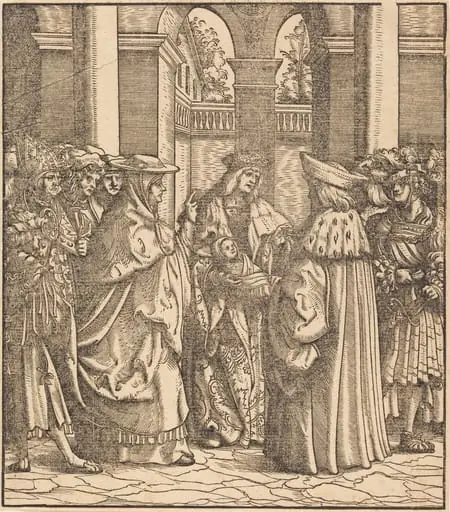
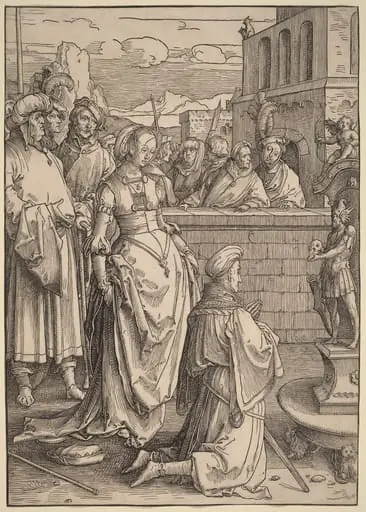
A Legation before a King, near Him Two Women Standing
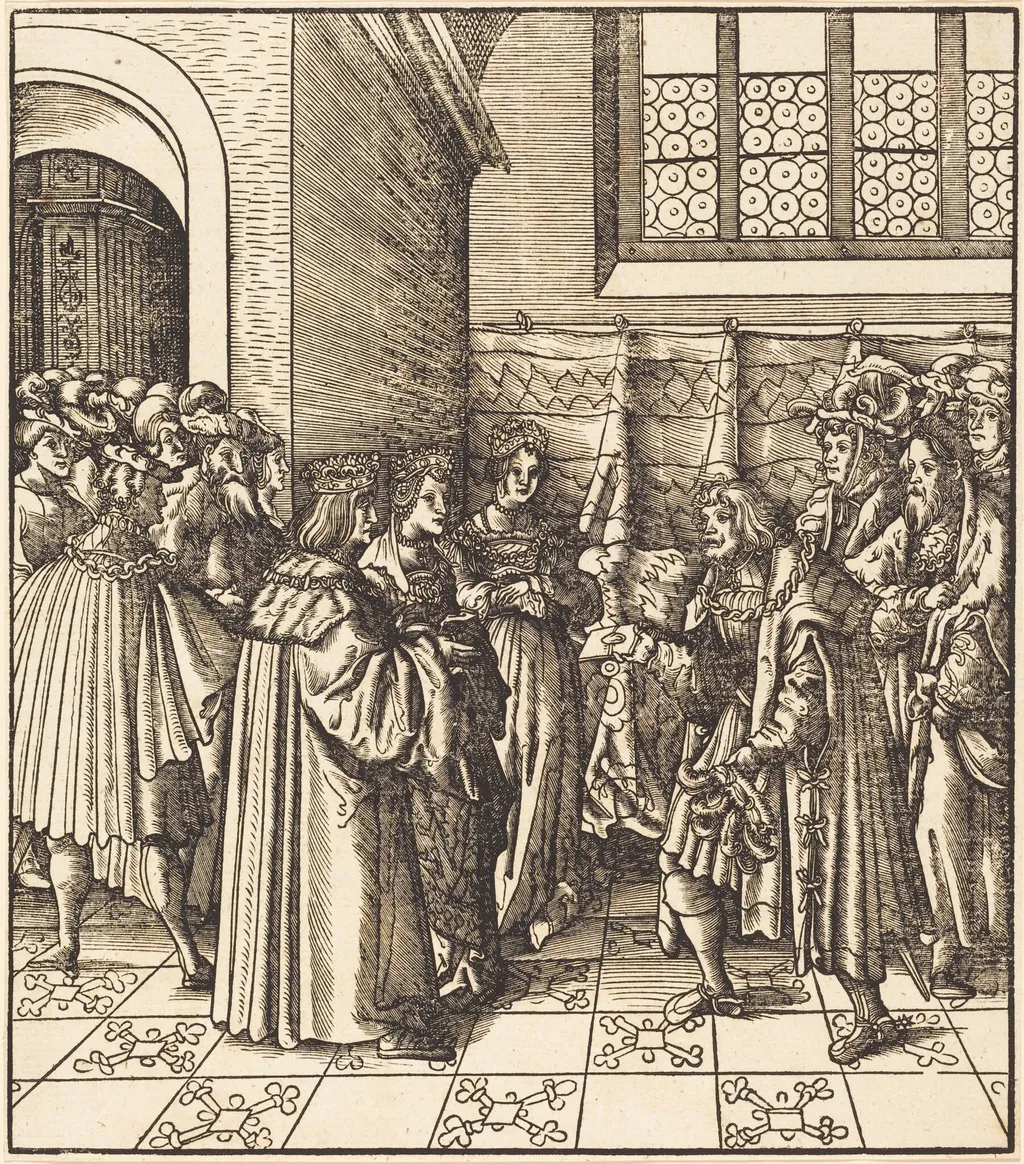
A Legation before a King, near Him Two Women Standing is an ink print by the Renaissance artist Leonhard Beck. It dates from 1515 and is held in the collection of the National Gallery of Art.
About this work
Overview
Leonhard Beck’s 1515 woodcut, *A Legation before a King, near Him Two Women Standing*, presents a ceremonial audience in a richly appointed hall. A monarch occupies a raised throne, grasping a scepter, while two women—one cradling a child—stand beside him. Diplomats kneel or stand around the throne, bearing staffs and books, all rendered with intricate detail in the print’s linear composition.
Subject & Meaning
The image records a formal diplomatic encounter, emphasizing the hierarchy between the sovereign and his envoys.
The image records a formal diplomatic encounter, emphasizing the hierarchy between the sovereign and his envoys. The presence of the two women, one with an infant, may signal the king’s familial or dynastic concerns, while the surrounding officials with documents suggest negotiations or treaty discussions. The composition underscores the authority of the ruler and the orderly conduct of state business.
Technique & Style
Executed in woodcut, the work relies on bold incisions and contrasting darks to model space. Beck’s use of fine hatching creates shadowed interiors and the illusion of depth within the columned hall. The crisp lines and careful modulation of tone reflect the evolving Renaissance approach to printmaking, where artists sought greater realism and narrative clarity within the constraints of the medium.
History & Provenance
Born into a family of miniaturists, Beck was the son of Georg Beck and received training from Hans Holbein the Elder. By the early sixteenth century he was engaged by the court of Emperor Maximilian I, which frequently commissioned woodcuts for political propaganda. The print likely circulated among court officials and diplomatic circles as a visual record of the event.
Context
The early 1500s saw Augsburg emerge as a hub for print production, with artists like Beck contributing to the visual culture of the Holy Roman Empire. Woodcuts served both informational and promotional purposes, reinforcing imperial authority. This piece aligns with Maximilian’s broader program of using images to legitimize his rule and to document ceremonial occasions.
Artist & collection
Artist
Leonhard Beck (c. 1480 – 1542) was a painter and woodcuts designer in Augsburg, Germany. He was the son of Georg Beck, a miniaturist who was active in Augsburg c. 1490–1512/15. Leonhard collaborated with his father on…